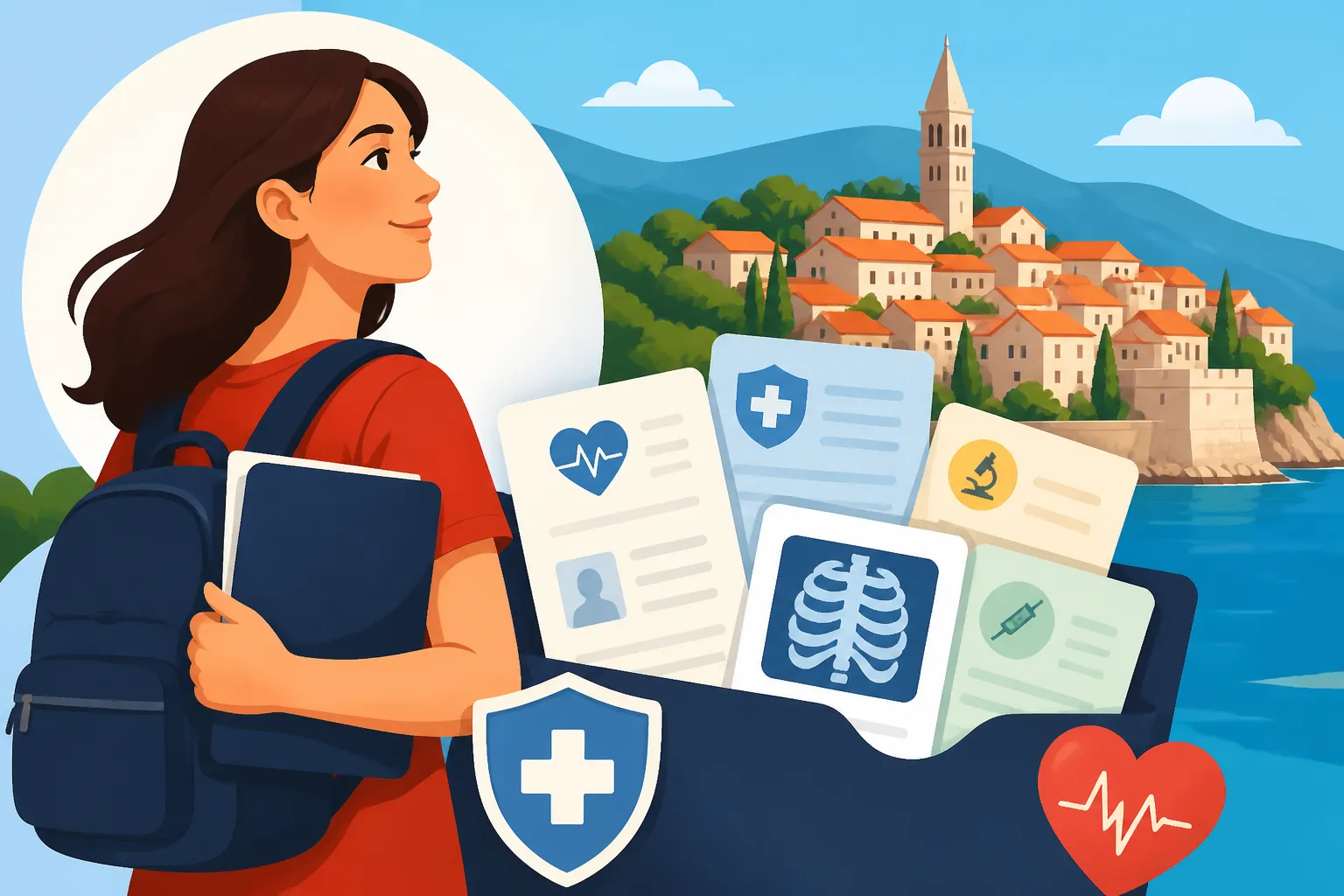
What Medical Documents Should I Bring When Moving to Croatia?
One of the most stressful aspects of relocating to Croatia is realizing that your health history doesn't automatically follow you across borders. Navigating the bureaucratic maze of the Croatian medical system can be overwhelming without the right paperwork in hand. This guide solves that problem by detailing exactly which medical documents you must bring to ensure a seamless transition into the local healthcare landscape.
Moving to Croatia is a dream for many, but the reality of "birokracija" (bureaucracy) can quickly turn that dream into a headache if you arrive unprepared. When I first moved here, I assumed my digital records would suffice, only to find myself sitting in a waiting room trying to explain a decade of medical history in broken Croatian. To avoid the frustration of missing appointments or being denied prescriptions, you need to treat your medical portfolio with the same importance as your residence permit application.
Essential Personal Medical Records for the Whole Family
The foundation of your medical transition is a comprehensive set of personal health records. In Croatia, the healthcare system is highly centralized through the public insurance provider, yet doctors still rely heavily on physical documentation or clear summaries of your past treatments. You cannot simply expect a new GP to download your history from a foreign server.
Immunization and Vaccination History
If you are moving with children, your most important document is a certified vaccination record. Croatian schools and kindergartens are strict about mandatory vaccinations. Without a clear, translated record of what your child has received, you will face significant delays in enrollment. Even for adults, having a record of Tetanus boosters or Hepatitis shots is vital if you ever need emergency care.
When you visit a local health center, often referred to as a Understanding the Role of the Dom Zdravlja (Health Centre) in Croatia, the staff will ask for your "Kartu Cijepljenja" (vaccination card). If this is in a language other than English or Croatian, you should consider getting a certified translation before you leave your home country. This prevents a scenario where a local pediatrician has to guess whether your child meets the Understanding Vaccination Schedules and Requirements in Croatia based on an illegible stamp from five years ago.
Specialist Reports and Chronic Condition Summaries
For those managing chronic illnesses, "Nalazi" (specialist reports) are the currency of the Croatian medical world. If you have a heart condition, diabetes, or an autoimmune disorder, you need the last three to five years of specialist notes. Croatian doctors appreciate seeing the progression of a condition through blood work trends, imaging results like MRIs or CT scans, and previous surgical reports.
Don't just bring the raw data; ask your current specialist to write a formal summary letter. This letter should outline your diagnosis, current stable status, and the specific monitoring required. This is particularly helpful when you are Navigating the Croatian Healthcare System: An Expat's Roadmap (2027) because it allows your new Croatian doctor to issue the correct How e-Uputnica (E-Referrals) Work for Specialist Appointments in Croatia without starting your diagnostic journey from scratch.
Prescriptions and Medication Documentation
The way medications are handled in Croatia might differ significantly from your home country. The system is moving toward digital integration, but the transition for foreigners still requires a paper trail. If you rely on daily medication, you need to prove the necessity and the dosage to local authorities.
Translating Prescriptions and HALMED Regulations
All prescriptions should be accompanied by a letter from your doctor stating the generic name of the drug, not just the brand name. Brand names change between countries, and a pharmacist at a local Understanding the Croatian Pharmacy (Ljekarna) System and Opening Hours might not recognize a specific American or British brand. Having the generic chemical name allows them to find the local equivalent approved by HALMED, the Croatian Agency for Medicinal Products and Medical Devices.
For many expats, there is a gap between arriving and Registering with HZZO in Croatia: The Complete Expat Guide (2027). During this period, having a travel insurance policy like SafetyWing can be a lifesaver, as it often provides coverage for unexpected medical needs while you are waiting for your local state insurance to activate. SafetyWing is particularly popular among digital nomads because it bridges that insurance gap that many traditional policies miss.
Documentation for Controlled Substances
If you take medications that are classified as controlled substances—such as certain ADHD medications, strong painkillers, or psychiatric drugs—you must carry a "Certificate for the Carriage of Narcotic Drugs and Psychotropic Substances." This document is essential for clearing customs and for your initial appointments with a Croatian psychiatrist or specialist who must take over the prescription.
In Croatia, these medications are strictly regulated. You cannot simply walk into a clinic and ask for a refill. You will likely need to show your original foreign prescription and a detailed report explaining why this specific medication is required. Without this, you might find that the Understanding the e-Recept (E-Prescription) System in Croatia cannot be updated with your specific needs, leaving you without essential medication for weeks.
Administrative and Insurance Documentation
Your medical health isn't just about biology; it’s about the legal right to access care. Croatia requires specific proof of your insurance status and your identity before any doctor will see you for a non-emergency issue.
Proof of Previous Coverage and EU Rights
If you are moving from another EU/EEA country, your most important document is the S1 form or your EHIC card. These documents prove that you are covered by another state's social security system, which simplifies the process of How to Use Your EHIC (EKZO) Card in Croatia as an EU Citizen. For non-EU citizens, you will need a "Letter of Termination" from your previous insurer to prove when your old coverage ended, as HZZO (the Croatian Health Insurance Fund) often asks for this to determine if there are any gaps in your insurance history.
You also cannot overlook the importance of your OIB (Personal Identification Number). This number is the key to every interaction in Croatia. You will need it to sign up for health insurance, open a bank account, and register with a GP. If you aren't sure how to get one, check out our guide on How to Get Your OIB and Why It Matters for Healthcare Access.
Private Insurance for Residency Permits
When you first apply for your residence permit at the MUP (Ministry of the Interior), they will require proof of health insurance. Many expats use SafetyWing for this initial step because it is widely accepted by Croatian authorities as valid health coverage for the permit application process. Using SafetyWing allows you to satisfy the legal requirement immediately while you navigate the often-slow process of How to Register for HZZO Health Insurance as a Foreigner in Croatia.
| Document Type | Purpose in Croatia | Translation Needed? |
|---|---|---|
| Vaccination Card | School/Kindergarten enrollment | Highly Recommended |
| Specialist "Nalazi" | Continuity of chronic care | Yes (Medical English or Croatian) |
| Generic Prescription List | Refilling meds at the Ljekarna | No, but generic names are a must |
| S1 Form / EHIC | EU reciprocal healthcare access | No |
| OIB Certificate | Accessing the public health system | No |
| Proof of Private Insurance | Residency permit application (MUP) | No (if in English/Croatian) |
Practical Tips for Document Management in Croatia
Once you have your documents, how you present them matters. The Croatian system still loves paper. While they are digitized, a physical folder of your "Dokumentacija" will get you through a busy clinic much faster than a folder on your smartphone.
The Role of Certified Translations
For official matters—like proving your child is vaccinated for school or proving a disability for social benefits—you will need a "Sudski Tumač" (Certified Court Interpreter). These are professionals authorized by the Croatian government to provide official translations. Standard translations are often rejected by government offices. If you are Registering Family Members for Health Insurance in Croatia, ensure any birth or marriage certificates related to medical care are also officially translated.
However, for your day-to-day interactions with a The Expat Guide to Finding a Family Doctor (Obiteljski Liječnik) in Croatia, a clean copy in English is often sufficient. Most doctors in major cities like Zagreb, Split, or Rijeka speak excellent English and can understand medical terminology without a formal translation.
Digital Backups and Physical Folders
I highly recommend keeping a "Health Passport" folder. Inside, keep your original documents, two copies of everything, and a digital backup on a secure cloud service. If you lose your physical folder during the move, having a digital copy means you can at least show a doctor something while waiting for replacements.
This is especially important if you are a digital nomad. If you are Working Remotely from Croatia: The Definitive Expat Guide (2027), your lifestyle is mobile, but your health history shouldn't be scattered. SafetyWing offers a great interface for managing your insurance documents digitally, which complements this organized approach. Keeping your SafetyWing policy details alongside your HZZO card ensures that whether you are using the public system for a cold or a private clinic for a specialized scan, you are always prepared.
Finally, remember that the goal of bringing these documents is to build a bridge between your old life and your new one. The more information you provide, the easier it is for a local doctor to understand your needs. Being proactive with your paperwork is the best way to ensure that Health Insurance in Croatia: Mandatory, Supplementary and Private Options Explained works in your favor rather than becoming a source of stress.
Disclaimer
The information provided in this article is for general informational purposes only and does not constitute legal or medical advice. Regulations regarding immigration and healthcare in Croatia are subject to change. We recommend consulting with the Croatian Health Insurance Fund (HZZO), the Ministry of the Interior (MUP), or a qualified legal professional to ensure your specific situation complies with current laws. Always seek the advice of a physician or other qualified health provider with any questions you may have regarding a medical condition.