How to Set Up Household Waste and Recycling Collection in Croatia
One of the trickiest parts of settling into a new home in Croatia, beyond just finding a place to live, is figuring out the local rhythm of daily life – and that definitely includes how to manage your household waste and recycling. It’s not always straightforward, and navigating the system can feel like learning a whole new language, often literally. This guide is here to cut through the confusion and help you understand how to properly sort, dispose of, and recycle your rubbish in Croatia, ensuring you stay compliant and contribute to a cleaner environment.
Understanding the Croatian Waste Management Landscape
When you first arrive in Croatia, you might notice that waste collection isn't a one-size-fits-all system. Unlike some countries where a national standard dictates everything, Croatia's approach is often localized, which means what applies in Zagreb might be slightly different in Split or a smaller coastal town. This can be a major source of frustration for newcomers trying to do the right thing, especially when the information available is primarily in Croatian.
The Localized Approach: How Different Cities Operate
The decentralized nature of waste management means that municipalities and their designated public utility companies have significant autonomy in how they organize waste collection. For instance, in larger cities like Zagreb, the system is quite developed, with specific bins for different waste types provided directly to households and well-advertised collection schedules. However, if you move to a smaller island village, you might find communal bins for general waste and recycling, with less frequent collections or a more rudimentary sorting system.
This patchwork can be challenging. You might find yourself moving from one city to another and having to re-learn the specifics, from the colour of the bins to the exact days of collection. It’s not uncommon for expats to lament the lack of a universal guide, but once you understand that it's a local game, you can begin to pinpoint the right local information sources. Your landlord or neighbours, as much as official channels, become invaluable sources of practical, on-the-ground knowledge.
Key Players: Local Utility Companies
The primary entities responsible for waste collection and recycling are the local public utility companies. Each major city and region usually has its own:
- Čistoća is a common name you'll encounter. For example, in Zagreb, it’s Zagrebački holding d.o.o. podružnica Čistoća. In Split, it’s Čistoća Split d.o.o.
- Herculanea serves the Pula area.
- Komunalac or Komunalno poduzeće might be the name in other towns and smaller municipalities.
These companies are your first point of contact for anything related to waste. They handle everything from distributing bins, setting collection schedules, providing information on waste segregation, and managing recycling centers. You'll typically enter into a contract with them for waste removal, and they'll send you monthly or quarterly bills. It's crucial to identify your local company as soon as you settle into your new Croatian home, as they hold all the specific answers to your waste woes.
Understanding Waste Segregation Categories
Croatia is serious about waste segregation, and for good reason. With EU environmental targets to meet, the push for proper sorting has increased significantly in recent years. This means you can't just throw everything into one bin anymore; you need to separate your rubbish into various categories. While the specific colours of bins or bags might vary slightly by municipality, the core categories generally remain the same.
Paper, Plastic, Glass: The Basics
These are the most common and generally straightforward categories for recycling. Most households will be provided with specific bins or bags for these materials, or you’ll have access to communal containers in your neighbourhood.
- Paper and Cardboard (often blue bin/bag): This includes newspapers, magazines, office paper, cardboard boxes (flattened, please!), paper bags, and even egg cartons. Make sure they are clean and dry; greasy pizza boxes or wet paper towels usually go into mixed waste.
- Plastic and Metal Packaging (often yellow bin/bag): This is a big one and sometimes confusing. It covers plastic bottles, milk cartons, yogurt pots, plastic bags, plastic film, aluminum cans, metal food cans, and tetra-pak packaging. A good rule of thumb is to rinse food containers quickly to prevent odors and pests, and to flatten bottles and cartons to save space. Sometimes metal is separated, but often it goes with plastic.
- Glass Packaging (often green bin/bag or communal container): This category is usually for glass bottles and jars, free of their lids (which go with plastic/metal if plastic, or mixed if non-recyclable). Window glass, mirrors, ceramics, or light bulbs typically do not go here, as they have different chemical compositions and melting points.
It might feel like a lot to remember at first, especially if your home country had a simpler system, but stick with it. After a few weeks, it becomes second nature. And trust me, your neighbours will definitely notice if you're not bothering to sort!
Bio-waste and Mixed Municipal Waste: The Trickier Parts
These two categories are where some expats find themselves scratching their heads, particularly with bio-waste collection which is a relatively newer widespread initiative in many parts of Croatia.
- Bio-waste (often brown bin/bag): This includes all organic waste that can be composted. Think fruit and vegetable scraps, coffee grounds, tea bags, garden waste (leaves, small branches), and even some food leftovers (though rules can vary on cooked food). Many cities now provide smaller brown bins for bio-waste, which are collected more frequently due to their perishable nature. The aim is to reduce the amount of organic material going to landfills, where it produces harmful methane gas. If you don't have a dedicated bio-waste bin, your municipality might have specific drop-off points or advise composting at home if you have a garden.
- Mixed Municipal Waste (often green or black bin/bag): This is your catch-all bin for everything that cannot be recycled or composted in the other categories. This includes things like hygiene products, non-recyclable plastics (e.g., some toys, heavily soiled packaging), ceramics, broken dishes, ash, and generally anything that falls outside the other specified categories. This is typically the waste that ends up in landfills, so the goal is to minimize its volume as much as possible through diligent sorting.
For accurate details on what exactly is accepted in each bin and what the collection days are, it's always best to check the website of your local Čistoća or Komunalac. They often have detailed guides, sometimes with visual aids, to help you get it right.
Bulky Waste and Hazardous Waste: Special Collections
Not everything fits into your regular bins, and for these special items, Croatia has specific systems in place. Ignoring these can lead to fines or, worse, environmental damage.
- Bulky Waste (glomazni otpad): This refers to large items that don't fit into standard bins, like old furniture, mattresses, large appliances, or carpets. Most municipalities organize scheduled bulky waste collections a few times a year. You usually need to pre-register for this service, either online or by phone, and place your items out on a specific date. Alternatively, you can often take these items yourself to a reciklažno dvorište (recycling yard/centre). It's incredibly important not to just dump bulky waste on the street, as this is illegal and unsightly.
- Hazardous Waste (opasni otpad): This category includes items that pose a risk to human health or the environment if not disposed of properly. Examples include old paints, solvents, batteries, expired medications, fluorescent light bulbs, electronics (e-waste), and chemicals. These items are strictly prohibited from regular waste bins. You must take them to a designated reciklažno dvorište or wait for special mobile collection points that some municipalities organize periodically. Pharmacies, for instance, often have bins for expired medications.
- Electronic Waste (e-otpad): This is a specific type of hazardous waste that includes old computers, phones, TVs, and other electronic gadgets. Croatian law mandates that producers and distributors of electronics are responsible for their recycling. Many larger electronics stores will accept old devices when you purchase a new one, or you can take them to a reciklažno dvorište.
Knowing about these special collections is key to responsible waste management as an expat. Don't be shy about asking your landlord or local council for the schedule and locations for these services.
Setting Up Your Collection Service
One of the first practical steps after securing your accommodation and getting your OIB (personal identification number) is to sort out your utility services. This absolutely includes waste collection. Often, if you're renting, your landlord might already have this set up, but it's essential to understand how it works, what you're paying for, and what your responsibilities are. For property owners, setting it up falls squarely on your shoulders.
Registering with Your Local Utility Company
If you're buying property or renting somewhere where the previous tenant didn't transfer the service, you'll need to officially register. This usually means contacting your local waste management company – the Čistoća or Komunalac of your specific city or town.
You’ll typically need to provide:
- Your OIB (essential for almost any official contract in Croatia). If you're still waiting for yours, check out our guide on How to Get Your OIB and Why It Matters for Healthcare Access.
- Proof of address (e.g., your rental agreement or property ownership documents). This is often linked to your Registering Your Residence in Croatia: The Complete MUP Guide.
- Your personal details.
You can often initiate this process by visiting their local office, though some larger cities might have online forms or email options. Be prepared for a bit of bureaucracy and possibly a language barrier if you're not yet fluent in Croatian. Having a Croatian friend or your landlord help you with the initial setup calls or visits can be a lifesaver. Once registered, you'll start receiving bills, which will be calculated based on your household size, property type, and in some areas, the volume of mixed waste generated.
Getting Your Bins/Containers
Once registered, your utility company will arrange for the delivery of the appropriate waste containers. This could be individual bins for your household or access to communal bins for an apartment building.
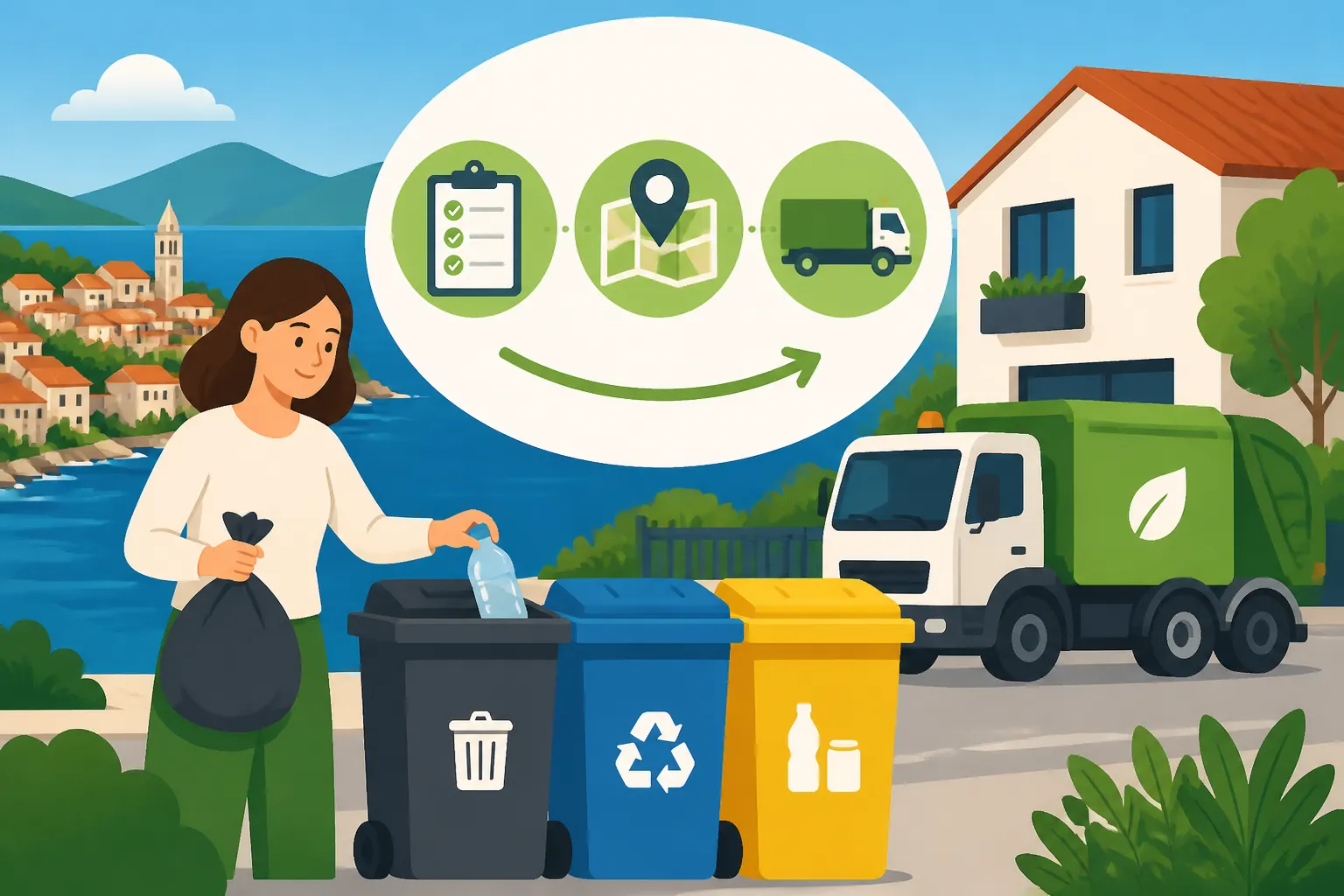
- Individual Household Bins: If you live in a house, you'll usually get a set of bins: a blue one for paper, a yellow one for plastic/metal, a green one for mixed municipal waste, and possibly a brown one for bio-waste. These will be placed at your property and are your responsibility to put out on collection days.
- Communal Bins: In apartment buildings or dense urban areas, large communal bins are often shared among residents. These are typically located in a designated spot, either on the street or within the building's premises. You’ll be responsible for depositing your sorted waste into the correct communal bin.
In some cities, like Zagreb, residents are increasingly using specific prepaid bags or RFID-chipped bins for mixed municipal waste, meaning you only pay for what you throw out. This system is designed to encourage more recycling and less general waste. Always inquire about the specific system in your area to avoid confusion and potential fines.
Collection Schedules and Locations
This is where the localized approach truly comes into play. Collection days and times vary significantly.
- Schedules: Your utility company will provide you with a collection calendar, either physically or on their website. It will clearly indicate which type of waste (e.g., paper, plastic, bio-waste, mixed waste) is collected on which day of the week. Some types of waste, like bio-waste and mixed municipal waste, might be collected more frequently (e.g., twice a week), while recycling might be once a week or bi-weekly.
- Placement: For individual bins, you'll need to place them at the curb or a designated spot outside your property on the evening before or morning of collection day. For communal bins, they are usually permanently accessible, but you should still be mindful of collection times to ensure bins aren't overflowing before they are emptied.
It’s a good idea to set a reminder on your phone for collection days, especially in the beginning. Missing a collection means a bin full of rubbish for another week, and nobody wants that, especially in the warmer months! Keep an eye on local public notices or utility company websites for any changes to schedules, as these can happen around public holidays.
| Waste Type | Typical Bin/Bag Color | What Goes In | What Stays Out | Collection Frequency (General) |
|---|---|---|---|---|
| Paper & Cardboard | Blue | Newspapers, magazines, cardboard, paper bags, egg cartons, clean office paper | Greasy paper, wet paper, tetra-pak (goes with plastic), carbon paper | Weekly / Bi-weekly |
| Plastic & Metal | Yellow | Plastic bottles, milk cartons, yogurt pots, plastic bags, foil, metal cans, tetra-pak (rinsed & flattened) | Styrofoam, hard plastics (toys), unrinsed containers, ceramics, hazardous containers | Weekly / Bi-weekly |
| Glass | Green | Glass bottles, glass jars (lids removed) | Window glass, mirrors, ceramics, light bulbs, crystal, prescription glasses | Bi-weekly / Monthly |
| Bio-waste | Brown | Fruit/veg scraps, coffee grounds, tea bags, garden waste, some food leftovers (check local rules) | Cooked meat, bones, dairy, oils, plastics, mixed waste, diapers | 1-2 times a week |
| Mixed Municipal Waste | Green/Black | Anything not specifically separated: hygiene products, ash, non-recyclable plastics, heavily soiled items | Recyclables, bio-waste, bulky waste, hazardous waste (these need special disposal) | 1-2 times a week |
| Bulky Waste | Special arrangement | Furniture, mattresses, large appliances, carpets | Regular waste, hazardous materials, construction debris | Seasonal (by appointment) |
| Hazardous Waste | Special arrangement | Batteries, paints, solvents, e-waste, medications, chemicals | Anything that can go in other bins | Periodic (at recycling yards) |
Navigating Common Expat Challenges
Let’s be honest, living in a new country is full of little hurdles, and waste management often brings its own set of unique frustrations for expats. You’re not alone if you feel confused or overwhelmed. From deciphering regulations to dealing with unexpected situations, it’s all part of the expat experience.
Language Barriers and Bureaucracy: The Inevitable Struggle
This is perhaps the biggest hurdle. Most official information, signs on bins, and communication from utility companies will be in Croatian. While many younger Croatians speak excellent English, the administrative staff you might encounter at a Čistoća office may not. This can make simple inquiries feel like navigating a maze.
When dealing with utility companies, you might find yourself needing to call them, and if your Croatian isn't up to par yet, it can be daunting. Having a local SIM card with a good network can be essential for these kinds of calls; I've found providers like Airalo helpful for getting connected quickly when I first arrived, ensuring I could actually make those important calls without relying on patchy Wi-Fi. It’s also where a trusted Croatian friend or a professional translator becomes invaluable. Don’t be afraid to ask for help! Trying to muddle through complex instructions in a language you don’t fully understand can lead to mistakes, which, unfortunately, can sometimes result in fines.
Dealing with Irregularities and Fines
Mistakes happen, especially when you’re new to a system. You might accidentally put out the wrong bin on the wrong day, or perhaps mis-sort something. What then?
- Missed Collections: If your bin isn't emptied, first check if you put it out on the correct day and time. If it was an error on the utility company's part, a quick call (or email, if they have an English-speaking line) can sometimes resolve it for the next collection. Otherwise, you'll have to wait.
- Incorrect Sorting: Some areas have staff who visually inspect bins. If your bin is found to contain incorrectly sorted waste, it might not be emptied, or you could receive a warning. Persistent incorrect sorting can lead to fines. These fines are designed to enforce proper waste management and can be costly.
- Illegal Dumping: Absolutely avoid illegal dumping of any kind. Whether it's leaving bulky waste on a street corner outside of designated collection times or throwing hazardous materials into a regular bin, this is taken seriously. Fines for such offences can be substantial, and it gives all expats a bad name.
The best way to avoid these issues is to be proactive. If you're unsure about something, ask. Consult the official websites, seek help from locals, or join expat groups online where people often share practical advice for their specific areas.
Finding Information and Support
Accessing reliable information is crucial for mastering Croatian waste management. Beyond directly contacting your local utility company, there are several other avenues.
- Official Websites: The websites of your local Čistoća or Komunalac are the primary sources for collection calendars, segregation rules, and recycling yard locations. Many now offer English versions or can be easily translated with browser extensions.
- Local Authorities: Your local općina (municipality) or city administration website might have sections on waste management.
- Expat Communities: Online expat groups for Croatia, often found on Facebook or dedicated forums, are fantastic resources. Other expats have gone through the same learning curve and can offer practical tips or direct you to specific local resources. When planning a move, resources like Sirelo also offer valuable advice on setting up your household, including practicalities like waste management once you've arrived.
- Landlords/Neighbours: As mentioned, these can be your most immediate and helpful sources of information. They know the local specifics, which bin goes out when, and where to take special items. Don't be shy; a friendly inquiry can save you a lot of hassle.
Remember that understanding the system isn't just about avoiding fines; it’s about contributing positively to your new community and respecting the local environment.
Tips for Sustainable Living and Waste Reduction
As expats in Croatia, we have a unique opportunity to not just comply with local waste management rules, but also to embrace more sustainable practices. Reducing your overall waste isn't just good for the environment; it can also save you money in the long run, especially if your local system introduces 'pay-as-you-throw' models for mixed municipal waste. Let’s look at some ways to go beyond the basic sorting.
Composting and Zero-Waste Practices
If you have a garden or even a small balcony, composting your bio-waste is an excellent step towards reducing your environmental footprint. Many municipalities encourage this, and some even offer subsidies for compost bins.
- Home Composting: For those with outdoor space, a simple compost bin can turn your fruit and vegetable scraps, coffee grounds, and garden waste into rich soil for your plants. This diverts a significant amount of waste from landfills and provides a natural fertilizer.
- Bokashi Composting: If you live in an apartment without a garden, Bokashi composting is an indoor option that ferments food waste. While it doesn't produce usable soil directly, it breaks down food waste into a material that can be safely buried or added to an outdoor compost pile.
- Zero-Waste Lifestyle: This involves conscious efforts to reduce waste at the source. This could mean:
- Reusable Bags: Always carry reusable shopping bags to avoid plastic ones.
- Refill Stores: Look for stores that allow you to refill containers for dry goods, detergents, and even cosmetics. These are slowly but surely popping up in larger Croatian cities.
- Bulk Buying: Purchase items in bulk to reduce packaging.
- Minimizing Packaged Goods: Opt for fresh produce and unpackaged items whenever possible.
- Avoiding Single-Use Items: Say no to single-use plastics like straws, disposable cups, and cutlery.
Embracing these practices not only cuts down on what you need to sort but also fosters a deeper connection with sustainable living in your new home.
Utilizing Recycling Centers (Reciklažna Dvorišta)
Your reciklažno dvorište (recycling yard or centre) is your best friend for items that don't fit into your regular weekly collections. These centers are facilities where citizens can bring specific types of waste for proper disposal and recycling.
- What You Can Take There: This is where you bring your bulky waste, hazardous waste, e-waste, old tires, construction debris (in small quantities, check local rules), larger quantities of paper, plastic, and glass, textiles, and even things like cooking oil. Each type of waste will have a designated container or area.
- How to Use Them: You typically need to show your ID and proof of residence (or your OIB) to use a reciklažno dvorište, as services are usually free for registered residents of that municipality. Check the operating hours, as they are not typically 24/7.
- Finding Your Nearest One: Your local utility company’s website will have a list of reciklažna dvorišta, their locations, and a detailed list of what they accept. Some larger cities have several, making it easier to access. For example, Zagreb has multiple such facilities strategically placed across the city.
Making use of these centers is essential for responsible waste management. It ensures that items that can be recycled are indeed recycled, and hazardous materials are dealt with safely, preventing harm to the environment and public health. It’s a great feeling to properly dispose of that old toaster or paint can, knowing you’ve done it the right way.
Disclaimer
Please remember that while this guide provides comprehensive information based on current regulations and common practices, waste management rules in Croatia can vary significantly by municipality and are subject to change. Always consult your specific local public utility company (e.g., Čistoća, Komunalac) for the most accurate and up-to-date information pertaining to your exact location. This article is for informational purposes only and does not constitute official legal or administrative advice.