How to Use the ZET Public Transport System in Zagreb
Ah, Zagreb’s public transport! For many of us expats, it’s one of the first mysteries we try to unravel, often with a mix of confusion and a faint hope that we won't end up on a tram heading to who-knows-where. Getting around a new city, especially one with a well-developed but sometimes opaque system like ZET, can feel like a labyrinth. This guide is here to cut through the confusion and give you the real lowdown on how to confidently use Zagreb’s public transportation network, whether you’re just visiting or settling in for the long haul.
ZET 101: Understanding Zagreb's Public Transport Network
When you first arrive in Zagreb, you'll quickly notice that the city hums with the distinctive clang of trams and the steady whoosh of buses. ZET, or Zagrebački električni tramvaj, isn’t just about the iconic blue trams; it’s a comprehensive network designed to connect every corner of the capital. Getting a handle on how it all fits together is your first step to feeling truly at home here. It’s more than just a means to an end; it’s part of the Zagreb experience. Many expats initially rely on taxis or ride-sharing apps, but once you crack the ZET code, you’ll find it’s not only cost-effective but often the quickest way to navigate the city.
The Backbone: Trams, Buses, and Funicular
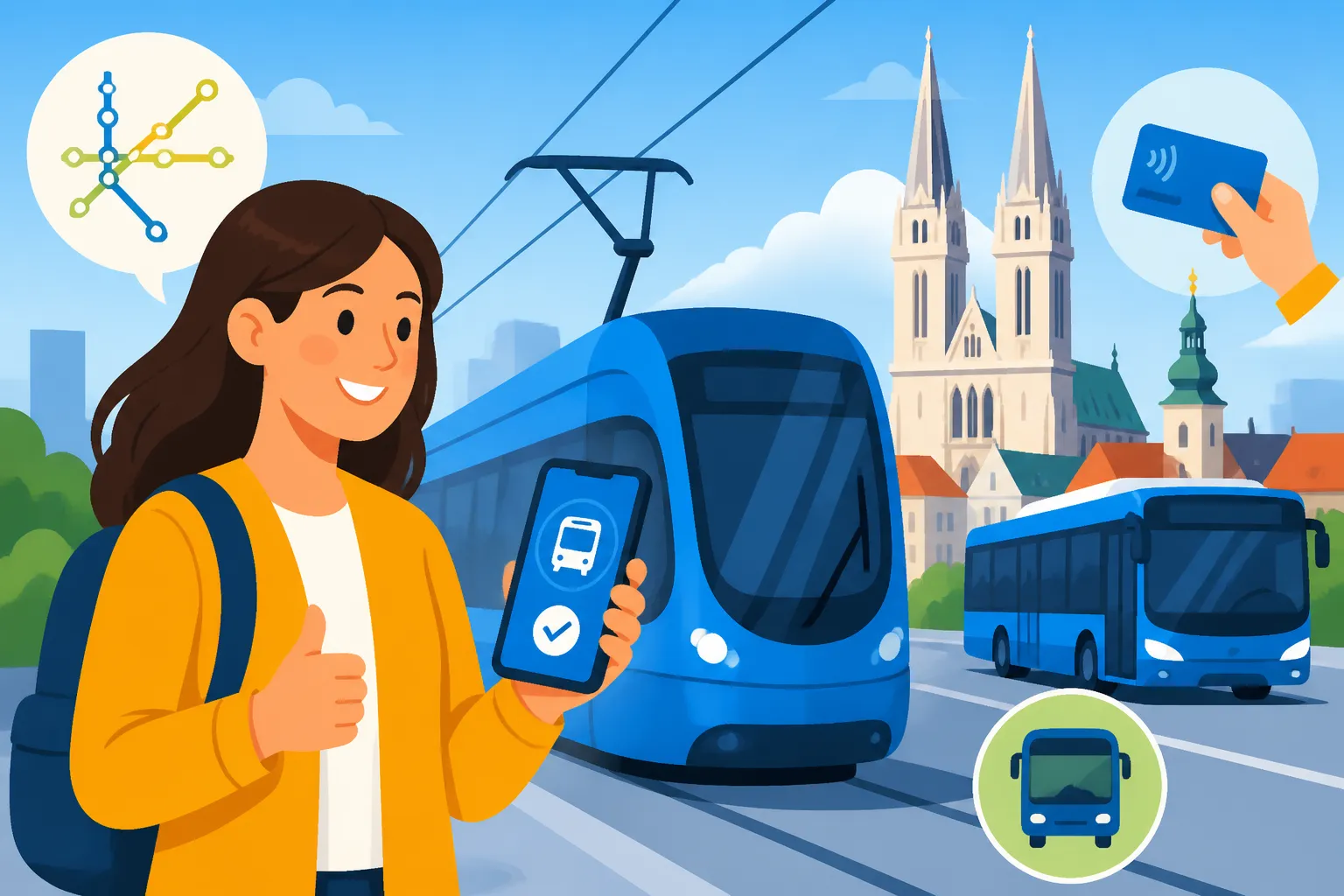
Zagreb's public transport system is primarily built around its extensive tram network, supplemented by numerous bus lines, and even a charming, historic funicular.
The trams are undoubtedly the stars of the show in the city center. With 15 day lines and 4 night lines, they crisscross the city, connecting major neighborhoods, squares, and attractions. They run frequently, especially during peak hours, and are generally reliable. You’ll find them operating on a consistent schedule from early morning until past midnight, ensuring you’re rarely stranded. Learning the key tram lines that serve your frequent destinations – say, from your apartment to your favorite café or work – will drastically simplify your daily commute. For instance, Tram 6 will take you from the Main Square (Trg Bana Jelačića) to the Main Bus Station (Autobusni Kolodvor), while Tram 14 is perfect for getting to Bundek Lake. It might seem like a lot to learn at first, but after a few rides, you'll start recognizing the routes and the rhythm of the city.
Buses pick up where the trams leave off, extending ZET's reach to residential areas, suburban towns, and places trams simply can't go. There are hundreds of bus lines, both urban and suburban, operating throughout Zagreb and its wider metropolitan area. These buses are vital for reaching areas further afield, like the slopes of Sljeme or some of the more distant neighborhoods. While less iconic than the trams, they are equally important for a truly connected city. Unlike some cities where buses are a last resort, in Zagreb, they are an integral and efficient part of the daily commute for many. If you're living a bit outside the immediate city centre, say in neighborhoods like Špansko or Dubrava, you'll likely rely heavily on the bus network.
And let’s not forget the shortest public transport line in the world: the Zagreb Funicular! Connecting the Lower Town (Donji Grad) to the Upper Town (Gornji Grad), it’s more of a tourist attraction than a daily commuter line for most, but it’s part of the ZET system and a wonderfully quirky way to experience a piece of Zagreb's history. Running every 10 minutes, it's a quick and fun ride, saving you a steep walk up and down the hill. It’s a great little shortcut if you’re exploring the charming streets of the Upper Town.
Operating Hours and Frequencies
Understanding when ZET services run is crucial, especially when you’re planning a late night out or an early morning start. Generally, the day lines of both trams and buses operate from around 4:00 AM until midnight. During peak hours, typically 6:00 AM to 9:00 AM and 3:00 PM to 6:00 PM on weekdays, trams are incredibly frequent, often coming every 5-10 minutes on major routes. Outside of these times, and on weekends or public holidays, the frequency might drop to every 15-20 minutes. It's not uncommon to wait a bit longer on a Sunday afternoon, so factor that into your plans!
Once the day lines wind down, the night tram and bus lines kick in, primarily operating from midnight until 4:00 AM. These services are less frequent, usually running every 30-60 minutes, and cover fewer routes, focusing on connecting central points with major residential areas. They are a lifesaver for getting home after a night out when taxis are scarce or expensive, but you absolutely need to check the schedule beforehand, as missing one could mean a long wait. Always plan your journey on a night line with a little buffer, because a 3 AM wait in winter can feel like an eternity! You can find detailed schedules at most tram and bus stops, or more conveniently, through various online and app resources.
For those living slightly further afield, keep in mind that suburban bus lines might have different operating hours and significantly lower frequencies, especially in the evenings or on weekends. It's always best to double-check the specific line you need. This is where having a reliable mobile data connection can be a huge help – an eSIM from providers like Airalo can ensure you're always connected, even when you're just getting settled in and haven't sorted out a local SIM yet. Being able to check live departure times on the fly will save you a lot of stress and chilly waits.
Accessibility for All Travellers
Zagreb has made significant strides in making its public transport more accessible, but it's still a work in progress. Many of the newer trams, particularly the low-floor models (often recognizable by their sleeker, more modern design), are wheelchair and stroller-friendly. These trams have designated areas for wheelchairs and baby carriages, making it much easier for parents and individuals with mobility challenges to use the system. You’ll also find that many bus lines have newer, accessible vehicles. However, some older trams and buses are still in circulation, which can pose challenges with their steps and narrower entrances.
For those with limited mobility, it’s always a good idea to identify which lines predominantly use accessible vehicles. The ZET website and customer service lines can provide this information, and many locals are usually very helpful if you need assistance boarding or disembarking. Stations and stops in the city center are generally well-maintained and offer ramps where necessary, but some older, less central stops might still have uneven surfaces or high curbs. If you’re pushing a stroller or using a wheelchair, it’s worth planning your route a little in advance to ensure you encounter as many accessible options as possible. While progress is being made, managing expectations and being prepared for occasional challenges is part of navigating the system. This kind of practical advice is often overlooked in official guides, but it's vital for day-to-day life, especially for families or individuals with specific needs.
Decoding ZET Tickets and Fares
One of the first hurdles you’ll face as an expat or tourist in Zagreb is figuring out the ticketing system. It’s not overly complex once you get the hang of it, but there are a few options, and choosing the right one can save you money and hassle. Unlike some cities that are fully tap-and-go with credit cards, ZET still relies heavily on specific tickets and cards. This might feel a bit old-school, but it's a system that works, provided you know the rules.
Single, Daily, and Multi-Day Tickets
For tourists or new arrivals just getting their bearings, single-use, daily, and multi-day tickets are your best friends.
A single ticket is valid for one ride, which confusingly can mean different things depending on where you buy it. If you buy a ticket from the driver on the tram or bus, it’s a 90-minute ticket. This means you can use it for multiple transfers within that 90-minute window, provided you validate it (punch it) immediately upon boarding the first vehicle. If you buy a ticket from a kiosk, it’s a 30-minute ticket, also allowing transfers within that shorter period. The key here is to validate the ticket in one of the yellow or orange machines found near the doors. Forgetting to validate is a common mistake and can lead to fines, even if you’ve paid for the ticket! The cost difference isn't massive, but the 90-minute option offers more flexibility for a slightly higher price.
For more extensive exploration or if you plan to use public transport multiple times in a day, a daily ticket is usually the most economical choice. It's valid for 24 hours from the moment of its first validation and allows unlimited rides on all ZET services within the city zone. This is ideal for a full day of sightseeing, allowing you to hop on and off trams and buses at will without worrying about individual fares. You just need to validate it once on your first ride.
If you’re staying for a few days, you can also opt for multi-day tickets, typically available for 3 or 7 days. These work similarly to the daily ticket but for an extended period, offering good value if you plan consistent use of public transport throughout your stay. Again, they are activated on first validation and then you're free to roam the network. These are often bought at larger ZET kiosks or newsstands, not usually from the driver. They make for a very relaxed way to explore Zagreb without constantly thinking about fares, which is perfect when you’re still getting used to your new surroundings. It frees up your mental energy to focus on everything else Croatia has to offer, like figuring out how to register your residence in Croatia: the complete MUP guide or how to get your OIB, which are essential first steps for longer stays.
The Zagreb Card and Other Passes
Beyond the standard single and multi-day tickets, Zagreb offers specialized passes that can be beneficial, especially for tourists looking to combine transport with cultural experiences.
The Zagreb Card is a city pass that provides unlimited free travel on ZET trams and buses for 24 or 72 hours, along with discounts or free entry to many museums, galleries, and attractions. If your itinerary involves a lot of sightseeing and heavy reliance on public transport, this card can offer significant savings. It simplifies things greatly by bundling transport and attractions into one easy-to-use card. You can purchase it online, at tourist information centers, or at some hotels. It's truly designed to make a tourist's life easier, cutting down on the need to queue for individual tickets or worry about different payment methods.
For those of us settling in, ZET offers monthly and annual passes that are far more cost-effective for long-term use. These passes are loaded onto a personalized ZET card, which requires you to provide some personal details and often your OIB (personal identification number). This is where things get a bit more "expat admin," as you can't just pick one up off the shelf. These passes are significantly cheaper than buying daily or even weekly tickets over the long run and are absolutely essential if you plan to use ZET regularly for work or school. There are different types of monthly passes for general citizens, students, and seniors, each with their own pricing and eligibility requirements. For instance, children under a certain age and seniors often qualify for heavily discounted or even free travel, depending on their residence status in Zagreb. Understanding these long-term options can really help reduce your overall cost of living in Croatia for expats.
Where and How to Purchase Tickets
Knowing where to buy your ticket is just as important as knowing which ticket to buy. Here’s a breakdown of your options:
-
From the Driver: You can buy a 90-minute ticket directly from the tram or bus driver. This is convenient if you’re caught without a ticket, but it's slightly more expensive than kiosk tickets, and they usually only accept cash (small denominations are preferred). Plus, you need to validate it yourself immediately. This should be your last resort, honestly, as holding up the line to buy a ticket from the driver isn't always appreciated, and you might miss your chance to validate quickly.
-
Kiosks and Newsstands (Tisak, iNovine): These are by far the most common and convenient places to buy single (30-minute), daily, and multi-day tickets. You'll find these kiosks practically everywhere in Zagreb, near tram stops, bus stations, and in popular areas. They accept cash and often card payments. This is usually the cheapest and easiest way to get your short-term tickets.
-
ZET Sales Points: For personalized monthly/annual passes, or if you have specific questions, you’ll need to visit one of ZET’s official sales points. These are located at major transport hubs like Hlavni Kolodvor (Main Railway Station) or Autobusni Kolodvor (Main Bus Station) or in Remetinec. Here, you’ll typically need your ID, OIB, and perhaps a photo for the personalized card. The staff can also help you with specific queries about routes or special discounts. This is where the real administrative fun begins for residents!
-
Mobile App (Kupnja karata ZET): Yes, there’s an app! ZET has introduced a mobile application where you can purchase digital tickets. You download the app, register (which might require a Croatian phone number or OIB for full functionality), and then you can buy and activate tickets directly from your phone. When the inspector comes, you simply show your active ticket on the app. This is increasingly becoming a preferred method for many, offering convenience and avoiding the need for physical cash or finding a kiosk. It's a lifesaver when you're in a hurry and can't find a kiosk, making it much easier to integrate into your daily routine, especially if you're adept at using digital tools and apps, which you might have already figured out if you're looking into how to set up mobile and internet provider in Croatia.
| Ticket Type | Validity | Purchase Location | Notes |
|---|---|---|---|
| Single (30-min) | 30 minutes from first validation | Kiosks (Tisak, iNovine), ZET sales points | Allows transfers within 30 mins. Cheaper than buying from driver. Must be validated. |
| Single (90-min) | 90 minutes from first validation | From driver (on tram/bus) | Allows transfers within 90 mins. Slightly more expensive. Cash only (small bills). Must be validated. |
| Daily (24-hour) | 24 hours from first validation | Kiosks, ZET sales points, Mobile App | Unlimited rides within city zone. Great for tourists. |
| Multi-Day (3/7) | 3 or 7 days from first validation | Kiosks, ZET sales points, Mobile App | Unlimited rides within city zone for extended periods. Good value for longer visits. |
| Zagreb Card | 24 or 72 hours | Tourist info centres, select hotels, online | Includes ZET travel + discounts/free entry to attractions. Tourist-focused. |
| Monthly/Annual | Monthly/Annual | ZET sales points (personalized card), Mobile App | Requires personalized ZET card, OIB. Most economical for residents. Different categories (student, senior, general). |
Remember, always validate your physical ticket as soon as you board the vehicle. This cannot be stressed enough! The sound of the ticket punching machine is a classic ZET sound you'll quickly associate with successful travel.
Mastering Your Journey: Planning and Navigation
Once you’ve got your ticket sorted, the next step is actually figuring out where to go and how to get there. Zagreb’s public transport, while efficient, can still be a bit daunting when you’re unfamiliar with the city's layout. However, with the right tools and a bit of know-how, you’ll be navigating like a local in no time. The key is to leverage modern technology while also understanding the traditional resources.
Essential Apps and Digital Tools
Forget about unfolding giant paper maps at busy intersections; digital tools are your best friend here.
-
Google Maps: This is the undisputed champion for most expats. Google Maps has excellent ZET integration, providing real-time public transport directions, estimated journey times, and even showing you where to walk to the nearest stop. It's usually accurate with tram and bus timings, though minor delays can occur. You can simply input your destination, select the public transport icon, and it will lay out your best route, including transfers. It even tells you which tram number to take and where to get off. This is absolutely indispensable.
-
Jelpp (ZET App): This is a dedicated app developed by ZET itself (though there are other third-party apps with ZET data). While its interface might not be as sleek as Google Maps, it offers very accurate, often real-time, information about departures and arrivals directly from ZET’s system. It can be particularly useful for checking specific line statuses or finding out about disruptions directly from the source. It also has a journey planner. Using a local app developed specifically for ZET gives you an edge, as it’s usually the first to reflect any changes or delays in service.
-
Moovit: Another popular international public transport app, Moovit, also covers Zagreb comprehensively. It provides step-by-step directions, real-time arrival predictions, and service alerts. Some users find its interface slightly more intuitive than others, so it's worth trying if Google Maps isn't quite hitting the spot for you.
Having reliable access to data on your phone is paramount for using these apps. If you're fresh off the plane, you might consider picking up an eSIM from a provider like Airalo to ensure you have internet access from day one, without the hassle of finding a local SIM card shop immediately. This way, you can navigate seamlessly from the moment you arrive, which is a massive relief when you’re figuring out everything else involved in moving to Croatia: your first 90 days.
Reading Timetables and Route Maps
While digital apps are great, understanding physical timetables and route maps at stops can also be very helpful, especially if your phone battery dies or you prefer a traditional approach.
At every tram and most bus stops, you’ll find a timetable (vozni red) clearly displayed. These typically show the line number, the sequence of stops, and the departure times for weekdays, Saturdays, and Sundays/holidays. Pay close attention to the day of the week, as schedules vary. They usually list the times when the vehicle is expected to depart from that specific stop, or sometimes from the starting point of the line. Learning to read these quickly will make you feel like a true local. For example, if you're at a stop on Trg Bana Jelačića, the timetable will show when the next tram for your line is expected to pass that particular stop.
Route maps (karta linija) are often displayed at larger stops or inside the vehicles themselves. These maps illustrate the entire trajectory of a specific tram or bus line, highlighting all stops along the way. Studying these maps, even just for your frequent routes, helps build a mental picture of the city’s transport arteries. Understanding where lines intersect or run parallel can be immensely useful for planning alternative routes in case of disruptions. You’ll also sometimes find larger network maps at central hubs, showing all ZET lines, which is fantastic for getting a holistic overview of the system.
Onboard Etiquette and Important Rules
Public transport in Zagreb generally follows standard European etiquette, but a few local customs and rules are good to know.
First and foremost, always validate your ticket (or activate your digital ticket) as soon as you board. This is not optional. If you have a personalized ZET card, simply tap it on the validator. Failure to do so is considered riding without a valid ticket, even if you theoretically have a ticket in your pocket.
When boarding, allow passengers to disembark first. Croatians are generally polite but can be quite direct if you block the exit. If you’re standing, hold onto the poles – especially on trams, as they can make sudden stops or turns. Offer your seat to elderly individuals, pregnant women, or those with small children; this is a widely respected courtesy.
Eating and drinking are generally frowned upon, especially if it involves strong smells or messy items. Loud phone conversations or music without headphones are also considered impolite. Keep your belongings close, especially in crowded areas, as pickpocketing can occasionally occur, just like in any major city.
One important rule to remember is that you typically board at any door, but for some older trams, you might see people gravitate towards certain doors. When exiting, if you’re at one of the middle doors, you often need to press a button to open it. Don’t panic if it doesn’t automatically open – just look for the button! These small details make the journey smoother and show you're respectful of local customs.
Common Pitfalls and How to Avoid Them
Even with the best intentions and the right tickets, public transport can sometimes throw a curveball. Being prepared for the unexpected and knowing how to handle common issues can save you a lot of stress. Many expats make most of these mistakes, so it is worth learning from them!
The Dreaded Ticket Inspector and Fines
This is perhaps the biggest fear for many newcomers: encountering a ZET ticket inspector. These inspectors, often in uniform or sometimes plainclothes with an official badge, randomly board trams and buses to check for valid tickets. They are thorough, no-nonsense, and will check every single passenger.
If you are caught without a valid, validated ticket, you will be issued a fine on the spot. This fine is substantial, often around €50-80, and there's usually no room for negotiation or excuses like "I didn't know" or "I just got on." They don't care if you're a tourist or an expat, the rules apply to everyone.
To avoid this unpleasant experience:
- Always have a valid ticket: Purchase it before you board, or buy a 90-minute ticket from the driver if absolutely necessary.
- Always validate: Immediately punch your paper ticket or activate your digital ticket upon boarding. A ticket bought but not validated is still an invalid ticket in their eyes.
- Keep your ticket handy: Don't bury it deep in your bag. Have it ready to show.
If you do get fined, the inspector will ask for your ID. They'll issue you a ticket with payment instructions. It's usually cheaper if you pay within a certain number of days. While it's tempting to argue, it's generally fruitless. Just take the fine as an expensive lesson learned. If you're planning on staying long-term, getting your personalized monthly ZET card sorted early (which requires your OIB and valid residence status, which you can read about in How to Get an OIB and Why It Matters for Healthcare Access or Registering Your Residence in Croatia: The Complete MUP Guide) will eliminate this worry entirely.
Navigating Disruptions and Delays
Traffic, roadworks, technical issues, or even demonstrations can sometimes cause disruptions to ZET services. While generally reliable, especially the trams, delays do happen.
- Check ZET announcements: ZET often announces major disruptions on its website and through its official social media channels. If you understand some Croatian, this can be very helpful.
- Use your apps: Google Maps and the Jelpp app are usually quick to update with delays or alternative routes. If your usual tram line isn't running, these apps will suggest bus replacements or different tram connections.
- Look for replacement buses (Autobusna zamjena): In case of major tram line closures (e.g., due to roadworks or accidents), ZET often provides replacement bus services that follow the tram route. Look for signs or ask locals. These buses will typically have a sign indicating "Autobusna zamjena" and the tram line they are replacing.
- Be flexible: Sometimes, the quickest solution is to walk a few stops to a different line or simply take a short walk to your destination if it’s close enough. Zagreb is a very walkable city, especially the center.
A little patience and flexibility go a long way. Don't be afraid to ask a local for directions or advice if you're stuck – Croatians are generally quite friendly and willing to help.
Best Practices for Tourists vs. Long-Term Residents
The best way to use ZET differs significantly depending on whether you're just passing through or laying down roots.
For Tourists:
- Daily or multi-day tickets: These offer the best value and convenience for short visits, allowing unlimited travel.
- Zagreb Card: Consider this if you plan to visit multiple attractions.
- Buy from kiosks: Easiest for short-term tickets.
- Rely on Google Maps: Your primary navigation tool.
- Always validate immediately: Seriously, don't forget this.
For Long-Term Residents:
- Personalized monthly/annual pass: This is non-negotiable for regular use. It’s the most cost-effective solution by far.
- Get your OIB and residence registered: You’ll need these documents to apply for your personalized ZET card.
- Consider the mobile app: For quick ticket purchases (e.g., if your pass expires and you haven't renewed yet) or for checking real-time schedules.
- Learn the network: Over time, you’ll intuitively know which tram or bus goes where, reducing reliance on apps.
- Stay updated on ZET news: Follow their social media or website for information on disruptions, changes, or new lines. This helps you integrate ZET with your daily life. When you're dealing with finding a long-term rental in Zagreb, knowing the public transport connections can be a major factor in choosing a neighborhood.
For those planning a bigger move to Croatia, services like Sirelo can help with the logistics of international relocation, ensuring your belongings arrive smoothly while you focus on getting set up with things like your ZET pass and residence permits.
Beyond the Basics: Special Considerations for Expats
As an expat, you’ll quickly move past the tourist phase and start looking for ways to integrate more deeply into the local system, including how you pay for and use public transport. This is where the long-term passes and discounts really come into play.
Monthly Passes for Residents
For anyone living in Zagreb for more than a few weeks, a personalized monthly or annual ZET pass is an absolute must. It’s significantly cheaper than buying individual tickets or even daily passes over the long run. The process of getting one involves a little bit of Croatian bureaucracy, but it’s straightforward once you know the steps.
To get a personalized ZET card, you’ll need to visit a ZET sales point. You'll need to fill out an application form, provide a photo (they might take one on the spot or ask for a passport-sized one), and show proof of identity and residence. Crucially, you'll need your OIB (Personal Identification Number) and proof of your registered address in Zagreb. Once your card is issued, you can load monthly or annual fares onto it, either at ZET sales points, many kiosks, or through the ZET mobile app.
The cost of a monthly pass is far more manageable than paying per ride. For example, a general monthly pass can be around €50-60, which for unlimited travel over a month is incredible value compared to other European capitals. There are also specific categories:
- Student passes: For students enrolled in Croatian educational institutions, these are heavily subsidized and very cheap.
- Senior passes: For pensioners, often significantly reduced or even free depending on age and residency status.
- Disabled persons passes: Special conditions apply, often allowing free travel.
These passes represent true integration into the city's infrastructure and are a tangible way to reduce your overall cost of living. It's a small administrative hurdle that offers big long-term benefits.
Integrating ZET with Daily Life
Once you have your monthly pass, ZET naturally becomes a seamless part of your daily routine.
- Commuting to work/school: Most workplaces and schools in Zagreb are well-connected by ZET. Your commute will likely involve a tram, a bus, or a combination of both. You’ll learn the quickest routes, alternative options for when there are delays, and even your favorite seat on the tram.
- Errands and shopping: Running to the market, visiting the Dom Zdravlja (health center), or going to the mall – ZET will get you there. Many major shopping centers and public services are strategically located near tram or bus stops.
- Social life: Meeting friends for coffee, going to a concert, or exploring a new neighborhood – ZET makes it all accessible. The night lines, while less frequent, are crucial for evenings out, saving you taxi fares.
Having a ZET pass means you don't have to think twice about hopping on a tram or bus. It simplifies decisions about where to live, as long as it's well-connected, you're good. This freedom of movement is a huge benefit of urban living in Zagreb. When planning your initial setup, consider how you will access healthcare in Croatia for expats, as ZET can be your gateway to doctor's appointments and pharmacies.
Children, Students, and Senior Discounts
Zagreb is quite considerate when it comes to specific demographics, offering substantial discounts or even free travel for certain groups.
- Children: Younger children, often up to the age of 7, can travel for free when accompanied by an adult, provided they don't occupy a seat. For school-aged children, heavily discounted monthly or annual passes are available. This helps immensely with family budgets, especially when considering schools and education in Croatia: a complete guide for expat families.
- Students: Students enrolled in universities, colleges, or high schools in Zagreb are eligible for greatly reduced monthly or annual ZET passes. The application process is similar to the general personalized card, but requires proof of student status (e.g., student ID or certificate from the university). These are a fantastic benefit and widely used by the student population.
- Seniors: Residents of Zagreb who are of a certain age (typically 65 or older for men, and sometimes younger for women, aligning with pension age) often qualify for significantly discounted or even free ZET passes. Again, proof of age and residence is required. This is a huge boon for retirees living in the city, enabling them to remain active and connected.
Always check the latest eligibility criteria and application procedures on the official ZET website or at a ZET sales point, as rules can occasionally change. These discounts are a testament to Zagreb's commitment to inclusive public transport and make the city very livable for diverse groups.
Getting Around Zagreb's Wider Area: ZET's Reach
While trams dominate the city center, ZET's network extends far beyond, serving Zagreb's sprawling suburbs and connecting to various key transport hubs. Understanding this broader reach is essential, particularly for those living on the outskirts or planning excursions.
Suburban Bus Lines and Connections
ZET operates a vast network of suburban bus lines that branch out from the city center, reaching towns and villages in the Zagreb County. These lines are crucial for residents who commute into the city for work or school but live in places like Velika Gorica, Samobor, or Zaprešić. Unlike the urban tram network, which is very dense, these suburban lines are designed to cover longer distances, often with fewer stops and less frequent service.
If you decide to live outside the immediate city, perhaps for more space or a quieter lifestyle, these ZET suburban buses will become your lifeline. You'll notice that many of these lines depart from major hubs like the Main Bus Station (Autobusni Kolodvor) or from the terminal points of tram lines. For instance, Bus 268 goes to Velika Gorica from the Main Bus Station, connecting one of Zagreb's largest satellite towns. While the journey might take longer, these services are generally reliable and included in your monthly ZET pass, making them a very economical option compared to driving and paying for parking. It’s important to familiarize yourself with these specific routes and their schedules, as their frequency tends to drop significantly in the evenings and on weekends.
Connecting to Other Transport Hubs
ZET is excellent at seamlessly connecting different modes of transport, making intercity travel from Zagreb quite convenient.
- Main Bus Station (Autobusni Kolodvor Zagreb): This is the central hub for all long-distance bus travel within Croatia and to international destinations. Several ZET tram and bus lines serve the bus station directly, including Tram 6 from the main square. Getting there is a breeze with public transport, allowing you to easily catch your bus for a weekend trip to the coast or a visit to another European city.
- Main Railway Station (Glavni Kolodvor Zagreb): For train travel, Glavni Kolodvor is your destination. Located right in the city center, it's served by numerous tram lines (e.g., 2, 4, 6, 9, 13). This makes connecting from anywhere in Zagreb to a train incredibly simple, whether you're heading to Split, Rijeka, or even further afield.
- Franjo Tuđman Airport (Zračna luka Zagreb): While ZET doesn't have a direct tram or local bus line to the airport in the same way as some other major cities, there is a dedicated Pleso Prijevoz airport bus shuttle that departs frequently from the Main Bus Station. You can easily reach the Main Bus Station via ZET and then take this express shuttle directly to the airport. While the airport shuttle isn't technically part of the ZET fare system, your ZET pass will get you to the departure point.
These connections ensure that whether you're commuting daily or embarking on a grand adventure, Zagreb's public transport system plays a central role in getting you where you need to go. If you're planning a trip around Croatia, knowing how to reach these hubs efficiently is a game-changer.
The Sljeme Cable Car: A ZET Experience
A unique and relatively new addition to Zagreb’s public transport offerings is the Sljeme Cable Car (Žičara Sljeme). While perhaps not your daily commute, it is officially operated by ZET and offers a spectacular way to reach Sljeme, the highest peak of Medvednica mountain, which is Zagreb’s beloved recreational area.
The lower station of the cable car is located in the northern part of Zagreb, easily accessible by ZET bus lines (like Bus 140 from Mihaljevac, which itself is a tram terminal). Once you're at the lower station, your ZET ticket or pass will generally cover the ride up the mountain. The cable car offers breathtaking panoramic views of Zagreb and the surrounding area as it ascends to the top, where you can enjoy hiking, skiing in winter, or simply a meal with a view at one of the mountain restaurants.
It’s more than just a ride; it’s an experience, a fusion of transport and tourism, and a testament to how ZET connects the city not just horizontally, but also vertically to its natural wonders. Whether you’re a nature lover, a skier, or just looking for a unique outing, the Sljeme Cable Car is a fantastic ZET-powered adventure right on Zagreb’s doorstep. It truly showcases the diverse offerings available through the public transport system, extending beyond mere urban transit to leisure and recreation.
Disclaimer
The information provided in this guide is for general informational purposes only and is subject to change. While we strive to keep the content up-to-date and accurate, official rules, regulations, prices, and schedules for ZET public transport in Croatia can change without prior notice. Always consult the official ZET website, ZET sales points, or official apps for the most current and authoritative information. We are not responsible for any inaccuracies or outdated information.