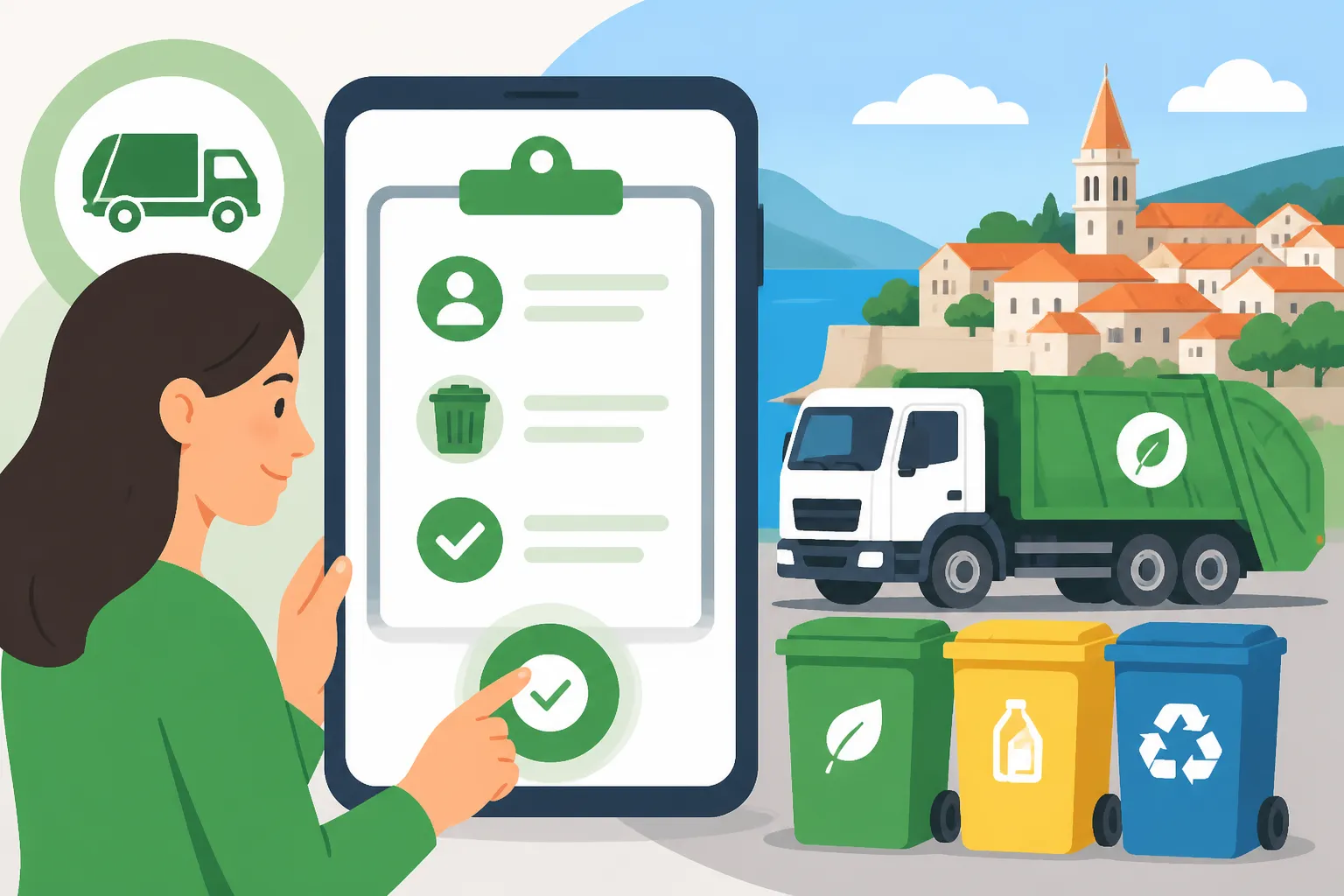
How Do I Register for Waste Collection Services in Croatia?
Oh, the joys of setting up life in Croatia! You’ve found your dream apartment, maybe even figured out how to tackle The Expat Guide to Setting Up Utilities in Croatia, but then comes the inevitable question: what do I do with the trash? It’s not just a matter of finding a bin; navigating the waste collection services in Croatia can feel like deciphering an ancient riddle, especially when every town seems to have its own unique system. Trust me, many of us expats have stood there, puzzled by an array of different colored bins or a mysterious plastic bag system. This guide is here to walk you through the ins and outs of registering for and understanding waste collection services across Croatia, ensuring you don't end up with overflowing bins or, worse, a fine!
Understanding Croatia's Waste Management System
Let's face it, when you move to a new country, mundane things like garbage collection are rarely at the top of your "exciting new life" list. But they are absolutely essential, and in Croatia, it's not a one-size-fits-all situation. The waste management system here is deeply rooted in local administration, which means what works in Zagreb might be completely different in Split, or even a small village in Istria.
The Localized Approach to Waste Collection
One of the first things you'll learn as an expat in Croatia is that a lot of public services are managed at the municipal (or grad / općina) level. Waste collection is a prime example. This means that instead of one national company, you'll be dealing with local komunalna poduzeća (communal companies). These are the unsung heroes – or sometimes, the frustrating gatekeepers – of your refuse. For instance, if you're living in the bustling capital, your waste will likely be handled by Čistoća Zagreb. Head south to Split, and you'll find another Čistoća, though it operates under different local rules and systems. In Rijeka, it's Komunalno društvo Čistoća Rijeka, and in Dubrovnik, yet another local Čistoća. Each of these entities, while sharing a similar name, might have vastly different operational procedures, collection schedules, and even sorting requirements.
This localized approach means that a new resident in Zagreb might receive a green bin for mixed waste, a blue bin for paper, a yellow bin for plastic and metal, and a brown one for bio-waste, all with specific collection days. Meanwhile, someone in Split might be primarily using special yellow bags for plastic, purchased from local supermarkets, alongside communal bins for other waste. And in smaller towns or rural areas, you might have individual bins for mixed waste and drop-off points or less frequent collections for sorted materials. This is why it’s crucial to understand that your first step is always identifying your local provider, which we'll get to shortly. Don't assume anything based on what a friend in another city told you!
Key Waste Categories and Sorting Requirements
Croatia, like many EU countries, is increasingly focused on reducing landfill waste and encouraging recycling. This means that simply throwing everything into one bin is a big no-no, and you can face penalties for not sorting correctly. The system generally categorizes waste into several key streams, and it's your responsibility to separate them diligently.
The most common categories you'll encounter are:
- Mixed Municipal Waste (komunalni otpad): This is your general, unsorted rubbish that can’t be recycled in other categories. Think food scraps (if no bio-waste bin), hygiene products, broken ceramics, etc. This usually goes into a standard green bin.
- Paper (papir): All types of clean paper, cardboard, newspapers, magazines, brochures, and paper packaging. Often collected in blue bins or bags.
- Plastic and Metal (plastika i metal): Plastic bottles, containers, bags, films, aluminum cans, metal lids. These usually go together in yellow bins or special yellow bags.
- Glass (staklo): Glass bottles, jars, and other glass packaging. Typically collected in bell-shaped or rectangular green/white containers.
- Bio-waste (bio-otpad): Food scraps, garden waste (leaves, grass, small branches), coffee grounds, tea bags. Increasingly collected in brown bins, especially in urban areas.
The importance of correct sorting cannot be overstated. Beyond the environmental benefits, improper sorting can lead to your bins not being emptied, or even fines. Many komunalna poduzeća publish detailed guides on their websites, often with illustrative images, showing exactly what goes where. Some even have QR codes on bins linking to the rules. It's a bit of a learning curve, but once you get into the habit, it becomes second nature. Remember, when you're moving, even something as simple as finding the right mobile provider to check these websites on the go is crucial; providers like Airalo can be lifesavers for staying connected without hassle.
Step-by-Step Guide to Registering for Waste Services
Alright, let's get down to brass tacks. You're in your new place, unpacked (mostly), and now you need to ensure your rubbish actually gets taken away. This process can be a little daunting, but by breaking it down, it's entirely manageable.
Identifying Your Local Waste Collection Provider
As we discussed, this is your very first, crucial step. You can't register if you don't know who to register with. Here's how you can usually figure it out:
The easiest way, by far, is to ask your landlord or the previous owner of your property. They are the best source of hyper-local information and can tell you exactly which company serves your address and often provide contact details or even the existing account number. Don't be shy about reaching out; they've been through it!
If that's not an option, take a look around your immediate neighborhood. Check the bins themselves. Waste bins often have the logo or name of the communal company emblazoned on them. Green bins might say "Čistoća" or "Komunalno poduzeće [Town Name]". This is a dead giveaway. Also, look at any public bins in the vicinity – they often share the same provider.
Another reliable method is to check your local municipality's official website (grad or općina website). They usually have a section on utility services (komunalne usluge) where they list the appointed waste management company for their jurisdiction. A quick search for "grad [Your City] odvoz otpada" (waste removal) or "komunalno poduzeće [Your City]" should point you in the right direction. Once you've identified the company, you can head directly to their website for more specific information. This is where having a reliable internet connection comes in handy. Remember, you’ll definitely need your How to Get an OIB (Personal Identification Number) in Croatia) at some point, so make sure that's sorted out.
Required Documents and Application Process
Once you know your provider, it’s time to gather your paperwork. Croatian bureaucracy often loves paperwork, and registering for waste services is no exception. While the exact list can vary slightly by company, here are the documents you'll almost certainly need:
- Proof of Ownership or Tenancy: This is paramount. If you own the property, bring your vlasnički list (property ownership certificate) or a recent copy of your deed. If you're renting, your rental contract (ugovor o najmu) is essential. Make sure it's formally registered if required by your municipality for other services, as some official bodies prefer registered contracts. This ties into your broader Registering Your Residence in Croatia: The Complete MUP Guide process, so ensure your address is properly established.
- Your OIB: Your personal identification number is crucial for almost all administrative tasks in Croatia, and waste collection is no different. It's how they link the service to you.
- Personal Identification: Your passport or Croatian residence card (boravišna iskaznica).
The application process typically involves a visit to the customer service office (poslovnica) of the communal company. It's a good idea to go during morning hours, as they tend to be less busy. When you arrive, you'll fill out an application form, present your documents, and they'll set up your account. In some larger cities, or for specific companies, you might find an option to register online or via email, but this is less common for initial setup. Always be prepared for a face-to-face visit, just in case. Don't be surprised if there's a queue – patience is a virtue when dealing with Croatian administration! If your Croatian isn't up to scratch, bring a Croatian-speaking friend. It will make the process infinitely smoother, believe me.
If you're moving into a newly built property, you'll be setting up a completely new account. If you're taking over an existing property, the process is often simpler, as you'll be transferring the service to your name. The company will likely just need to update the account holder details. This is generally preferred, as it ensures continuity of service.
Setting Up Payment and Receiving Bins/Schedule
After successfully registering, the next step is making sure you can pay and know when your rubbish will be collected.
Payment for waste collection services in Croatia usually involves monthly invoices. These can be sent to your registered address via post, or increasingly, many companies offer e-invoices sent to your email. You can typically pay these at the post office (pošta), Fina (Financial Agency), or through online banking. Many providers also offer the option to set up direct debit from your Croatian bank account, which is by far the most convenient way to handle recurring bills. It saves you the monthly trip to the post office and ensures you don't miss a payment. While the fees for waste collection are generally part of The Complete Guide to Cost of Living in Croatia for Expats (2026), they are usually very reasonable.
Regarding bins and schedules:
- For apartment buildings: You will likely use shared communal containers that are strategically placed near your building. Your building manager (predstavnik stanara) or landlord will be able to show you where these are and explain any specific rules for your building.
- For houses or smaller buildings: You might be issued individual bins for different waste types. These are usually delivered to your property after you register. Ensure you have a suitable place to store them, as they can take up a fair bit of space.
Once your account is active, you will also receive information about the collection schedule (raspored odvoza). This is vital! It specifies which type of waste (mixed, paper, plastic, bio) is collected on which day. These schedules are often printed and given to you, available on the company's website, or sometimes posted on communal notice boards. Many modern komunalna poduzeća even have smartphone apps or online calendars where you can input your address and get personalized collection reminders. Knowing your schedule is key to avoiding fines for putting out the wrong bin on the wrong day. You can find more detailed information specifically on waste separation and collection in our guide on How to Set Up Household Waste and Recycling Collection in Croatia.
Navigating Common Expat Challenges and Solutions
Let's be real: moving to Croatia is wonderful, but it also comes with its fair share of head-scratching moments. Waste management can certainly be one of them. From language barriers to confusing systems, here's how to tackle some common expat frustrations.
Language Barriers and Administrative Hurdles
Ah, the classic expat dilemma. You’re trying to understand complex rules about garbage, and the person explaining it is speaking rapid Croatian. It’s frustrating, bewildering, and can make even the simplest task feel monumental. I've been there, nodding along pretending to understand, only to walk away more confused than before!
The best solution, if your Croatian isn't quite fluent yet, is to bring a Croatian-speaking friend or colleague with you to the komunalno poduzeće office. Their assistance will be invaluable for translating documents, asking clarifying questions, and ensuring you don't miss any critical details. If that's not possible, translation apps can be a temporary lifeline, but for nuanced conversations, a human translator is always superior. Some larger city waste providers, especially in tourist-heavy areas like Split or Dubrovnik, might have English-speaking staff or at least key documents translated on their websites. It’s worth checking their 'Kontakt' or 'Customer Service' sections online. Don’t hesitate to ask if anyone speaks English when you arrive at the office – sometimes you get lucky!
Persistence is also key. Don't be afraid to politely ask for clarification if you don't understand something. It's better to ask ten times than to get it wrong and face a fine. Remember that many processes, including waste registration, are part of the larger administrative jigsaw puzzle when you're making The Complete Guide to Moving to Croatia: Your First 90 Days. It’s all part of the journey!
Understanding Different Collection Systems
Croatia's waste landscape is a patchwork of different approaches, and what works in one place might not apply to another. This can be incredibly confusing, particularly if you move between regions.
For example, in Split, many areas utilize a "yellow bag" system for plastic and metal. You purchase specific, branded yellow bags from local supermarkets or kiosks, fill them, and put them out on designated collection days. This is a form of a "pay-as-you-throw" model, where you effectively pay for the bags, which covers the collection cost. This system aims to incentivize less waste and better sorting. Contrast this with Zagreb, where most apartment blocks and houses have separate, color-coded bins (green for mixed, blue for paper, yellow for plastic/metal, brown for bio-waste). These bins are collected on a schedule, and residents pay a flat rate or a fee based on bin size, not on the number of bags.
Then there are areas where communal zeleni otoci (green islands) or recycling points are common for glass and sometimes paper/plastic, where you take your sorted waste to large, public containers. In some rural settings, the sorting might be less stringent, or collections less frequent, requiring residents to utilize regional recycling centers (reciklažna dvorišta) more often.
The crucial takeaway here is that you absolutely must verify the specific system in place for your address. Look for local signage, ask neighbors, check the communal company's website, or directly inquire at their office. Fines for incorrect sorting or using unauthorized bags are becoming more common and can range from small warnings to significant penalties. It's truly a scenario where ignorance is not bliss, but rather, costly!
Dealing with Bulky Waste and Hazardous Materials
What happens when you have an old sofa, a broken fridge, or some leftover paint cans? These aren't destined for your regular bins. Croatia has specific systems for bulky waste (glomazni otpad) and hazardous materials (opasni otpad).
For bulky waste, such as old furniture, mattresses, or large appliances, most komunalna poduzeća offer either:
- Scheduled collections by appointment: You contact them, register your item(s), and they give you a specific date to place them outside your property for pick-up. This service is often free a couple of times a year.
- Designated drop-off days/locations: Some municipalities organize specific days a few times a year where residents can bring bulky waste to a central collection point.
It's illegal to just dump bulky items by the roadside or next to regular bins, and you can be fined. Always check with your local waste provider for their specific procedure for glomazni otpad.
For hazardous materials (e.g., old paints, solvents, batteries, expired medicines, car oil), construction debris, or electronics, you'll need to use recycling yards (reciklažna dvorišta). These are specialized facilities designed to safely collect and process these types of waste. They are usually free for residents to use, but you might need to show proof of residency (like your ID and OIB). Check your local komunalno poduzeće website for the location and operating hours of your nearest reciklažna dvorišta. They're invaluable for responsible disposal and keeping Croatia beautiful!
| City/Region | Primary Waste Provider | Common Bin Types/System | Key Sorting Requirements | Special Notes for Expats |
|---|---|---|---|---|
| Zagreb | Čistoća Zagreb | Green (mixed), Blue (paper), Yellow (plastic/metal), Brown (bio) | Mandatory separation into specific bins; "pay-as-you-throw" for bio-waste | Detailed info on Čistoća website, some English content. Specific bio-waste bags might be required. |
| Split | Čistoća Split | Communal bins (mixed, glass), Yellow bags (plastic/metal), Brown bins (bio in some areas) | Yellow bags must be purchased. Bio-waste varies by location. | Yellow bags are a unique system – don't use regular plastic bags for recycling! |
| Rijeka | KD Čistoća Rijeka | Green (mixed), Blue (paper), Yellow (plastic/metal), Brown (bio) | Standard EU sorting. Focus on cleanliness of recyclables. | Good online resources, check their website for local details and schedules. |
| Dubrovnik | Čistoća Dubrovnik | Communal bins (mixed, glass), Yellow bins/bags (plastic/metal), Brown bins (bio in some areas) | Similar to Split with potential for special bags; rules can vary by urban vs. suburban. | Old Town areas have unique collection times/methods due to narrow streets. |
| Pula | Herculanea Pula | Green (mixed), Blue (paper), Yellow (plastic/metal), Brown (bio) | Emphasizes strict adherence to bio-waste separation. | Often have very localized drop-off points for specific materials. |
This table provides a snapshot, but always remember to confirm the details with your specific local provider, as systems can evolve! When you're dealing with all these new administrative steps in Croatia, resources like Sirelo can sometimes offer helpful general relocation guides, though the hyper-local specifics for waste will always come directly from your municipal provider.
Disclaimer
Please note that waste collection rules and providers in Croatia can change due to local regulations and municipal decisions. While this guide aims to provide comprehensive and up-to-date information, it is always advisable to consult the official website of your local communal waste management company or your municipality for the most current and specific details pertaining to your exact location.