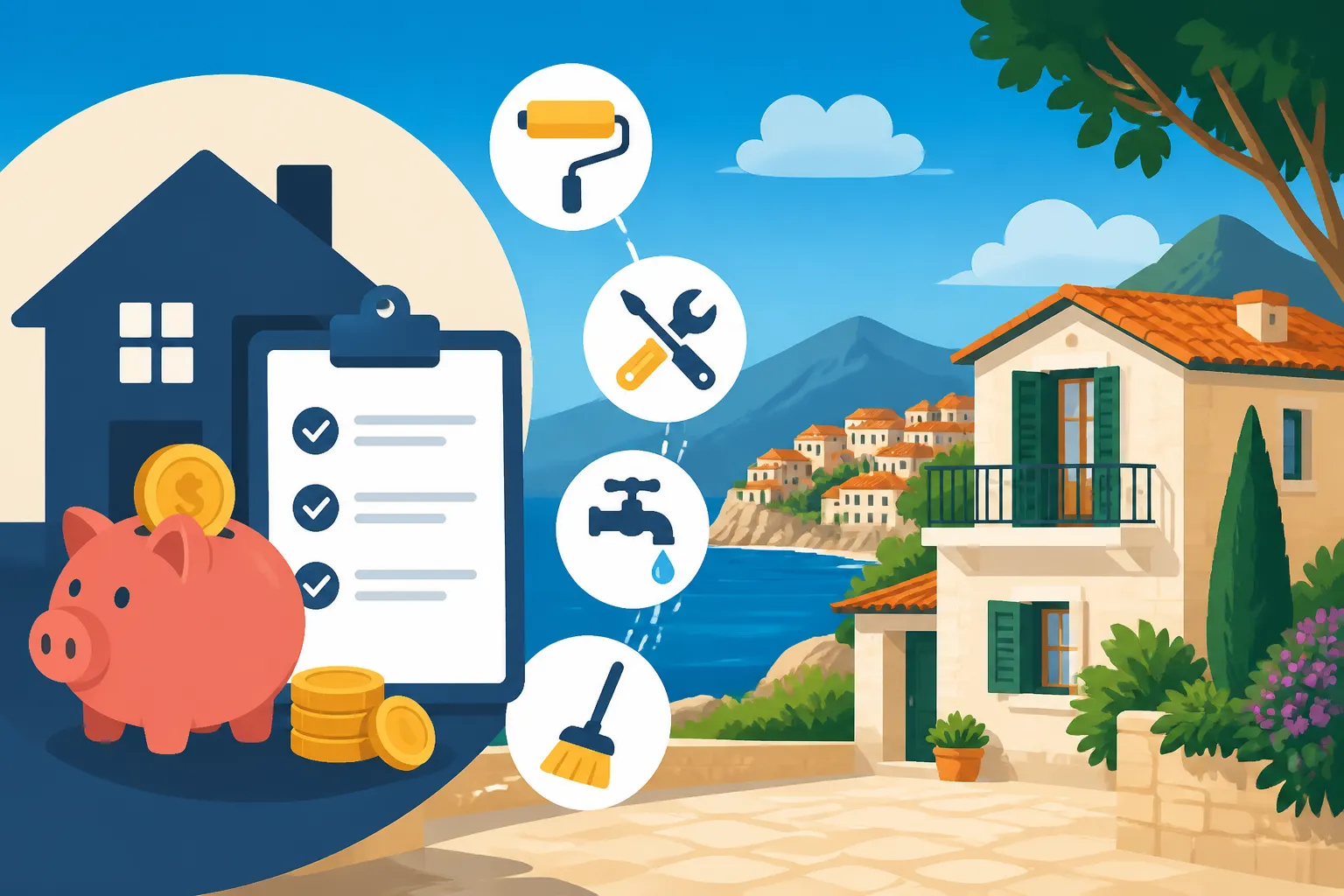
How Much Are Property Maintenance Costs in Croatia?
Buying property in Croatia can feel like a dream come true – turquoise waters, ancient towns, a slower pace of life. But beneath that idyllic surface, many of us expats quickly realize that managing a property here comes with its own set of intricacies, especially when it comes to ongoing maintenance costs. It’s not always straightforward, and what might seem like a simple repair can quickly become a bureaucratic headache or an unexpected financial drain if you're not prepared. This guide is here to shed light on exactly what you can expect in terms of property maintenance costs in Croatia, helping you budget wisely and avoid those unwelcome surprises.
The Basics of Property Maintenance in Croatia: What to Expect
When you first dive into the Croatian property market, you're often focused on the purchase price, the location, and whether that terrace has enough sun for your morning coffee. What often takes a backseat in those initial exciting moments are the recurring costs that come with owning a piece of this beautiful country. Trust me, it’s a marathon, not a sprint, and understanding these ongoing expenses is crucial for a stress-free ownership experience.
Common Maintenance Categories
Let's break down the typical categories of costs you'll encounter. These aren't just "maintenance" in the traditional sense, but the necessary financial outlays to keep your Croatian home running smoothly and legally.
Firstly, you have your basic utilities. These are non-negotiable and vary wildly depending on your usage, the size of your property, and the time of year. Think electricity (HEP), water, gas (if applicable), and of course, internet. Setting up these utilities is often one of the first tasks after moving in, and you'll find that while the base rates can be reasonable, usage quickly adds up, especially with air conditioning in the summer or heating in the winter. Don't underestimate the impact of those long, hot summers on your electricity bill if you love a cool apartment! If you're wondering how to get these essential services connected, our guide on The Expat Guide to Setting Up Utilities in Croatia offers a step-by-step walkthrough.
Then there are the communal fees, locally known as pričuva. If you own an apartment or a property within a shared complex, this is a mandatory monthly contribution to the building’s reserve fund. It covers everything from shared electricity for hallways, cleaning, minor repairs to major renovations like roof repairs or facade upkeep. We'll delve deeper into pričuva later, but for now, just know it's a fixed cost that can fluctuate slightly based on building needs. You might also encounter the komunalna naknada or communal fee, which is a local tax for public services like waste management, public lighting, and road maintenance. This isn't strictly "maintenance" for your property but a necessary cost of living in any Croatian municipality. You can learn more about this general fee in our article about Understanding the Komunalna Naknada (Communal Fee) in Croatia.
Lastly, there's insurance. While not always mandatory for homeowners (unless you have a mortgage), comprehensive home insurance is highly recommended. Croatia is prone to seismic activity, so earthquake insurance is a smart addition, often bundled with standard policies. Flooding can also be an issue in certain areas, particularly coastal regions or areas near rivers. Think of it as peace of mind; it’s a cost that feels like nothing until you suddenly really need it. Our guide on Understanding Home Insurance Options in Croatia provides excellent insights into available policies.
Regional Differences and Property Types
The "how much" question is rarely simple in Croatia, and maintenance costs are no exception. Your location and the type of property you own will significantly impact your wallet.
Coastal vs. Inland: Owning property along the Adriatic coast, while beautiful, comes with its unique challenges. The sea air, while invigorating, is corrosive. Salt and humidity can accelerate wear and tear on everything from window frames to external paintwork. Properties here, especially those rented out for tourism, often require more frequent touch-ups and robust materials. Winterization is also key for coastal homes left vacant during the colder months to prevent burst pipes or mold. In contrast, inland properties, particularly in regions like Lika or Gorski Kotar, face harsher winters with heavy snow, which can put stress on roofs and plumbing, requiring different types of maintenance and potentially higher heating costs.
Apartments vs. Houses: This is a big one. If you own an apartment, a significant portion of your external maintenance costs, like roof repairs, facade painting, or elevator servicing, are covered by your pričuva. You're sharing the burden with other owners. However, you have less control over when these works are done or which contractors are used. For a standalone house, you're solely responsible for everything – your roof, your facade, your garden, your fence, your septic tank (if applicable). This means more control but also the full financial responsibility. While it's lovely to have your own garden, remember that lawn care, pruning, and general upkeep fall entirely on you, which can be time-consuming or costly if you hire someone.
New Builds vs. Older Properties: A brand-new apartment or house often comes with a warranty on construction elements, meaning fewer immediate headaches. However, older properties, especially charming stone houses that are a quintessential part of Croatian allure, can be a money pit. They might need new plumbing, updated electrical wiring, better insulation, or even structural repairs. While they offer character, they often demand a much higher initial investment in renovation and can have ongoing, unpredictable maintenance requirements. Before you commit to that charming fixer-upper, it's wise to consult with local experts and understand the full scope of potential work. If you're still in the buying process, take a look at our comprehensive guide on How to Buy Property in Croatia as a Foreigner: The Full Guide (2027).
Understanding Communal Fees (Pričuva) and Building Management
One of the most commonly misunderstood aspects for expats buying apartments or units in shared buildings is the pričuva. It’s a vital part of property ownership here, and understanding it is key to avoiding frustration.
What is Pričuva and How is it Calculated?
The pričuva is a mandatory monthly contribution paid by all owners in a multi-unit building. Its purpose is to create a collective fund for the maintenance, repair, and general upkeep of common parts of the building. This isn't just a nicety; it's legally required by the Law on Ownership and Other Real Rights.
What does it cover? Typically, it includes:
- Maintenance and repair of common structural elements: the roof, facade, foundations, main walls, chimney.
- Upkeep of common installations: main water pipes, electrical systems, sewage, heating (if central), elevators, intercoms.
- Cleaning and lighting of common areas: hallways, stairwells, entrances.
- Administrative costs: fees for the building manager, insurance for common parts.
- Sometimes, minor landscaping of shared green spaces.
The calculation of pričuva is usually based on the usable surface area (square meters) of your apartment, plus a small coefficient for common areas. So, a larger apartment will pay more than a smaller one. The specific rate per square meter is decided by the building’s co-owners, often in consultation with the building manager, and it needs to be enough to cover current expenses and build up a reserve for future major repairs. For example, you might pay anywhere from €0.50 to €1.50 (or more for luxury buildings with extensive amenities) per square meter each month. This means a 60 sqm apartment could pay €30-€90 per month. This fee is non-negotiable and must be paid, even if you don't use the apartment. If you're diving deeper into this specific cost, our article How Do I Pay the Pričuva (Building Reserve Fund) in Croatia? will be incredibly helpful.
The Role of the Building Manager (Upravitelj)
Every apartment building in Croatia must have a building manager, known as an upravitelj. This can be an individual chosen from among the owners (the predstavnik stanara) or, more commonly, a professional management company. Their role is pretty comprehensive, acting as the administrative and operational hub for your building.
Their responsibilities generally include:
- Collecting pričuva payments and managing the building’s finances.
- Organizing and overseeing routine maintenance and repairs.
- Negotiating contracts with service providers (cleaners, electricians, plumbers).
- Ensuring compliance with legal requirements (e.g., elevator inspections, fire safety).
- Facilitating communication among owners and addressing common concerns.
- Preparing annual financial reports on the pričuva fund.
For expats, dealing with the upravitelj can sometimes be a challenge. Language barriers are often the first hurdle, as many older predstavnici or even smaller local management companies might not operate in English. Transparency can also be an issue; while they are legally required to provide financial reports, sometimes getting clear, detailed breakdowns of expenses can feel like pulling teeth. It's crucial to try and engage with your building's co-owners and the upravitelj to understand where your money is going and to advocate for necessary improvements or repairs. Don't be afraid to ask for explanations, even if it means finding a Croatian-speaking friend to help you translate.
Anticipating Major Repairs and Unexpected Costs
Beyond the regular monthly outlays, the true test of your maintenance budget comes with the big, unforeseen expenses. Croatia, like any country, has its quirks and its climate can be tough on buildings over time.
Wear and Tear: Roofing, Facades, and Utilities
Buildings, like people, age. Components degrade, systems fail, and eventually, things need to be replaced. For apartments, major items like roof replacement, facade renovation, or elevator modernization are typically funded by the accumulated pričuva. However, if the fund isn't robust enough, or if an urgent, extensive repair is needed, owners might be asked to contribute an additional special assessment, known as an izvanredni popravak. This can be a significant lump sum, so it’s always wise to ask about the state of the pričuva fund and any planned major works when buying an apartment.
For house owners, these costs fall entirely on your shoulders. A new roof, for instance, can cost tens of thousands of euros depending on the size and materials. The lifespan of a roof can be 20-50 years, but harsh weather can shorten that. Facade issues, like cracking or dampness, can lead to costly repairs and re-insulation.
Internal utility systems are another big one. A burst pipe in the wall, a leaking water heater, or an aging electrical panel can cause immediate damage and require urgent, often expensive, professional help. These are the moments you'll be glad you budgeted for an emergency fund. Finding reliable, English-speaking tradespeople can also be a challenge, so start building a network of trusted contacts (plumbers, electricians, handymen) as soon as you can.
Seasonal and Climate-Specific Maintenance
Croatia’s diverse climate means your property will face different stresses depending on the season and region.
Winterization: If your property is in a colder inland area, or if it's a coastal holiday home that will be left vacant for the winter, proper winterization is crucial. This includes draining water pipes to prevent freezing and bursting, ensuring heating systems are serviced, and checking for drafts or insulation issues. Neglecting this can lead to catastrophic damage and huge repair bills once spring arrives.
Summer Maintenance: The scorching summer heat puts stress on air conditioning units, which need regular servicing to run efficiently. Gardens and outdoor spaces require constant watering and upkeep to survive the dry months. If your property is rented out for tourism, the high turnover means more frequent cleaning, minor repairs from guest wear-and-tear, and vigilant oversight to maintain quality standards.
Coastal Specifics: We touched on it earlier, but the coastal environment really does take a toll. Beyond salt corrosion on metals and paint, you might find issues with dampness and mold in poorly ventilated properties, especially during humid periods. Regular airing, dehumidifiers, and good quality building materials designed for marine environments are important considerations.
Strategies for Managing and Budgeting Maintenance Costs
Feeling a bit overwhelmed? Don't worry, you’re not alone. Many expats initially underestimate these costs. But with a proactive approach and a smart budget, you can manage your Croatian property with confidence.
Creating a Realistic Budget
One common rule of thumb for property owners globally is to budget 1% to 3% of your property’s value annually for maintenance. So, for a €200,000 property, that's €2,000 to €6,000 per year. This might sound like a lot, but it’s a contingency fund that covers everything from those small, recurring expenses to saving up for big-ticket items like a new roof or facade work.
When creating your budget, consider these variables:
- Age of Property: Older properties will naturally demand a higher percentage for maintenance. If you bought a charming 100-year-old stone house, expect to invest more.
- Location: Coastal properties or those in regions with extreme weather variations often require more robust and frequent maintenance.
- Usage: Is it a full-time residence, a holiday home, or a rental property? Rental properties will typically incur higher wear and tear and require more immediate attention to repairs.
- Property Type: As discussed, houses generally mean higher individual responsibility and costs compared to apartments where some expenses are shared.
Don't just think about what you hope to spend, but what you might need to spend. It’s always better to over-budget slightly than to be caught off guard. Building an emergency fund specifically for property issues is a financially sound decision. This way, if your water heater decides to give up the ghost, you're not scrambling to find funds.
Finding Reliable Help and Services
Once you’ve got your budget sorted, the next hurdle is finding people to do the actual work. This is where local knowledge and a good network become invaluable.
Local Recommendations and Word-of-Mouth: This is often the best way to find reliable contractors in Croatia. Ask your neighbors, local friends, or fellow expats who they use and trust. A good, honest handyman (majstor) is worth their weight in gold! Online expat groups for cities like Zagreb, Split, or Dubrovnik are also great places to ask for recommendations.
Language Considerations: Be prepared for potential language barriers. While younger tradespeople or those in tourist areas might speak some English, it’s not guaranteed. Having a Croatian-speaking friend, neighbor, or even a professional translator to assist with initial calls, quotes, and explaining the scope of work can prevent misunderstandings and ensure you get what you pay for. Always get quotes in writing, ideally with a clear breakdown of costs and timeline.
Vetting and Quotes: Always get at least two, preferably three, quotes for any significant work. Don't automatically go with the cheapest option; sometimes paying a little more for a reputable, insured professional saves you headaches and bigger repair bills down the line. Check if they are registered (obrt) and ask for references if possible. Unfortunately, cowboy builders exist everywhere, and Croatia is no exception. A bit of due diligence goes a long way.
Managing a property in Croatia as an expat can be a learning curve, but it’s an incredibly rewarding one. By being prepared for the various maintenance costs – from the regular pričuva and utility bills to the larger, unforeseen repairs – you can ensure your beautiful Croatian home remains a source of joy, not stress.
| Category | Apartment (shared) | House (individual) | General Cost Factors |
|---|---|---|---|
| Communal Fees (Pričuva) | Mandatory, based on sqm. Covers common areas. | Not applicable | Building age, amenities (elevator), management company |
| Utilities | Individual meters for electricity, water, gas. | Individual meters for electricity, water, gas. | Usage, insulation, season, number of residents |
| Property Tax | Annual komunalna naknada and potential new property tax. | Annual komunalna naknada and potential new property tax. | Municipality, property size, location |
| Insurance | Individual home insurance for interior. | Comprehensive home and earthquake insurance highly recommended. | Property value, coverage level, provider |
| Roof Maintenance | Covered by pričuva (major repairs). | Full individual responsibility. | Roof material, age, size, weather exposure |
| Facade Maintenance | Covered by pričuva (major repairs). | Full individual responsibility. | Material, age, size, weather exposure, insulation |
| Garden/Yard Upkeep | Shared responsibility or not applicable. | Full individual responsibility (mowing, pruning, etc.) | Garden size, complexity, whether professional help is hired |
| Internal Repairs | Full individual responsibility (e.g., plumbing, electrical inside unit). | Full individual responsibility. | Extent of damage, material cost, labor cost |
| Emergency Fund | Highly recommended for internal issues or special assessments. | Essential for all major and minor repairs. | 1-3% of property value annually (rule of thumb) |
Disclaimer
Please remember that the information provided in this guide is for general informational purposes only and does not constitute legal, financial, or real estate advice. Laws and regulations in Croatia, particularly concerning property and taxes, can change and may vary by municipality. It is always recommended to consult with local legal professionals, tax advisors, and reputable real estate experts for advice tailored to your specific situation when buying, owning, or maintaining property in Croatia.