How Do I Get an OIB Before Renting an Apartment in Croatia?
Ah, the OIB. If you've just arrived in Croatia or are planning your move, you've likely already heard whispers about this mystical number. The challenge often hits when you realize you need an OIB (Osobni Identifikacijski Broj) for almost every administrative step, including renting an apartment, but sometimes you feel like you need an address first to get the OIB. It's a classic expat chicken-and-egg situation that can feel incredibly frustrating. Don't worry, this guide will walk you through how to navigate this particular bureaucratic dance, ensuring you get your OIB so you can smoothly secure your Croatian home.
The OIB: Your Personal Identification Number in Croatia
Let's clear the air on what an OIB actually is, because without truly understanding its pervasive nature, it's hard to grasp why it's such a bottleneck. The OIB is essentially your personal identification number in Croatia, similar to a Social Security Number in the US, a National Insurance Number in the UK, or a JMBG/MBG in other Balkan countries. It's unique to you and is used for everything that involves official records, finances, and transactions.
Why Your OIB is Essential for Renting
You might be thinking, "Can't I just sign a lease with my passport?" The short answer is, not really, or at least not properly. For any legitimate, long-term rental agreement in Croatia, especially one that needs to be registered with the tax authorities (which it absolutely should be for your protection and the landlord's), an OIB is non-negotiable.
When you sign a rental contract, both you (as the tenant) and the landlord (as the lessor) need to have OIBs listed. This contract then needs to be reported to the Porezna Uprava (Tax Administration) within a specific timeframe. This isn't just a formality; it links you to the address for official purposes, enables the landlord to declare rental income, and crucially, allows you to then use that registered address as proof of residence for other administrative tasks, like registering with the MUP for your residence permit. Without an OIB, this foundational step is effectively blocked, leaving you in a kind of bureaucratic limbo where your presence in Croatia isn't officially recorded at an address.
The OIB's Role Beyond Renting
It’s not an exaggeration to say that your OIB is the foundation for almost every administrative interaction you'll have here. Want to open a bank account? You'll need an OIB. Thinking of buying property? OIB. Setting up utilities like electricity (HEP) or internet? OIB. Even for things like getting a local mobile plan or a loyalty card at a supermarket, you'll often be asked for it. This ubiquity is precisely why getting it sorted early is paramount, even if it feels like an uphill battle at first. Understanding this gives you the motivation to push through the initial hurdles.
Navigating the Catch-22: OIB Without a Permanent Address
Here’s where the "chicken and egg" really comes into play. Officially, when applying for your OIB at the Porezna Uprava, they prefer to see a Croatian address. However, how are you supposed to have a stable, registered address if you can't properly sign a lease without an OIB? This is a common point of frustration for many newcomers, and it's where knowing the workarounds makes all the difference.
The Official Stance and the Reality
The Croatian Tax Administration’s official line is that if you are a foreign national, you will receive your OIB at the place of your first registered residence in Croatia. This implies you need to already have an address. However, they also process OIB requests for individuals who don't yet have an official residence in Croatia, recognizing that the OIB is often a prerequisite for obtaining one. The key here is presenting your case correctly and understanding the nuances of how these offices operate. Sometimes, what's written in a manual isn't exactly how it plays out on the ground, and persistence, along with the right documents, is your best friend.
Workaround 1: Using a Temporary or Informal Address
One of the most common and successful strategies is to use a temporary address for your OIB application. This doesn't have to be your long-term rental, but it needs to be an address where you can legitimately receive mail, or at least one that the Porezna Uprava will accept as your contact point.
- A Friend's or Family Member's Address: If you're lucky enough to have friends or family in Croatia, they can often provide a "contact address" for your OIB application. You might need a letter from them stating that you are staying with them temporarily or that they permit you to use their address for correspondence. This informal arrangement is often understood and accepted.
- Hostel/Hotel with a Receipt: For many, the first few days or weeks are spent in temporary accommodation. If you have a booking confirmation or a receipt from a hostel, hotel, or even a short-term Airbnb-style rental, this can sometimes suffice as a temporary address. The key is having some official-looking document with a Croatian address and your name on it. Just be prepared that this might require a bit more explanation or a more lenient civil servant at the Porezna Uprava.
- The Power of a "Pre-Contract": In some cases, if you've found a landlord willing to work with you, they might provide a "pre-contract" or a letter of intent to rent. This isn't a full, legally binding lease, but it states their intention to rent the property to you, pending your OIB acquisition. While less common, some foreign residents have successfully used this to demonstrate a forthcoming address.
Workaround 2: Applying for Your OIB from Abroad (via Consulate)
If you're still in your home country or another EU/Schengen country and want to get your OIB sorted before you even set foot in Croatia, you can apply for it through a Croatian consulate or embassy. This method eliminates the address issue entirely, as you're not yet residing in Croatia.
The process typically involves submitting your request along with a copy of your passport and the application form (Zahtjev za određivanje i dodjelu OIB-a). The OIB will then be issued and can usually be mailed to your address abroad or picked up at the consulate. The downside is that this can take longer due to international mail and processing times, and not all consulates are equally efficient. However, for those who prefer to have all their ducks in a row before arrival, it’s a solid option. Remember, if you use this method, you'll still need to register your actual residence with the MUP once you arrive in Croatia and find your long-term home. For more details on the OIB itself, you might find the guide on How to Get Your OIB and Why It Matters for Healthcare Access helpful.
Step-by-Step: Getting Your OIB at the Tax Administration (Porezna Uprava)
So, you’re in Croatia, you have your temporary address strategy, and you're ready to tackle the Porezna Uprava. Let's break down the process.
Required Documents: Don't Forget a Thing!
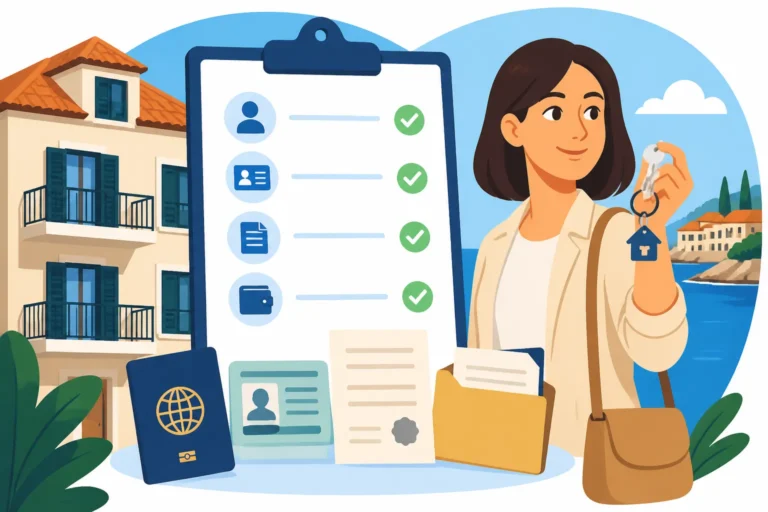
This is Croatia, so bringing extra documents is always better than being sent away for missing one. Here's what you'll typically need:
- Valid Passport or ID Card: Original and a photocopy. This is your primary identification.
- Application Form (Zahtjev za određivanje i dodjelu OIB-a): You can usually download this from the Porezna Uprava website or get a physical copy at the office. Fill it out completely.
- Proof of Address (if applicable):
- If you have a registered residence: Your MUP-issued certificate of residence (Potvrda o prebivalištu/boravištu).
- If using a temporary address (workaround): A copy of your hotel/hostel booking, a letter from a friend/family member confirming your temporary stay, or a pre-contract/letter of intent from a landlord. Ensure it has the full Croatian address.
- Proof of Purpose (sometimes requested): While not always strictly required for the OIB itself, showing why you need it (e.g., a printout of an apartment listing you're interested in, a letter from a potential employer, or even just stating "renting an apartment" clearly) can help clarify your situation to the civil servant.
| Document Type | Description | Notes |
|---|---|---|
| Valid ID | Passport or national ID card (for EU citizens) | Original and a clear photocopy. Ensure it's not expired. |
| Application Form | "Zahtjev za određivanje i dodjelu OIB-a" | Download from Porezna Uprava website or ask at the counter. Fill in accurately. |
| Proof of Address | (Most crucial for the "before renting" scenario) | Could be a temporary hotel/hostel booking, a letter from a friend/family confirming temporary stay, or a landlord's letter of intent/pre-contract. If you've already found a place, a draft lease might work. The address needs to be clearly stated. |
| Purpose (Optional) | Explanation of why you need the OIB (e.g., "for renting an apartment," "to open a bank account," "for work") | Not always asked for, but good to have a clear, concise reason. |
| Power of Attorney | If someone is applying on your behalf | Must be notarized and clearly state permission for OIB application. This is generally for those applying from abroad or who cannot attend in person. |
Finding the Right Office and What to Expect
You need to visit a regional office of the Porezna Uprava (Tax Administration). In larger cities like Zagreb, Split, Rijeka, or Dubrovnik, there will be multiple branches. You can generally go to any one of them that handles citizen services. Just search "Porezna Uprava [Your City]" on Google Maps.
Expect the typical Croatian administrative office experience:
- Queues: Patience is key. Take a number (if available) or ask where to queue.
- Language Barrier: While many civil servants speak some English, it's not guaranteed. Having a Croatian speaker with you can be a huge advantage. If not, have your request written down clearly in Croatian: "Trebam OIB za najam stana" (I need an OIB for renting an apartment).
- Persistence: Don't be disheartened if the first person you speak to says no or gives you conflicting information. Politely ask to speak to a supervisor or try a different office if you encounter a brick wall. This isn't common, but it can happen, especially with less straightforward cases like using a temporary address.
Once your application is submitted and approved (often on the spot, or within a few days), you'll receive a paper document with your OIB. This is the official proof! Don't lose it. While you'll rarely need the physical paper after memorizing the number, it's good to have for your records. For further details on the documents needed, check out What Documents Do I Need to Get an OIB in Croatia?
Securing Your Rental Once the OIB is in Hand
Congratulations! You have your OIB. Now you're ready to formalize your rental agreement. This is a critical step, not just for having a roof over your head, but for establishing your legal residence in Croatia.
Formalizing Your Lease Agreement
With your OIB, you can now sign a proper rental contract (Ugovor o najmu stana/kuće). Ensure this contract is comprehensive and includes:
- Your full name and OIB.
- The landlord's full name and OIB.
- The exact address of the property.
- Start and end dates of the lease.
- Monthly rent amount.
- Details about utilities: Who is responsible for setting them up and paying them (typically the tenant). The guide on The Expat Guide to Setting Up Utilities in Croatia can help here.
- Security deposit amount and conditions for its return.
- Notice period for termination.
- Inventory of furniture/appliances (if furnished).
Read everything carefully. If you don't understand Croatian, insist on getting an English translation or bring a trusted translator with you. Don't rush into signing anything you don't fully comprehend. You can also consult resources like The Complete Guide to Renting an Apartment in Croatia (2027) for more comprehensive advice on leases.
Registering Your Lease with the Tax Administration
After signing, your landlord is legally obliged to register the lease with the Porezna Uprava. This is important for both of you. For the landlord, it's how they declare their rental income and pay taxes on it. For you, it's crucial proof of your official residence. This registered lease document will be indispensable when you go to the MUP to register your actual residence, a vital step for your residence permit. The process for How to Register a Rental Lease with the Croatian Tax Administration is something your landlord should handle, but it's good for you to be aware of it.
Registering Your Residence (Prijava Boravišta/Prebivališta) with the MUP
Once your lease is signed and registered, the very next step is to head to the MUP (Ministry of Interior) to register your address. This is the final step in solidifying your official presence in Croatia and getting your residence permit. The MUP will need your OIB, your signed and (ideally) registered rental contract, and your passport. For EU citizens, this is your "Prijava Boravišta" or "Prijava Prebivališta." For non-EU citizens, it's part of your residence permit application. This is a crucial administrative link, and you can learn more about it in Registering Your Residence in Croatia: The Complete MUP Guide.
Staying Connected While You Navigate Bureaucracy
While you're running around getting your OIB and then finding an apartment, staying connected is incredibly important. You'll need your phone to arrange appointments, communicate with potential landlords, and use navigation apps to find the various administrative offices.
Consider getting a local Croatian SIM card or an eSIM as soon as you arrive. Companies like Hrvatski Telekom, A1, and Telemach are the main providers here, offering various prepaid options. If you prefer the flexibility of an eSIM, especially for shorter stays or if you're bouncing between countries, services like Airalo can be a lifesaver. An eSIM allows you to get online immediately without hunting for a physical SIM card, which means you can always search for the nearest Porezna Uprava or contact a landlord.
Similarly, if you're planning a full move, don't let the OIB process deter you from planning your logistics. Coordinating with international moving companies like Sirelo might feel premature if you don't have a fixed address, but it's all part of the expat juggle. Many people start discussions and get quotes even before they secure their permanent residence, adjusting dates as their OIB and rental search progresses. It’s all about parallel processing when moving abroad!
Conclusion: Patience and Preparation Pay Off
Getting your OIB before or during the apartment hunting process in Croatia can feel like an unnecessary hurdle, adding stress to an already complex move. However, with a clear understanding of its importance, knowing the potential workarounds, and preparing your documents meticulously, you can navigate this bureaucratic requirement successfully. Remember that the system, while sometimes rigid, is designed to bring order. Your persistence and a little bit of strategic thinking will get you through it. Soon enough, you'll have your OIB in hand, your apartment keys jingling, and you'll be one step closer to making Croatia your true home.
Disclaimer
The information provided in this guide is for general informational purposes only and does not constitute legal or financial advice. While we strive to keep the information up-to-date and accurate, administrative procedures in Croatia can change. Always consult official government sources, legal professionals, or the relevant authorities (such as the Porezna Uprava or MUP) for the most current and specific advice pertaining to your individual situation.