How Do I Get a Croatian SIM Card as a New Arrival?
Ah, the sweet relief of stepping off the plane, the warm Croatian air hitting your face, and then… the sudden, sinking realization: "How am I going to tell my family I landed safely? And where's the nearest Wi-Fi?!" Trust me, I've been there. Getting a local SIM card in Croatia as a new arrival feels like a rite of passage, a small but significant hurdle in your grand expat adventure. This guide is here to walk you through exactly how to get connected, cutting through the confusion and making sure you can call, text, and surf without breaking the bank.
The Immediate Need: Why a Local SIM is Your First Friend in Croatia
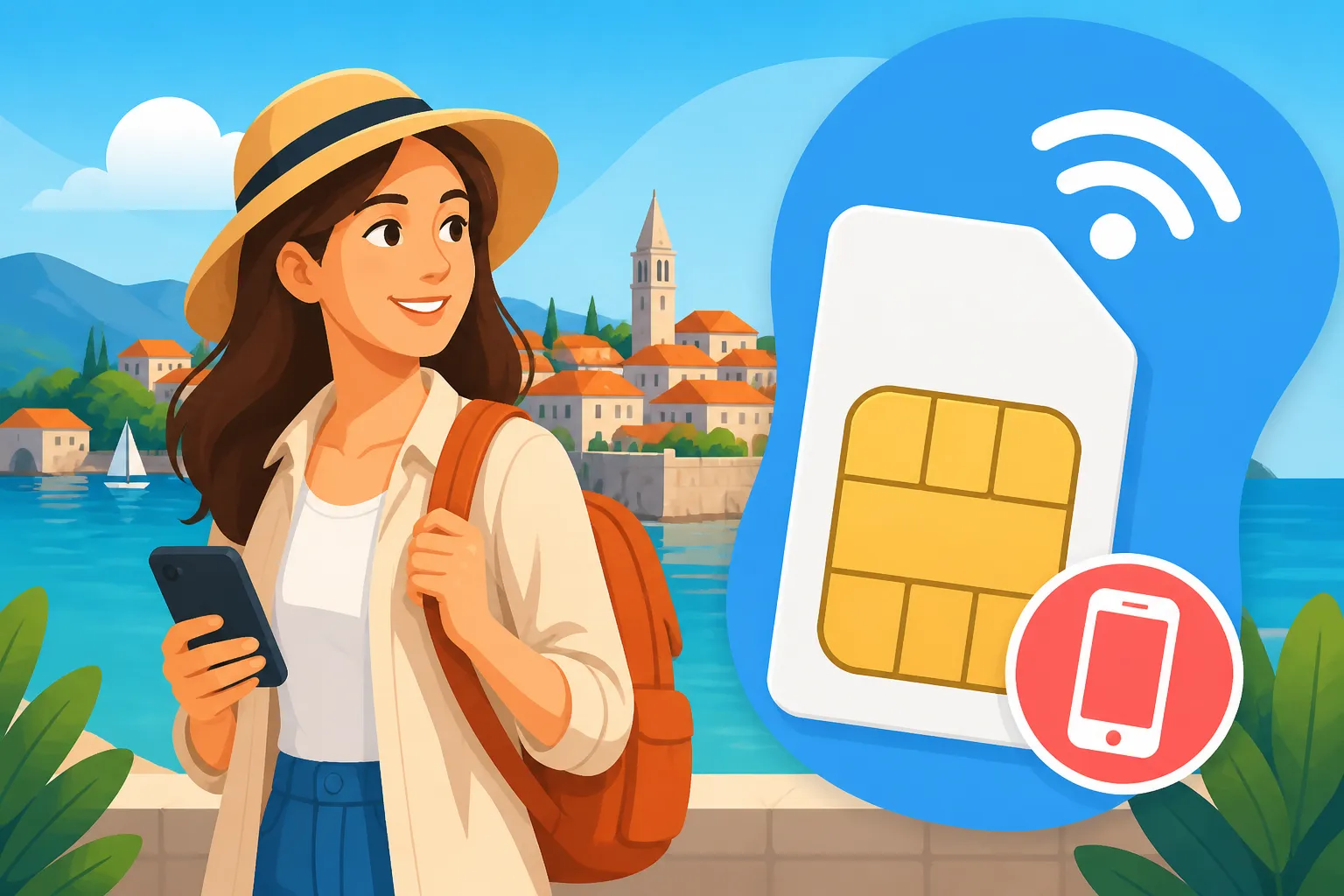
When you first land in Croatia, whether you're touching down in Zagreb, Split, or Dubrovnik, the last thing you want is to be hunting desperately for public Wi-Fi or racking up exorbitant roaming charges. Your phone is your lifeline – for navigation, translation, contacting new landlords, or simply telling your mum you're okay. A local Croatian SIM card isn't just a convenience; it's practically an administrative necessity and your first step towards feeling truly settled.
Why Ditch Roaming Charges? The Croatian Connection
Let's be brutally honest: international roaming charges are often designed to make you wince. I've heard horror stories from friends who thought their home plan would cover them "just for a little while" and ended up with bills that rivaled a month's rent. Even within the EU, while roaming is often included, sometimes the data caps can be surprisingly restrictive, especially if you're planning on living here long-term and relying on your phone for everyday life.
Getting a Croatian SIM immediately grounds you in the local network, offering significantly cheaper call rates, more generous data allowances, and the ability to easily communicate with local contacts. Imagine needing to call your new landlord, arrange an appointment at the MUP, or book a taxi – doing this on an international number is not only expensive but can also be a hassle for the person on the other end. A local number makes you feel, well, local. It shows you're committed to making this place home, even if you're just here for an extended stay. Plus, for those initial days, it means you can use your favourite apps like WhatsApp or Viber without constantly worrying about data usage, which is key for staying connected to friends and family back home.
Prepaid vs. Postpaid: What's the Right Fit for a Newbie?
When it comes to Croatian SIM cards, you generally have two choices: prepaid (na bonove) or postpaid (pretplata). For most new arrivals, especially those still finding their feet, prepaid is almost always the way to go.
Prepaid (Na Bonove): This is your best friend for the first few weeks or months. You buy the SIM card, load it with credit (known as 'bon'), and then use that credit for calls, texts, or data bundles. Once the credit is gone, you top up. It's fantastic for budgeting, as you can only spend what you've loaded, and there are no contracts or long-term commitments. You don't need to provide an OIB or a permanent address, which is a massive relief when you've just arrived and are still navigating the administrative labyrinth of How Do I Get an OIB (Personal Identification Number) in Croatia? or Registering Your Residence in Croatia: The Complete MUP Guide. Most prepaid SIMs are ready to use almost instantly after purchase, sometimes even bundled with a decent amount of initial data and minutes to get you started.
Postpaid (Pretplata): This is more akin to a traditional phone contract. You pay a monthly fee, usually via direct debit from a Croatian bank account, and in return, you get a set amount of data, minutes, and texts. While postpaid plans often offer better value for money in the long run, especially with more extensive data packages, they come with a few catches for new expats. You'll typically need:
- An OIB: Your personal identification number.
- Proof of Address: A rental contract or utility bill in your name.
- A Croatian Bank Account: For setting up direct debits.
- Sometimes a Credit Check: Which can be tricky without a local credit history.
As you can see, these requirements usually mean postpaid plans are for those who have been in Croatia for a while and have settled into their administrative life. For your first steps, stick with prepaid. You can always switch later once you've got all your ducks in a row. For comprehensive guides on everything from banking to residency, check out resources like Banking in Croatia: A Complete Guide for Foreigners or The Complete Guide to Moving to Croatia: Your First 90 Days.
Where to Snag Your First Croatian SIM Card
The good news is that getting a prepaid SIM in Croatia is relatively straightforward. There are multiple places to grab one, each with its own level of convenience and potential for human interaction (which, depending on your Croatian language skills and current stress levels, can be a pro or a con!).
The Grand Arrival: Airport, Kiosk, or Supermarket?
Your very first opportunity to get connected might come right at the airport. Major airports like Zagreb (Franjo Tuđman Airport), Split, and Dubrovnik usually have small kiosks or newsstands that sell prepaid SIM cards from the main providers. This is often the most convenient option if you want to be connected immediately upon landing. However, be aware that airport prices can sometimes be slightly inflated, and the staff might be rushed, meaning less time for detailed explanations. Still, for instant connectivity, it's a solid choice.
Beyond the airport, your options broaden considerably:
- Tisak Kiosks: These ubiquitous green kiosks are everywhere in Croatia, like a small corner shop on every block. They sell everything from newspapers and cigarettes to bus tickets and, yes, prepaid SIM cards. It’s a quick and easy way to get connected. Just ask for a "SIM kartica na bonove" (prepaid SIM card) and specify your preferred provider if you have one. They usually stock the starter packages from Hrvatski Telekom, A1, and Telemach.
- Supermarkets: Large supermarkets like Konzum, Lidl, Plodine, and Kaufland also sell prepaid SIM cards. They're usually located at the customer service desk or near the checkout. These often come in starter packs that include some initial credit or data, which is a great bonus.
- Petrol Stations: If you're arriving by car or stopping for fuel, most petrol stations, such as Ina, Crodux, and Petrol, will also have prepaid SIM cards available for purchase. Again, a convenient option if you're on the move.
The beauty of these options is that they don't typically require ID for a prepaid SIM, though it's always wise to have your passport or ID card on hand just in case. You literally just pick up a starter pack, pay, and you're good to go.
Visiting Official Storefronts: A Deeper Dive into Providers
While kiosks and supermarkets are great for convenience, visiting an official store of a mobile provider can offer more comprehensive service, especially if you have questions or want to compare packages. Croatia has three main mobile operators:
- Hrvatski Telekom (HT): This is the largest provider in Croatia, often considered to have the best coverage, especially in more rural areas. They have numerous stores in cities and towns. Their prepaid brand is called "Simpa" or "bonbon" (which is a digital-first sub-brand popular with younger users for its flexible bundles).
- A1 Hrvatska: A strong competitor to HT, A1 also offers excellent coverage and a variety of prepaid plans. They have a solid network of stores and good customer service. Their prepaid options are generally well-regarded.
- Telemach Hrvatska: Previously known as Tele2, Telemach is the third major player. They often compete aggressively on price, offering very attractive data-heavy prepaid packages. Their network has improved significantly over the years and is quite reliable in most populated areas.
Visiting one of these stores gives you the chance to speak directly with staff, albeit potentially in Croatian (though many in larger city stores will speak English). You can ask about current promotions, data bundles, and topping-up procedures. They can also help you activate the SIM card if you run into any issues. This is particularly useful if you're exploring How to Set Up Mobile and Internet Provider in Croatia for a more permanent solution and want to compare options face-to-face.
eSIMs for the Tech-Savvy Expat
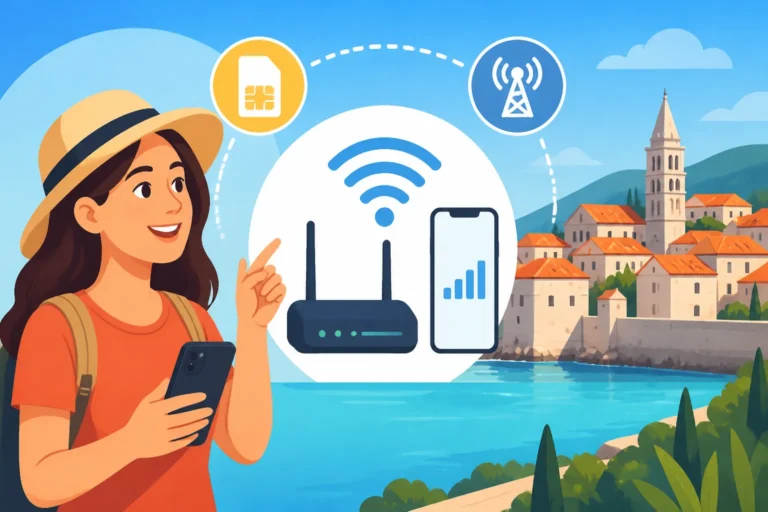
For those who are a bit more tech-savvy and want to hit the ground running with connectivity the moment their plane lands, an eSIM might be your perfect solution. An eSIM (embedded SIM) is a digital SIM that allows you to activate a cellular plan without needing a physical SIM card. Many newer smartphones support eSIM technology.
Services like Airalo or other international eSIM providers allow you to purchase and download an eSIM profile for Croatia before you even leave your home country. This means that as soon as you land and turn off airplane mode, your phone can connect to a local Croatian network, giving you instant data access. This is fantastic for those initial few days for navigation, checking emails, and coordinating arrival logistics without any fuss or hunting for physical SIM cards.
Pros of eSIMs for New Arrivals:
- Instant Connectivity: No need to find a store or kiosk.
- Convenience: Purchase and activate from anywhere.
- Dual SIM Capability: You can often keep your home country's physical SIM active for receiving calls/texts while using the eSIM for data in Croatia.
- Budget Control: Typically prepaid data packages.
Cons:
- Data Only: Most international eSIMs are data-only, meaning you won't get a Croatian phone number for calls and texts. This will eventually be a necessity for administrative tasks, but it's perfect for a soft landing.
- Device Compatibility: Only works with eSIM-compatible phones.
- Slightly Higher Cost: Data packages might be a bit more expensive per GB compared to local physical prepaid SIMs, but the convenience often outweighs the cost for the first week or two.
Consider an eSIM for your immediate arrival data needs, and then pick up a physical local prepaid SIM for calls, texts, and potentially better value data once you're more settled.
Activating and Topping Up Your New Croatian SIM
So, you’ve got your shiny new Croatian SIM card. Now what? Getting it activated and ensuring you know how to keep it topped up are your next crucial steps to uninterrupted connectivity.
The (Usually Simple) Activation Process
For most prepaid SIM cards purchased from kiosks, supermarkets, or official stores, the activation process is surprisingly simple, often happening automatically.
- Insert the SIM: Carefully open your phone's SIM tray and insert the new Croatian SIM card. Modern SIM cards are usually multi-format (standard, micro, nano) – just pop out the size you need.
- Turn On/Restart Your Phone: Your phone might automatically detect the new network. If not, restart it.
- Enter PIN (if prompted): The SIM card usually comes with a default PIN printed on the card holder. Enter this if prompted.
- Receive Welcome SMS: You'll typically receive a welcome SMS from the provider, confirming your new Croatian number and sometimes outlining initial credit/data or instructions.
- Check Balance/Activate Initial Package: Many starter packs come with pre-loaded credit or a basic data bundle. You can usually check this by dialing a short code (e.g.,
*100#for HT Simpa,*101#for A1,*123#for Telemach – these codes are generally provided with the SIM pack or on the provider's website). You might need to send a specific SMS to activate a pre-loaded bundle, so read the instructions carefully.
In rare cases, especially if you've bought a SIM that needs registration (which is more common for postpaid or if there are specific promotional offers), you might need to visit an official store with your ID. However, for standard prepaid na bonove, it's usually plug-and-play. If you run into any issues, don't hesitate to pop into the nearest Hrvatski Telekom, A1, or Telemach store for assistance. Even with a language barrier, a simple "aktivacija SIM kartice" and showing them your phone usually gets the message across.
Keeping Your Credit Alive: Topping Up Options
Once your initial credit runs out, you'll need to 'top up' your SIM card. This process is called "nadoplata bona" or simply "kupiti bon" (buy a voucher). There are several convenient ways to do this across Croatia:
- Kiosks (Tisak): The most common and easiest method. Just go to any Tisak kiosk and ask for a "bon" for your provider (e.g., "bon za A1" or "bon za HT"). You'll specify the amount (e.g., 5, 10, 20, 50, 100 EUR). They'll print a voucher with a code. You then scratch off the code and dial it on your phone (e.g.,
*123*CODE#for Telemach) or follow the instructions on the voucher. - Supermarkets and Petrol Stations: Similar to kiosks, you can usually buy credit vouchers at the checkout or customer service desk.
- Bankomats (ATMs): Many ATMs from major Croatian banks (like Zagrebačka Banka, PBZ, Erste) offer the option to top up your mobile credit directly. This is a very convenient option if you have a local debit card. You select your provider, enter your phone number, choose the amount, and it's added automatically.
- Online Banking / Mobile Apps: Once you've set up a Croatian bank account and online banking, you can typically top up directly through your bank's website or mobile app. This is hands-down the easiest method for ongoing top-ups. Each provider also has its own app (e.g., Moj A1, Moj Telekom, Moj Telemach) where you can manage your account and top up using a linked bank card.
- Websites: You can also top up directly on the provider's website using a credit or debit card.
Always make sure you know which provider your SIM card is from to ensure you buy the correct 'bon'. If you're managing other utilities and bills, knowing these local options for payment methods will become second nature. For example, knowing how to pay for your phone credit is not too different from figuring out How Do I Set Up Electricity (HEP) in Your Croatian Home or How Do I Set Up Water and Gas Connections in Croatia. It all becomes part of the tapestry of living here.
Navigating Data, Calls, and SMS with Croatian Providers
Once your SIM is active and topped up, the next step is to understand the best way to utilize it for your communication needs. The local providers offer a plethora of packages and bundles that can make your credit go a lot further.
Understanding Packages and Bundles
Croatia's mobile providers are very competitive, especially when it comes to prepaid offers. They frequently roll out new packages that combine data, minutes, and SMS, often at excellent value. These are typically activated by sending an SMS with a specific code or through the provider's mobile app.
Here’s a general idea of what to expect and how to choose:
- Data-Focused Bundles: If you're like most expats, data will be your priority. Look for packages offering generous GB allowances. Telemach, for instance, has been known for its strong data offerings, sometimes even unlimited data for short periods. Hrvatski Telekom's "bonbon" brand is also very popular for its flexible, data-heavy options where you can mix and match bundles.
- All-in-One Packages: These are usually the best value for general usage, giving you a set amount of data, national minutes, and national SMS for a specific period (e.g., 30 days). Prices typically range from €5 to €20, depending on the amount of data included.
- Validity Periods: Be mindful of the validity period of your credit and bundles. While your SIM card itself might remain active for a long time (as long as you top up periodically, usually every 3-6 months), the purchased bundles (data, minutes) often expire after 7, 15, or 30 days. Plan your top-ups accordingly.
Tips for Choosing:
- Check Provider Websites: Each provider (Hrvatski Telekom, A1, Telemach) has an English version of their website where you can browse current prepaid offers.
- Ask Locals/Other Expats: Word-of-mouth is invaluable. Other expats are often the best source for identifying the current "best deal."
- Use Mobile Apps: Download the provider's app once your SIM is active. They're usually in English and make it easy to see available packages, track usage, and activate new bundles.
- Consider Your Usage: Are you a heavy data user? Do you make many local calls? Tailor your package to your needs. If you're a digital nomad, for example, a robust data plan is non-negotiable, and it factors into your How to Get a Croatian Digital Nomad Permit: The Full Guide considerations.
Here’s a simplified table comparing some general aspects of the main providers for prepaid users. Please note that specific offers change frequently, so always check current promotions!
| Feature | Hrvatski Telekom (Simpa/bonbon) | A1 Hrvatska | Telemach Hrvatska |
|---|---|---|---|
| Network Coverage | Widest, generally considered best, especially rural areas | Excellent, strong in urban and coastal areas | Good, rapidly improving, strong in urban/tourist areas |
| Prepaid Brands | Simpa, bonbon (digital-first, flexible bundles) | A1 na bonove | Telemach na bonove |
| Ease of Top-Up | Kiosks, supermarkets, ATMs, online, app | Kiosks, supermarkets, ATMs, online, app | Kiosks, supermarkets, ATMs, online, app |
| Data Focus | Good variety, bonbon excellent for data flexibility | Strong data bundles, competitive pricing | Often offers very competitive, high-volume data packages |
| Customer Support | Generally good, often English-speaking staff in major stores | Good, English support often available | Improving, online support and stores |
| Common Starter Pack Price (approx.) | €5-€10 (often includes initial credit/data) | €5-€10 (often includes initial credit/data) | €5-€10 (often includes initial credit/data) |
Important Considerations: Number Portability and Customer Support
While you might start with one provider, you might find another offering a better deal down the line. In Croatia, number portability is a thing, meaning you can switch providers and keep your existing phone number. This usually involves a visit to the new provider's store with your ID and current SIM details. It's a fairly smooth process once you're comfortable with Croatian bureaucracy.
Customer Support: When you’re dealing with a new system in a new language, good customer support is a lifeline.
- In-Store: As mentioned, visiting an official store is often the best way to get help, especially for more complex issues. In major cities like Zagreb, Split, and Rijeka, you're more likely to find English-speaking staff.
- Phone Support: All providers have customer service hotlines. While some might have English options, it's not guaranteed, especially for prepaid services. Having a Croatian-speaking friend help you make the call can be incredibly useful.
- Online/App Support: Many issues can be resolved through online FAQs, chatbots, or the provider's mobile app, which often offer English language options.
It's also worth noting that your phone number will become essential for various aspects of life here. From signing up for loyalty programs at your local supermarket to providing a contact number for your The Expat Guide to Finding a Family Doctor (Obiteljski Liječnik) in Croatia or a Understanding Private Polyclinics (Poliklinike) in Croatia appointment, a local Croatian number quickly becomes part of your identity here. For broader relocation insights, including how to navigate various services and find local support, platforms like Sirelo can be incredibly helpful in piecing together your new life here, from utilities to finding schools for your kids. Keeping track of your administrative needs and contacts, including your new local number, is vital as you settle in.
Navigating the cost of living in general, including your mobile plan, is a constant consideration. For more detailed information on budgeting, take a look at The Complete Guide to Cost of Living in Croatia for Expats. Getting your SIM card sorted is a small but significant victory on your journey to making Croatia truly feel like home. Good luck, and enjoy staying connected!
Disclaimer
The information provided in this guide is intended for general informational purposes only and may not apply to every individual's situation. Telecommunication plans, prices, and regulations in Croatia can change frequently. While we strive to keep the information up-to-date and accurate, we recommend verifying specific details directly with the mobile service providers or relevant authorities at the time of your arrival or when making decisions. We are not responsible for any actions taken based on the information provided herein.