How Do I Transfer Utility Bills to My Name When Renting?
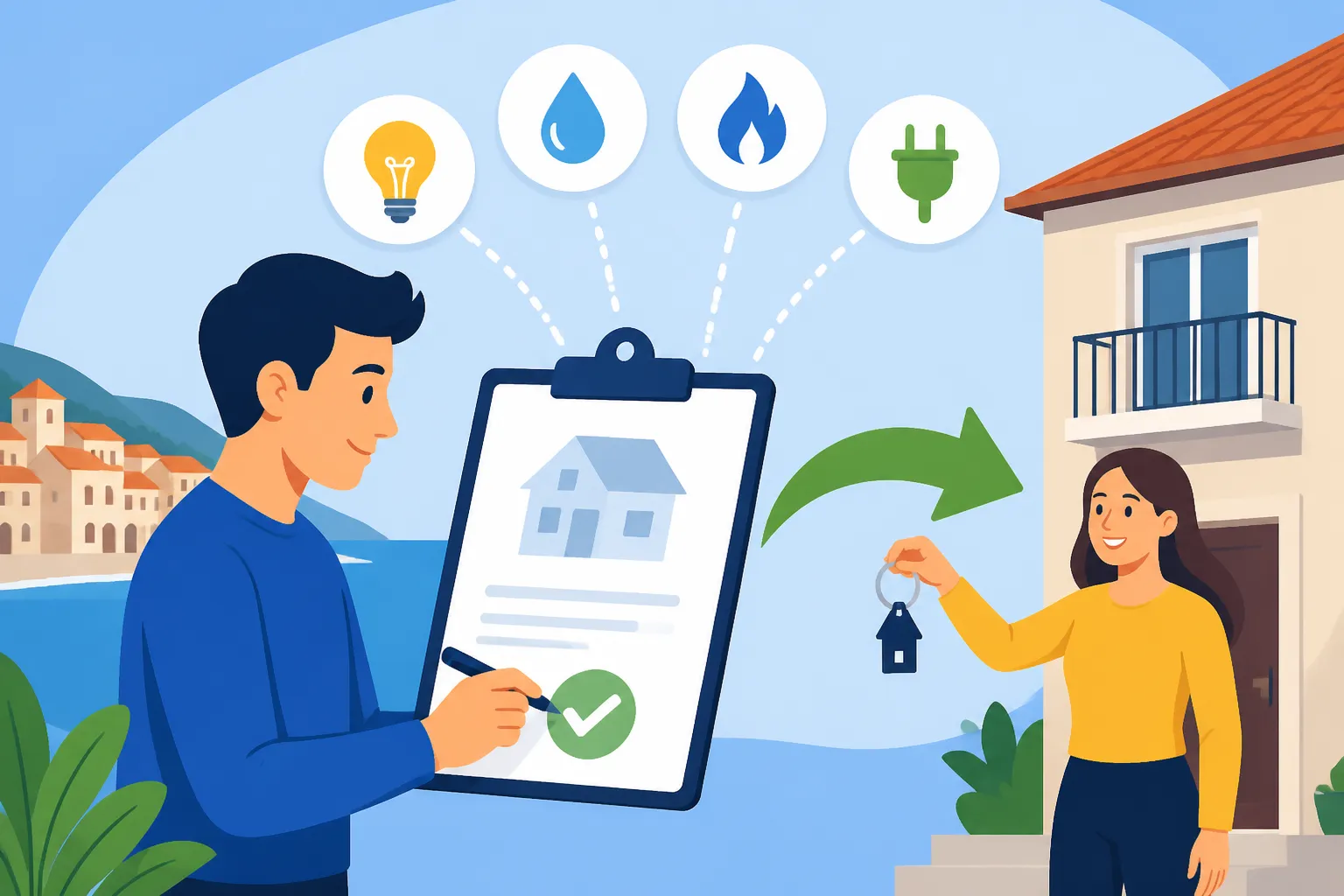
Okay, so you’ve found your dream apartment in Croatia – congratulations! That’s a huge hurdle overcome. But just when you think you can finally relax, a new administrative monster rears its head: transferring utility bills into your name. It’s a process that can feel incredibly opaque and frustrating, especially if your Croatian isn't fluent and you're navigating an entirely new system. This guide is here to walk you through exactly how to get those essential services like electricity, water, and gas officially tied to you, avoiding unnecessary stress and unwelcome surprises.
The Foundations: What Utilities Need Your Attention?
When you move into a new rental in Croatia, it's not always as simple as flipping a switch. You're typically dealing with a few key players, each with their own rules and processes. Understanding who they are and what they provide is the first step to feeling in control.
Electricity: Hrvatska Elektroprivreda (HEP)
Electricity is almost universally provided by HEP (Hrvatska Elektroprivreda), the national power company. While the energy market in Croatia has opened up to some alternative suppliers, the vast majority of households still rely on HEP, and it's the most straightforward option for new tenants. You’ll find their offices in every major city, and they also have a decent online presence, though much of it is in Croatian.
The good news is that the existing connection will almost certainly already be there. Your job is to simply transfer the account into your name. This usually involves presenting your personal identification (passport or ID card), your OIB (personal identification number – absolutely vital for anything official in Croatia!), and a copy of your rental agreement. Sometimes, they might ask for a statement from the previous tenant or landlord confirming the final meter reading. It’s always best practice to take a photo of the meter yourself on moving-in day. Don't skip this step – disputes over initial readings are a common headache!
Water and Sewage: Your Local Providers
Unlike electricity, water and sewage services are managed by municipal companies, meaning the provider will vary depending on where you live. For example, in Zagreb, you'll deal with Vodoopskrba i odvodnja, while in Split, it's Vodovod i kanalizacija Split. The structure of these companies is similar across the country, but their forms and specific requirements might differ slightly.
To transfer water, you’ll again need your OIB, ID, and rental agreement. Crucially, you'll need the current meter reading. Water meters are often located inside the apartment, in a shared hallway, or sometimes in an external box for a block of flats. Your landlord is your best friend here, as they'll know exactly where to find it. Just like with electricity, document that reading meticulously. Be prepared for a potentially small connection fee or deposit, although this is less common for water than for electricity or gas.
Gas: Keeping Warm and Cooking
Gas provision is also localized. In Zagreb and surrounding areas, Gradska Plinara Zagreb is the main player, but you'll find other companies like EVN in Dalmatia. If your apartment has gas heating or a gas stove, this is another utility you'll need to transfer.
The process mirrors electricity and water: bring your OIB, ID, and rental contract, and prepare to provide a meter reading. Gas meters are often located outside the apartment, sometimes in a common area or even on the exterior of the building. Again, your landlord's guidance is invaluable here. Gas bills can be substantial during the colder months, so ensuring a clean transfer is essential to avoid being saddled with someone else's heating costs.
Waste Management: Čistoća and Komunalna Naknada
Waste collection in Croatia, often referred to as Čistoća (cleanliness), is handled by municipal companies. This service is typically bundled with a communal fee called komunalna naknada, which also covers public infrastructure maintenance. While you usually won't "transfer" this service in the same way as electricity or water, it's important to understand how it's billed.
Often, the komunalna naknada and waste collection charges are paid by the landlord and then either included in your rent or passed on as a separate charge. In some cases, particularly in larger buildings, it might be tied to the property itself, and you just start receiving the bills. Clarify with your landlord how this is handled – you want to know who is responsible for paying these fees and how they are calculated. It's less about a formal transfer of an account and more about understanding the payment flow. This falls under the general umbrella of Understanding the Komunalna Naknada Communal Fee in Croatia.
Internet and Mobile: Your Connection to the World
These aren't typically "transferred" but rather set up as new accounts. While you won't be transferring existing accounts for these, securing your internet and mobile connection is arguably the most crucial utility for most expats. For immediate mobile connectivity upon arrival, especially if you're traveling a lot initially, services like Airalo can be a lifesaver with eSIMs, so you're not scrambling for a local SIM card the moment you land. Once settled, you'll want to explore local providers for a stable home internet connection.
Step-by-Step: Getting Utilities into Your Name
This is where the rubber meets the road. Navigating Croatian bureaucracy can feel like a game of 'Snakes and Ladders,' but with the right preparation and a bit of patience, you'll get there.
The Essential Documents You'll Need
Before you even think about stepping into a utility company office, make sure you have these key documents ready. Having everything organized will save you multiple trips and a lot of frustration.
- OIB (Osobni Identifikacijski Broj): Your Croatian personal identification number. This is non-negotiable. Without it, you cannot enter into any formal contract, including utility services. If you don't have one yet, make it your absolute priority. You can find a comprehensive guide on How to Get an OIB Personal Identification Number in Croatia.
- Valid Identification: Your passport or Croatian ID card (if you have one).
- Rental Agreement (Ugovor o Najmu/Zakupu Stana): This document is paramount. It proves you are the legal tenant of the property and therefore authorized to transfer the utilities. Make sure you have a signed copy, and it's always a good idea to have it translated into Croatian if your landlord only provided it in English, though generally, a bilingual contract is accepted. Remember that for your rental agreement to be fully valid and protect your rights, your landlord should How to Register a Rental Lease with the Croatian Tax Administration.
- Proof of Residence (Potvrda o Prebivalištu): Sometimes required, especially for the initial setup. This is a document you get from the MUP (Ministry of Interior) confirming your registered address in Croatia. If you've already completed your residence registration, you should have this. For more on this, check out Registering Your Residence in Croatia: The Complete MUP Guide.
- Previous Tenant's Details (Optional but Helpful): If possible, have the name and OIB of the previous tenant. This makes it easier for the utility company to locate the correct account for transfer.
- Current Meter Readings: As mentioned, a photo with a timestamp is your best friend here. Write down the numbers too.
The Transfer Process Itself
Now for the actual legwork. This process often involves the landlord more than you might expect, so good communication is key.
- Coordinate with Your Landlord: This is the most critical first step. In Croatia, it's very common for the landlord to initiate the utility transfer process, or at least facilitate it significantly. They know the local offices, the specific names of the companies, and often have existing relationships. They might even have an online account where they can manage transfers. Ask them to help you. Many landlords are happy to, as it ensures they aren't liable for your future bills.
- Gather Meter Readings: On your move-in day, take clear, timestamped photos of all utility meters (electricity, water, gas if applicable). Make sure the meter number is visible. Share these with your landlord and keep them for your records.
- Visit Utility Company Offices (or Online Portal):
- Electricity (HEP): Find your nearest HEP office. Bring all your documents. You'll fill out a form (often with the help of a clerk) to transfer the existing electricity meter number to your name. They might require a deposit, which is usually returned when you eventually move out and close the account. You can also explore the HEP website; sometimes, online forms are available, or at least you can download the application form in advance. Learn more about How to Set Up Electricity HEP in Your Croatian Home.
- Water (Local Provider): Head to your local water company office (e.g., Vodoopskrba i odvodnja). The process will be similar to HEP.
- Gas (Local Provider): Same drill for gas. Be sure to confirm the exact provider with your landlord. For more detailed instructions on connecting these services, you can refer to How to Set Up Water and Gas Connections in Croatia.
- Confirmation: Once the transfer is complete, you should receive a confirmation or your first bill in your name. Keep this safe! This confirms the accounts are now officially yours.
Important Note: Do not just assume the utilities will be automatically transferred or that your landlord will handle everything without your involvement. Be proactive, ask questions, and follow up.
Understanding Meter Readings and Invoicing
Meter readings are the foundation of your utility bills.
- Initial Reading: The reading you take on move-in day is crucial. It marks the start of your consumption. Any consumption before that date is the responsibility of the previous tenant or landlord.
- Regular Readings: Utility companies usually read meters periodically, but in some areas, especially for gas or water, you might be asked to submit readings yourself online or by phone. Pay attention to instructions on your bills or from the company.
- Estimated Bills: Sometimes, if a meter isn't read, you might receive an estimated bill. This is usually reconciled with an actual reading later, but it's always better to provide actual readings if asked, to avoid overpaying or underpaying significantly.
Common Pitfalls and Expat Frustrations
Let's be real, the Croatian administrative process can be a test of patience. It’s not just you; everyone faces these hurdles.
Language Barriers and Bureaucracy
This is probably the biggest frustration. While many younger Croatians speak English, the staff at utility companies, especially in smaller towns, might not. This can make explaining your situation or understanding complex forms incredibly difficult.
- Solution: Bring a Croatian-speaking friend, colleague, or your landlord with you if possible. If not, use a translation app on your phone, but be prepared for slow communication. Remember that a friendly demeanor and patience go a long way. Services like Sirelo, a moving platform, often provide tips for navigating international moves, which implicitly includes dealing with local bureaucracy.
Waiting Periods and Deposits
Don't expect instant gratification. Processing times can vary from a few days to a couple of weeks, especially if there's any anomaly with the previous account.
- Deposits: As mentioned, some companies (especially HEP) might require a deposit from new customers, particularly foreigners who don't have a long credit history in Croatia. This is standard procedure, not a personal slight. Ensure you get a receipt for this deposit.
Dealing with Debts of Previous Tenants
This is a nightmare scenario, but it can happen. If the previous tenant left unpaid bills, the utility company might initially hold the property responsible, not the individual.
- Solution: This is why your accurate, timestamped meter readings and a clear rental agreement are so important. They prove you are a new tenant and should not be liable for past debts. If the utility company insists, have your landlord intervene, as they are ultimately responsible for ensuring the property is free of such encumbrances for a new tenant. Don't back down; you're not responsible for someone else's bills.
Setting Up Other Essential Services (Internet, Phone, etc.)
Once the core utilities are sorted, you'll want to get your digital life running smoothly.
Internet and TV Providers
Croatia has several major internet and TV providers, offering various packages. The big players are:
- Hrvatski Telekom (HT): Often considered the most widespread and reliable, especially in rural areas, as they inherited the former state infrastructure.
- A1 Hrvatska: A strong competitor with good coverage and often competitive packages.
- Telemach Hrvatska: Another major player, often known for good mobile deals but also offers home internet.
Choosing the right provider depends on your location (fibre optic availability), your budget, and your specific needs (speed, TV channels, mobile bundle). Most offer packages that combine internet, TV, and sometimes landline. You'll need your OIB and ID to sign up. Installation can take anywhere from a few days to a couple of weeks, depending on whether new cabling is required. To dive deeper into securing your digital connection, check out How to Set Up Internet at Home in Croatia.
Mobile Phone Services
For mobile, the same three companies (HT, A1, Telemach) dominate. You have two main options:
- Prepaid (na bonove): Easy to get, just buy a SIM card at any kiosk, grocery store, or provider shop. Top up as needed. Great for short stays or initial periods. This is where an eSIM from Airalo could be an excellent temporary solution while you get settled.
- Postpaid (pretplata): A contract plan. Requires your OIB and ID, sometimes a bank account. Offers better value for regular users, often with more data and unlimited calls/texts.
Consider your data needs and how long you plan to stay. For long-term residents, a postpaid plan usually makes more sense. For more advice, refer to How to Choose a Mobile and Internet Provider in Croatia.
Here's a quick overview of typical utilities and what you might need:
| Utility Service | Typical Provider(s) | Key Documents Needed | Common Challenges for Expats |
|---|---|---|---|
| Electricity | HEP (Hrvatska Elektroprivreda) | OIB, ID, Rental Agreement, Meter Reading | Deposit, language barrier |
| Water & Sewage | Local Municipal Company (e.g., Vodoopskrba i odvodnja) | OIB, ID, Rental Agreement, Meter Reading | Local variations, finding office |
| Gas | Local Municipal Company (e.g., Gradska Plinara Zagreb) | OIB, ID, Rental Agreement, Meter Reading | Seasonal usage, meter location |
| Waste Management/Communal | Local Municipal Company (e.g., Čistoća) | Usually tied to property/landlord | Clarifying payment responsibilities |
| Internet & TV | HT, A1, Telemach | OIB, ID, Bank Account (for postpaid) | Installation time, package selection |
| Mobile Phone | HT, A1, Telemach | ID (prepaid), OIB, ID, Bank Account (postpaid) | Choosing best plan, immediate connectivity (Airalo) |
Moving to a new country like Croatia is an adventure, and setting up your home base with all the necessary utilities is a big part of that. While it might seem daunting at first, breaking it down into manageable steps and understanding the local nuances will make it much smoother. The overall The Complete Guide to Moving to Croatia: Your First 90 Days (2027) will have more tips for your initial setup. You're doing great, and soon you'll have everything running like clockwork in your new Croatian home!
Disclaimer
Please note that while this guide provides comprehensive information based on current practices, utility regulations and administrative procedures in Croatia can change. It is always advisable to verify the most up-to-date requirements directly with the relevant utility providers or seek advice from local experts. This information is for general guidance and does not constitute legal or professional advice.