How Do I Pay the Highway Toll in Croatia?
Hitting the open road in Croatia is one of the absolute joys of living here – the coastal drives, the winding roads through national parks, the quick links between our vibrant cities. But before you get too lost in the beauty, there’s one administrative hurdle that often trips up newcomers and even seasoned expats: figuring out how to pay the highway tolls. It’s not always straightforward, especially if you’re used to different systems, but trust me, with a little know-how, it becomes second nature. This guide is designed to demystify the Croatian toll system, helping you navigate it like a local.
The Croatian Highway Toll System: An Introduction
Before we dive into the nitty-gritty of payment methods, it’s helpful to understand the basic structure of Croatia’s toll road network. Most of Croatia's modern highways are operated by public companies like Hrvatske autoceste (HAC) and Bina-Istra. These roads are generally well-maintained, offer excellent connectivity, and are essential for quickly traversing the country, especially during the busy summer months. Think of them as the backbone of road travel here.
The 'Closed' System: How Most Tolls Work
The most prevalent system you’ll encounter on Croatian highways is the "closed" system. This is probably familiar to many of you from other European countries. Here’s how it typically works:
- Entry: As you enter a toll section of the highway, you'll drive through a toll plaza. You'll stop at a barrier, and either a machine will dispense a ticket for you, or an attendant will hand you one. This ticket records your entry point. Hold onto it, because it's crucial for payment later!
- Exit: When you exit the highway or a specific toll section, you’ll again drive through a toll plaza. You’ll present your ticket to either an attendant or insert it into a machine. The system then calculates the toll based on the distance you’ve traveled from your entry point and your vehicle category. You then pay the calculated amount.
This method ensures you only pay for the distance you actually drive, which is fair, but it does mean you need to remember to grab that ticket and keep it safe. Losing it can lead to a hefty charge, as they’ll assume you’ve driven the maximum possible distance on that highway section. We'll cover that nightmare scenario a bit later.
The Roads You'll Pay For
While some smaller roads and bridges are free, the major arteries connecting our cities and regions are almost exclusively tolled. The most frequently used tolled highways include:
- A1 (Zagreb-Split-Ploče): This is the main artery for anyone traveling down to the beautiful Dalmatian coast from Zagreb. It’s arguably the most important tolled road for tourists and expats alike.
- A3 (Bregana-Zagreb-Lipovac): Running east-west, this highway is vital for transit from Slovenia and into Slavonia or towards Serbia.
- A6 (Bosiljevo-Rijeka): Connects the A1 to the port city of Rijeka and further to Istria.
- A4 (Zagreb-Goričan): The route north towards Hungary.
- A2 (Zagreb-Macelj): Connects Zagreb with the Slovenian border, often used for trips to Austria or Germany.
You’ll quickly get a feel for where the toll gates are, and most navigation apps will highlight them. Before you embark on any long journey, it's always a good idea to factor in these costs. Planning a big move to Croatia? Services like Sirelo can help coordinate your logistics, and understanding these routine costs, including tolls for your car, becomes part of your overall budgeting for settling in.
Your Options for Paying Highway Tolls
Now that you know how the system works, let’s talk about the various ways you can actually pay these tolls. Croatia offers several methods, each with its own advantages and disadvantages. Choosing the right one depends on how frequently you plan to use the highways and your preference for convenience versus flexibility.
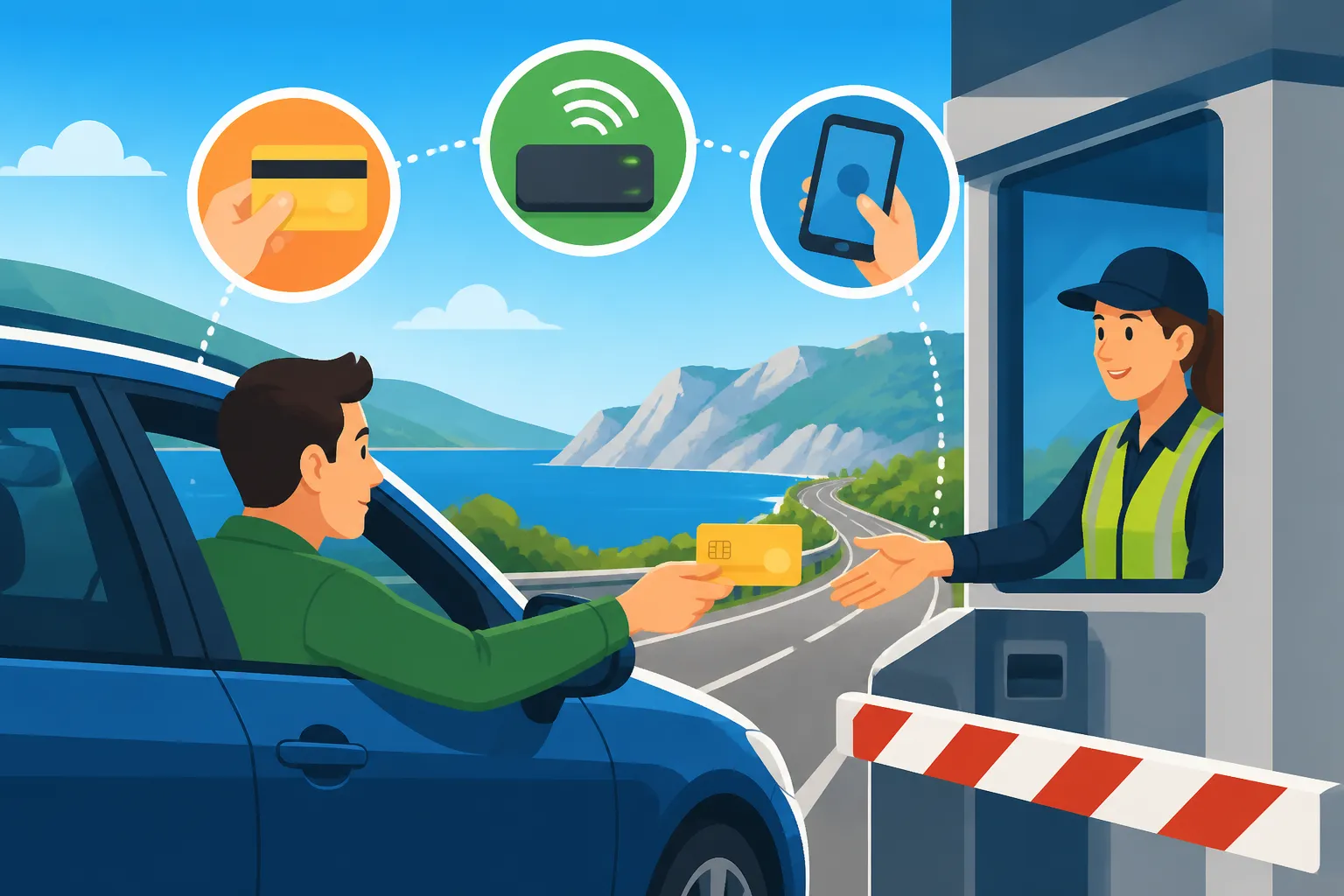
Traditional Payment Methods: Cash and Cards
For many, especially those on a shorter visit or who only occasionally use the highways, the traditional payment methods are perfectly adequate.
Cash (Gotovina) in Euros
Yes, good old cash is still king for many transactions in Croatia, and highway tolls are no exception. Since Croatia adopted the Euro on January 1, 2023, all cash transactions are made in Euros.
- Pros: It's universally accepted at all toll booths, simple, and doesn't require any prior setup. For tourists who might not have local bank accounts or credit cards, cash is a reliable fallback.
- Cons: Cash lanes can be slower, especially during peak season when lines of cars stretch back. You'll need to make sure you have small denominations sometimes, as attendants might not always have change for large bills, although this is less common on highways than in small shops. Fumbling for exact change while traffic builds behind you can be a little stressful, I can tell you from experience!
Credit and Debit Cards (Kartice)
Most major credit and debit cards are widely accepted at Croatian toll plazas. This includes:
- Visa
- MasterCard
- Maestro
American Express is less commonly accepted, so it’s always wise to have a backup.
- Pros: Convenient, no need to carry large amounts of cash, and generally faster than cash lanes as attendants just swipe or tap your card. Many expats will find this the easiest option for their first few drives.
- Cons: Card reader malfunctions can happen, though rarely. You might also incur foreign transaction fees if you're using a non-Euro denominated card, so check with your bank. And like cash lanes, card-only lanes can still experience queues during busy periods.
The Electronic Toll Collection (ENC) System: A Game Changer
If you plan on living in Croatia and driving regularly, or even if you're a frequent visitor making multiple trips, investing in an Electronic Toll Collection (ENC) device is an absolute no-brainer. This system is truly a lifesaver for stress-free travel on Croatian highways.
What Exactly is ENC?
ENC (Elektronička Naplata Cestarine) is Croatia’s transponder-based system. You purchase a small device, usually mounted on your car's windshield. As you approach an ENC lane at a toll plaza, a sensor reads your device, and the toll amount is automatically deducted from a pre-paid balance linked to your device. The barrier then lifts, and you drive through without stopping. It’s wonderfully efficient.
Why Expats Swear By ENC
The benefits of ENC are considerable:
- Speed and Convenience: This is the big one. ENC lanes are almost always empty or have minimal queues, even when cash and card lanes are backed up for kilometers. Imagine sailing past a huge line of cars in the height of summer – it's pure bliss.
- Discounts: This is where you really save money. HAC, the main operator, offers significant discounts (often around 21.74% for Category I vehicles, which are standard cars) on tolls if you pay with ENC. These discounts are not negligible, especially over time.
- Ease of Use: No fumbling for tickets, cash, or cards. It’s completely hands-free. This is especially good if you’re driving alone or with kids!
Where and How to Get Your ENC Device
You can purchase an ENC device directly from the toll operators. The most common provider is Hrvatske autoceste (HAC).
- HAC Sales Points: These are usually located at larger toll plazas (e.g., Lučko near Zagreb, Dugopolje near Split) or at certain petrol stations. You’ll see signs for "Prodaja ENC" or "ENC Info" at these locations.
- Documents Needed: You’ll generally need your personal ID (passport or residence permit), your OIB (Croatian personal identification number), and vehicle registration documents. If you haven't sorted out your OIB yet, make sure to read up on How to Get Your OIB and Why It Matters for Healthcare Access – it’s essential for so much here.
- Cost and Top-Up: There’s a one-time cost for the device itself (around €15-€20). You then load money onto it. You can do this at sales points, but also increasingly online via the HAC website or their mobile app. You can usually choose a package that includes the device and a pre-loaded balance, often with an initial discount.
Once you have the device, make sure it's properly mounted according to the instructions (usually on the inside of your windshield near the rearview mirror). And remember to keep it topped up! Many expats find that linking their online banking for automatic top-ups, as described in guides like How to Set Up Online Banking and IBAN Transfers in Croatia, makes life even easier.
Practical Tips for Navigating Croatian Tolls
Beyond knowing the payment methods, there are a few practical considerations that will make your toll-paying experience much smoother, especially as an expat or tourist.
Handling Tolls in a Rental Car
This is a common question, and it's essential to get it right to avoid unexpected charges later.
-
Check with the Rental Company: Before you drive off the lot, ask your rental agency about their policy on tolls and ENC devices.
- Included ENC: Some premium rental packages might include an ENC device, and the tolls are simply added to your final bill. This is the most convenient option if available.
- Optional ENC: Many companies offer the ENC device as an add-on for an extra daily fee. Compare this fee against the potential discounts and time savings, especially for longer trips.
- No ENC Provided: If the rental car doesn't come with an ENC, you'll be relying on cash or card payments. Be prepared for potentially longer waits at toll booths, particularly during the summer.
-
Scenario Planning: Imagine you’ve just landed in Zagreb and picked up a car to head down to Dubrovnik. That’s a long drive on the A1. If your rental doesn't have an ENC, those cash and card queues could add significant time to your journey, especially if you’re traveling in July or August. If you're using your phone for navigation or to research local spots, having a reliable internet connection (perhaps through an eSIM like Airalo) can help you quickly check toll queue predictions or manage payment apps if you decide to buy your own temporary ENC device.
Seasonal Variations and Traffic Flow
Croatia’s highways, particularly the A1 to the coast, see a massive surge in traffic during the summer months (June, July, August) and around major holidays.
- Summer Peak: Expect significant queues at cash and card lanes, especially on Fridays, Saturdays, and Sundays as people head to and from the coast. This is where an ENC device truly shines; the dedicated lanes remain fast-flowing.
- Off-Season: Outside of summer, traffic is generally light, and queues are rare even in cash/card lanes. So, if you’re visiting in the shoulder seasons or winter, the urgency for an ENC is less, but the convenience and discount are still there.
- Planning Your Route: Use navigation apps (Google Maps, Waze) to see real-time traffic conditions. The HAC website also provides updates. If you're flexible, traveling during off-peak hours (early morning or late evening) can save you time.
Remember that driving in Croatia has its own unique set of rules and nuances, which is covered extensively in guides like Driving in Croatia: Licences, Registration and Rules for Expats (2027). Being prepared for tolls is just one part of becoming a confident Croatian driver.
Estimating Costs and Budgeting
Tolls can add up, especially on longer journeys. It’s wise to factor them into your travel budget or your overall The Complete Guide to Cost of Living in Croatia for Expats (2026).
- HAC Toll Calculator: The official Hrvatske autoceste (HAC) website has an excellent toll calculator. You simply input your entry and exit points and your vehicle category, and it will give you an exact cost. This is indispensable for planning.
- Vehicle Categories: Toll prices depend on your vehicle category (I, II, III, IV, or IA for motorcycles). Most standard passenger cars fall into Category I.
- Examples: A trip from Zagreb to Split (Dugopolje exit) for a Category I vehicle will cost you around €25-€30, but this can change slightly, so always check the latest figures on the HAC site.
For those planning to bring their own car to Croatia, the costs associated with driving don't stop at tolls. You'll also need to consider vehicle registration, insurance, and maintenance. If you're looking into How to Register a Vehicle and Get Croatian Plates, you'll find that all these aspects require careful planning and budgeting.
Common Pitfalls and Troubleshooting
Even with the best preparation, things can sometimes go sideways. Here are a few common issues and how to handle them at Croatian toll booths.
Losing Your Toll Ticket: The Costly Mistake
This is arguably the biggest headache you can face at a Croatian toll booth if you’re using the closed system. If you lose the ticket you received upon entry:
- The Problem: The system has no way of knowing where you entered the highway. To cover all bases, they will charge you the maximum possible toll for your vehicle category on that entire highway section. This can be significantly more expensive than your actual journey.
- What to Do:
- Inform the Attendant Immediately: Don’t try to bluff your way through. As soon as you realize your ticket is gone, explain the situation to the attendant. Most will speak some English, especially at major toll plazas.
- Be Prepared to Pay Max Toll: Unfortunately, there’s not much wiggle room here. It’s a standard policy to prevent fraud. Just pay the maximum amount and consider it a lesson learned.
- Keep it Safe: Store your ticket in a visible, easy-to-reach spot, like a sun visor clip or a dedicated slot in your car. Better safe than sorry!
Malfunctioning ENC or Card Issues
Technology isn't always perfect, and sometimes devices or card readers can act up.
-
ENC Not Reading: If you drive into an ENC lane and the barrier doesn’t lift, or the device doesn’t register:
- Don't Panic: Stay calm.
- Reverse Carefully: If it's safe to do so, reverse out of the ENC lane and move to a standard lane (cash/card). This usually means pushing a button to call for assistance or waiting for an attendant.
- Pay Manually: Pay with cash or card.
- Get it Checked: Later, visit a HAC sales point to have your ENC device checked. It might need a new battery, re-registration, or simply to be repositioned on your windshield.
-
Card Reader Issues: If the card reader isn't working or your card is declined (and you know you have funds):
- Try Another Card: If you have a backup credit or debit card, try that.
- Cash is King: This is why I always recommend having some Euros in cash as a backup, even if you prefer paying by card. It saves a lot of potential embarrassment and delay.
- Attendant Assistance: The attendant can usually manually process the payment or suggest alternatives.
Navigating the nuances of everyday life in Croatia, like setting up utilities or understanding currency, can sometimes feel like a puzzle. But don't let these minor hiccups overshadow the incredible experience of living here. Just like learning How to Set Up Electricity (HEP) in Your Croatian Home or familiarizing yourself with Understanding the Euro Transition: Croatia's Currency Guide for Newcomers, mastering the toll system is just another step in becoming a true Croatian local.
Final Thoughts on Croatian Tolls
While the concept of highway tolls might be a bit of a departure for some, especially those from countries with free motorways, it's an integral part of maintaining Croatia's excellent road infrastructure. Once you get the hang of it, and particularly if you invest in an ENC device, it becomes a seamless part of your driving experience.
So, don't let the idea of tolls intimidate you. Plan ahead, know your payment options, and most importantly, keep that entry ticket safe! Happy driving, and enjoy exploring all the stunning corners of Croatia.
Disclaimer
Please note that while every effort has been made to provide accurate and up-to-date information, rules and regulations in Croatia can change. This guide is intended for informational purposes only and should not be considered legal or financial advice. Always consult official government sources or relevant authorities for the most current information.