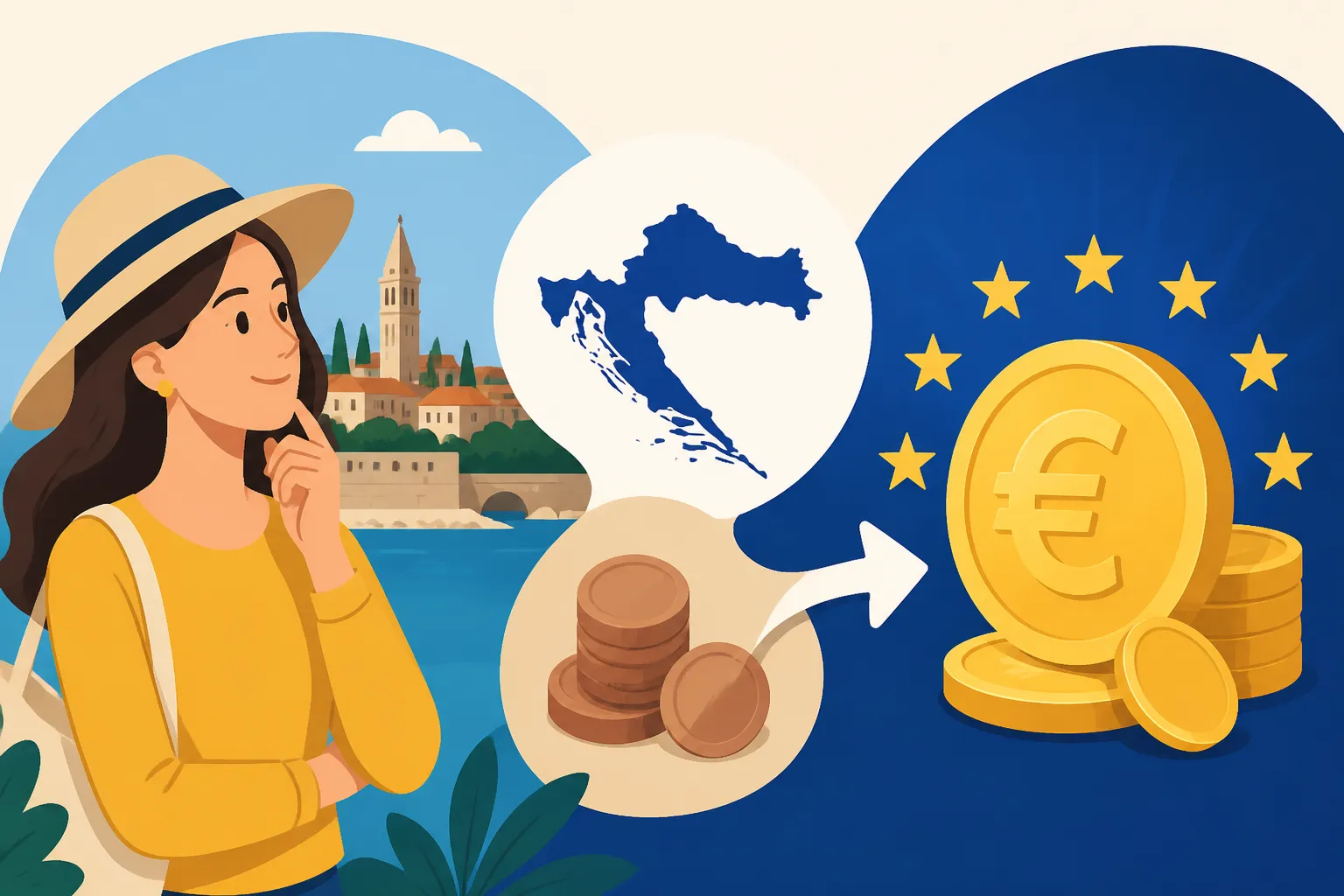
Understanding the Euro Transition: Croatia’s Currency Guide for Newcomers
Oh, the Euro transition in Croatia! If you’ve just landed here, you might be scratching your head, wondering if you missed a chapter or two in the country’s financial history. Many newcomers are baffled by pricing, banking, and general money management in a country that felt the seismic shift of changing its national currency. This guide is here to untangle the complexities, offering you a veteran expat’s perspective on navigating Croatia’s euro-dominated financial landscape.
Croatia's Journey to the Euro: A Historical Perspective
When you first arrive in Croatia, everything seems to be priced in Euros, and rightly so, as it's been the official currency since January 1, 2023. But for those of us who’ve been here a while, the transition from the Croatian Kuna (HRK) was a monumental shift, impacting every facet of daily life and finances. Understanding this journey helps contextualize some of the quirks you might still encounter.
The Kuna Era: A Brief Look Back
Before the Euro, Croatia proudly used the Kuna, its national currency, for nearly three decades. Named after the marten, a small furry animal whose pelt was used as a unit of trade in medieval times, the Kuna had a significant place in Croatian identity. It was subdivided into 100 lipa, meaning "linden tree." The Kuna wasn't just money; it was a symbol of post-independence sovereignty, a tangible representation of Croatia's place in the world after separating from Yugoslavia.
For many years, the Kuna operated under a managed float exchange rate against the Euro, meaning its value was closely tied to the Euro, providing a sense of stability. This close relationship often meant that major purchases, like real estate or cars, were unofficially quoted in Euros long before the official switch. Expats often had to juggle mental conversions, especially when comparing costs to their home countries or dealing with international transactions. The Kuna had its charm, its unique banknotes featuring famous Croatians and landmarks, and its gradual climb in value against other major currencies over the years.
The Path to Eurozone Membership
Croatia’s aspiration to join the Eurozone wasn’t a sudden whim; it was a carefully plotted strategic goal, deeply intertwined with its overall integration into the European Union. After becoming an EU member state in 2013, joining the Eurozone was seen as the next logical step, promising greater economic stability, deeper integration into the single market, and reduced transaction costs. The formal process began with Croatia entering the Exchange Rate Mechanism II (ERM II) in July 2020, a crucial two-year "waiting room" where the Kuna's exchange rate was strictly monitored to ensure stability against the Euro.
During this period, the government and the Croatian National Bank implemented a series of reforms to meet the strict Maastricht criteria, which include benchmarks on inflation, government debt, interest rates, and exchange rate stability. It was a rigorous test, demanding fiscal discipline and structural adjustments. For those of us living here, this period felt like a slow but inevitable march towards the change, with public discussions, information campaigns, and a gradual mental preparation for the switch. The official date of entry, January 1, 2023, was announced with much fanfare and, let's be honest, a fair bit of anxiety.
Initial Impact and Public Sentiment
The moment the clock struck midnight on January 1, 2023, Croatia officially adopted the Euro. The initial impact was, predictably, a mixed bag. On one hand, there was a sense of pride and relief among many, signaling Croatia's full embrace of European economic integration. Tourists and businesses dealing with international clients immediately benefited from the elimination of exchange rate risks and conversion fees. Moving money around became simpler, both for individuals and for companies.
However, the transition wasn't without its growing pains, especially for the locals and long-term residents. There were widespread concerns about price increases, often referred to as "zaokruživanje cijena" (price rounding), where some businesses used the opportunity to round up prices in Euros, effectively leading to a subtle but noticeable hike. While the government implemented strict dual pricing rules and monitoring to prevent unjustified increases, the perception of higher costs persisted, fueling public debate and frustration. For newcomers, you largely missed the initial chaos of dual circulation and conversion, stepping directly into a Euro-only reality, but the echoes of these discussions about fairness and pricing still resonate in the collective consciousness.
The Practicalities of Euro Adoption for Newcomers
Stepping off the plane in Croatia as a newcomer means you’re diving straight into a Euro-centric economy. This simplifies a lot of things, as you won't be grappling with unfamiliar banknotes or exchange rates like expats did just a couple of years ago. However, there are still nuances to understand, especially concerning lingering dual pricing, everyday transactions, and how local financial systems have adapted.
Understanding Dual Pricing and Conversion Rates
While the official dual pricing period ended a while ago, you might still occasionally encounter price tags or old signage that references Kuna prices, especially in smaller, older establishments or for services where updating everything seemed like an unnecessary hassle. The official conversion rate was fixed at 1 EUR = 7.53450 HRK, which meant that a lot of things didn't convert neatly. This is where the infamous "rounding up" often occurred, leading to the perception of price hikes.
For you, as a newcomer, this primarily means that if you see an old Kuna price, you can use that fixed rate to mentally convert and compare, though it’s less and less common now. What’s more pertinent is understanding how this conversion affected local purchasing power and pricing strategy. Some goods and services were genuinely recalibrated, while others simply absorbed the rounding difference. It’s useful context to remember if you’re ever discussing cost of living with long-term residents, as their frame of reference often still includes the Kuna era. You won't typically need to perform conversions yourself, but being aware of the historical fixed rate can sometimes help understand local discussions about "how much things used to cost."
Cash, Cards, and Everyday Transactions
In Euro-denominated Croatia, using cash and cards is pretty straightforward, much like in any other Eurozone country. Euros are, of course, accepted everywhere. Debit and credit cards are widely used in cities, supermarkets, restaurants, and most businesses. Visa and Mastercard are universally accepted, with American Express and Diners Club slightly less so but still common in larger establishments. Contactless payments via card or mobile phone (Apple Pay, Google Pay) are also increasingly prevalent and convenient.
However, it's always wise to carry some cash, especially if you're venturing into smaller towns, local markets, or more traditional establishments, such as some bakeries (pekara) or small cafes outside the main tourist hubs. Sometimes, cash-only signs pop up unexpectedly, or a card machine might be "out of order." For instance, if you're buying fresh produce at a tržnica (open-air market), cash is almost always preferred, if not required. ATM access is widespread, particularly in urban areas, and you'll find most major Croatian banks like Zagrebačka Banka, PBZ, Erste & Steiermärkische Bank, and OTP Bank offering ATMs. Just be mindful of potential ATM fees, especially if you're using a foreign bank card.
Bank Accounts and Financial Services Adjustment
The shift to the Euro also meant significant adjustments for Croatian banks and financial service providers. All Kuna accounts were automatically converted to Euro accounts at the fixed rate. For newcomers looking to establish themselves financially, this has made things much simpler. You're opening a Euro account from the get-go, eliminating any need for conversion or dealing with a transitional period.
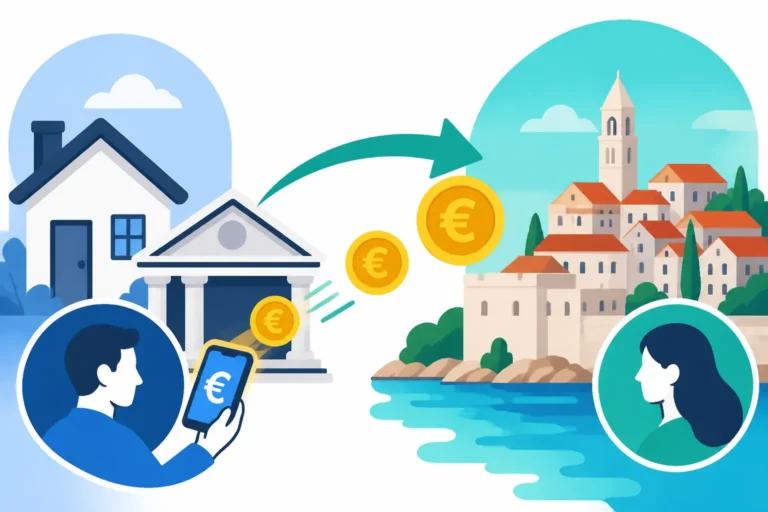
When you're ready to The Expat Guide to Opening a Bank Account in Croatia , you'll find that banks are well-versed in handling Euro transactions. International money transfers, both incoming and outgoing, are now also entirely in Euros, streamlining processes and reducing currency exchange fees that were once a factor when dealing with Kuna. Platforms like Wise, for example, have become even more efficient for transfers to and from Croatia, as they're now dealing with a single currency across the Eurozone. This means faster processing and generally better rates for sending money to other Euro countries, or receiving it from them.
Navigating Your Finances During the Transition
Even though the official transition is over, for you, the newcomer, navigating your finances means understanding the post-Euro landscape. This involves how you bring money into the country, manage your daily spending, and set up your long-term financial plans without the complexities of a looming currency change.
Converting Your Existing Funds: Tips and Tricks
If you’re arriving from a non-Euro country, you’ll still need to convert your home currency into Euros. However, the good news is that you only need to do this once (or periodically as you bring in funds), without the added step of converting to Kuna first. The critical advice here is to avoid airport exchange kiosks – their rates are notoriously poor.
Instead, consider using a reputable online money transfer service like Wise (formerly TransferWise) or Revolut. These services typically offer much better exchange rates and lower fees than traditional banks. You can transfer funds directly to your new Croatian Euro bank account once it's set up. For smaller amounts of cash, look for exchange offices in city centers, but always compare rates and check for hidden fees. Some major banks also offer exchange services, but again, their rates might not be as competitive as dedicated exchange offices or online platforms. Plan ahead, as doing a large lump sum conversion or several smaller ones over time can save you a significant amount in fees.
Managing International Transfers and Remittances
With Croatia now in the Eurozone, international money transfers, especially from other Eurozone countries, are seamless and often as quick and inexpensive as domestic transfers within Croatia. This is a massive improvement for expats who previously faced varying speeds and fees for Kuna transfers. For transfers from outside the Eurozone, the process is also simplified, as you're now dealing with a globally recognized currency.
When sending money to Croatia, instruct the sender to send it in Euros. If it's sent in another currency, your Croatian bank will convert it, and you might incur their exchange rate and fees, which are often less favorable than what you could get with an independent service. Similarly, if you're sending money out of Croatia to a non-Euro country, using a service like Wise can help you secure better rates and avoid your Croatian bank's international transfer fees. This efficiency makes managing your finances across borders considerably less stressful.
Understanding Price Changes and Inflation Concerns
One of the most significant public concerns during and after the Euro transition was inflation. While official reports often showed moderate inflation, many residents felt a disproportionate rise in prices for everyday goods and services. This perception largely stemmed from the aforementioned "rounding up" of Kuna prices to convenient Euro figures. For you, as a newcomer, you’re experiencing the post-transition prices directly, without the historical context of Kuna values.
However, it's still good to be aware that the general cost of living has seen some upward pressure, not just from the Euro transition but also from broader global inflationary trends. When you're The Complete Guide to Cost of Living in Croatia for Expats (2026), remember that locals may have a different perception of value compared to what you find. Budgeting carefully, especially for groceries and dining out, is always a good idea. Keep an eye on local supermarket flyers (like Konzum, Lidl, Plodine) and compare prices, as they can fluctuate. Don't be surprised if some prices seem higher than you expected, particularly for imported goods or in popular tourist areas.
Banking and Financial Institutions in a Euro-Dominated Croatia
For any expat, setting up your financial base is one of the first and most crucial steps. With Croatia firmly in the Eurozone, this process has become more streamlined. However, understanding the local banking landscape, from opening an account to navigating digital services, is still key to a smooth financial life.
Opening a Euro Bank Account: What to Expect
Opening a bank account in Croatia as a foreigner is a fairly standard procedure now that everything is in Euros. You'll typically need your passport, your OIB (personal identification number), and proof of residence. Some banks might ask for additional documents, such as a proof of income or a rental contract. It’s a good idea to research banks like Zagrebačka Banka, Privredna Banka Zagreb (PBZ), Erste & Steiermärkische Bank, OTP Banka, or Raiffeisen Bank.
The process usually involves an in-person visit to a branch, though some banks are slowly introducing more digital options. Expect some paperwork, and while many bank employees speak English, having a Croatian speaker with you or using a translation app can be helpful, especially for clarifying terms and conditions. Once your account is open, you’ll receive an IBAN (International Bank Account Number), which is now standard for Eurozone transactions, making it easy to receive payments from other EU countries. Don't forget to inquire about monthly maintenance fees, international transfer fees, and online banking services when you're How to Open a Bank Account at a Croatian Bank as a Foreigner.
Digital Banking and Mobile Payments
Croatian banks have made significant strides in digital banking, offering robust online and mobile banking platforms that allow you to manage your Euro accounts, make payments, and access services from your phone or computer. Most major banks offer dedicated apps for both Android and iOS, providing features like checking balances, making domestic and international transfers (now much simpler with SEPA in Euros), paying bills, and managing your cards.
Contactless payments are also widely accepted, with most point-of-sale terminals supporting tap-to-pay via debit/credit cards or mobile wallets like Apple Pay and Google Pay. This is incredibly convenient for everyday purchases. However, it's always good practice to have a physical card or some cash as a backup, especially when technical glitches can occur or in smaller, less tech-savvy establishments. Getting comfortable with your bank's digital tools will greatly enhance your day-to-day financial efficiency. You'll definitely want to learn How to Set Up Online Banking and IBAN Transfers in Croatia as soon as your account is open.
Choosing the Right Financial Partner
Choosing the "best" bank in Croatia largely depends on your specific needs as an expat. All major banks now operate fully in Euros and offer similar core services. However, there are subtle differences that might sway your decision. Some banks might have better English-speaking staff in certain branches, more expat-friendly customer service, or more intuitive online banking platforms.
Consider factors such as:
- Fees: Monthly maintenance fees, ATM withdrawal fees (especially for non-bank ATMs), and international transfer fees.
- Branch Network: Do they have branches and ATMs conveniently located near your home or work?
- Online/Mobile Banking: How user-friendly and feature-rich are their digital platforms?
- Customer Service: Is there readily available English-speaking support?
- Additional Services: Do they offer credit cards, loans, or investment options that might be relevant to your long-term plans?
It’s often a good idea to visit a few different banks, talk to their representatives, and compare their offerings before making a decision. Some expats prefer banks with a strong international presence, while others value a local bank's deep understanding of the Croatian market.
Impact on Cost of Living and Budgeting for Expats
When you're trying to figure out if you can afford that adorable apartment in Split or that delicious meal in Zagreb, the Euro conversion has played a significant, albeit sometimes subtle, role in shaping the cost of living. For newcomers, understanding these changes is vital for realistic budgeting.
Rent, Utilities, and Housing Costs
One of the areas where the Euro transition arguably had the most impact, or at least the most perception of impact, was in housing. Even before the official Euro adoption, it was common for landlords to quote rental prices in Euros, especially in popular expat and tourist areas. This made the transition somewhat smoother on paper for rental agreements. However, the conversion often led to a slight rounding up, which contributed to an overall feeling of increased cost.
When you're looking for an apartment, you'll find all rental prices listed in Euros, which provides clarity. Utility bills, such as electricity (HEP), water, and gas, are also now uniformly billed in Euros. While the Euro itself didn't directly cause utility price hikes, the general inflationary environment post-transition has certainly contributed to higher energy and service costs. When you're calculating your budget, remember to factor in not just the headline rent but also the monthly utility expenses, which can fluctuate with seasonal usage. For instance, winter heating can significantly increase your electricity or gas bill, so always budget realistically.
Groceries, Dining, and Daily Expenses
This is perhaps where the "Euro price shock" was most acutely felt by long-term residents. While supermarkets were legally bound to display both Kuna and Euro prices during the dual pricing period, the psychological effect of seeing prices in Euros often made things feel more expensive, even if the conversion was accurate. Many smaller shops and cafes were also accused of rounding up, leading to a slight but noticeable increase in the cost of a coffee or a loaf of bread.
For you, coming in fresh, you're seeing the current Euro prices without that historical context. Generally, groceries in Croatia can be quite affordable if you stick to local produce and seasonal items. Supermarkets like Lidl and Kaufland often offer good value. Dining out can range from very reasonable (e.g., a simple pizza or grilled meat at a local konoba) to quite expensive in high-end restaurants, especially in tourist hot spots like Dubrovnik or Hvar. Transport costs, like public transport in Zagreb or intercity buses, are all clearly priced in Euros. Being mindful of where you shop and eat will go a long way in managing your daily expenses.
Long-Term Financial Planning in Euros
For expats planning a long-term stay in Croatia, the Euro adoption simplifies financial planning immensely. Your savings, investments, and pension contributions (if applicable) are now all within a stable, internationally recognized currency bloc. This eliminates currency risk when comparing your Croatian finances to those in other Eurozone countries or when repatriating funds.
When you're looking into things like Understanding Pension Pillars and Retirement Savings in Croatia, the calculations are now straightforward. Similarly, if you're a business owner or self-employed, like a paušalni obrt owner, all your income and expenses will be in Euros, making bookkeeping and tax calculations less complex. This stability is a significant benefit for long-term residents, allowing for clearer projections and more confident financial decisions, whether you're saving for a down payment on a property or planning for retirement.
Taxes and Official Payments in the Euro Era
The shift to the Euro didn't fundamentally change Croatia's tax structure or payment obligations, but it certainly simplified the process by standardizing the currency. For newcomers, understanding how taxes and official payments work in Euros is crucial for staying compliant.
Tax Obligations and Declarations
Croatia’s tax system is now entirely denominated in Euros, from income tax brackets to VAT rates and social security contributions. If you're employed in Croatia, your salary will be paid in Euros, and all deductions for income tax and contributions will be calculated in Euros. If you're self-employed, like the popular paušalni obrt, your flat-rate taxes and contributions are also set and paid in Euros. This standardization makes it much easier to understand your financial commitments and compare them to other Eurozone countries.
When it comes time to file your annual income tax return, all figures, declarations, and calculations will be in Euros. This removes the headache of converting various income sources from Kuna to Euro and back again, which was a real pain point for many during the transition. For comprehensive information, always refer to guides like The Complete Guide to Taxes in Croatia for Expats (2027) or Understanding Income Tax in Croatia: The Full Expat Guide to ensure you're fully compliant with all obligations in the Euro era.
Paying Bills and Government Fees
All government fees, fines, and utility bills are now exclusively in Euros. This includes everything from renewing your residence permit at the MUP, paying for vehicle registration, or settling your monthly electricity and water bills. The process for paying these bills is also streamlined. You can often pay online via your bank’s mobile app or online banking platform using SEPA (Single Euro Payments Area) transfers, through internet banking, or in person at FINA offices (Financial Agency), post offices, or even some kiosks.
When dealing with the Tax Administration (Porezna Uprava), all payment slips and forms will be in Euros. For example, if you're paying property taxes or other municipal fees, the amounts will be clearly stated in Euros. This simplifies the payment process and reduces the chance of errors related to currency conversion. Using your bank's online payment system is usually the most convenient method for most recurring bills.
Business and Self-Employment Considerations
For expats running a business or working as freelancers in Croatia, the Euro transition brought significant advantages. Invoices are now issued in Euros, simplifying cross-border transactions with EU clients and suppliers. This eliminates currency conversion risks and bank fees associated with Kuna transfers, especially within the SEPA zone.
If you’re a paušalni obrt owner, your income thresholds, social contributions, and flat-rate tax payments are all clearly defined in Euros. This makes it far easier to forecast your annual expenses and profit margins. You’ll find guides such as How Much Tax Does a Paušalni Obrt Pay in Croatia in 2026? crucial for navigating these specifics. Similarly, companies (d.o.o.s) now handle all their accounting and reporting in Euros, streamlining financial statements and reducing administrative burden. The move to the Euro has undoubtedly enhanced Croatia's appeal as a place for international business and self-employment.
Common Challenges and Solutions for Expats
While the Euro transition largely simplifies things for newcomers, there are still some lingering challenges and areas where an expat's insight can be invaluable. Adjusting to a new financial system always has its quirks, even when it’s a familiar currency like the Euro.
Dealing with Residual Kuna and Older Systems
For you, as a new arrival, the direct impact of residual Kuna is minimal, as it's no longer legal tender. However, you might still encounter remnants of the old currency in unexpected places. Perhaps an old-timer selling produce at the market might accidentally give you change in Kuna coins (unlikely now, but possible in the very early days of the transition), or you might stumble upon an old vending machine or public transport ticket machine that still shows Kuna pricing from before its update.
The Croatian National Bank (HNB) will continue exchanging Kuna banknotes indefinitely, and Kuna coins until December 31, 2025. So, if you do end up with any old Kuna from a forgotten drawer or a quirky purchase, you know where to take it. For most daily interactions, though, you can rest assured that you'll only be dealing with Euros. The main challenge often comes from older, less frequently updated administrative systems, but even those have largely been updated to reflect the new currency.
Seeking Financial Advice and Support
Navigating the financial landscape in a new country can be daunting, even with a familiar currency. It’s always a good idea to seek professional advice when dealing with complex financial matters like investments, property purchases, or significant tax planning. While local banks can offer some guidance, their advice is often tailored to their products.
For specific expat financial planning, including tax implications between Croatia and your home country, consider consulting an independent financial advisor experienced with international clients. Companies like Taxes for Expats specialize in helping expatriates manage their tax obligations across borders, which can be invaluable, especially if you have income sources outside Croatia or are concerned about double taxation. They can help you understand your liabilities and optimize your financial situation in the Eurozone.
Avoiding Scams and Misinformation
Anytime there's a significant financial transition, opportunistic scams and misinformation can surface. During the Kuna-to-Euro switch, there were reports of individuals attempting to exploit confusion, for example, by giving incorrect change or attempting to 'help' with conversions. While these types of scams are now largely a thing of the past given the Euro's full adoption, general financial vigilance remains crucial.
Always be wary of unsolicited emails, phone calls, or doorstep visits asking for your bank details or offering suspiciously good investment opportunities. Use official sources like your bank's website, the Croatian National Bank (HNB), or the Ministry of Finance for financial information. If something feels off, trust your gut. Croatian institutions often have official stamps and clear identification for their representatives. If you're ever unsure about a transaction or a request for financial information, it's always best to err on the side of caution and verify it through official channels before proceeding.
Future Outlook and What to Expect
Croatia's adoption of the Euro isn't just a change of currency; it's a profound economic and geopolitical integration. For you, the newcomer, this means stepping into a country with a more stable and predictable financial future, but also one that will continue to evolve within the larger Eurozone framework.
Stability and Economic Integration
The primary benefit of Eurozone membership is enhanced economic stability. Being part of such a large and powerful currency bloc reduces exchange rate risks for businesses and individuals, encourages foreign investment, and can help mitigate economic shocks. For expats, this translates into greater confidence in the value of your earnings and savings in Croatia. The Euro provides a strong anchor against potential national currency fluctuations, making long-term financial planning more secure.
Croatia is now more deeply integrated into the European single market, which benefits trade and economic growth. This integration can also lead to more harmonized financial regulations and services across the Eurozone, potentially making it even easier for you to manage your finances if you have dealings with other EU countries. It positions Croatia as a more attractive destination for international talent and businesses, which can indirectly lead to more opportunities and a more dynamic economy.
Potential for Further Digitalisation
The Euro transition has also spurred a greater drive towards digitalisation in Croatian financial services. While Croatian banks already had strong online and mobile banking platforms, the push for seamless Euro transactions and greater integration with EU-wide payment systems is likely to accelerate further innovation. Expect to see more advanced mobile banking features, potentially expanded use of digital wallets, and perhaps even more simplified processes for governmental and municipal payments.
This move towards a more digital financial ecosystem is generally a boon for expats, making administrative tasks faster and more accessible, often in English. For example, the e-Građani (e-Citizens) platform, which allows access to various government services online, will continue to integrate more financial functionalities, making tasks like filing tax returns or checking your social security contributions even smoother. The long-term trend is clear: convenience through technology.
Staying Informed
As an expat in Croatia, staying informed about economic developments, local financial news, and any potential changes to regulations is always a good practice. While the currency itself is stable, government policies, tax laws, and banking regulations can still evolve. Following reputable Croatian news sources (many have English sections), subscribing to expat community newsletters, and participating in forums can help you stay abreast of important information.
Remember that Croatia is a dynamic country, continuously adapting and growing within the EU framework. Understanding its financial pulse will not only help you manage your money effectively but also deepen your connection to your new home. Whether it's changes to property tax or updates on pension contributions, being proactive in seeking information will ensure you remain financially savvy.
| Aspect | Before Euro (Kuna) | After Euro (Euro) | Expat Impact |
|---|---|---|---|
| Primary Currency | Croatian Kuna (HRK) | Euro (EUR) | Simplified transactions, no need for HRK conversion. |
| Exchange Rate Risk | Fluctuating HRK/EUR rates; risk for international biz | Eliminated within Eurozone; stable against major currencies | Predictable international transfers, stable value of earnings/savings. |
| International Transfers | Conversion fees, varying speeds, HRK accounts | SEPA transfers, faster, lower fees, EUR accounts | Cheaper and quicker money transfers, especially from/to other Eurozone countries. |
| Pricing Transparency | All in HRK; informal EUR quotes for big items | All in EUR; dual pricing during transition | Clearer pricing; initial perception of price hikes due to rounding (zaokruživanje). |
| Cash/Card Acceptance | HRK cash, cards widely accepted | EUR cash, cards universally accepted | Seamless use of Euro cash/cards, like other Eurozone countries. |
| Bank Account Opening | HRK accounts; foreigners needed HRK | EUR accounts; no HRK conversion needed | Easier and more direct process for opening a Euro-denominated bank account. |
| Tax Declarations | All amounts in HRK | All amounts in EUR | Streamlined tax reporting and payment, easier comparison with other EU systems. |
| Cost of Living Perception | Perceived stability in HRK | Perceived increase due to Euro rounding and inflation | Need to budget based on current Euro prices, be aware of local sentiment on costs. |
Disclaimer
The information provided in this guide is intended for general informational purposes only and does not constitute financial, legal, or tax advice. While we strive to keep the content up-to-date and accurate, regulations and circumstances can change. We strongly recommend consulting with a qualified professional for advice tailored to your specific situation when dealing with financial matters in Croatia.