How Much Is the Communal Fee (Komunalna Naknada) in Zagreb?
Oh, the infamous Croatian komunalna naknada! If you've just moved to Zagreb, or even if you've been here a while and are still scratching your head over the local bills, you're not alone. Many expats find themselves utterly bewildered by this seemingly simple yet frustratingly opaque communal fee. This guide is here to cut through the confusion, explaining exactly what this fee is, how it’s calculated specifically for Zagreb, and what you can expect as a new resident trying to navigate the system.
What Exactly Is the Komunalna Naknada in Zagreb?
Let's start by demystifying one of Croatia's many administrative quirks: the komunalna naknada. This isn't just another utility bill; it’s a mandatory municipal fee that every property owner or long-term resident in Croatia pays. Think of it as your contribution to the local city infrastructure and the smooth functioning of public services, even if you don't always directly see where every single kun(a)-turned-euro goes. For many foreigners, it's just another piece of paper that arrives in the mail, often in Croatian, adding to the stack of "what is this for?" documents. We've all been there, trust me.
Understanding the Purpose of This Fee
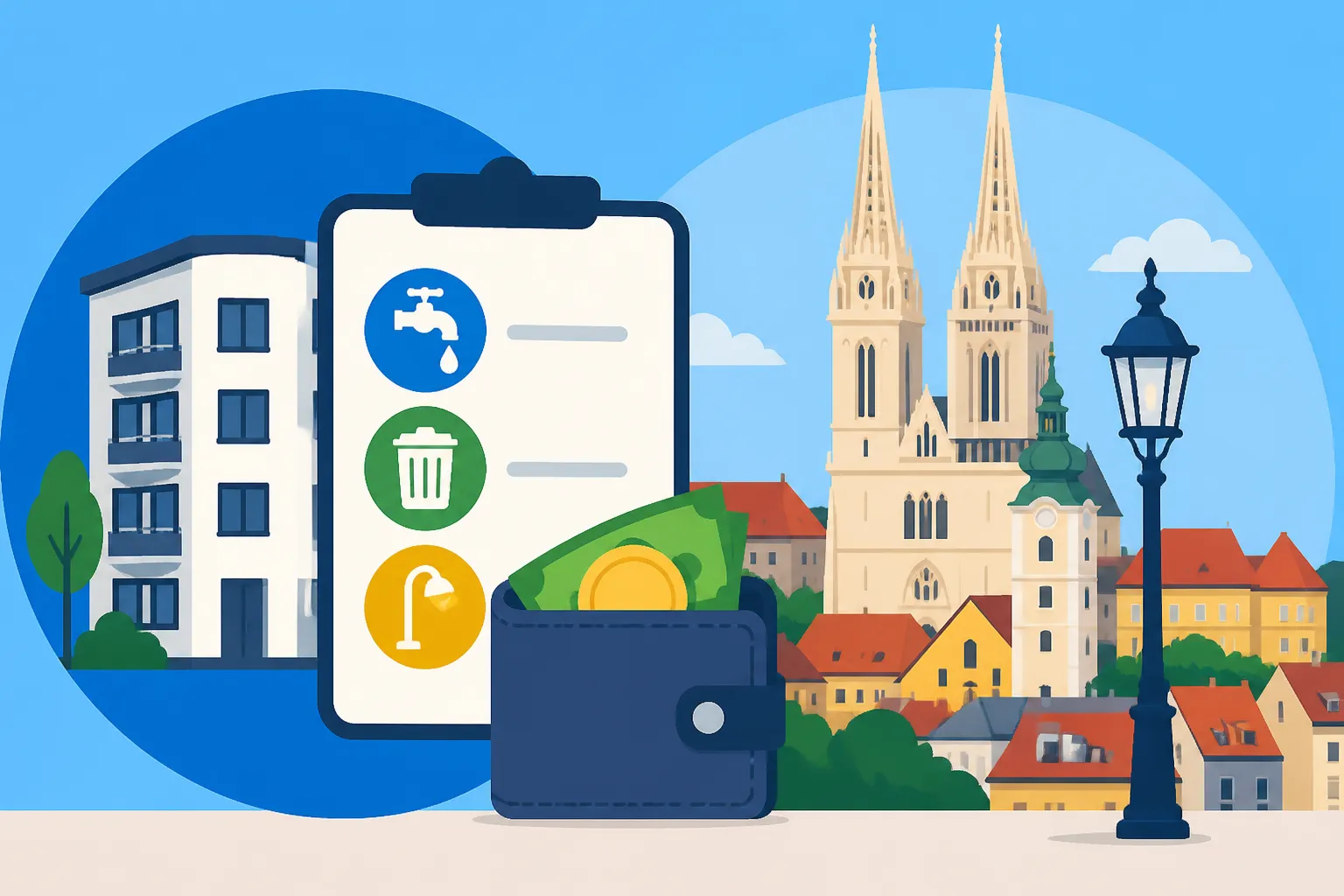
So, what exactly does this komunalna naknada fund? Well, it goes into the city coffers to cover the maintenance and development of what are known as "communal facilities" – essentially, public infrastructure that benefits everyone in the community. This includes everything from the upkeep of public roads and sidewalks, ensuring the streetlights actually turn on at night, maintaining those lovely green areas and parks that make Zagreb so beautiful, managing public cemeteries, and even supporting the drainage systems. It’s not directly tied to your water or electricity consumption, but rather to your property itself, contributing to the overall urban standard of living.
For instance, that freshly paved road near your apartment? The new playground in the local park? The city's efforts to keep the historical centre clean and tidy? A portion of your komunalna naknada contributes to these efforts. It’s designed to ensure that these essential public goods are maintained and upgraded, though it often feels like an invisible tax when you’re just trying to figure out why your bill is what it is. It's a fundamental part of the municipal budget that keeps the city running.
Who Is Responsible for Paying It?
The responsibility for paying the komunalna naknada typically falls on the shoulders of the property owner. If you've taken the plunge and decided to How to Buy Property in Croatia as a Foreigner: The Full Guide (2027), then this fee will be directed to you as the legal owner. However, if you are a long-term tenant, especially in an apartment, it's very common for the landlord to include this fee in your monthly rent or, less frequently, to pass the bill directly to you. This is why understanding your rental contract is absolutely crucial.
When you're signing your lease, make sure to clarify exactly what is included in the rent and which utilities or fees you are expected to pay separately. Many landlords will simply absorb the komunalna naknada into the overall rent, particularly if it’s a flat-rate agreement. But some will pass it on, along with other utilities like water, electricity, and gas. Always ask! If your landlord expects you to pay it directly, ensure you understand the exact procedure and how the bills will be delivered to you. This is one of those small but significant details that can prevent misunderstandings down the line, especially when you're trying to figure out The Complete Guide to Renting an Apartment in Croatia (2027). The bill itself will usually be addressed to the property owner, but there might be arrangements for tenants to handle the payments.
How Is Your Communal Fee Calculated in Zagreb?
Now for the part that really makes expats want to pull their hair out: the calculation. Unlike a simple electricity bill where you pay for what you use, the komunalna naknada in Zagreb is calculated based on several factors related to the property itself. It's not a uniform charge across the city; rather, it varies depending on where you live and the characteristics of your dwelling. The City of Zagreb sets these parameters through local ordinances, which means the rates can change, but the core factors usually remain the same.
The primary factors include:
- Zone (Zona): Zagreb is divided into different zones, typically from Zone I (the city center, more expensive) to Zone IV or even V (outlying areas, less expensive).
- Type of Property (Vrsta Nekretnine): Is it residential? Commercial? A garage? Each has a different coefficient.
- Area (Površina): The size of your property in square meters.
This complex interplay often leads to confusion, as you can have two identical apartments paying different fees just because one is across the street in a different zone, or one is used for residential purposes and the other as an office space.
Key Factors Influencing Your Bill
Let’s delve a bit deeper into the calculation. The municipal fee is generally determined by multiplying the area of your property (in square meters) by a specific coefficient for the property type, and then by a coefficient for the zone it's located in. Each of these coefficients is determined by the City of Zagreb and can be found in their official decrees, though good luck finding the most current version in English!
Here’s a simplified breakdown:
Komunalna Naknada = Property Area (m²) x Type Coefficient x Zone Coefficient
Let's imagine some hypothetical scenarios in Zagreb to illustrate:
-
Scenario 1: Small Apartment in City Center (Zone I)
- You rent a cozy 40m² apartment in the bustling heart of Donji Grad, which is typically Zone I.
- Because it’s a prime location, the zone coefficient will be higher. Let's say the residential type coefficient is 1.0 and the Zone I coefficient is 0.8 EUR/m²/month (these numbers are illustrative, not current official rates).
- Your monthly fee might be around
40 m² * 1.0 * 0.8 EUR/m² = 32 EUR.
-
Scenario 2: Larger Family Home in a Suburb (Zone III)
- You own a spacious 120m² family house in a quieter part of Dubrava, which might fall into Zone III.
- The zone coefficient here will be lower. Let's say residential type coefficient is still 1.0, but the Zone III coefficient is 0.3 EUR/m²/month.
- Your monthly fee could be around
120 m² * 1.0 * 0.3 EUR/m² = 36 EUR.
As you can see, a smaller apartment in the city center might end up paying a similar amount to a much larger property in the outer suburbs, purely due to the zonal differences. This can feel counterintuitive if you're used to systems where larger properties always pay more regardless of location.
Here's a simplified table illustrating how these factors play out, again, remember these coefficients are illustrative:
| Factor | Zone I (e.g., Donji Grad) | Zone II (e.g., Trešnjevka) | Zone III (e.g., Dubrava) | Zone IV (e.g., Sesvete) |
|---|---|---|---|---|
| Residential Coeff. | ~0.8 EUR/m²/month | ~0.6 EUR/m²/month | ~0.3 EUR/m²/month | ~0.15 EUR/m²/month |
| Commercial Coeff. | ~1.2 EUR/m²/month | ~0.9 EUR/m²/month | ~0.5 EUR/m²/month | ~0.25 EUR/m²/month |
| Garage Coeff. | ~0.4 EUR/m²/month | ~0.3 EUR/m²/month | ~0.15 EUR/m²/month | ~0.07 EUR/m²/month |
(Note: These coefficients are purely hypothetical for demonstration purposes. Actual rates are determined by the City of Zagreb and subject to change. Always consult official city resources for the most up-to-date figures.)
Navigating the Payment Process and Penalties
Once your komunalna naknada bill arrives – typically monthly or quarterly – you’ll usually find it delivered to your registered address. For many expats, this is the first hurdle: deciphering the Croatian on the invoice. These bills, like most utility statements in Croatia, will have a barkod (barcode) and a specific reference number (poziv na broj) that is unique to your payment.
You have several ways to pay:
- Bank Branches: Take your bill to any Croatian bank (like Zagrebačka Banka, PBZ, Erste, OTP, etc.). They will scan the barcode and you can pay in cash or from your account. Be aware that most banks charge a small transaction fee for this service.
- Fina (Financijska agencija): Similar to banks, Fina branches are government financial agencies where you can also pay bills, often with slightly lower fees.
- Post Office (Hrvatska Pošta): Another common spot for paying bills, again with a small fee.
- Online Banking/Mobile Banking: This is often the most convenient option if you've set up your Croatian bank account for online payments. You'll need to manually enter the
IBANandpoziv na broj(reference number) from your bill. If you're managing these tasks on the go, especially when you're first settling in and might not have home internet set up, having reliable mobile data is a godsend. Using a local eSIM provider like Airalo can ensure you stay connected to handle your online banking and translations without a hitch. It definitely beats trying to find free Wi-Fi spots just to pay a bill! - Direct Debit: Some property management companies or landlords might offer to set up a direct debit, but this is less common for komunalna naknada itself unless it's bundled with other building charges (pričuva).
What happens if you miss a payment? Like any official fee in Croatia, non-payment can lead to penalties. You'll likely receive a reminder, followed by interest charges on the overdue amount. Persistent non-payment can eventually escalate to legal action, so it's always best to pay on time, even if the amount seems small. For a deeper dive into the broader landscape of managing your household expenses, you might find our guide on How Do I Pay My Utility Bills in Croatia? incredibly helpful, as it covers the general payment mechanisms that apply to the komunalna naknada as well.
Tips for Expats: Managing Your Komunalna Naknada
Navigating the komunalna naknada can be a bit of a maze, especially when you're just getting your feet wet in a new country. It’s one of those administrative hurdles that makes you wish for a universal "expat help button." But with a bit of proactive effort and understanding, you can manage this recurring expense without too much stress.
Getting Information and Assistance
The first step in managing your communal fee is understanding it. If you're renting, your landlord or property manager should be your primary point of contact. They can clarify whether the fee is included in your rent, how it's calculated for your specific property, and how to pay it. Don't be shy about asking questions, and if possible, have a Croatian-speaking friend or translator help you review your lease agreement or communicate with your landlord. The language barrier is a real pain, and something as simple as understanding a bill can become a Herculean task.
If you own your property, or if your landlord is less than helpful, your next best resource is the local city administration (Grad Zagreb). Specifically, look for the department responsible for communal services or municipal finances. Be prepared for a bureaucratic experience; while some city employees might speak English, it's not guaranteed. Bringing someone who speaks Croatian with you is highly advisable. They can help you decipher official documents and forms, which will inevitably be in Croatian. You'll likely need your OIB (personal identification number) for any inquiries, so make sure you've already sorted out How Do I Get an OIB (Personal Identification Number) in Croatia?. It's your key to unlocking most administrative processes here.
Another good starting point for general information about setting up household services when you first arrive can be found in The Expat Guide to Setting Up Utilities in Croatia. While komunalna naknada isn't a utility, the process of finding information and getting set up often overlaps.
Budgeting for This Essential Cost
When you're planning your finances as an expat in Zagreb, it’s crucial to factor in the komunalna naknada as a regular, albeit often small, recurring expense. It’s easy to overlook these smaller charges when you’re focusing on big-ticket items like rent and initial relocation costs. However, they add up, and being surprised by an unexpected bill is never fun.
For a typical residential apartment in Zagreb, you can expect the monthly komunalna naknada to be anywhere from €15 to €50 or more, depending heavily on the size and location (zone) of your property. While this might not seem like a huge amount, it's another piece of the puzzle that contributes to The Complete Guide to Cost of Living in Croatia for Expats (2026). It’s also worth considering when you are trying to understand How Much Does It Cost to Rent an Apartment in Zagreb in 2026? – often, the higher the rent in a desirable central location, the higher these associated communal fees will also be.
When you're making your initial relocation budget, especially if you're using international moving platforms like Sirelo to get quotes and plan your logistics, remember to include all these recurring local fees. It’s not just the big move itself; it’s the dozens of small administrative details and payments that really define the cost of settling in. These details, including local taxes and fees like the komunalna naknada, need to be accounted for in your long-term financial planning.
In summary, budgeting for this fee, even if it's a rough estimate, helps you get a clearer picture of your overall monthly outgoings. Remember that you also have other fees related to your residence, which are covered when you go through the process of Registering Your Residence in Croatia: The Complete MUP Guide. Also, while the komunalna naknada contributes to general communal infrastructure, specific services like waste collection are often billed separately. To avoid confusion, check out How to Set Up Household Waste and Recycling Collection in Croatia for more details on that. Being prepared for these costs, even the seemingly minor ones, helps in settling into your new Croatian life smoothly.
Disclaimer
The information provided in this guide is intended for general informational purposes only and does not constitute legal, financial, or tax advice. While we strive to provide accurate and up-to-date information based on our experience as expats in Croatia and available public resources, laws and regulations can change frequently. It is always recommended to consult with a qualified legal professional, financial advisor, or the relevant Croatian authorities (such as the City of Zagreb administration or the Tax Administration) for advice tailored to your specific situation. We cannot be held responsible for any errors or omissions, or for any actions taken based on the information provided herein.