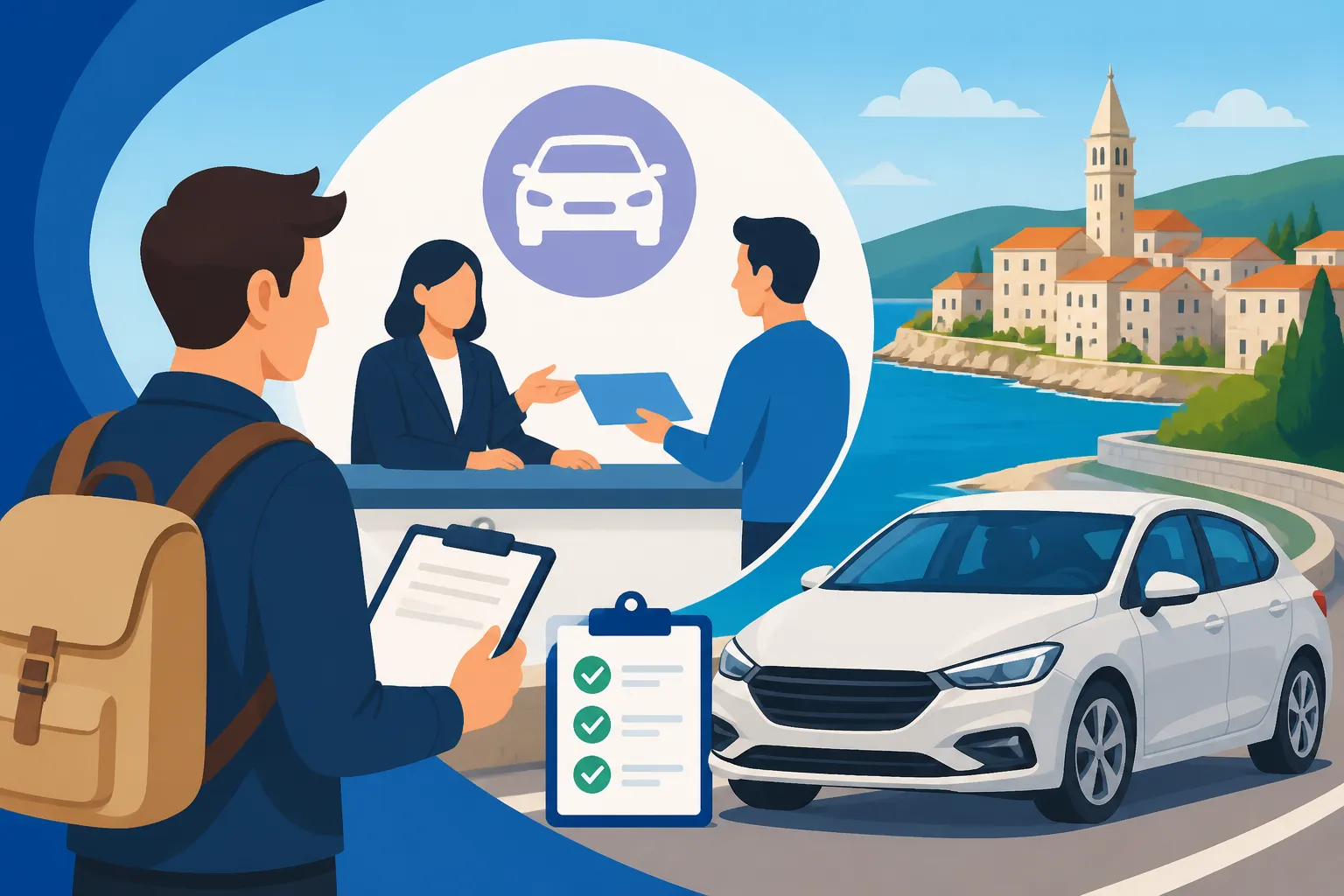
How Do I Register a Car in Croatia as a Foreigner?
Ah, the sheer joy of navigating Croatian bureaucracy! If you’ve just arrived in Croatia, or are planning to, and have visions of cruising down the Adriatic coast in your own set of wheels, you’re likely already feeling the cold sweat of administrative hurdles. Registering a car as a foreigner here can feel like trying to solve a Rubik's Cube blindfolded, especially with all the forms, stamps, and offices involved. But don’t despair; this guide will walk you through every twist and turn, helping you understand the process and making sure your car is legally on Croatian roads without too many headaches.
The Initial Shock: Understanding the Bureaucracy Before You Start
Let's be honest, bureaucracy in Croatia is legendary. What might take a day or two in other countries can stretch into weeks here, mainly due to the multi-layered process and the need to visit several different institutions. Don't go into this expecting efficiency; go in prepared and with a healthy dose of patience.
Why Is This So Complicated?
You're not imagining it; the process is complicated. Croatia, like many countries, has distinct procedures for registering vehicles, and these become even more intricate when you're a foreigner. There are different rules for EU/EEA citizens versus non-EU citizens, for new cars versus used cars, and for imported vehicles versus those purchased locally. The underlying reason for the complexity is often a combination of tax regulations, road safety standards, and simply the way the system has evolved over time. You’ll be dealing with everything from customs (if you're bringing a car from outside the EU) to technical inspections, tax offices, and the good old Ministry of Interior (MUP). It’s a chain reaction, where one step cannot begin until the previous one is fully completed and documented.
Key Players in the Registration Process
To make sense of it all, it helps to know who the main players are and what role they perform in getting your car legally registered:
- MUP (Ministarstvo Unutarnjih Poslova – Ministry of Interior): This is where you'll ultimately register your vehicle and receive your license plates and traffic documents. They handle your residence permit too, so you'll get to know them well.
- CVH (Centar za Vozila Hrvatske – Centre for Vehicles of Croatia): This is the central body overseeing technical inspections and homologation (ensuring your vehicle meets Croatian standards). You won't interact with them directly, but you'll use their authorized stations.
- Technical Inspection Stations (Stanica za tehnički pregled): These are private companies authorized by CVH where your car undergoes its mandatory annual check-up or initial inspection.
- Porezna Uprava (Tax Administration): If you're importing a vehicle from outside the EU or purchasing a used car locally, you'll be dealing with them for various taxes. Understanding How the Croatian Tax Administration (Porezna Uprava) Works is crucial here.
- Insurance Companies (Osiguravajuća društva): You'll need mandatory third-party liability insurance (obvezno osiguranje) before you can register your car. Companies like Croatia Osiguranje or Generali are common choices.
- Car Dealerships/Notaries: If you're buying a car, these entities facilitate the transfer of ownership documents.
Step One: Getting Your OIB and Residence Permit in Order
Before you even think about cars, you need to establish yourself in Croatia. Without your personal identification number and a valid residence permit, nothing else can proceed.
Your Croatian Identity: The OIB
The OIB (Osobni Identifikacijski Broj) is your personal identification number, similar to a tax ID or social security number. It's absolutely foundational for almost everything you'll do in Croatia, from opening a bank account to, you guessed it, registering a car. You cannot register a vehicle in your name without an OIB. You’ll need to apply for it at the local tax office (Porezna Uprava). It’s usually a straightforward process, but ensure you have your passport and residence details ready. For a full rundown, check out our guide on How to Get an OIB (Personal Identification Number) in Croatia.
Proving You Belong: Residence Permit
Your residence permit dictates your legal status in Croatia, and this, in turn, impacts how you register a car. Whether you’re on a temporary residence permit (Privremeni Boravak), a digital nomad permit, or permanent residence, you must have this sorted out first. The MUP is the authority for all residence matters. They need to know you're here legally and have a valid address. This is critical because your car registration documents will be tied to your registered address in Croatia. If you’re just starting, our comprehensive guide on The Expat Guide to Temporary Residence (Privremeni Boravak) in Croatia is a great place to begin. The MUP will verify your address when you apply for your car registration, so make sure your Registering Your Residence in Croatia: The Complete MUP Guide is up-to-date and correctly handled.
Importing Your Car vs. Buying One Locally: A Crucial Decision
This is perhaps the biggest fork in the road, financially and logistically. Should you bring your beloved vehicle from your home country, or simply buy a new (or used) one once you're here? Both options have their own set of challenges and costs.
Bringing Your Own Wheels: Importing a Foreign Vehicle
If you're dead set on bringing your existing car to Croatia, especially if it holds sentimental value or is a specialized model, prepare for a rigorous process.
- Customs and VAT Implications: If your car is coming from outside the EU/EEA, you'll generally face customs duties and VAT (Value Added Tax) upon import. These can be substantial, often calculated on the vehicle's market value. There are exemptions for personal belongings if you're relocating and have owned the car for a certain period (usually 6-12 months) before moving, but these exemptions are strict and require careful documentation. Consult with a customs broker for specifics; they are worth their weight in gold for avoiding costly mistakes.
- Homologation (Certificate of Conformity): Every vehicle must meet Croatian (and by extension, EU) technical and environmental standards. If your car is from an EU/EEA country and has a valid Certificate of Conformity (COC), this step is generally easier. If it’s from elsewhere, you might need individual testing and certification to ensure it complies. This could involve modifications or extensive paperwork if the vehicle doesn't have an existing EU type-approval. You'll typically get this done at one of the CVH-authorized technical inspection stations.
- PPMV (Poseban Porez na Motorna Vozila – Special Car Tax): This is the infamous "car tax" levied on all vehicles when they are first registered in Croatia, whether imported or newly purchased. It's calculated based on a combination of CO2 emissions and the age/value of the vehicle. This tax can be a real shocker, especially for older or more polluting cars. The rates can be quite high, making some imports financially unfeasible. You'll pay this tax at the technical inspection station before you can proceed with registration.
- Logistics of Shipping: If you’re importing, you’ll also need to consider the logistics of getting the car here. This is where services like Sirelo can be incredibly helpful. They specialize in international removals and can assist with vehicle transport, ensuring your car arrives safely and navigating the initial port procedures. Don't underestimate the complexity of this step; a good moving company can save you a lot of hassle.
The Local Purchase: Buying a Car in Croatia
Buying a car locally, whether new or used, can often simplify parts of the registration process, as you bypass customs and homologation headaches.
-
Used vs. New:
- New Cars: Buying a new car from a dealership is usually the most straightforward, as the dealership handles much of the initial registration paperwork, including the PPMV, and ensures the car is compliant.
- Used Cars: This is a popular option. When buying a used car from a private seller, you'll need to go to a public notary to transfer ownership. The buyer (you) is responsible for paying the 3% real estate transfer tax (Porez na promet nekretnina) on the purchase price, which is declared to the tax administration within 15 days of the purchase. If buying from a legal entity (e.g., a used car dealership), VAT is usually included in the price, and you generally won't pay the 3% transfer tax. Our guide on How to Buy a Used Car in Croatia as a Foreigner delves into this in more detail.
-
Initial Registration: Whether new or used, the car will still need to go through a technical inspection if it's new to you, and then you'll proceed with the MUP for plates.
Here's a quick comparison to help you weigh your options:
| Feature | Importing Your Car (from non-EU) | Buying Locally (used or new) |
|---|---|---|
| Customs/VAT | Yes, often significant, unless personal effects exemption applies. | No, already paid or included in price. |
| Homologation | Potentially complex, may require individual testing if not EU-compliant. | Straightforward, generally already EU compliant. |
| PPMV (Special Car Tax) | Yes, calculated on emissions and value, paid at first registration. | Yes, calculated on emissions and value, paid at first registration (by dealer for new, by buyer for used). |
| Transfer Tax | Not applicable (unless you later sell it in Croatia). | 3% real estate transfer tax for private used car sales, typically none for dealer sales. |
| Paperwork Complexity | High (customs, COC, valuations). | Medium (notary for used, simpler for new). |
| Vehicle Choice | Keep your existing car, potentially rare models. | Limited to the Croatian market. |
| Delivery Logistics | Requires international shipping, costs, and careful coordination (e.g., with Sirelo). | Drive it off the lot. |
Navigating Technical Inspections and Insurance
With your car acquired (or about to be), the next two pillars of registration are the mandatory technical inspection and getting your insurance in place. These steps are non-negotiable and must be completed before you can get your license plates.
The Mandatory Technical Inspection (Tehnički Pregled)
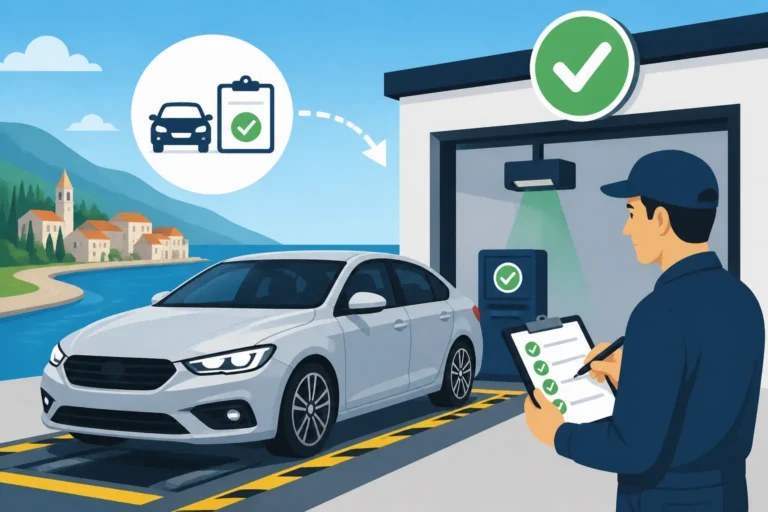
Every vehicle in Croatia, new or old, must undergo a technical inspection. For newly imported vehicles or those changing ownership, this is the initial assessment. After that, it’s an annual affair.
- What They Check: The inspection is comprehensive. They'll check everything from your brakes, lights, tires, suspension, emissions, and chassis, to the basic safety equipment like a first-aid kit, reflective vest, and warning triangle. They also verify the vehicle's documentation, VIN, and engine numbers. Think of it as an MOT or TÜV check.
- Finding a Station: You can find a "stanica za tehnički pregled" in almost any decent-sized town. They are clearly signposted. Simply drive up, take a number, and wait your turn. The staff will guide you through the process, but having a Croatian speaker with you can be very helpful if your language skills aren't yet up to par. For a more detailed walkthrough, see our guide on Understanding Vehicle Technical Inspection (Tehnički Pregled) in Croatia.
- Initial vs. Annual Inspections: The initial inspection for an imported vehicle or a newly purchased used vehicle might be more involved than subsequent annual checks. Once your car passes, you'll receive a certificate which is essential for the MUP. If it fails, you'll be given a list of deficiencies that need to be fixed, and then you'll return for a re-inspection.
Getting Your Car Insured in Croatia
Mandatory third-party liability insurance (obvezno osiguranje) is not just a good idea; it's a legal requirement to register and drive a car in Croatia. Without it, the MUP simply won't process your registration.
- Mandatory vs. Comprehensive:
- Mandatory (Obvezno Osiguranje): This covers damages you might cause to other vehicles or property in an accident. It does not cover damage to your own vehicle. This is the minimum legal requirement.
- Comprehensive (Kasko Osiguranje): This is optional but highly recommended. It offers much broader coverage, including damage to your own vehicle (even if you're at fault), theft, fire, natural disasters, and often includes roadside assistance.
- Local Providers: You'll find many reputable insurance companies in Croatia, including established names like Croatia Osiguranje, Euroherc, Generali, Uniqa, and Allian. It's always a good idea to get quotes from a few different providers to compare prices and coverage. Many technical inspection stations also have insurance desks on-site, allowing you to get your insurance immediately after passing the inspection.
- No-Claims Bonus Transfer: If you have a history of safe driving and a "no-claims bonus" from your previous country, some Croatian insurance companies might recognize it, especially if it's from an EU/EEA country. You'll need to provide official documentation from your previous insurer, translated into Croatian, proving your claim history. Don't assume this will automatically apply; confirm with your chosen insurer.
The Actual Registration: MUP and Plates
With your OIB, residence, vehicle, technical inspection, and insurance all sorted, you’re finally ready for the big one: the MUP. This is where you bring all your meticulously gathered paperwork and walk out with legal Croatian license plates and vehicle documents.
Gathering Your Paperwork
This is arguably the most critical step. Get your documents in order, neatly organized, and make sure you have both originals and copies. Missing a single document can send you back to the start.
Here's a checklist of common documents you'll need:
- Passport or valid ID: Proof of identity.
- OIB: Your Croatian identification number.
- Valid Residence Permit: Proof of your legal residency in Croatia.
- Proof of Vehicle Ownership: This could be the purchase contract (from a private seller or dealership), the original foreign vehicle registration certificate (if imported), or customs declaration papers.
- Technical Inspection Certificate: Proof that your vehicle has passed its check-up.
- Proof of Mandatory Car Insurance: Your valid insurance policy.
- Certificate of Conformity (COC) / Homologation Document: Especially important for imported cars, proving it meets EU standards.
- Proof of PPMV payment: The special car tax.
- Proof of any other applicable taxes paid: Such as the 3% transfer tax for used car purchases.
- Filled-out MUP application forms: These are usually available at the MUP office or can sometimes be downloaded online.
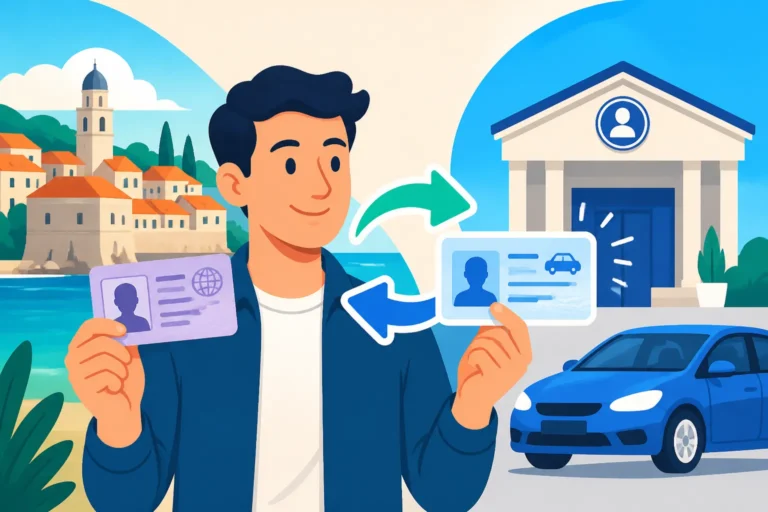
Don't forget that you'll also need a valid Croatian driving license, or have commenced the process of exchanging your foreign license. For more on that, see How to Exchange Your Foreign Driving Licence in Croatia.
The MUP Appointment
Once you have everything ready, head to your local MUP office that handles vehicle registration. In larger cities like Zagreb or Split, you might need to make an appointment online or through a local MUP kiosk, especially for residence-related matters. It’s always best to check their website or call ahead to see if appointments are required for car registration specifically. While waiting for your appointment or navigating the MUP building, having mobile data can be super helpful for translations or looking up information on the fly. Services like Airalo offer eSIMs for Croatia, ensuring you stay connected.
The MUP officer will meticulously review all your documents. They will enter your vehicle's details into the national registry, assign your license plate number, and process the issuance of your traffic license (prometna dozvola) and vehicle booklet (knjižica vozila). These are the two primary documents proving your car is legally registered and belongs to you. The prometna dozvola is the larger document and functions as your main registration certificate, while the knjižica vozila contains technical details and ownership history. Make sure all details (your name, OIB, vehicle details) are accurate before you leave!
Your Shiny New Croatian Plates
Once all the paperwork is approved and fees are paid, you'll be issued your Croatian license plates (registarske pločice). These are typically handed to you right there at the MUP.
- Standard vs. Customized Plates: Most people get standard plates, which feature two letters representing the city where the vehicle is registered (e.g., ZG for Zagreb, ST for Split), followed by the Croatian coat of arms, and then a combination of numbers and letters. You can, for an additional fee, request personalized plates, but these are significantly more expensive and have specific rules.
- Placement: You'll need to affix these plates to your vehicle yourself. Remember, they are legally required to be displayed correctly and visibly.
For more detailed information on this entire final step, our guide on How to Register a Vehicle and Get Croatian Plates provides an in-depth look.
Ongoing Obligations and What to Expect
Congratulations! Your car is now legally registered in Croatia. But the journey isn't quite over. There are ongoing responsibilities you need to be aware of.
Annual Renewals and Fees
Unlike in some countries where registration is permanent until the car is sold, in Croatia, you must renew your vehicle registration annually. This involves:
- Annual Technical Inspection: Every year, your car will need to pass its tehnički pregled.
- Annual Insurance Renewal: Your mandatory third-party liability insurance needs to be renewed annually.
- Payment of Annual Fees: There are various annual fees, including road tax (cestarina), environmental fees, and administrative charges. These are typically paid at the technical inspection station when you do your annual check.
It’s a good idea to set a reminder for your renewal date, as driving an unregistered vehicle carries significant penalties.
Selling Your Car as a Foreigner
If you decide to sell your car in Croatia as a foreigner, the process is similar to how you would have bought one locally. You'll need to go to a notary with the buyer to sign a purchase agreement and complete the transfer of ownership. The new owner will then be responsible for the 3% transfer tax and the subsequent registration in their name. Keep all your registration and ownership documents safe, as they'll be vital for any future sale.
Dealing with Roadside Assistance and Emergencies
Now that you're registered, you'll be driving on Croatian roads. It's wise to be prepared for any eventuality. Most comprehensive insurance policies offer roadside assistance, but you can also purchase separate memberships with organizations like HAK (Hrvatski Autoklub – Croatian Automobile Club), which offers excellent nationwide roadside assistance, travel information, and technical support. Remember the general emergency number 112 for any urgent situations. Familiarize yourself with local traffic laws and driving customs. Our guide to Driving in Croatia: Licences, Registration and Rules for Expats (2027) will give you a leg up on what to expect on the roads.
This entire process, while admittedly a bit of a marathon, is a rite of passage for many expats in Croatia. With careful preparation, patience, and a little local guidance, you'll soon be enjoying the freedom of the open road.
Disclaimer
The information provided in this guide is for general informational purposes only and does not constitute legal, financial, or professional advice. While we strive to keep the information accurate and up-to-date, regulations and procedures in Croatia can change. It is highly recommended to consult with relevant Croatian authorities (MUP, Porezna Uprava, CVH) or a local legal professional for advice tailored to your specific situation. We do not accept responsibility for any loss which may arise from reliance on the information in this guide.