How to Set Up Online Banking and IBAN Transfers in Croatia
Moving to Croatia means dealing with a lot of new systems, and let's be honest, setting up your finances can feel like navigating a maze blindfolded. From getting your paycheque to paying bills and sending money back home, it all hinges on getting your online banking and IBAN transfers sorted. This guide is going to walk you through the ins and outs, sharing the nitty-gritty details you need to manage your money efficiently and without too many headaches in your new Croatian life.
Why Online Banking is Essential for Expats in Croatia
When you first arrive, everything feels new and exciting, but eventually, the mundane tasks of life kick in. Paying bills, managing subscriptions, and transferring money become everyday necessities. This is where online banking truly shines, especially for us expats who often juggle finances across borders. Relying on physical bank branches for every transaction just isn't sustainable in the modern world, and Croatia's banking system, while traditional in some ways, has fully embraced digital solutions that can make your life so much easier.
Convenience at Your Fingertips
Imagine never having to rush to a bank branch during specific opening hours, often clashing with your own work schedule, just to pay a utility bill or check your balance. That’s the beauty of online banking. Most Croatian banks offer robust online platforms and mobile applications that put the power of your finances directly into your hands, 24/7. Whether you're in the bustling centre of Zagreb or enjoying a quiet coffee in a coastal town, you can manage your money from anywhere with an internet connection.
This convenience extends to paying for just about anything. From your monthly electricity bill with HEP to your mobile phone plan, rent, or even local taxes, most service providers offer options to pay via online banking using a simple payment slip (uplatnica) code. This means no more queuing at the post office or Fina, which can be a real time-saver and stress reducer, especially if your Croatian isn't quite fluent yet.
Streamlining International Transfers
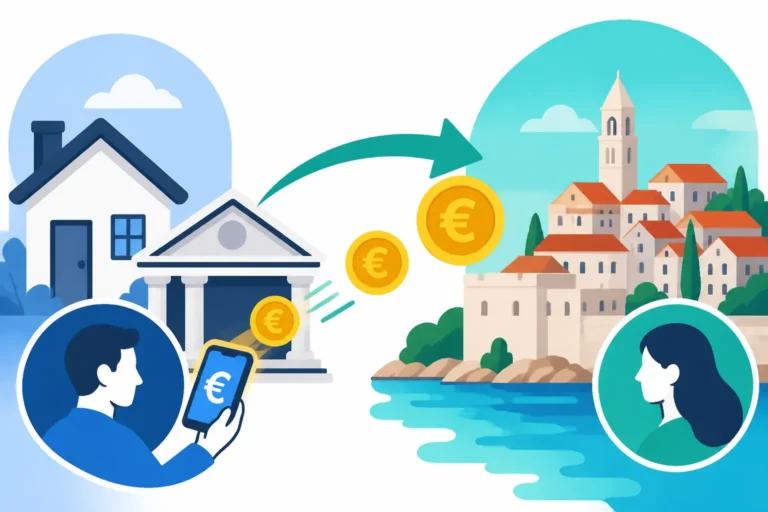
For many of us, our financial lives aren't confined to Croatia. We might need to send money to family abroad, receive funds from a foreign employer, or manage investments in our home country. Online banking, coupled with the ubiquitous IBAN system, makes these cross-border transactions possible, though not always cheap or fast. Croatian banks facilitate international transfers, allowing you to move funds to and from accounts globally.
However, it's worth noting that traditional bank-to-bank international transfers can sometimes come with hefty fees and less-than-favourable exchange rates, not to mention often frustratingly long processing times. This is why many expats also turn to alternative services like Wise (formerly TransferWise) for more cost-effective and quicker international money transfers. It's about finding the right tool for the job, and knowing your options can save you a significant amount over time.
Enhancing Financial Control and Security
Online banking provides an unparalleled level of transparency and control over your finances. You can instantly view your transaction history, track your spending, and set up alerts for specific activities. This vigilance is crucial for financial planning and for quickly identifying any suspicious activity, adding an extra layer of security. Most platforms also offer features like setting spending limits, blocking cards, and managing direct debits with ease.
While the thought of digital banking can sometimes raise security concerns, Croatian banks invest heavily in protecting your accounts. They employ multi-factor authentication, encryption, and other advanced security protocols. Typically, this involves using a physical token generator or a mobile app on your smartphone to generate one-time passwords, ensuring that only you can access your account, even if someone somehow got hold of your login details. This robust security provides peace of mind, allowing you to manage your money with confidence.
Getting Started: Prerequisites for Croatian Online Banking
Before you can dive into the world of digital banking in Croatia, there are a few foundational steps you absolutely need to take. Think of these as your building blocks; without them, the whole structure won't stand. Trust me, I've seen countless expats get stuck at this stage, so let's break it down thoroughly.
Securing Your OIB
The OIB, or Osobni Identifikacijski Broj, is your personal identification number in Croatia, and it's absolutely non-negotiable for almost every official interaction, including banking. You cannot open a bank account or access online banking services without one. It’s like your social security number, but for Croatia. The good news is that obtaining an OIB is generally one of the smoother administrative processes for new arrivals.
You typically get your OIB through the Tax Administration (Porezna Uprava). If you're applying for a residence permit, it's often issued automatically as part of that process. If not, you'll need to visit a local Porezna Uprava office with your passport (and often a copy of your birth certificate, translated if necessary, though this varies by office). The process itself usually doesn't take long, and you'll often walk out with your OIB on a piece of paper, or have it emailed to you, ready for your banking appointment. Make sure to keep this number safe, as it will follow you through all your financial dealings in Croatia. For a deep dive into this crucial step, check out our guide on How to Get an OIB (Personal Identification Number) in Croatia.
Opening Your Croatian Bank Account
Once your OIB is in hand, the next critical step is opening a bank account. This is where many expats encounter their first real "welcome to Croatian bureaucracy" moment. While some banks are becoming more expat-friendly, others might still give you a bewildered look when you walk in without a full command of the Croatian language or a local friend to translate. It's not uncommon to be asked for more documents than you initially thought, so always go over-prepared.
Generally, you'll need your OIB, a valid passport, and often proof of your Croatian residence (your residence card or temporary residence approval). Some banks might also ask for proof of employment or income, though this is less common for basic accounts. When choosing a bank, consider larger institutions like Zagrebačka banka (often called Zaba), Privredna banka Zagreb (PBZ), Erste&Steiermärkische Bank, or OTP Banka. These usually have more experience with international clients and are more likely to offer English-speaking staff. It’s always a good idea to research and compare their offerings for expats. We have a dedicated resource on The Expat Guide to Opening a Bank Account in Croatia which covers this in more detail, along with a helpful guide on How to Choose the Best Bank for Expats in Croatia.
Understanding Initial Setup and Activation
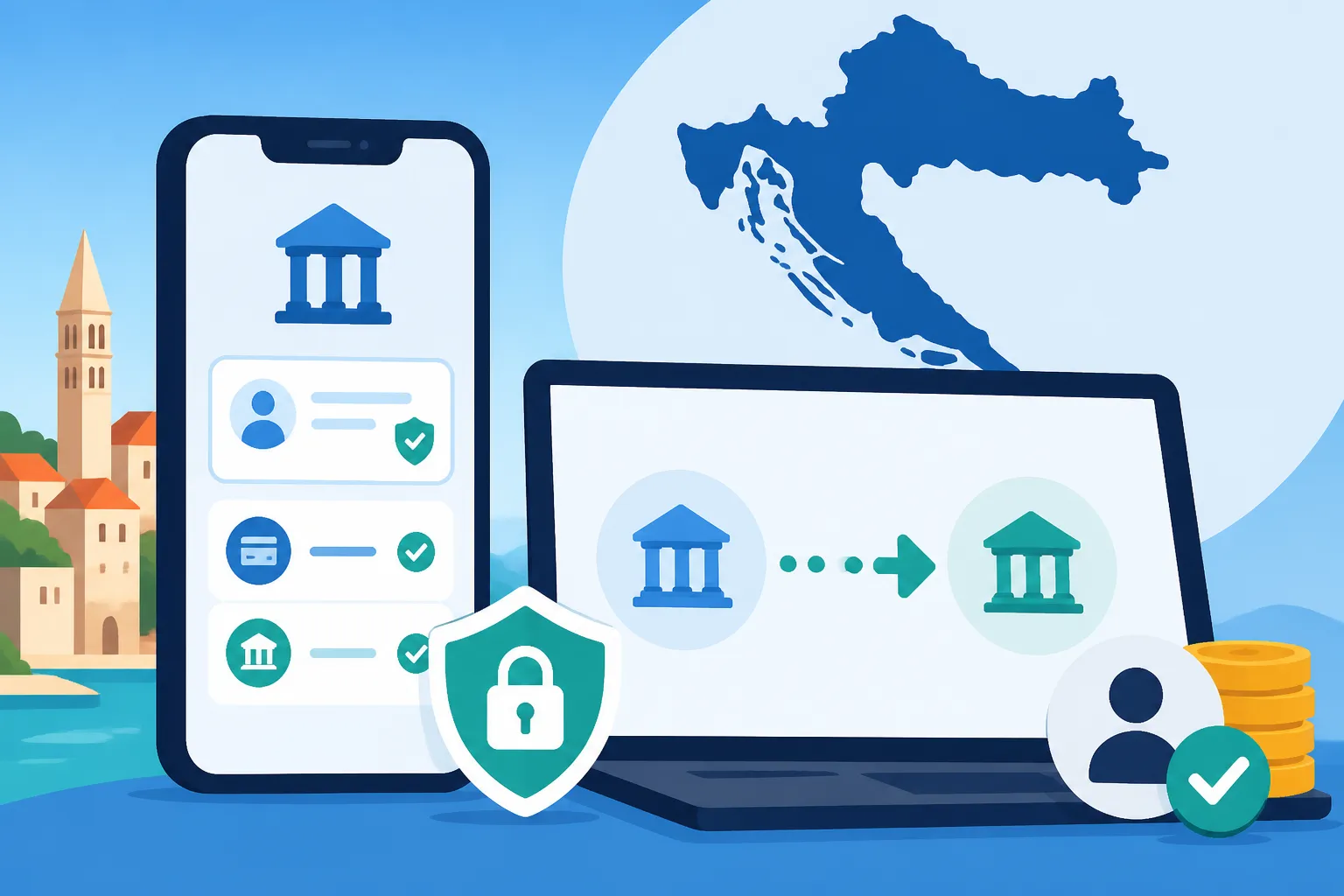
Once your account is open, the bank will guide you through activating your online banking. This usually involves several components: your user ID, a password, and a security device or app for two-factor authentication. Historically, many Croatian banks provided a small physical token generator (mToken or Token) that produces one-time passcodes. While some older accounts might still use these, the trend is definitely towards mobile banking apps that incorporate this functionality directly onto your smartphone.
For instance, with Zaba or PBZ, you'll download their respective mobile banking app and activate the mToken feature within it. This app then becomes your portal for generating login codes and approving transactions. The activation process typically requires a one-time code sent to your registered phone number or email, and possibly an initial login through a computer to set everything up. It’s a bit of a dance, but once it's done, you're usually good to go. Make sure your phone number registered with the bank is always up-to-date, as it's crucial for these security features and for receiving SMS notifications.
Navigating Croatian Online Banking Platforms
So, you’ve got your OIB, your bank account is open, and you’ve managed to activate your online banking and mToken. Congratulations! Now comes the fun part: actually using it. Croatian online banking platforms, while functional, might look a little different from what you're used to back home. They're robust, but sometimes the user interface can feel a bit… utilitarian.
Common Features and Functionality
Most Croatian online banking platforms offer a comprehensive suite of services designed to cover all your financial needs. You'll find sections for viewing your account balances and transaction history, which is often the first stop for many users. Here, you can track your spending, identify direct debits, and ensure everything looks in order. You'll likely also find options to download account statements, which are essential for everything from tax filing to visa renewals.
Beyond basic viewing, you'll have the capability to make various types of payments. This includes local transfers to other Croatian bank accounts using the recipient's IBAN (we'll dive deeper into IBANs shortly!), paying utility bills using the 2D barcode scanner on your mobile app or by manually entering payment slip details (uplatnica), and setting up standing orders for recurring payments like rent. International transfers are also typically available, although as mentioned, these can sometimes be more cumbersome and costly than alternative services. Some banks also offer investment options, savings accounts, and credit card management directly through their online portals, giving you a full overview of your financial portfolio.
Understanding the User Interface
The layout and design of Croatian online banking interfaces can vary significantly between banks, but they generally follow a logical structure. You'll often see a main dashboard upon logging in, providing an overview of your accounts. Look for menu options or tabs that translate roughly to "Accounts" (Računi), "Payments" (Plaćanja), "Cards" (Kartice), "Savings" (Štednja), and "Settings" (Postavke). Many platforms also offer language options, so if your bank supports it, switch to English to make navigation much smoother.
Don't be afraid to click around and explore. Most actions, especially payments, will require a final confirmation using your mToken or a similar two-factor authentication method, so you can't accidentally send money with a stray click. Pay close attention to details when making transfers, especially the recipient's IBAN and the payment description (opis plaćanja), as mistakes can be difficult to rectify. It's often helpful to first make a small test transfer if you're unsure, especially for new recipients.
Mobile Banking Applications
In today's fast-paced world, mobile banking apps are practically indispensable. All major Croatian banks offer dedicated mobile apps for both iOS and Android devices, often replicating and sometimes even enhancing the functionality of their desktop platforms. These apps are generally more user-friendly, offering quick access to your balances, a simplified payment process (including barcode scanning for bills), and the integrated mToken for security.
Using a mobile app, you can often snap a photo of a payment slip's 2D barcode, and all the relevant payment information (recipient, amount, reference number) will be automatically populated, significantly reducing the chances of error and saving you from tedious manual entry. This feature alone is a lifesaver for managing monthly expenses like electricity, water, and internet bills. Just ensure you download the official app directly from your bank's website or the official app stores, and always keep it updated to benefit from the latest security enhancements and features. These apps really do simplify paying bills and managing your money on the go.
Mastering IBAN Transfers in Croatia
The IBAN (International Bank Account Number) is the backbone of modern banking in Europe, and Croatia is no exception. Understanding how to use it, both for domestic and international transfers, is crucial for anyone managing their finances here. Forget complicated routing numbers; the IBAN is your single identifier for bank accounts. For insights into securing your specific bank account details, our guide on How Do I Get an IBAN for a Croatian Bank Account? can be helpful.
Domestic IBAN Transfers
Making a domestic transfer within Croatia is usually straightforward and relatively quick. All Croatian bank accounts have an IBAN, which is a unique string of alphanumeric characters starting with "HR" (for Croatia) followed by 19 digits. To send money, you’ll need the recipient’s full name or company name, their IBAN, and typically a payment description (opis plaćanja). The payment description is important, especially for invoices or specific transactions, as it helps the recipient identify your payment.
When you initiate a payment through your online banking platform or mobile app, you’ll enter these details into the designated fields. For instance, if you're paying a tradesperson for work done on your apartment, they'll provide an invoice with their IBAN and possibly a "poziv na broj" (reference number). You'll typically enter this reference number in the 'Reference number of the payer' (Poziv na broj platitelja) field. Most domestic transfers within Croatia are processed quickly, often within the same business day if initiated before a certain cut-off time (usually around 2 PM or 3 PM), or by the next business day. Funds are rarely delayed beyond 24 hours for internal Croatian transfers.
International IBAN Transfers
This is where things can get a little more complex, and often more costly, with traditional Croatian banks. International IBAN transfers, especially to non-EU countries, can incur a range of fees, including your bank's outbound transfer fee, intermediary bank fees, and the recipient bank's inbound transfer fee. The exchange rate offered by your bank can also significantly impact the final amount received. For this reason, many expats look beyond traditional banking when sending money internationally.
This is where services like Wise come into play. They specialize in international money transfers, often offering mid-market exchange rates and transparent, lower fees compared to conventional banks. You can typically initiate transfers directly from your Croatian bank account to a Wise account, or use their platform to send money from your debit/credit card. For example, if you need to send euros to a family member in the US, Wise might convert it at a much better rate and charge a smaller, upfront fee, ensuring more money reaches the recipient. Our article on Can I Use Revolut or Wise Instead of a Croatian Bank? provides more context on these services. When considering the overall cost of living, understanding these fees is essential, and our guide on What Bank Fees Should Expats Expect in Croatia? can offer further clarity.
Fees, Exchange Rates, and Speed
When making any IBAN transfer, whether domestic or international, it's vital to be aware of the associated costs and timings. Domestic transfers are generally very cheap, often just a few cents per transaction or included in your monthly account maintenance fee. International transfers, however, are a different beast. Banks might charge a percentage of the transferred amount, a flat fee, or both, plus potentially unfavourable exchange rates.
Processing times also vary. While domestic transfers are swift, international transfers can take anywhere from 1 to 5 business days, sometimes longer if there are multiple intermediary banks involved or if the transfer is to a less common destination. Always check your bank’s fee schedule for international transfers. For larger sums or frequent transfers, the difference in fees and exchange rates offered by your bank versus a specialist service like Wise can be substantial, leading to significant savings over time. If you're managing foreign income, this is particularly relevant, and our guide on How to Report Foreign Income to the Croatian Tax Administration can offer valuable context.
| Transfer Type | Typical Speed (Business Days) | Average Bank Fees (approx.) | Common Alternatives & Benefits |
|---|---|---|---|
| Domestic HRK | Same day to 1 | €0.15 – €0.50 (often included in monthly fee) | N/A (Banks are efficient for HRK) |
| International (within EU/EEA – SEPA) | 1-2 | €0.50 – €5.00 | Wise, Revolut (often lower fees, better rates) |
| International (outside EU/EEA – SWIFT) | 2-5+ | €10 – €50+ (can be percentage-based, plus intermediary fees) | Wise, Revolut (significantly better exchange rates, transparent fees) |
Troubleshooting Common Online Banking and Transfer Issues
Even with the best preparation, you might still hit a snag or two with Croatian online banking. It happens to the best of us. The key is knowing what to do when you encounter a problem, rather than panicking. Patience, and sometimes a little bit of persistence, will be your best allies here.
Technical Glitches and Login Problems
It’s an annoying scenario: you’re trying to log into your online banking or mobile app, and suddenly it's not working. Maybe your mToken isn't generating codes, or the app keeps crashing, or you’ve forgotten your password. These technical glitches are common across all digital platforms. Your first port of call should always be to double-check your internet connection and ensure your mobile banking app is updated to the latest version. Sometimes a simple phone restart can resolve the issue.
If you’ve forgotten your password or your mToken isn't working, resist the urge to keep trying and potentially lock your account. Instead, look for the "Forgot Password" or "Unlock Account" option on the login page. This usually initiates a recovery process that might involve answering security questions or receiving a verification code to your registered phone. If that doesn't work, or if you're locked out, you'll likely need to contact your bank's customer support. Be prepared to provide your OIB and other personal details for verification. In some cases, for security reasons, they might require you to visit a branch to reset your login credentials, which can be a pain, but it's for your own protection.
Failed or Delayed Transfers
One of the most frustrating issues is a transfer that doesn't go through or takes much longer than expected. For domestic transfers, delays are rare, but if it's not appearing in the recipient's account within one business day, first confirm with the recipient that they haven't received it. Then, double-check the IBAN you entered – a single digit error can cause a transfer to fail or, worse, go to the wrong account. If you've made an error, contact your bank immediately; they might be able to recall the funds, though this isn't guaranteed and can incur fees.
For international transfers, delays are more common due to different banking systems, time zones, and intermediary banks. If an international transfer is delayed, first check your online banking statement to see if the funds have actually left your account. If they have, try to trace the transaction using any reference numbers provided by your bank. If using a service like Wise, they usually provide real-time tracking. If the delay persists, contact your bank's international transfers department. Be patient, as these investigations can take time. It's also worth noting that national holidays in either the sending or receiving country can significantly impact transfer speeds.
Security Concerns and Fraud
In the digital age, security is paramount. While Croatian banks have robust security, you are often the first line of defence against fraud. If you notice any suspicious transactions on your account or receive unexpected SMS messages or emails purporting to be from your bank asking for personal information, treat them with extreme caution. Phishing scams are prevalent everywhere, and Croatia is no exception.
Never click on suspicious links or provide your login details, mToken codes, or credit card information in response to unsolicited communications. Your bank will never ask for your full password or mToken codes via email or SMS. If you suspect your account has been compromised, or if your phone (with your mToken) is lost or stolen, contact your bank immediately to freeze your account and cards. Most banks have a 24/7 fraud hotline. Acting quickly can prevent significant financial loss. Regularly checking your account statements, as advised in our guide to Understanding Income Tax in Croatia: The Full Expat Guide, helps keep an eye on your financial health.
Tips for Secure and Efficient Online Banking in Croatia
Living as an expat in Croatia means managing your finances in a new environment, and setting yourself up for success with online banking can save you a world of grief. After years of navigating this system, I’ve picked up some essential habits that I wholeheartedly recommend.
Utilize Mobile Banking Apps to Their Full Potential
The mobile banking apps offered by Croatian banks are often far more user-friendly and efficient than their desktop counterparts. Make sure you download and actively use your bank's official app. The integrated mToken functionality means you don't need to carry a separate device, and features like 2D barcode scanning for bills are incredibly convenient. Instead of manually typing in long strings of numbers for your electricity, water, or internet bill, simply open the app, select the payment option, scan the barcode on your physical or digital invoice, and confirm. It’s quick, reduces errors, and keeps all your payment records in one accessible place.
Beyond payments, use the app to check your balances frequently, set up notifications for incoming and outgoing transactions, and manage your cards. Many apps allow you to temporarily block or unblock your card, change daily spending limits, or report a lost/stolen card immediately, all from your phone. This proactive approach gives you immense control over your finances and can be incredibly helpful when budgeting or dealing with unexpected situations.
Embrace International Money Transfer Services for Cross-Border Payments
For any transfers outside of Croatia, particularly those involving currency exchange, seriously consider using dedicated international money transfer services over traditional bank wire transfers. Companies like Wise have revolutionized how expats send money across borders by offering significantly better exchange rates (often the real mid-market rate) and much lower, transparent fees. The difference can add up to substantial savings over time, especially if you’re regularly sending or receiving money from your home country or other international sources.
While your Croatian bank can certainly handle international SWIFT transfers, they often come with hidden costs embedded in less favorable exchange rates, and can take longer to process. Services like Wise, on the other hand, typically complete transfers within 1-2 business days, sometimes even faster. Integrating such a service into your financial routine is a smart move for any expat with international financial ties.
Maintain Vigilance Against Scams and Phishing Attempts
Unfortunately, the digital world comes with its share of risks, and financial scams are a global problem. As an expat, you might be seen as a potentially easier target due to unfamiliarity with local customs or language nuances. Always be on high alert for suspicious emails, SMS messages, or phone calls claiming to be from your bank or any other official institution. These "phishing" attempts try to trick you into revealing sensitive information like your login credentials, PINs, or mToken codes.
Remember these golden rules: your bank will never ask you for your full password, PIN, or mToken codes via email, SMS, or an unsolicited phone call. If you receive a suspicious message, do not click on any links. Instead, navigate directly to your bank's official website or open your mobile app to check for any alerts. If in doubt, call your bank's official customer service number (found on their website or the back of your bank card, not from the suspicious message) to verify. Regularly changing your passwords and enabling all available security features, such as transaction notifications, will add extra layers of protection.
Disclaimer
The information provided in this guide is for general informational purposes only and does not constitute financial, legal, or professional advice. While we strive to keep the information up-to-date and accurate, banking regulations, fees, and services in Croatia can change. Always consult with your specific bank or a qualified financial advisor for advice tailored to your personal circumstances. We are not responsible for any actions taken based on the information presented herein.