Can I Be Self-Employed and Employed at the Same Time in Croatia?
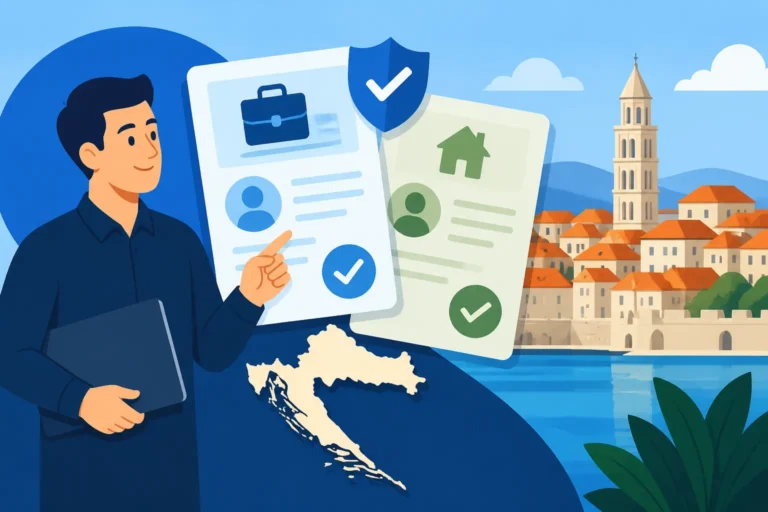
Living in Croatia often means navigating a bit of a bureaucratic maze, and sometimes, you find yourself wondering if you can juggle multiple hats to make ends meet or pursue a passion project. Many of us expats arrive with one job, only to discover a new business idea or a desire to freelance on the side. This guide dives deep into whether you can legally and practically be both employed by a Croatian company and run your own self-employed venture, like a paušalni obrt, at the same time, giving you the full, unvarnished truth about the intricacies involved.
Understanding the Legal Framework for Dual Status in Croatia
It's a common misconception that once you're employed, your options for additional income are severely limited. Thankfully, Croatia's legal framework is generally quite open to individuals pursuing multiple avenues of work, provided you meet certain conditions and fulfill all your obligations. This flexibility can be a real boon for those looking to diversify their income or simply explore entrepreneurial ambitions without giving up the security of a steady job. However, it's not a free-for-all, and understanding the nuances is crucial to avoid any headaches down the line.
Croatian Labour Law and Multiple Engagements
Croatia's Labour Law (Zakon o radu) doesn't explicitly forbid an employee from engaging in other work, including self-employment. What it does care about are a few key things: loyalty to your primary employer, preventing conflicts of interest, and ensuring you're not working so much that it impairs your ability to perform your main job. Many employment contracts will contain clauses about secondary employment or competing activities. It’s absolutely vital to read your employment contract carefully. Some contracts might require you to inform your employer, or even seek their explicit written consent, before you start any significant external work. Others might have non-compete clauses that could restrict the type of self-employment you can pursue, especially if it's in a similar industry.
For example, if you're working as a software developer for a Croatian tech company, and you decide to open a paušalni obrt to freelance as a software consultant for other clients, your primary employer might see this as a conflict of interest or a breach of your non-compete agreement. Even if it's not directly competing, they might have concerns about you using company time or resources, or simply being too fatigued to perform your primary duties effectively. Always, and I mean always, have an open conversation with your employer, ideally getting any agreements or permissions in writing. Ignoring this step can lead to serious consequences, including termination of your employment.
Different Types of Self-Employment Structures
When we talk about self-employment in Croatia, the most common structure for expats looking to run a small business or freelance is the paušalni obrt, also known as a flat-rate trade. This structure is incredibly popular due to its simplified accounting and taxation, which can be a huge relief compared to other business forms. However, it's not the only option. You could also set up a regular obrt or even a d.o.o. (limited liability company). The choice depends largely on your expected income, the nature of your business, and your long-term goals.
For most expats considering simultaneous employment and self-employment, the paušalni obrt is usually the go-to. It allows you to operate quite flexibly, offering services like consulting, design, or even online teaching without the heavy administrative burden of a full company. You can read more about How to Register a Paušalni Obrt (Flat-Rate Trade) in Croatia to understand the initial steps. The key here is that paušalni obrt owners have a simplified tax scheme where they pay a fixed quarterly tax amount based on their previous year's income bracket, rather than being taxed on actual profit. This predictability can be really appealing when you're also managing a full-time salary.
However, if your self-employment income is expected to be quite high, or you plan to take on significant liabilities, a d.o.o. might be more appropriate, though it comes with more complex administration and tax obligations. It's truly a spectrum, and understanding these options is the first step in deciding if dual status is right for you.
Navigating the Administrative and Practical Challenges
So, you've decided to go for it. Great! But hold your horses, because while it's possible, it's not always straightforward. Croatia, bless its heart, has a knack for making administrative processes a test of patience, and combining two different employment statuses can amplify that. You'll be dealing with different governmental bodies for your employment and your self-employment, each with its own rules and forms.
Registration and Bureaucracy
The first hurdle is always registration. For your employed status, your employer handles most of the heavy lifting with the Croatian Health Insurance Fund (HZZO) and the Croatian Pension Insurance Institute (HZMO). But for your self-employment, that burden falls squarely on your shoulders. You'll need to register your obrt with the relevant authorities, which includes getting an OIB (personal identification number) if you don't already have one, and then officially registering your business activity. You can learn more about How to Register as Self-Employed in Croatia as an Expat.
Once your obrt is registered, you'll need to deal with the local tax administration (Porezna Uprava) for your paušalni obrt contributions. Remember, even if you're primarily employed, you still have social contributions for your obrt, although they are often calculated differently when you have primary employment. This is where things can get tricky, as the system tries to figure out how much you're already contributing through your main job and adjusts your obrt contributions accordingly. This often means your obrt contributions for health and pension will be lower than if you were only self-employed, because your primary employment covers a significant portion already.
Time Management and Workload
Let's be real: working two jobs, even if one is a "side hustle," is demanding. Expats often underestimate how much time and energy goes into setting up and running a self-employed venture, especially in a new country. There's the actual work for clients, but also invoicing, chasing payments, communicating, and staying on top of administrative tasks. It's a huge time commitment. Many people start their obrt intending to work a few hours a week, only to find it quickly escalates.
Consider your energy levels and your primary job's demands. If your main job involves long hours or frequent travel, squeezing in self-employment can lead to burnout. It's crucial to set realistic expectations for yourself and be honest about how much you can truly handle. Building a successful self-employed venture takes consistent effort, and if you're constantly exhausted from your primary job, your side project might suffer, or worse, both could. For instance, if you're trying to improve your Croatian for better integration or to communicate with clients, using platforms like iTalki might seem like a good idea, but you still need to find the dedicated time for it amidst everything else.
Tax and Social Contribution Implications
This is often the part that sends shivers down an expat's spine, and for good reason. Taxes and social contributions in Croatia can be a bit of a labyrinth, and adding a layer of self-employment on top of regular employment can make it even more complex. However, it’s far from impossible, and with proper understanding, you can manage it efficiently.
Income Tax for Dual Earners
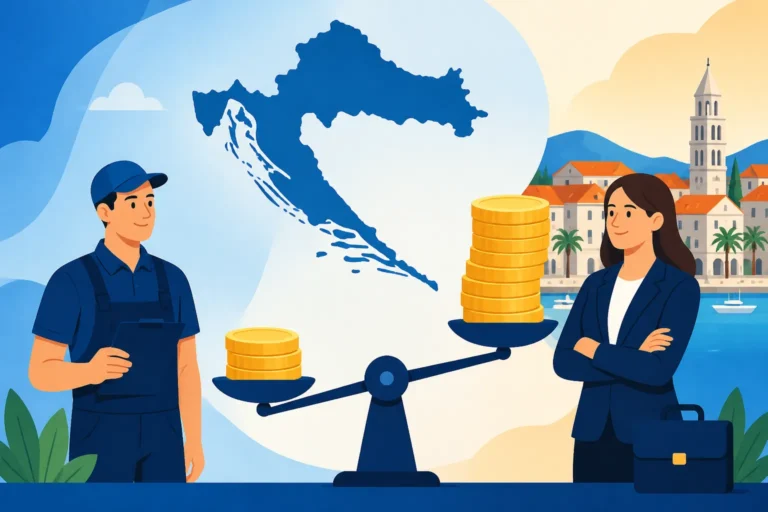
As an employed individual in Croatia, your income tax is generally withheld and paid by your employer. When you also have a paušalni obrt, the income from this venture is taxed separately under its simplified, flat-rate system. This means that the income you generate from your paušalni obrt does not get added to your employment income for the purposes of calculating your main income tax bracket. This is one of the biggest advantages of the paušalni obrt for those who are also employed: your two income streams are taxed independently.
You'll pay your quarterly fixed tax amount for the paušalni obrt to the local Porezna Uprava. The amount depends on which income bracket your obrt falls into, based on your projected annual gross income. You can find detailed information on How Much Tax Does a Paušalni Obrt Pay in Croatia in 2026?. It's crucial to keep good records of your obrt's income, even with simplified accounting, to ensure you stay within your declared bracket and avoid penalties. If your obrt income exceeds the highest paušalni obrt bracket, you would then transition to a different tax regime, which involves more complex accounting and higher tax rates.
Social Contributions When Employed and Self-Employed
This is where many expats get confused. When you're employed, your employer pays health and pension contributions (doprinosi) on your behalf. When you open a paušalni obrt, you are also generally required to pay health and pension contributions for that activity. However, you don't typically pay double the full amount.
The Croatian system recognizes that your primary employment already covers your basic health insurance and pension. Therefore, your obrt contributions for health and pension will be calculated at a reduced rate, or in some cases, you might be exempt from certain obrt contributions if your primary employment contributions are already above a certain threshold. For example, your health insurance contributions from your obrt might be minimal or zero, as your main employment already registers you with HZZO. Your pension contributions for your obrt will typically be calculated on a lower basis than if you were only self-employed, making the combined burden more manageable.
It's essential to consult with a local accountant or a specialized service like Taxes for Expats to get a precise calculation for your specific situation, as these rules can change and depend on your exact employment status and obrt income bracket. They can help you understand How Much Is the Monthly HZZO Contribution for Self-Employed Workers? and how it applies when you're also employed.
Here's a simplified overview of how social contributions might look:
| Contribution Type | Primary Employment (Employer's Obligation) | Paušalni Obrt (Your Obligation, if applicable) | Notes |
|---|---|---|---|
| Mandatory Health (HZZO) | Yes (Full) | Often reduced or zero | Primary employment typically covers your HZZO registration. Obrt might pay a smaller supplementary amount. |
| Mandatory Pension (HZMO) | Yes (Full) | Reduced | Calculated on a lower basis for the obrt, as primary employment also contributes. |
| Income Tax | Employer withholds | Fixed quarterly payment (paušal) | Income streams taxed separately. |
Note: This table provides a general overview. Actual amounts and specific exemptions can vary based on individual circumstances, income brackets, and current legislation. Always seek professional advice.
Annual Tax Return Considerations
While paušalni obrt owners generally don't file a traditional annual income tax return for their obrt income (as it's covered by the fixed quarterly payments), you still need to be aware of the overall picture. If you have significant capital gains from investments, or other types of income beyond your employment and obrt, you might still need to file a comprehensive annual tax return. Moreover, while your obrt income isn't combined with your salary for income tax calculations, it's prudent to ensure all your earnings are declared correctly, especially if you're dealing with international clients and need to demonstrate income for things like loan applications or future residence permit renewals.
For non-EU citizens, accurately reporting income from all sources is critical for maintaining your residence permit. You can delve into Filing Your Annual Tax Return in Croatia: The Complete Walkthrough (2027) for a broader understanding of Croatian tax obligations.
Strategic Considerations for Managing Dual Roles
Deciding to pursue both employment and self-employment is a big step, and it requires careful planning beyond just the legal and tax aspects. There are real-world implications that can affect your personal life, your career trajectory, and your financial stability.
Balancing Risk and Security
One of the primary motivations for many expats to simultaneously work a full-time job and run an obrt is to balance the security of employment with the potential for higher earnings and independence from self-employment. A steady paycheck offers a safety net, covering your basic living expenses and providing a predictable income for things like rent and groceries. This can significantly reduce the pressure on your obrt to become profitable immediately, allowing you to experiment, learn, and grow your side venture more organically.
However, this balance requires vigilance. Don't let the pursuit of your self-employed dream jeopardize your main source of income. As mentioned earlier, clear communication with your employer about any potential conflicts of interest is paramount. Think about it: if your obrt starts taking off, you might face a different kind of decision down the road – do you scale back your primary employment, or take the leap into full-time self-employment? This dual structure provides a fantastic testing ground for such a transition.
Future Planning and Growth
When you're juggling two professional identities, it’s easy to get caught up in the day-to-day grind. But it's vital to think about your long-term goals. Do you envision your obrt eventually becoming your primary income source? Are you using it to build a portfolio, test a new market, or simply explore a hobby that generates a bit of extra cash? Your answers will influence how much time and resources you invest in your self-employed activities.
For example, if your obrt is meant to be a stepping stone to full-time entrepreneurship, you'll want to focus on sustainable growth, client acquisition, and perhaps even building a team. If it's more of a side passion, then the pressure is lower, and you can enjoy the creative freedom without the intense commercial demands. Remember to regularly review your financial situation and business progress. Having two income streams can also significantly impact your overall financial planning, including savings, investments, and even how you manage personal expenses. Organizations like Taxes for Expats can also offer advice on broader financial planning for expats with diverse income portfolios.
Maintaining Well-being
This might sound like a fluffy topic, but it’s arguably the most important one. Working two jobs is tough. It demands discipline, excellent time management, and a strong sense of purpose. It’s easy to neglect your personal life, your health, and your relationships when you’re constantly working. Trust me, I've seen it happen.
Make sure you schedule downtime, protect your weekends, and take actual holidays. Croatia offers so many incredible places to explore and relax, so don't let your dual career prevent you from enjoying them! Maintaining a healthy work-life balance is not just about avoiding burnout; it’s about ensuring you have the energy and mental clarity to excel in both your roles. If you find yourself struggling, consider whether your current approach is sustainable. It's okay to adjust your workload, delegate tasks in your obrt, or even decide to focus on one path if the other becomes too much. Your well-being should always come first.
In summary, yes, you absolutely can be both self-employed and employed at the same time in Croatia. It's a pathway many expats use to create a fulfilling life here, blending security with entrepreneurial spirit. Just be prepared to do your homework, stay organized, and communicate openly with all parties involved.
Disclaimer
The information provided in this article is for general informational purposes only and does not constitute legal, financial, or tax advice. While we strive to keep the information up-to-date and accurate, laws and regulations in Croatia can change rapidly. It is essential to consult with a qualified legal, tax, or financial professional in Croatia for advice tailored to your specific situation before making any decisions. We are not responsible for any actions taken based on the information presented herein.