Can I Get a Job in Croatia Without a Work Permit as an American?
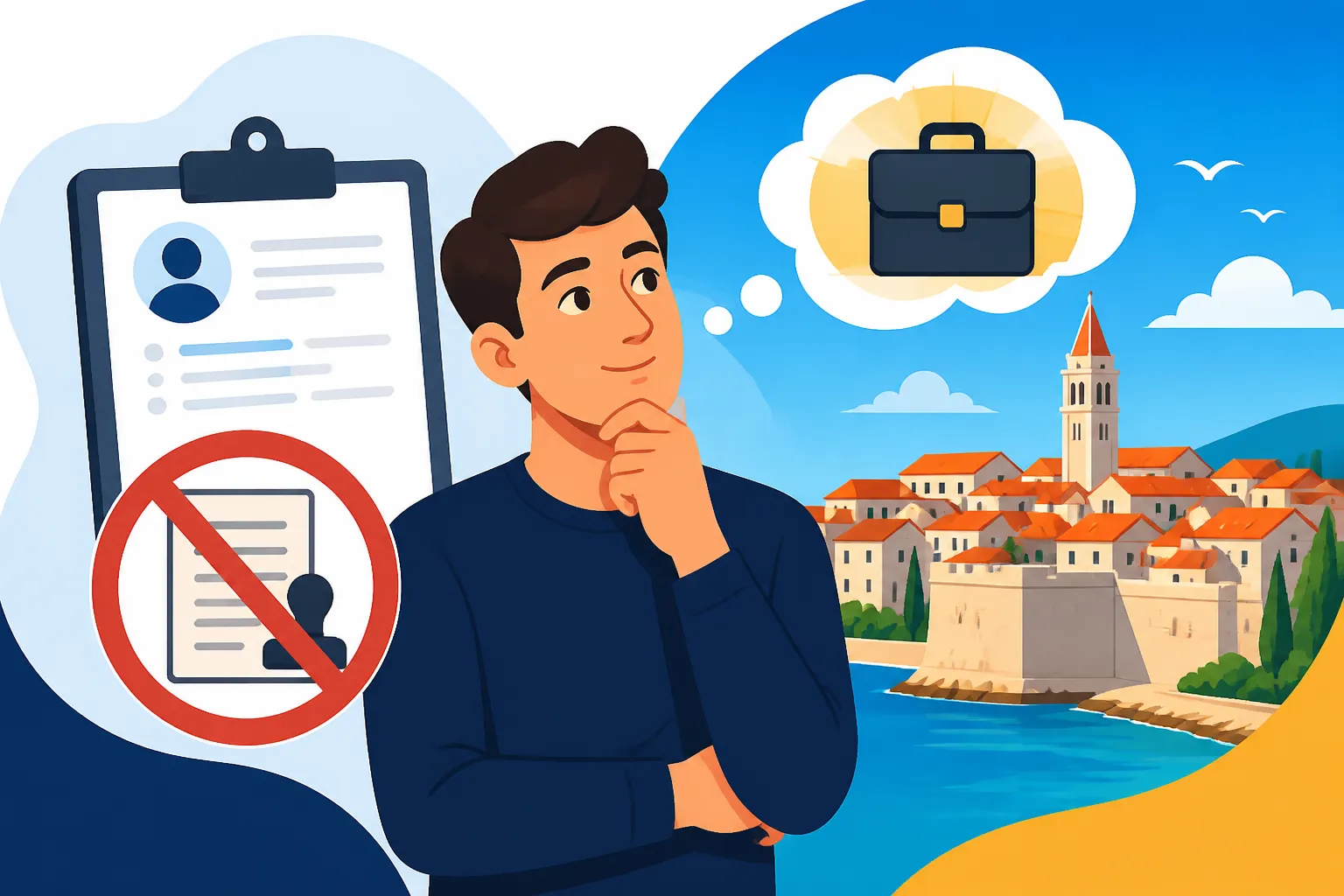
It’s a common dream for many Americans: picturing life by the sparkling Adriatic, enjoying the laid-back rhythm of Croatia while earning a living. But let's be blunt: if you’re hoping to simply find a job with a Croatian employer without first securing a work permit, you're in for a rude awakening. This guide will cut through the red tape, explain the realities for non-EU citizens like Americans, and show you the actual pathways to working and living in this beautiful country.
The Harsh Reality: Why Traditional Jobs Require a Permit for Americans in Croatia
I know, I know, it sounds a bit… unfair, doesn't it? You're a skilled professional, ready to contribute, and you just want to find employment. But for non-EU citizens, Croatia's (and by extension, the EU's) immigration and labour laws are pretty clear-cut: a work permit is almost always the gatekeeper to traditional employment. It's not about your qualifications; it's about the legal framework designed to protect the local labour market.
The Legal Framework: Croatian and EU Employment Laws
Croatia, as a member of the European Union, adheres to specific rules regarding the employment of third-country nationals, which is the official term for citizens from non-EU/EEA countries like the United States. These laws are primarily designed to ensure that Croatian and other EU citizens have priority in the job market. This isn't unique to Croatia; it's a standard practice across the EU. What this means for you, practically, is that a Croatian employer cannot simply decide to hire an American on a whim if there's a qualified Croatian or EU citizen available for the same role. It’s a systemic barrier, not a personal one, but a barrier nonetheless.
The main piece of legislation governing this is the Law on Foreigners, which details the conditions under which non-EU citizens can enter, reside, and work in Croatia. Any long-term stay that involves earning income from a Croatian entity generally requires a residence permit linked to a work permit. You might hear the term "single work and residence permit" – that's often what you'll apply for. It’s a combined document issued by the Ministry of Interior (MUP) after approval from the Croatian Employment Service (HZZ). Getting a work permit is therefore intrinsically tied to your ability to legally reside and be employed in Croatia. You can find more comprehensive details on this process in guides like How to Get a Work Permit and Residence Permit in Croatia.
The "Labour Market Test" and Quotas: What It Means for You
Before a Croatian company can even consider hiring a non-EU citizen, they typically have to jump through several hoops. The most significant of these is the "labour market test," known as test tržišta rada. This involves the employer advertising the position with the Croatian Employment Service (HZZ) for a specific period, usually 15 to 30 days. The goal is to see if any suitable Croatian or EU candidates apply. If a qualified candidate emerges, the employer is legally obligated to prioritize them. It’s a mechanism to ensure that local talent is utilized first.
Only if no suitable local candidates are found, or if the employer can demonstrate that the position is genuinely specialized and requires unique skills not available in the local market, can they then proceed with applying for a work permit for a non-EU citizen. Furthermore, Croatia used to operate with annual quotas for foreign workers in certain sectors, though these have been largely replaced by the labour market test. This adds another layer of complexity and uncertainty to the process. For Americans, this means the job search isn't just about impressing an employer; it's about the employer being able to legally justify your hire to the government, a hurdle that often proves too high for many companies, especially smaller ones.
Employer Responsibilities: Why Companies Can't Just Hire You
For a Croatian employer, hiring a non-EU citizen like an American is a significant administrative undertaking. It involves more bureaucracy, more paperwork, and a longer waiting period compared to hiring a Croatian or EU national. They have to:
- Undergo the labour market test: As mentioned, this means advertising the role and waiting.
- Prepare extensive documentation: This includes proving the necessity of hiring a foreign worker, providing details about your qualifications, and demonstrating they can meet all legal requirements for your employment.
- Sponsor your permit application: The company is essentially vouching for you and facilitating your work permit application with the MUP.
- Potentially higher costs: While not direct, the administrative burden and potential legal fees can make foreign hires less attractive.
Many companies, particularly small to medium-sized businesses (SMEs) that make up a large portion of the Croatian economy, simply don't have the resources or the patience to navigate this complex process. They might prefer to hire locally, even if your skills are excellent, just to avoid the headache. This isn't a slight against you; it's a practical business decision. So, while it's not impossible to find a job with a Croatian company, it's certainly an uphill battle for most Americans without a pre-existing connection or highly specialized, in-demand skills that genuinely cannot be found within the EU. This is why many expats end up exploring alternative routes like those discussed in The Expat Guide to Finding a Job in Croatia (2027).
Beyond the Work Permit: Scenarios for Americans to Live and Work in Croatia
Okay, so traditional employment without a work permit is essentially a non-starter. But don't despair! Croatia has evolved, and there are legitimate, legal pathways for Americans to reside and earn income here, albeit typically not through direct employment with a Croatian company in the conventional sense. These routes demand a different mindset: thinking like an entrepreneur, a remote worker, or leveraging family ties.
The Digital Nomad Visa: Remote Work, Not Local Employment
This is probably the most talked-about and genuinely accessible option for many Americans looking to live and "work" in Croatia without needing a traditional work permit for a Croatian employer. Croatia was one of the first countries in the EU to introduce a specific visa for digital nomads, recognizing the value of these remote workers to the economy. The key distinction here is crucial: with a digital nomad permit, you are explicitly forbidden from working for any Croatian company or delivering services to Croatian clients. Your income must come from outside Croatia.
To qualify for this permit, you need to prove several things, including:
- Proof of remote work: You must be employed by a company outside Croatia or own your own foreign-based company, or be a freelancer with clients outside Croatia.
- Sufficient funds: You need to show you have enough money to support yourself during your stay. The current minimum income requirement (which can change) is generally around €2,500 per month for a single applicant, increasing for additional family members. You'll need to demonstrate stable income, usually through bank statements, for the past several months. For the most up-to-date figures, consult Understanding the Digital Nomad Permit Income Requirements in Croatia.
- Accommodation: You need to show proof of accommodation in Croatia for your intended stay.
- Health insurance: You'll need valid travel or private health insurance for the entire duration of your stay.
The digital nomad permit grants you temporary residence for up to one year, with the possibility of renewal after a six-month break outside Croatia. It's a fantastic option for those who are already location-independent and want to experience Croatian life. It frees you from the complexities of the work permit system entirely because you're not entering the local labour market. This pathway is so popular it has its own dedicated guides, such as The Complete Guide to Croatian Digital Nomad Permit: The Full Guide (2026) and Working Remotely from Croatia: The Definitive Expat Guide (2027).
Self-Employment (Obrt): An Entrepreneurial Path
Another viable option for Americans who want to work in Croatia is to become self-employed by opening an obrt (sole proprietorship or trade business). This essentially means you're creating your own job, becoming an entrepreneur. This pathway, especially the paušalni obrt (flat-rate obrt), is highly attractive due to its simplified tax structure and lower administrative burden compared to other business forms. As an obrt owner, you are not an employee but a business owner, and you can legally offer services or sell products within Croatia (or internationally).
This route requires you to:
- Register your obrt: This involves several steps with various government bodies, including the Croatian Chamber of Trades and Crafts and the Commercial Court. You'll also need to obtain an OIB (personal identification number) if you don't already have one. For detailed steps, see How to Register a Paušalni Obrt (Flat-Rate Trade) in Croatia and How to Get an OIB (Personal Identification Number) in Croatia.
- Secure a temporary residence permit for self-employment: This permit is tied to your obrt activity. You’ll need to prove you have the funds to start and sustain your business and yourself.
- Pay taxes and contributions: While simplified, you'll still have obligations for health insurance contributions, pension contributions, and income tax. The paušalni obrt system offers predictable, lump-sum tax payments, which can be a huge benefit. You'll want to get acquainted with Self-Employment in Croatia: The Paušalni Obrt Guide for Foreigners to understand this fully.
Starting an obrt is a fantastic way to integrate into the Croatian economy and provides a legitimate long-term residence option. It’s perfect for freelancers, consultants, or anyone with a skill they can monetize independently. However, it requires a good business idea, some starting capital, and the willingness to navigate local bureaucracy to get everything set up correctly. This means becoming deeply familiar with Croatian business and tax regulations, perhaps even consulting with a local accountant. Many expats utilize services like "Taxes for Expats" to ensure they are compliant with both Croatian and their home country's tax requirements when operating an obrt.
EU/EEA Family Reunification: Leveraging Spousal Status
For some Americans, the pathway to working in Croatia might come through family ties. If you are married to, or in a registered life partnership with, a Croatian citizen or an EU/EEA citizen who is legally residing and working in Croatia, you may be eligible for a temporary residence permit based on family reunification. This permit typically grants you the right to live and work in Croatia without needing a separate work permit.
The process involves:
- Proving your relationship: Marriage certificates, birth certificates, and other official documents will be required to establish your relationship with the EU/EEA citizen.
- The EU/EEA citizen’s status: Their status (employment, self-employment, or sufficient funds) will determine your eligibility and ability to reside with them.
- Application with MUP: The application is submitted to the Ministry of Interior (MUP), and you'll typically receive a residence card that indicates your right to work.
This is a significantly smoother path to legal employment for Americans, as it bypasses the labour market test entirely. Once you have this type of residence permit, you are essentially treated much like an EU citizen in terms of employment rights within Croatia. You can then actively seek employment with Croatian companies without the employer needing to obtain a work permit for you. For detailed information on this, refer to Family Reunification in Croatia: A Complete Guide for Expats. It’s a game-changer if you have those family connections already established.
Finding Your Footing: Practical Steps and Considerations
No matter which pathway you choose – be it digital nomad, obrt owner, or family reunification – there are universal practical steps and considerations that apply to all Americans seeking to live and work in Croatia. Understanding these nuances early can save you a lot of headaches, trust me. It’s not just about getting the right stamp in your passport; it’s about genuinely integrating and making your life here sustainable.
Proving Sufficient Funds and Accommodation
Across almost all temporary residence applications for non-EU citizens, including those for digital nomads or self-employment, you will need to demonstrate that you have sufficient means to support yourself (and any accompanying family members) and that you have a place to live. The MUP doesn't want people arriving without a safety net, becoming a burden on the state.
- Funds: This typically means showing bank statements for the last few months, sometimes with a letter from your bank, proving a consistent income stream or a substantial lump sum. The exact amounts vary by permit type and whether you have dependents. For instance, the digital nomad visa has clear guidelines. For an obrt, you need to show you have startup capital and enough to live on while your business gets off the ground.
- Accommodation: You'll need a signed rental contract, a notarized statement from a property owner confirming you can live there, or proof of property ownership in your name. This needs to cover the period of your requested residence permit. Securing long-term accommodation can sometimes be a "chicken-and-egg" situation – you need an address for your permit, but landlords might prefer tenants with existing permits. This is a common expat frustration, and it often requires flexibility and persistence.
It's vital to have these documents in order and meticulously translated and apostilled if required. The MUP can be very particular, and any missing detail can lead to delays or outright rejection.
Language Skills and Integration: Beyond the Formalities
While you can get by in Croatia with English, especially in tourist areas and major cities like Zagreb, Split, or Dubrovnik, learning at least basic Croatian will vastly improve your experience and your chances of success, especially if you plan to stay long-term or open an obrt. Government offices, banks, and utility companies often have staff who speak some English, but relying solely on it can be frustrating and isolating. Imagine trying to explain a complex tax issue or a medical symptom in a language you don't fully grasp!
- For obrt owners: If your business involves interacting with local clients or suppliers, speaking Croatian is almost a necessity. You’ll need to understand contracts, invoices, and local customs.
- For digital nomads: While not strictly required for your permit, even basic phrases (Dobar dan, Hvala, Molim, Govorite li engleski?) will make your daily life smoother, earn you respect from locals, and help you integrate into your community. You’ll find it easier to shop, order food, navigate public transport, and build friendships.
- For job seekers (via family reunification): If you gain the right to work, knowing Croatian will be a massive advantage in the job market, opening up more opportunities beyond just English-speaking roles.
There are many resources for learning Croatian, from local language schools to online platforms like "iTalki," which allows you to connect with native speakers for lessons. Embracing the language isn't just a chore; it's a gateway to truly experiencing Croatia. More information about language learning can be found in Learning Croatian: A Complete Guide to Language Courses and Levels.
| Pathway to Working in Croatia for Americans | Requires Work Permit for Croatian Employer? | Primary Income Source | Residence Permit Type | Key Considerations |
|---|---|---|---|---|
| Direct Employment with Croatian Co. | YES (via employer-sponsored process) | Croatian Employer | Single Work & Residence Permit | Employer must pass Labour Market Test; high administrative burden for employer; often difficult for non-EU citizens unless highly specialized. |
| Digital Nomad Permit | NO (prohibited) | Foreign Employer/Clients | Temporary Residence for Digital Nomads | Income must come from outside Croatia; proof of sufficient stable income (approx. €2,500/month for single); valid for 1 year, then required break before reapplication. |
| Self-Employment (Obrt) | NO (you are the employer) | Croatian/Foreign Clients | Temporary Residence for Self-Employment | Registering a business (e.g., paušalni obrt); need business idea & capital; ongoing tax & contribution obligations; good for freelancers/entrepreneurs; often requires some Croatian language for local business. |
| Family Reunification (with EU/EEA spouse) | NO (right to work inherent in permit) | Croatian/Foreign Employer | Temporary Residence (Family Reunification) | Requires marriage/partnership to Croatian/EU citizen residing in Croatia; provides full access to labour market; bypasses work permit process entirely. |
Understanding Tax Implications: Not Just a Permit Issue
Once you establish residence in Croatia, regardless of how you achieved it, you need to understand the tax implications. It's not just about getting the permit; it's about being compliant with Croatian tax law. For Americans, this is doubly important due to the U.S.'s citizenship-based taxation, meaning you'll likely have reporting obligations in both countries.
- Tax Residency: If you spend more than 183 days in Croatia within a calendar year, you will generally be considered a Croatian tax resident. This means your worldwide income could be subject to Croatian tax. This is a critical point that many expats overlook. Understanding your tax residency status is paramount. For more on this, check Understanding Tax Residency Rules for Expats in Croatia.
- Income from Obrt: If you open an obrt, you'll be responsible for paying income tax and social contributions in Croatia. The paušalni obrt system, as mentioned, is designed to be simpler, with fixed quarterly payments.
- Digital Nomads: While your income comes from abroad, you will be a tax resident in Croatia if you meet the 183-day rule. However, Croatia has tax treaties (or lack thereof, as with the US) that can influence how this income is taxed. For digital nomads from countries with a Double Taxation Treaty (DTT) with Croatia, your income might only be taxed in your home country, provided certain conditions are met. Unfortunately, the US does not have a DTT with Croatia, meaning you are technically taxable in both countries, though foreign tax credits can help mitigate this. This area is complex and definitely warrants professional advice.
- US Tax Obligations: Remember, as an American citizen, you must continue to file U.S. federal income tax returns annually, regardless of where you live or earn income. You may be able to exclude a certain amount of foreign-earned income using the Foreign Earned Income Exclusion (FEIE) or claim foreign tax credits, but filing is mandatory.
Navigating international tax laws is complex. It's highly advisable to consult with a tax professional specializing in international taxation for expats, particularly one familiar with both U.S. and Croatian tax laws. Services like "Taxes for Expats" can be incredibly helpful in ensuring you remain compliant and optimize your tax situation in both countries. Ignoring these obligations can lead to significant penalties down the line. To get a general overview of taxes in Croatia, read The Complete Guide to Taxes in Croatia for Expats (2027).
Disclaimer
The information provided in this article is for general informational purposes only and does not constitute legal, financial, or immigration advice. While every effort has been made to ensure accuracy, laws and regulations in Croatia can change rapidly. It is essential to consult with qualified legal, tax, or immigration professionals for advice tailored to your specific situation before making any decisions related to residence, employment, or business in Croatia. The author and publisher disclaim any liability for errors or omissions.