Can I Keep My Foreign Employer While Living in Croatia?
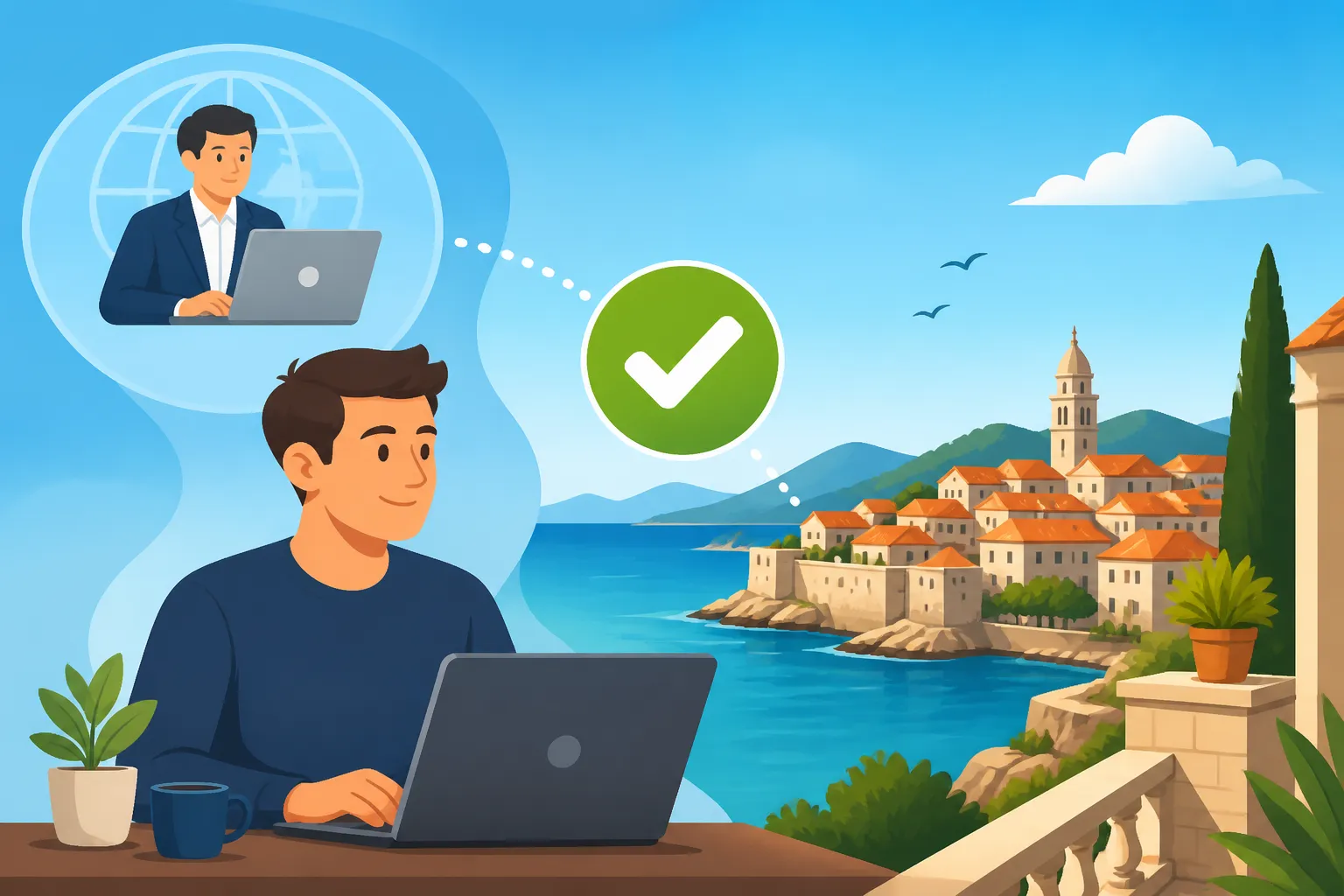
Many of us come to Croatia dreaming of that idyllic Mediterranean lifestyle, but the burning question often is: how do I make it work financially? If you're lucky enough to have a job back home that you can do remotely, the thought of keeping your foreign employer while living here is incredibly appealing. This guide will walk you through the real-world implications, administrative hoops, and critical considerations you'll face trying to maintain your overseas job while making Croatia your new home base.
Understanding Your Legal Status for Remote Work in Croatia
This is the absolute first hurdle. You can't just move to Croatia and work for your foreign employer without the right paperwork. Croatia, like any country, needs to know why you're here and what you're doing. Get this wrong, and you're in for a world of trouble.
The Digital Nomad Visa: Your Golden Ticket (Usually)
Okay, so Croatia launched its Digital Nomad Permit a few years back, and let me tell you, it was a game-changer for many of us. If you're working remotely for a company outside of Croatia, this permit is specifically designed for you. It allows you to reside here for up to a year (renewable) without paying Croatian income tax on that foreign income. Sounds amazing, right? And it really is!
However, it comes with a catch: you absolutely cannot work for any Croatian company or clients while on this permit. Your income must come from outside Croatian borders. This is crucial. If your foreign employer suddenly decides to open a Croatian branch or starts contracting with Croatian companies and involves you, you'd be in a sticky situation. The application process involves proving sufficient income (which has seen updates, so always check the latest requirements on the official MUP website), having health insurance, and securing accommodation. It's relatively straightforward compared to other permits, but still requires patience and meticulous document gathering. You can find a complete walkthrough in our guide, How to Get a Croatian Digital Nomad Permit: The Full Guide (2027). This permit really simplifies things for maintaining your foreign employment because it carves out a specific legal and tax niche for you.
Other Residence Permits and Their Implications
What if the Digital Nomad Permit isn't for you, or your situation doesn't fit? Maybe you're here for family reunification, or you’ve secured a different type of temporary residence. It's important to understand that not all residence permits are created equal when it comes to remote work and foreign employers.
For instance, if you're an EU/EEA citizen, you have the right to reside and work in Croatia without a specific work permit in the same way Croatian citizens do. However, you still need to register your temporary residence with the MUP after 90 days. The catch here is the tax implications, which we’ll dive into later. Your foreign income would likely become taxable in Croatia, and you’d need to inform your employer, which can be a whole other can of worms for their HR department. Similarly, if you're on a student visa or a family reunification permit, these permits grant you the right to reside but don't automatically exempt your foreign income from Croatian tax if you become a tax resident. Each permit type has specific conditions you need to be aware of. For a broader overview, take a look at The Complete Guide to Croatian Residence Permits for Expats (2027).
Another common path, especially before the digital nomad permit, was self-employment (an obrt or d.o.o.). This is generally for those who actively provide services to clients, often including Croatian ones, rather than being an employee of one foreign company. While you could technically run an obrt and have your foreign employer be your "sole client," it's a different legal and tax beast entirely, and arguably less suitable than the digital nomad route if your intent is purely to remain an employee. Plus, registering an obrt means you’re contributing to Croatian social security and health insurance, which can be an added cost and administrative load your foreign employer might not want to deal with.
Navigating the Croatian Tax Landscape with a Foreign Employer
Ah, taxes. The bane of every expat's existence, and Croatia is no exception. This is where many people get tripped up. It’s not just about getting a permit; it’s about understanding where you owe allegiance (and money) to the taxman. Ignoring this part can lead to very unpleasant surprises down the line, including fines and penalties.
Understanding Tax Residency and Your OIB
The core concept here is "tax residency." It's not the same as your immigration residence permit. Generally, if you spend more than 183 days in Croatia within any 12-month period, you are considered a tax resident. And once you're a tax resident, Croatia generally expects to tax your worldwide income. This is a big deal!
When you apply for any residence permit in Croatia, you'll be issued an OIB (Osobni identifikacijski broj), your personal identification number, which is essentially your tax ID. This is how the Croatian Tax Administration (Porezna Uprava) tracks you. You can learn more about this crucial number in our guide on How to Get an OIB (Personal Identification Number) in Croatia.
If you're on a Digital Nomad Permit, the beauty is that your foreign-sourced income is explicitly exempt from Croatian income tax for the duration of your permit. This is why it's such a popular choice for remote workers. You'll still need to declare it, but you won't be taxed on it here.
However, if you're an EU citizen or on another type of residence permit (like family reunification), and you spend over 183 days here, then your foreign salary will typically become subject to Croatian income tax. This means you’ll need to figure out how to report that foreign income, which can be quite complex. Delving into Tax Residency in Croatia: A Definitive Guide for Expats (2027) is a must-read for anyone in this situation.
The Double Taxation Dilemma and Reporting Foreign Income
If you become a Croatian tax resident and are working for a foreign employer, you might face the dreaded "double taxation" scenario – where both Croatia and your home country think they have a right to tax your income. Thankfully, Croatia has double taxation agreements (DTAs) with many countries. These agreements are designed to prevent you from being taxed twice on the same income.
However, understanding and applying these DTAs can be incredibly complex. You might need to obtain a tax residency certificate from Croatia to show your home country that you're no longer a tax resident there, or vice versa. The exact mechanism depends on the specific DTA between Croatia and your employer's country. You'll likely need to file an annual tax return in Croatia, declaring your foreign income and then applying the DTA to avoid double taxation. This is definitely not a DIY project for most expats. This is where a specialized service like Taxes for Expats can be a lifesaver, helping you navigate the intricacies of international tax law. They understand the nuances of cross-border income and how to properly declare it in both jurisdictions, ensuring you remain compliant without overpaying. Don’t try to guess your way through this; the Porezna Uprava isn't known for its leniency! For a deeper dive, check out Understanding Income Tax in Croatia: The Full Expat Guide and How to Report Foreign Income to the Croatian Tax Administration.
Social Contributions: An Often Overlooked Cost
Beyond income tax, there are social contributions, which cover things like health insurance and pension. If you are legally employed by a Croatian company, these are automatically deducted from your salary and paid by your employer. If you're self-employed (e.g., paušalni obrt), you pay them yourself.
If you're on a Digital Nomad Permit, you generally don't pay Croatian social contributions on your foreign income, because you're not considered employed in Croatia. You're typically expected to maintain your own health insurance (either private or through your home country's system if applicable) and any social security payments in your home country.
However, if you become a Croatian tax resident through another type of residence permit (e.g., EU citizen registering residence, family reunification) and are receiving a salary from abroad, it gets murky. While some might argue they're not "employed" in Croatia, the Croatian state often expects contributions if you are a resident deriving income. This is a complex area, often requiring a professional opinion, as the rules can be interpreted differently. It’s a common point of confusion and frustration for expats, especially when trying to understand Understanding Social Security Contributions (Doprinosi) in Croatia.
Practical Considerations for Remote Work in Croatia
So, you’ve sorted your legal status and are starting to wrap your head around taxes. But what about the day-to-day realities of working for a foreign company from Croatia? There’s more to it than just a good internet connection.
Employer Willingness and HR Hurdles
This is a huge one, and often underestimated. Your foreign employer might be thrilled you're productive from a beach in Dalmatia, but their HR and legal departments might not be so enthusiastic.
Many companies are simply not set up to employ someone who is a tax resident in another country. It creates a host of administrative complexities for them:
- Payroll: They might need to adjust your payroll to reflect your new tax residency or treat you as a "contractor" rather than an employee, which can change your benefits and employment rights. This might involve setting you up with an "Employer of Record" service in Croatia, which handles all the local compliance for them, but this is an added cost they might not be willing to bear.
- Compliance: They suddenly have to worry about Croatian labor laws, even if you’re not directly employed by a Croatian entity. This can be a headache for them, especially smaller companies with limited international experience.
- Social Security/Benefits: Your home country's social security system might stop covering you if you’re no longer physically residing and working there. Your employer might not want the responsibility of ensuring your coverage or figuring out how to contribute to a foreign system.
You must have an open and honest conversation with your employer's HR and legal teams about your relocation plans. Some companies are very flexible, especially those already used to remote international teams. Others have strict "no international remote work" policies for fear of legal and tax complications. Be prepared for them to say no, or to offer a solution that turns you into a "contractor" rather than a traditional employee, which again changes your legal and tax situation drastically.
Banking and Finances in Croatia
Once you’re in Croatia for the long haul, you'll need a local bank account. While digital banks like Revolut or Wise are fantastic for international transfers and daily spending (and highly recommended for managing different currencies), for things like receiving your salary, paying local bills, and sometimes even for official purposes (like proving funds for a visa), a traditional Croatian bank account is often necessary. Banks like Zagrebačka banka, PBZ, or Erste are popular choices among expats and generally have English-speaking staff in larger cities. Opening an account usually requires your OIB, a valid ID, and proof of residence. You can find more details in our guide "The Expat Guide to Opening a Bank Account in Croatia".
Receiving your foreign salary into a Croatian account is generally straightforward. Your employer will send the funds via an international bank transfer to your Croatian IBAN. Just be mindful of currency conversion fees if your salary isn't in Euros, and any potential incoming transfer fees from your Croatian bank. Always check with your chosen bank about these charges.
Connectivity and Language
Croatia has generally good internet infrastructure, especially in cities like Zagreb, Split, Rijeka, and other coastal towns. Fibre optic is common in urban areas, and mobile data is affordable and reliable, even in more remote islands during peak season. You'll have no trouble finding suitable internet for remote work, but if you're settling in a very rural area, it's always wise to double-check coverage.
While many Croatians, especially in tourist areas and younger generations, speak excellent English, official communication (MUP, Porezna Uprava, local administrative offices, and even some doctors' offices outside major expat hubs) is predominantly in Croatian. Having some basic Croatian phrases under your belt will make your life infinitely easier, and for serious administrative tasks, a translator or a Croatian-speaking friend can be invaluable. Don't be afraid to try! Tools like iTalki can connect you with Croatian tutors for online lessons, helping you get comfortable with the basics before you even arrive or while you’re settling in. Don't underestimate how much knowing a few words can smooth interactions and open doors – it shows respect and can often get you much further than pure English, even when English is understood. Check out Learning Croatian: A Complete Guide to Language Courses and Levels for more resources.
Potential Pitfalls and How to Avoid Them
Even with the best intentions, things can go sideways. Being prepared for the potential snags will save you a lot of grief and prevent you from having an unnecessarily stressful expat experience.
Compliance Risks and Unintended Consequences
The biggest pitfall is non-compliance, either with Croatian immigration rules or tax laws, or even your home country's tax rules. Living here on a tourist visa and secretly working full-time for a foreign employer is a big no-no and can lead to fines, deportation, and future entry bans. The Croatian authorities are becoming increasingly aware of remote workers, and while the Digital Nomad Permit is a welcoming gesture, it also means they expect others to play by the rules for different permit types.
Misunderstanding tax residency is another major trap. If you think you're not a tax resident but the Porezna Uprava decides you are, you could face back taxes, penalties, and interest. This is why getting professional tax advice tailored to your specific situation is so critical. Trying to piece together information from online forums or outdated articles can be risky – your situation is unique, and you need advice that reflects that.
Maintaining Health Insurance
This is tied closely to your residence permit and often a mandatory requirement. If you're on a Digital Nomad Permit, you are required to have private health insurance that covers you in Croatia for the duration of your stay. This is usually checked during the application process. Make sure your policy meets the minimum coverage requirements.
If you're an EU/EEA citizen, your EHIC (European Health Insurance Card) covers you for medically necessary treatment, but it’s not a substitute for comprehensive healthcare as a resident. Once you register your temporary residence as an EU citizen (which is mandatory after 90 days), you usually become eligible for the public HZZO system. This means enrolling with the Croatian Health Insurance Fund (HZZO) and potentially opting for supplementary health insurance (Dopunsko Zdravstveno Osiguranje) to cover co-payments. Our guide, Registering with HZZO in Croatia: The Complete Expat Guide (2027), walks you through this.
For non-EU citizens on other permits, like family reunification, you will typically be required to join the HZZO system and pay contributions, or show proof of comprehensive private insurance. No matter your situation, ensuring continuous, adequate health coverage is non-negotiable and a legal requirement for residence.
The Importance of Professional Advice
I cannot stress this enough: for anything related to visas, residence permits, and especially taxes, consult with professionals. A good immigration lawyer in Croatia can guide you through the MUP processes, ensuring your application is correct and complete. An international tax advisor (like the experts at Taxes for Expats) who understands both Croatian and your home country’s tax laws is invaluable. They can help you understand your obligations, minimize your tax burden legally, and ensure you're compliant in all relevant jurisdictions. Trying to navigate the bureaucracy alone can lead to costly mistakes and immense stress. While blogs like ours aim to provide a comprehensive overview, they are not a substitute for personalized legal or financial counsel. Things change, rules get updated, and your specific circumstances will always have unique wrinkles.
Quick Overview: Key Considerations for Remote Work in Croatia
| Aspect | Digital Nomad Permit Holder (Non-EU) | EU/EEA Citizen Registering Residence | Other Non-EU Residence Permits (e.g., family reunion, student) |
|---|---|---|---|
| Work Status | Cannot work for Croatian companies/clients. Income must be foreign-sourced. | Can work for foreign employer, subject to Croatian tax laws. | Can work for foreign employer, subject to Croatian tax laws. |
| Croatian Income Tax | Exempt from Croatian income tax on foreign income. | Likely subject to Croatian income tax on worldwide income. | Likely subject to Croatian income tax on worldwide income. |
| Social Security | Generally, no Croatian social contributions required. Must have private health insurance. | Likely subject to Croatian social contributions (HZZO, pension). | Likely subject to Croatian social contributions (HZZO, pension). |
| Health Insurance | Mandatory private health insurance. | Eligible for HZZO public system after registration; EHIC for initial period. | Mandatory HZZO or comprehensive private insurance. |
| Tax Residency | Treated as a temporary resident, often retaining home country tax residency (check DTA). | Becomes Croatian tax resident if >183 days/year. | Becomes Croatian tax resident if >183 days/year. |
| Complexity | Relatively straightforward, but specific rules apply. | Moderate to high, especially tax and social contributions. | Moderate to high, varies by permit type. |
This table is a simplified overview, and individual circumstances can vary greatly. Always seek professional advice.
It's clear that keeping your foreign employer while living in Croatia is entirely possible and, thanks to initiatives like the Digital Nomad Permit, even encouraged. However, it's far from a "set it and forget it" scenario. You need to be proactive, informed, and prepared to navigate the administrative landscape. The rewards of living in this beautiful country while maintaining your career are immense, but like any expat journey, it requires diligence and a willingness to understand the local system. Don't let the bureaucracy deter you, but do approach it with a clear head and realistic expectations.
Disclaimer
This article is for general informational purposes only and does not constitute professional advice. Laws, prices and regulations vary by location and change over time. Consult a qualified professional for guidance on your specific situation.