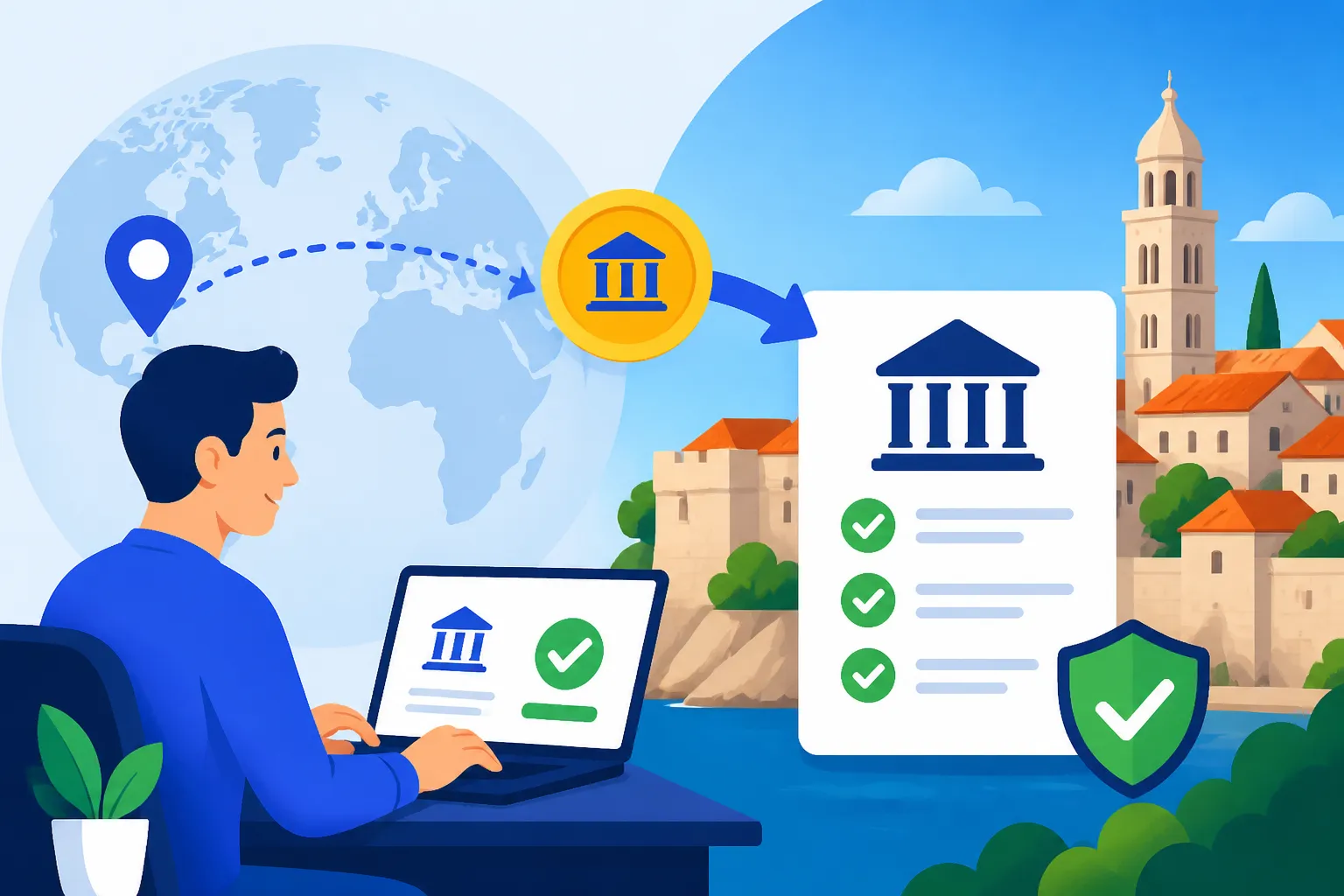
Can I Pay My Croatian Taxes from Abroad?
Ah, the eternal expat question! You've packed your bags, maybe you're on a temporary jaunt, or perhaps you've even moved on to another adventure, but Croatia still holds a piece of your financial pie. It's an incredibly common scenario: you have tax obligations here, but you're physically elsewhere. The good news is, in most cases, yes, you absolutely can pay your Croatian taxes from abroad, but like everything involving Croatian bureaucracy, it requires a clear understanding of the system and a healthy dose of patience. This guide will walk you through the practicalities, potential pitfalls, and best strategies for managing your tax duties to the Croatian Tax Administration (Porezna Uprava) no matter where in the world you're sending those kunas (or rather, euros these days!).
The Reality of Paying Croatian Taxes from Overseas
Let's be honest, trying to navigate the Croatian tax system from within Croatia can feel like deciphering an ancient scroll written in a language you only vaguely understand. Throw a few thousand kilometers into the mix, and it can quickly become overwhelming. Many expats find themselves in this exact predicament: you might own property here, you could still be running a Paušalni Obrt (flat-rate trade), or perhaps you simply left Croatia but have lingering tax responsibilities. The key is recognizing that your physical location doesn't necessarily absolve you of your financial duties.
Understanding Your Tax Obligations as an Expat
First things first, it's crucial to understand what you're actually liable for. This often boils down to your tax residency status. Just because you've left Croatia doesn't mean you've automatically shed your Croatian tax resident status in the eyes of the Porezna Uprava. For instance, if you maintain a permanent home here, or your "center of vital interests" (family, economic ties) remains in Croatia, you could still be considered a tax resident and therefore liable for taxes on your worldwide income. It's a complex topic, and I strongly recommend you dive into Tax Residency in Croatia: A Definitive Guide for Expats (2027) to fully grasp the nuances.
Common taxes that might still require your attention from abroad include:
- Income Tax: If you have any income sourced in Croatia (e.g., rental income from a property you own, income from a Croatian business, or even capital gains from selling Croatian assets).
- Property-Related Taxes: This is a big one for many expats who decide to keep their Croatian homes. This can include the real estate transfer tax when buying, and various communal fees or potential property taxes.
- Paušalni Obrt Contributions: If you maintain a self-employed business registered as a Paušalni Obrt, you'll have monthly or quarterly fixed contributions to pay, regardless of whether you're actively working from abroad or just keeping it active.
The point is, even if you're lounging on a beach in Thailand, the Porezna Uprava still expects its due if you have a taxable link to Croatia. Ignorance, unfortunately, isn't bliss, and it certainly isn't an excuse in the eyes of Croatian tax law, potentially leading to fines or interest on overdue payments.
Legal Framework and Challenges for Non-Residents
Croatia, like many modern countries, has evolved its tax payment infrastructure, but it's not always seamless for those outside its borders. The legal framework dictates that taxes must be paid into specific government accounts, using precise reference numbers that identify the type of tax, the period, and the taxpayer (your OIB is paramount here). This is where the challenges often begin.
For example, traditionally, many smaller payments or specific fees might have required a physical uplatnica (payment slip) to be filled out and paid at a bank or Hrvatska Pošta (Croatian Post Office). While direct bank transfers are now much more common, getting those exact payment details and ensuring they are correct from a distance can be a headache. There are also specific situations, like activating certain services or completing administrative steps, that might still subtly imply a need for a physical payment or presence.
Furthermore, access to critical digital services like ePorezna, the online tax portal, often hinges on having an e-Građani account, which usually requires a Croatian ID card or residence permit and a trip to FINA (Financial Agency) to activate. If you've moved away and let your residence permit expire, or never obtained the full e-Građani access, paying taxes online can become a significant hurdle. This is where many expats hit a wall, feeling caught between a rock and a hard place.
Practical Methods for Remote Tax Payments
So, you're abroad, you have taxes to pay, and the thought of navigating Croatian bureaucracy from afar makes you want to pull your hair out. Deep breaths! There are indeed practical ways to handle this, though some might require a bit of forward planning or external assistance.
Online Banking and International Transfers
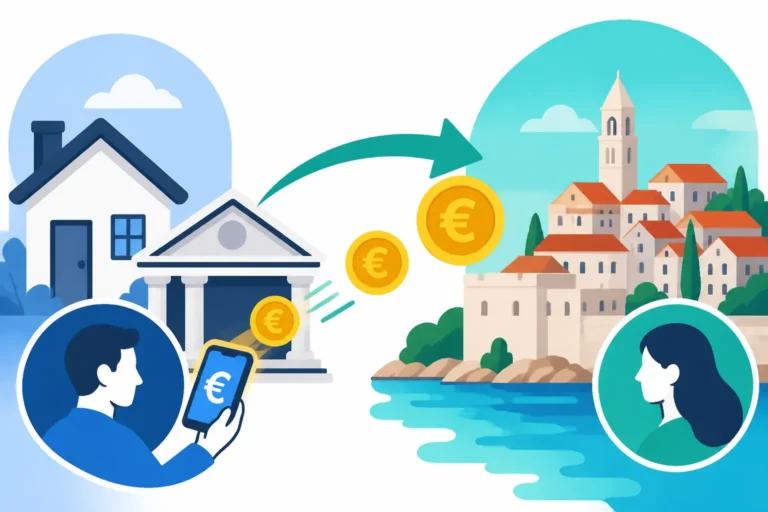
This is, by far, the most common and often the most straightforward method for paying Croatian taxes from abroad, assuming you have the correct information. The Croatian tax system relies heavily on bank transfers to specific state treasury accounts.
Here's how it generally works:
- Obtain Correct Payment Details: Every tax payment in Croatia is directed to a specific IBAN (International Bank Account Number) belonging to the state budget or a municipal body. Crucially, each payment also requires a unique "Poziv na broj" (Reference Number). This reference number is not just a random string; it's a structured code that tells the Porezna Uprava who is paying, what they are paying for, and for which period. Without the correct Poziv na broj, your payment might not be properly allocated, leading to a world of administrative headaches.
- Use Your OIB: Your OIB (Osobni Identifikacijski Broj) is your personal identification number in Croatia and is essential for all tax matters. It will almost always be part of the Poziv na broj or needs to be clearly stated in the payment description. If you haven't sorted out your OIB yet, then you should prioritize How to Get an OIB (Personal Identification Number) in Croatia.
- Initiate an International Bank Transfer: You can do this from your foreign bank account. You'll need:
- The beneficiary's name (usually "Državni proračun Republike Hrvatske" for state taxes, or the specific municipality for local fees).
- The correct Croatian IBAN.
- The SWIFT/BIC code of the Croatian bank that holds the IBAN (though for SEPA transfers within the EU, this might not always be strictly necessary, it's good practice).
- The exact amount in Euros.
- The all-important "Poziv na broj" (Reference Number).
- A clear payment description (e.g., "Plaćanje doprinosa za obrt [Your OIB]" – Payment of contributions for trade [Your OIB]).
If you maintain a Croatian bank account, perhaps with Zagrebačka Banka, PBZ, Erste, OTP, or Raiffeisen, transferring funds from your foreign account to your Croatian one, and then making the domestic payment from your Croatian account, can sometimes simplify the process and reduce international transfer fees. Many expats find opening a local account invaluable; you can learn more about it in The Expat Guide to Opening a Bank Account in Croatia.
For those without a Croatian bank account, or if you want to avoid potentially high international transfer fees from traditional banks, services like Wise (formerly TransferWise) can be a godsend. Wise offers competitive exchange rates and lower fees for international transfers, making it an excellent option for sending euros directly to Croatian government accounts. Just make sure you accurately input all the IBAN and Poziv na broj details! Always double-check every digit before confirming the transfer.
Leveraging the ePorezna System (with caveats)
Croatia's online tax portal, ePorezna, is designed to simplify tax filings and payments. It's a fantastic resource for managing your tax affairs, but here's the kicker: full access typically requires a strong digital identity, usually through the e-Građani system. You can get a deeper understanding of this portal by reading Understanding the ePorezna Online Tax Portal in Croatia.
While some basic functionalities might be available with less stringent authentication, for filing and making payments directly, you'll generally need:
- e-Građani Access: This usually involves activating your e-ID (issued with your Croatian ID card or residence permit) or obtaining a specific digital certificate from FINA.
- Active Residence Status: If your Croatian residence permit has expired, your e-ID might also be deactivated, locking you out of full ePorezna functionality.
If you have active e-Građani access, ePorezna will often generate the exact payment slips with the correct IBANs and Poziv na broj details for your specific obligations (e.g., monthly Paušalni Obrt contributions, annual income tax payments). You can then use your Croatian online banking to execute the payment, or sometimes, directly within the ePorezna system if it integrates with your bank. However, for those physically abroad without active e-Građani access, relying solely on ePorezna for direct payments isn't a viable option. This is a significant pain point for many expats who move away but still retain financial ties.
Utilizing a Proxy or Professional Assistance
When direct online payment isn't feasible, or if you simply find the whole process too daunting, enlisting local help is often the most reliable solution.
-
Appointing an Accountant/Tax Advisor: This is by far the safest and most recommended route. A Croatian accountant or tax advisor, such as those specializing in expat services like Taxes for Expats, can manage your tax obligations entirely on your behalf. They can:
- Calculate your taxes accurately.
- Generate the correct payment details (IBANs, Poziv na broj).
- File necessary declarations (e.g., annual income tax return).
- Make payments directly from their business account on your behalf, often using a power of attorney (punomoć) that grants them the authority to act for you in tax matters.
- Communicate with the Porezna Uprava if any issues arise.
This is especially useful if you have a Paušalni Obrt or significant property income. Their fees are often well worth the peace of mind and the assurance that everything is handled correctly.
-
Trusted Friend or Family Member: In some cases, a very trusted friend or family member in Croatia can assist. You would send them the funds, and they could make the payment on your behalf. However, this comes with significant caveats:
- Legal Implications: For more formal tax filings and payments, a power of attorney might be required, especially if they need to represent you before the Porezna Uprava.
- Accuracy: They must be meticulous in entering all payment details, especially the Poziv na broj. Any error could lead to your payment being misallocated.
- Privacy and Trust: You are entrusting them with sensitive financial information and money. Ensure this is someone you have absolute faith in.
While a trusted person can help with simple payments like communal fees, for complex tax matters, a professional is always the better choice. They understand the nuances of How the Croatian Tax Administration (Porezna Uprava) Works and how to ensure compliance.
Specific Tax Scenarios and Considerations for Remote Payments
Let's look at a couple of common expat tax scenarios and how remote payment strategies apply.
Income Tax and Paušalni Obrt Contributions
If you're self-employed in Croatia, particularly as a Paušalni Obrt owner, you'll be familiar with your fixed monthly or quarterly contributions. These contributions cover health and pension insurance, along with a small income tax component. The good news is, these are typically paid via bank transfer to specific state budget IBANs, with a standardized Poziv na broj that includes your OIB and the payment period. This makes them relatively straightforward to pay from abroad via international bank transfer or through a service like Wise, provided you have the correct and up-to-date payment information. Our guide on How to Pay Taxes as a Paušalni Obrt Owner in Croatia delves into these details. You'll need to know the specific IBAN and the correct format for the Poziv na broj, which usually includes a model HR68 and a combination of your OIB and the payment month/year.
For income tax, if you're an employee with a Croatian employer, they will generally handle your payroll taxes. However, if you're a remote worker for a foreign company, but still considered a Croatian tax resident, you might have direct income tax obligations. This is a tricky area, and you'll definitely want to consult How to Handle Tax as a Remote Worker for a Foreign Company in Croatia to understand your responsibilities. In such cases, your annual tax return (Godisnja Prijava Poreza) will be crucial. Filing your annual tax return in Croatia is a process that can often be managed through ePorezna if you have access, or by an accountant. Any resulting tax liability would then be paid via bank transfer. Check out Filing Your Annual Tax Return in Croatia: The Complete Walkthrough (2027) for a comprehensive guide.
Property-Related Taxes and Fees
Property ownership often means ongoing payments, even if you're not living in Croatia. These can include:
- Real Estate Transfer Tax (Porez na Promet Nekretnina): This is a one-time tax paid when you purchase a property. The Porezna Uprava will issue a decision outlining the amount and payment details. You'll need the specific IBAN and Poziv na broj from this decision. Missing the payment deadline can incur penalties. Our guide on Understanding the Real Estate Transfer Tax (Porez na Promet Nekretnina) can provide more context.
- Communal Fees (Komunalna Naknada): These are regular municipal fees for local services. Municipalities typically send out payment slips (uplatnice) by post, often quarterly or annually. These slips will contain the necessary IBAN and Poziv na broj. If you're not physically present to receive mail, you'll need a reliable local contact or property manager to receive these for you and forward the payment details.
- Other Fees: Depending on your property, there might be other local contributions or administrative fees that require payment to municipal accounts. Similarly, the payment details are usually found on official notices.
The biggest challenge with property-related payments when you're abroad is often receiving the physical payment notices. Ensure you have a trustworthy system for receiving and forwarding mail from your Croatian address. This might be a property management company, a lawyer, or a close friend who can scan and email you the payment details as soon as they arrive. If you miss a payment notification, you won't know the exact amount or the crucial reference number, making remote payment impossible. Remember, many local government offices still rely heavily on snail mail for official communications.
Here's a quick comparison of the common methods:
| Method | Pros | Cons | Best For |
|---|---|---|---|
| Online Banking (Foreign) | Direct control, widely available, suitable for known IBANs. | Potentially higher transfer fees, precise entry of 'Poziv na broj' is critical, errors can be hard to fix remotely. | Routine payments (e.g., Paušalni Obrt) with known, static details. |
| ePorezna (Direct) | Generates exact payment details, streamlines filing and payment. | Requires active e-Građani access (often tied to Croatian ID/residence), complex setup for those truly 'abroad' without an active Croatian ID or digital certificate. | Expats with active Croatian residence and e-Građani, managing ongoing obligations. |
| Third-Party/Proxy (e.g., Accountant, Trusted Person) | High accuracy, minimal effort for you, can handle complex issues, ensures proper allocation. | Involves additional costs (for professionals), requires significant trust, legal formalities (Power of Attorney) may be needed for full scope. | Complex tax situations, annual returns, property taxes, or when you lack ePorezna access. |
Wrapping Up Your Croatian Tax Journey from Afar
Navigating Croatian taxes from abroad is certainly achievable, but it's rarely a walk in the park. The key takeaways here are preparation, precision, and not being afraid to ask for help. Always prioritize obtaining the exact IBAN and "Poziv na broj" for any payment. Without those, you're essentially sending money into the void.
If you plan to be away for an extended period, or if your tax situation is even slightly complex (e.g., owning property, running a business), seriously consider engaging a professional Croatian accountant or a tax service like Taxes for Expats. Their expertise will save you countless hours of frustration and potential penalties, ensuring you remain compliant with Croatian tax law, no matter where you are in the world. It’s an investment in your peace of mind.
Remember, the Croatian system, while increasingly digital, still has nuances that can trip up even seasoned expats. Stay informed, keep meticulous records, and don't underestimate the importance of accurate information. With a bit of planning, you can keep your Croatian tax obligations squared away, even if you’re thousands of miles away.
Disclaimer
The information provided in this article is for general informational purposes only and does not constitute legal, financial, or tax advice. While we strive to provide accurate and up-to-date information, tax laws and regulations in Croatia can change frequently and may be subject to individual interpretation. We strongly recommend consulting with a qualified Croatian tax advisor or legal professional for advice tailored to your specific situation before making any financial or tax-related decisions. The author and publisher of this article shall not be held responsible for any errors or omissions, or for any actions taken based on the information provided herein.