Can I Study and Work in Croatia at the Same Time?
Oh, the dream of living in Croatia, soaking up the sun, diving into a new language and culture, and making it all work by studying and earning a living at the same time! It’s a vision many of us expats have shared, and let me tell you, it's a completely understandable desire. However, navigating the Croatian system to achieve this isn't always straightforward. This guide will walk you through the realistic possibilities and challenges of combining study and work in Croatia, helping you understand the legal landscape and practical steps involved.
The Short Answer: Yes, But It's Complicated
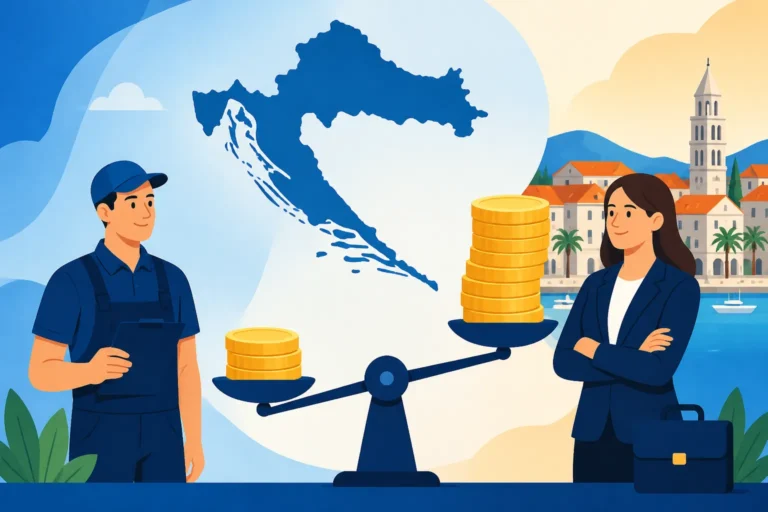
You absolutely can study and work in Croatia concurrently, but the ease and extent of doing so depend heavily on your citizenship, the type of residence permit you hold, and the nature of both your studies and your employment. It’s not a simple "yes" or "no" answer, especially if you're coming from outside the European Union.
EU/EEA/Swiss Citizens: More Freedom, Fewer Hurdles
If you're a citizen of an EU, EEA (European Economic Area) country, or Switzerland, you're in a much more privileged position. Thanks to the principle of free movement, you generally have the right to live, study, and work in Croatia without needing a specific work permit or a student residence permit in the same way non-EU citizens do.
Once you register your residence with the MUP (Ministry of Interior) – which is required for stays longer than three months – you're essentially on equal footing with Croatian citizens when it comes to employment and educational opportunities. This means you can enrol in a university program and take on a job, whether part-time or full-time, without additional immigration hurdles related specifically to combining these activities. You might still face the common challenges of finding a job or getting into your desired study program, but the legal framework is significantly less restrictive. However, even for EU citizens, understanding the nuances of how to register for HZZO health insurance as a foreigner in Croatia and the local tax system is crucial.
Non-EU/EEA/Swiss Citizens: Navigating the Permit Maze
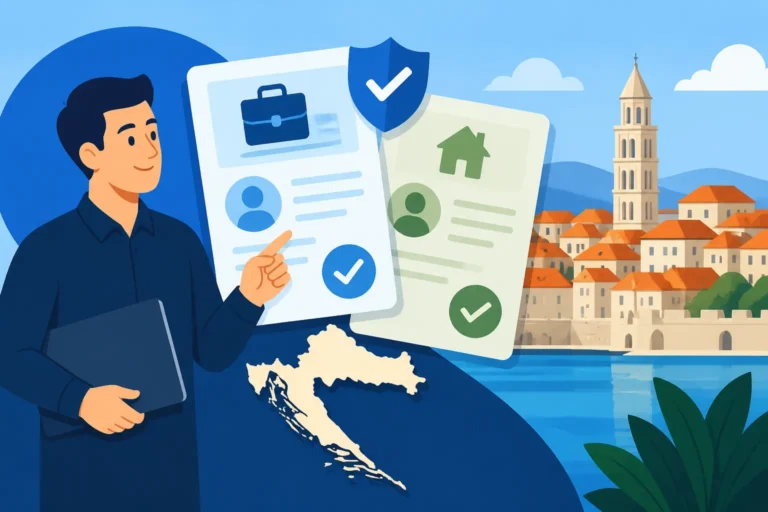
For those of us from outside the EU/EEA/Switzerland, the situation is decidedly more complex, primarily because your ability to work is tied to your residence permit. Each type of permit comes with specific conditions, and combining study and work often means applying for one primary permit (e.g., student) and then seeking permission to engage in the other activity (e.g., work). It’s a classic bureaucratic dance, and it requires careful planning and a good dose of patience. The key is understanding what your main purpose for being in Croatia is, as this will dictate your primary permit, and then exploring the secondary activities allowed under that permit.
Working While on a Student Residence Permit in Croatia
This is perhaps the most common scenario for non-EU citizens looking to combine both activities. The good news is that if you hold a valid student residence permit in Croatia, you are generally allowed to work. But, as always, there are conditions.
Understanding Student Work Contracts (Studentski Ugovor)
The primary mechanism for students to work legally in Croatia is through a "Studentski Ugovor" or Student Work Contract. This is a special type of employment contract designed for students, often facilitated through student service centers (like Student Servis in Zagreb or Split). These centers act as intermediaries between students and employers, handling the paperwork and ensuring compliance with regulations. The beautiful thing about these contracts is that they offer some flexibility and a generally lower tax burden compared to standard employment, making them attractive to both students and businesses.
Think of it like this: an employer needs temporary help, perhaps for a busy season or a specific project. Instead of hiring someone full-time with all the associated taxes and contributions, they can engage a student through a Studentski Ugovor. The student gets paid, gains experience, and the administrative burden is relatively low for both parties. It’s a win-win, but it's specifically for enrolled students. You’ll need to officially register with one of these student service centers to be eligible. Many universities have their own affiliated student service offices, making the process a bit smoother.
The Nitty-Gritty: Hours, Income, and Registration
While on a student permit and working via a Studentski Ugovor, there are usually limits to how much you can work. The general rule is that you can work up to 20 hours per week during the academic year. During official university holidays and breaks, you can often work full-time, up to 40 hours per week. These hours are in place to ensure your primary focus remains on your studies, which is, after all, the basis for your residence permit.
Regarding income, the Studentski Ugovor also has specific rules. Your earnings are generally subject to a more favorable tax regime, but you still need to be aware of the thresholds. For example, specific annual income limits apply, and if you exceed them, you might face higher tax rates or other obligations. It's really important to keep track of your earnings. This kind of nuanced understanding of your financial obligations, particularly concerning how much tax does a Paušalni obrt pay in Croatia in 2026, also extends to student earnings.
To actually get started, you'll need to be officially enrolled in an accredited educational institution in Croatia. Once you have proof of your student status, you can approach one of the student service centers. They will help you register and then you can browse their job listings or have an employer contact them directly to hire you. They’ll issue the Studentski Ugovor for each engagement.
Important Considerations for Student Workers
- Primary Purpose: Remember, your student residence permit is granted with the understanding that your main activity in Croatia is studying. Any work you undertake should not interfere with your academic progress. The MUP can review your situation if they suspect you're not fulfilling your study obligations.
- Health Insurance: As a student, you'll need to secure health insurance. If you're from the EU/EEA/Switzerland, your EHIC card might cover you, but it’s still highly recommended to understand understanding Dopunsko Zdravstveno Osiguranje (supplementary insurance) in Croatia. For non-EU citizens, your student permit typically requires you to register with HZZO, the Croatian Health Insurance Fund. This is mandatory and ensures you have access to public healthcare.
- OIB: Before you can even think about working or really doing anything official in Croatia, you'll need an OIB (Personal Identification Number). This is your Croatian tax ID and is absolutely essential for everything from opening a bank account to getting paid. If you haven't already, make sure you know how to get your OIB and why it matters for healthcare access, as it’s the bedrock of all administrative tasks.
- Language: While many student jobs, especially in tourism or IT, might not require fluent Croatian, having some basic language skills will greatly enhance your job prospects and overall experience. Consider using platforms like iTalki to practice Croatian with native speakers; even a little goes a long way.
Studying While on a Work Residence Permit in Croatia
What if your primary reason for being in Croatia is work, and you then decide you want to study? This scenario is less common but certainly possible.
Can You Pursue Further Education?
If you hold a valid work and residence permit in Croatia, your primary purpose for being here is employment. However, this doesn't automatically preclude you from pursuing educational opportunities. You are generally free to enrol in language courses, vocational training, or even university programs, provided these studies do not interfere with your full-time employment obligations and do not require you to switch your residence permit category.
For instance, taking an evening Croatian language class or a part-time online course is usually not an issue. The challenge arises if you want to pursue full-time studies, such as a bachelor's or master's degree that demands significant time and attendance. In such a case, the MUP might question whether your primary purpose in Croatia is still work, or if it has shifted to study. If your studies become your main activity and you're no longer working the hours required by your work permit, you might need to apply for a change in your residence permit status, from a work permit to a student permit. This can be a complex process and is not guaranteed, so it's best to consult with the MUP directly or seek legal advice before making such a significant change.
Balancing Your Permit Obligations
The key here is ensuring your studies don't undermine the conditions of your work permit. If your permit is for a full-time job, you need to maintain that employment. Any educational pursuits would typically need to be outside your regular working hours. You might find yourself juggling a demanding work schedule with academic commitments, which can be tough.
For those considering switching from a work permit to a student permit, you'll essentially be going through the process of applying for a new permit type. This means gathering all the required documents for a student permit, including proof of enrolment, financial means, and accommodation. It's not a mere amendment; it's a new application, and you'll need to be prepared for the waiting times and bureaucratic steps involved.
Navigating the Bureaucracy and Practicalities
Regardless of whether you start as a student or a worker, combining these two aspects of life in Croatia requires a firm grasp of the local administrative requirements.
Getting Your OIB and Staying Compliant
As mentioned, the OIB is your personal identification number, similar to a tax ID. You literally cannot do anything official without it. It's often one of the first things you'll acquire when you apply for your residence permit, but it's worth reiterating its importance. When you’re working, your OIB is how your employer reports your income and contributions. When you're studying, it might be used for university administration or accessing student benefits. Ensure you understand how to get an OIB as part of your residence application.
Staying compliant means understanding the specific rules that apply to your permit. For students, this means respecting the hour limits on your Studentski Ugovor. For workers, it means maintaining your employment as per your work permit. Any changes to your circumstances – a new job, changing study programs, or a significant change in income – should be reported to the relevant authorities (MUP, tax office) to avoid issues down the line. Croatian bureaucracy can be slow, but it's also thorough, and overlooking these details can lead to headaches.
Tax Implications for Student Workers and Other Permit Holders
This is an area where many expats get tripped up. Even with the favorable conditions of a Studentski Ugovor, you will still have tax obligations. If you earn above certain thresholds, you'll be liable for income tax. The good news is that for typical student earnings, the amounts are often low enough to incur minimal or no tax, but it's essential to understand the rules. For more complex financial situations, especially if you have income from multiple sources or countries, consulting with a tax advisor specializing in Croatian taxes for expats is always a wise decision. They can help you navigate the nuances of income tax in Croatia: the full expat guide and ensure you're compliant.
For those on work permits, your employer will typically handle your tax and social security contributions directly from your salary. However, if you're taking on additional, self-generated income (e.g., freelance work on the side of your main job, even if it's minimal), you need to be aware of how that impacts your overall tax situation. The Croatian tax administration (Porezna Uprava) expects you to declare all income, and failure to do so can result in penalties.
Here's a simplified overview of typical tax and contribution rates in Croatia for different types of work, which may affect you:
| Income Type | Income Tax Rate (Progressive) | Social Security Contributions (Approx.) |
|---|---|---|
| Studentski Ugovor (Student Work) | 0% up to ~€1,000/month, then 20%/30% | Minimal (small student-service fee) |
| Employment (Work Permit) | 20% (up to ~€47,780 gross/year), 30% (above) | Employer pays ~16.5%, Employee pays 20% |
| Freelance/Self-Employed | Paušalni Obrt: Fixed monthly tax (variable by municipality/income bracket); Regular Obrt/d.o.o.: 20%/30% income tax | ~€150-€300+/month (for health, pension) |
Note: These figures are approximations and subject to change. Consult official sources or a tax professional for precise, up-to-date information.
Language and Cultural Adaptation: A Hidden Challenge
While not strictly bureaucratic, the language barrier and cultural differences can be significant hurdles when trying to combine study and work. Most university programs in Croatia are taught in Croatian, though English-language programs are becoming more common, especially at the Master's level. If you're enrolling in a Croatian-taught program, you'll need a good command of the language. Similarly, while tourist-facing jobs might not require Croatian, many other sectors will.
Learning Croatian: a complete guide to language courses and levels can equip you with the tools you need to integrate. It’s not just about passing exams or getting a job; it’s about making friends, understanding everyday life, and feeling truly at home. Don't underestimate the power of language in smoothing over bureaucratic interactions, too!
Croatia operates at a different pace than many Western countries, and "soon" can mean anything from tomorrow to next month. Patience is your best friend. Embrace the process, ask questions (even if it feels like you're asking the same question for the fifth time), and don't be afraid to seek help from expat groups or local friends. Many of us have been there, pulling our hair out over a form or a procedure, and can offer a sympathetic ear or practical advice.
Combining study and work in Croatia is a fantastic way to fully immerse yourself in the country, gain valuable experience, and build a life here. With careful planning, a good understanding of the rules, and a healthy dose of patience, you can absolutely make it happen.
Disclaimer
This article is for general informational purposes only and does not constitute professional advice. Laws, prices and regulations vary by location and change over time. Consult a qualified professional for guidance on your specific situation.