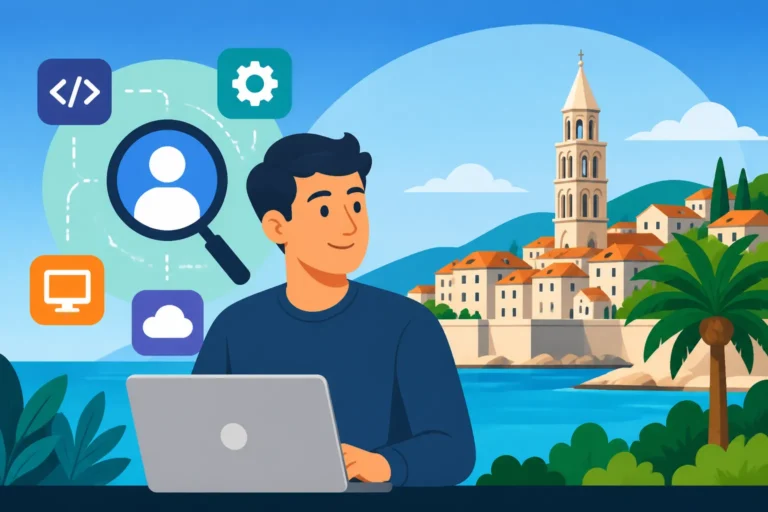
How to Find English-Speaking Jobs in Croatia
Moving to the Adriatic coast or the historic streets of Zagreb is a dream for many, but the reality of sustaining that lifestyle often hits a wall when you realize you don't speak the local language. Many foreigners struggle to find professional roles that don't require fluent Croatian, leading to frustration and financial stress. This guide provides a comprehensive roadmap for identifying industries, platforms, and strategies to secure English-speaking jobs in Croatia while navigating the local bureaucracy.
The Reality of the Job Market for English Speakers in Croatia
If you have spent any time browsing local job boards, you might feel a sense of dread seeing "vrsno poznavanje hrvatskog jezika" (excellent knowledge of the Croatian language) as a requirement for almost every role. It is a valid frustration. Croatia is a small, tightly-knit market where business is often conducted in the native tongue. However, the landscape has shifted dramatically over the last decade. The rise of the tech sector and the internationalization of the tourism industry have carved out significant spaces where English is not just accepted, but often the primary language of communication.
High-Demand Sectors for English Speakers
The crown jewel of the English-speaking job market in Croatia is undoubtedly the Information Technology (IT) and software development sector. Companies like Infobip, Rimac Technology, and various gaming studios in Zagreb and Sisak operate on a global scale. In these environments, code is written in English, documentation is in English, and the internal Slack channels are almost exclusively in English. If you are a developer, data scientist, or UX designer, your lack of Croatian is often a non-issue. These companies are desperate for talent and are highly experienced in sponsoring work permits for the right candidates.
Beyond tech, the tourism and hospitality sector remains a massive employer. While many entry-level roles in cafes or small hotels require Croatian to interact with local suppliers, high-end international hotel chains in Dubrovnik, Split, and Istria actively seek native English speakers for guest relations, management, and marketing roles. Additionally, there is a growing niche for English-speaking real estate consultants and yacht crew members, where the clientele is almost exclusively international. For a broader look at the landscape, you should check out The Complete Guide to Working in Croatia as a Foreigner (2027).
The Language Barrier vs. English-Friendly Roles
It is important to be realistic about where English-only profiles fit. You will likely struggle in traditional sectors like law, public administration, or traditional retail. In these fields, the legal and cultural requirements for Croatian fluency are nearly impossible to bypass. However, "shared service centers" and international BPOs (Business Process Outsourcing) are a different story. Companies like Transcom or City Connect often hire for multilingual support roles. While they frequently look for German or Italian speakers, there is a consistent need for native English speakers to handle high-level corporate accounts or technical support.
Many expats find that even if a job is "English-speaking," social integration at the office can still be a challenge. In smaller Croatian companies, the official meetings might be in English for your benefit, but the "kava" (coffee) breaks will revert to Croatian. This is where using a platform like iTalki can be a lifesaver. You don't need to become a scholar of Slavic linguistics, but learning the basics of office banter and polite greetings through iTalki can bridge the cultural gap and make you a more attractive candidate during the interview process.
Local Networking and the Hidden Market
In Croatia, who you know often matters as much as what you know. The "hidden" job market is very real here. Many positions are filled through word-of-mouth before they are ever posted on a public portal. This means that as an expat, your social circle is one of your most valuable job-seeking tools. Joining groups like "Expats in Zagreb" or "Expats in Split" on social media isn't just for finding a plumber; it's for finding out which international company is quietly expanding its marketing department.
Attending networking events, such as those hosted by the American Chamber of Commerce (AmCham) or the various foreign business clubs in Zagreb, can put you in the same room as decision-makers who value international experience. Don't be afraid to reach out to fellow expats on LinkedIn who are working at companies you admire. Most of us have been in your shoes and are more than willing to give a referral or share a tip about an upcoming vacancy. For more tips on this, see How to Find English-Speaking Jobs in Croatia.
Essential Platforms and Resources for Your Search
When you start your search, you need to know which tools are actually effective in the Croatian context. Using a global site like Indeed might give you some results, but it often misses the hyper-local opportunities that define the Croatian market. You need a multi-pronged approach that combines local expertise with international professional networks.
International and Local Job Portals
The most important local site is MojPosao. It is the undisputed leader in the Croatian recruitment space. While much of the site is in Croatian, you can filter for "English" or "Foreigner-friendly" roles. Another significant player is Posao.hr, which carries a high volume of listings for both seasonal and permanent positions. For those specifically in the tech space, LinkedIn has become the gold standard. Most major Croatian tech companies post their vacancies there first, often in English, to attract a global talent pool.
If you are looking for roles in the startup ecosystem, keep an eye on Hub385 or the various "Netokracija" job listings. These platforms cater to a younger, more international-minded demographic where English is the default. When applying through these portals, make sure your profile is optimized. If you are worried about how your foreign experience will be taxed once you land a role, consulting with a service like Taxes for Expats early on can help you understand the net take-home pay you should be negotiating for.
LinkedIn and Social Media Communities
LinkedIn is not just a job board in Croatia; it is a vital research tool. Use it to map out the "international" departments of large Croatian firms like Atlantic Grupa or Adris Grupa. Follow the HR managers of companies like Photomath or Rimac. Often, these recruiters will post "we are hiring" status updates that contain more detail than a formal job description. It is also an excellent place to verify if a company has a history of hiring foreigners, which you can see by looking at the "People" tab on their company page.
Facebook remains surprisingly relevant for job hunting in Croatia. There are specific groups like "Work in Croatia" or "IT Jobs Croatia" where recruiters frequently post urgent or niche roles. These groups allow for a more informal interaction where you can ask directly about the language requirements before committing to a formal application. This direct line of communication can save you hours of applying for roles that are secretly reserved for Croatian speakers.
Recruitment Agencies and Headhunters
For mid-to-senior level professionals, engaging with recruitment agencies can be highly effective. Agencies like Adecco Croatia, Selectio, and Manpower have dedicated departments for international recruitment. They often handle the search for specialized roles where the local talent pool is thin, and an English-speaking expat with 10 years of experience in London or New York is exactly what their client needs.
When working with an agency, be very clear about your residency status. Are you an EU citizen, or will you require a work permit? Agencies are much more likely to represent you if they know exactly what the administrative hurdle will be. They can also provide invaluable feedback on your salary expectations. To get a head start on what to expect, read Understanding Minimum Wage and Average Salary in Croatia.
Navigating the Legal and Administrative Requirements
This is where the dream often meets the "birokracija." Finding a job is only half the battle; the other half is getting the legal right to actually do it. Croatia’s immigration system is notoriously paperwork-heavy, and while it has modernized in recent years, you still need to be prepared for a marathon, not a sprint.
Work and Residence Permits for Non-EU Citizens
If you are not an EU citizen, your employer will typically need to apply for a "Stay and Work Permit" (dozvola za boravak i rad) on your behalf. For most standard jobs, this involves a "Labour Market Test" where the employer must prove they couldn't find a qualified Croatian candidate. This sounds daunting, but for specialized English-speaking roles, it is often a formality. However, it is a process that can take anywhere from 4 to 12 weeks. You can learn more about this in Understanding the Labour Market Test for Croatian Work Permits.
There are exceptions to the Labour Market Test, particularly for "shortage occupations" or high-level management positions. If you are being hired by a major tech firm, they likely have a dedicated legal team to handle this. If you are being hired by a smaller company, you may need to be more proactive in ensuring the paperwork is moving. Always ask during the interview process: "Do you have experience sponsoring non-EU workers?" Their answer will tell you a lot about the next three months of your life. For a full breakdown, see How to Get a Work Permit and Residence Permit in Croatia.
The Role of the OIB and Registration
Regardless of your job, the first thing you need in Croatia is an OIB (Osobni identifikacijski broj). This personal identification number is the key to everything: opening a bank account, signing a mobile contract, and, most importantly, getting on a company’s payroll. You can obtain this at the local Tax Administration (Porezna uprava) office. It is a relatively simple process, but essential to do as soon as you arrive.
Once you have your OIB and a job offer, you will also need to register your temporary residence with the MUP (Ministry of the Interior). This involves providing proof of health insurance and a registered address. If your head is spinning from the financial implications of these moves, remember that Taxes for Expats can provide clarity on how your Croatian income will interact with your tax obligations back home, especially for Americans. For the nitty-gritty on the ID number, check How to Get an OIB (Personal Identification Number) in Croatia.
Self-Employment Options (Paušalni Obrt)
Many English speakers find that instead of looking for a traditional employer, it is easier to "employ themselves" by opening a Paušalni Obrt. This is a flat-rate trade business that is incredibly popular among freelancers and consultants. It allows you to work for international clients while living legally in Croatia. The tax burden is remarkably low compared to other European countries, making it a very attractive option for digital nomads who want to transition into a more permanent residency.
However, running an obrt comes with its own set of administrative responsibilities, including monthly social contribution payments and annual reporting. It is a great "bridge" while you look for a permanent role or if you decide that the corporate life in Croatia isn't for you. You can find a step-by-step guide on this at Self-Employment in Croatia: The Paušalni Obrt Guide for Foreigners.
Crafting Your Application for the Croatian Market
You cannot simply use the same CV you used in your home country and expect the same results. Croatian recruiters have specific expectations regarding formatting and the information provided. Adapting your approach shows that you have done your homework and are serious about integrating into the local professional culture.
Adapting Your CV and Cover Letter
The standard Croatian CV is often more detailed than the one-page American style. It usually includes a professional photograph (though this is becoming less mandatory in tech), your date of birth, and your nationality. While you should keep it to two pages, don't be afraid to list specific projects and technical skills in detail. If you are applying for an English-speaking role, your CV should obviously be in English, but adding a short introductory paragraph in Croatian can score significant "effort points."
Your cover letter should be tailored to the local context. Croatians value loyalty and a long-term commitment to the country. If you are an expat, explain why you are in Croatia and that you intend to stay. Employers are often hesitant to hire foreigners if they fear they will leave after six months. For specific templates, read How to Write a Croatian-Style CV and Cover Letter.
The Interview Process and Cultural Nuances
Interviews in Croatia tend to be more formal than in the UK or the US. Even in tech companies, there is a level of respect for hierarchy that you should observe. Dress professionally, be punctual (actually, be 5 minutes early), and be prepared for direct questions about your personal life or your reasons for moving. This isn't necessarily intrusive; it's the Croatian way of building a personal connection before a professional one.
You might also encounter multiple rounds of testing, especially for language skills or technical proficiency. If you’ve been brushing up on your skills or even a bit of the local language on iTalki, don't be afraid to mention it. Showing that you are actively learning through iTalki demonstrates a level of adaptability that is highly prized in international teams.
Salary Negotiations and Market Standards
One of the biggest shocks for expats is the difference between "Gross" and "Net" salaries in Croatia. When a Croatian employer quotes a salary, they are almost always talking about the Net amount (what you actually receive in your bank account). However, the employment contract will state the Gross amount. It is vital to use a salary calculator to understand the difference.
Be aware that salaries in Croatia are generally lower than in Western Europe or North America. However, the cost of living is also lower (though rising). Do your research on sites like Glassdoor or local forums to ensure your expectations are in line with the market. If you are negotiating a senior role, you might also discuss "bonuses" like a Christmas bonus (Božićnica) or holiday allowance (Regres).
Comparative Analysis of Top Job Locations in Croatia
Where you choose to live will dictate the type of jobs available to you. While Zagreb is the economic engine, other cities offer niche opportunities that might better suit your background.
| City | Primary Industries | English-Speaking Potential | Lifestyle Factor |
|---|---|---|---|
| Zagreb | IT, Finance, Marketing, BPO | Very High | Busy European capital, 12-month economy. |
| Split | Tourism, IT, Maritime | Medium-High | Mediterranean pace, seasonal fluctuations. |
| Rijeka | Logistics, Engineering, IT | Medium | Industrial charm, close to Istria and islands. |
| Dubrovnik | Luxury Hospitality, Yachting | High (Seasonal) | High-end tourism, expensive living costs. |
Zagreb vs. Split vs. Rijeka
Zagreb is the only city in Croatia with a truly diversified, year-round job market. If you are looking for a career in corporate marketing, tech, or international NGOs, this is where you need to be. The density of international companies means there is a constant churn of roles for English speakers. The city is also the hub for Learning Croatian: A Complete Guide to Language Courses and Levels, making it easier to upskill while you work.
Split is rapidly catching up in the tech space with the "Split Tech City" initiative, but it remains heavily dominated by the tourism cycle. If you are a digital nomad or work in hospitality, Split offers an incredible quality of life, but the "professional" job market is smaller and more competitive than Zagreb's. Rijeka, as the country's main port, offers unique roles in logistics and international shipping where English is the lingua franca of global trade. It is an often-overlooked gem for expats who want a more "authentic" and less touristy experience.
Boosting Your Employability While You Search
If the job hunt is taking longer than expected, don't just wait. Use the time to make yourself "un-rejectable" in the eyes of local employers.
Upskilling and Language Learning
While you are looking for that perfect English-speaking role, starting to learn Croatian is the best investment you can make. Even a basic A1 level shows a recruiter that you are committed to the community. Using iTalki for 1-on-1 tutoring allows you to focus on the specific vocabulary you need for your industry. If you are a designer, learn the Croatian words for "layout" or "deadline." It breaks the ice and shows initiative.
In addition to language, consider local certifications. If you are in finance, understanding the local JOPPD reporting forms or VAT (PDV) system is a huge plus. Using a resource like Taxes for Expats to understand the broader tax landscape can also help you position yourself as a consultant who understands both international and local fiscal realities.
Freelancing as a Bridge to Employment
If you have a residence permit that allows it, taking on freelance projects for Croatian companies can be a great "foot in the door." It allows the company to "test drive" your skills without the long-term commitment of a full work permit application. Often, a three-month freelance contract can turn into a full-time job offer once the employer sees the value you bring as a native English speaker with international experience. This is a common path for copywriters, translators, and social media managers.
Disclaimer
The information provided in this guide is for informational purposes only and does not constitute legal, financial, or professional career advice. While every effort has been made to ensure the accuracy of the details regarding the Croatian job market and immigration procedures as of 2026, regulations and market conditions in Croatia are subject to frequent change. Readers are encouraged to consult with the official Croatian Ministry of the Interior (MUP), the Croatian Employment Service (HZZ), or qualified legal and tax professionals regarding their specific circumstances.