How to Get a Tax Residency Certificate in Croatia
Navigating the labyrinthine world of Croatian bureaucracy can feel like a full-time job for expats, and nowhere is this more true than when dealing with tax matters. One document that often causes a fair bit of head-scratching is the tax residency certificate. If you’ve been asked for one, or are simply trying to untangle your tax obligations here and abroad, this guide will walk you through exactly how to obtain this crucial piece of paper from the Croatian tax authorities.
Why You Even Need a Tax Residency Certificate in Croatia
Let's face it, nobody wakes up wanting to deal with tax certificates. But for many expats living in Croatia, this document isn't just a piece of paper; it's often the key to unlocking clarity in their international tax situation and preventing a nasty case of double taxation.
Proving Your Tax Status to Foreign Authorities
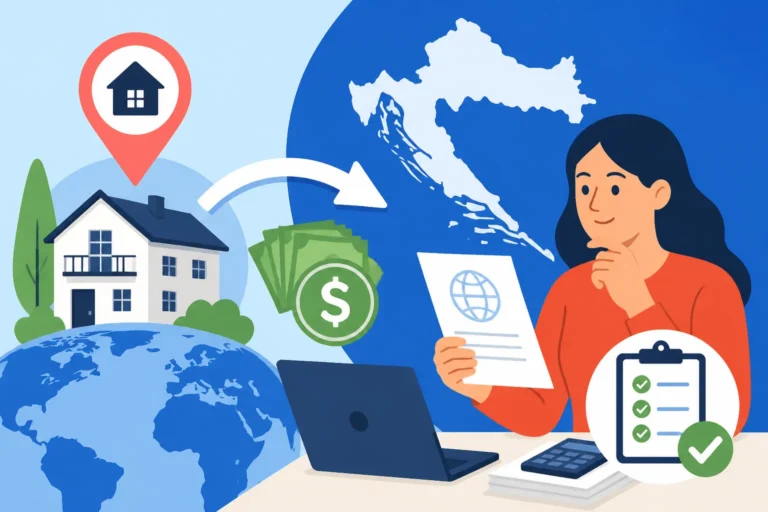
Imagine you've moved to Croatia, you're building a new life, and you've cut ties with your home country. You might still have assets there, or perhaps you're receiving income from an old employer. Your former country's tax authority might still consider you a tax resident, expecting you to pay taxes on your worldwide income to them. This is where the Croatian tax residency certificate becomes your superhero. It's an official declaration from the Croatian tax administration, the Porezna Uprava, confirming that, yes, you are indeed a tax resident of Croatia for a specific period. This document is typically required by tax authorities in your home country or any other country where you might have tax obligations, to demonstrate that you are now primarily taxed in Croatia.
Without this certificate, you could find yourself in a sticky situation, potentially liable for income tax in two countries on the same income. It’s a common expat nightmare. Many countries have Double Taxation Treaties (DTTs) with Croatia, which are agreements designed precisely to prevent this. To invoke these treaties and ensure you're only taxed once, the foreign tax authority will almost certainly demand proof of your tax residency in Croatia. It’s not just about avoiding extra payments; it's about staying compliant and avoiding penalties that can really sting your wallet. For complex cross-border tax issues, sometimes consulting with specialists like Taxes for Expats can provide peace of mind and ensure you're navigating these waters correctly from both ends.
Ensuring Compliance with Double Taxation Treaties
Croatia has signed numerous Double Taxation Treaties with countries around the globe. These treaties are designed to determine which country has the primary right to tax various types of income (e.g., salary, dividends, pensions, rental income) when an individual has connections to both countries. If you're officially a tax resident of Croatia, these treaties generally ensure that your worldwide income is primarily taxed here, and you receive relief (either exemption or credit for taxes paid in Croatia) in the other country, according to the treaty's specific provisions.
To fully benefit from these DTTs, you absolutely need to present the tax residency certificate to the tax authorities of the other country. For instance, if you receive a pension from your home country, they might withhold tax at a higher non-resident rate. With a Croatian tax residency certificate, you can often apply to have that withholding reduced or eliminated, depending on the treaty. It simplifies your financial life immensely, allowing you to plan your finances with much greater certainty. This document essentially serves as your official identification in the international tax world, confirming your allegiance, so to speak, to Croatia for tax purposes.
Defining Tax Residency in Croatia: It's Not Always What You Think
One of the biggest misconceptions for new arrivals is confusing legal residency with tax residency. While your residence permit (privremeni boravak) is a good start, it doesn't automatically make you a tax resident. The Porezna Uprava has specific criteria, and they're not always straightforward.
The Difference Between Legal and Tax Residency
When you first arrive in Croatia, you'll spend a lot of time at the MUP (Ministry of Interior) to get your The Complete Guide to Croatian Residence Permits for Expats (2027). This grants you legal temporary residence, allowing you to live here. However, tax residency is a whole different beast, determined by the Porezna Uprava based on criteria laid out in the Income Tax Act. It's entirely possible to be legally residing in Croatia but not yet be considered a tax resident by the tax authorities, or vice-versa under certain specific conditions. The MUP cares about where you're allowed to live, while the Porezna Uprava cares about where you have your "centre of vital interests."
This "centre of vital interests" is the golden standard. It's a slightly nebulous concept, but generally refers to where your personal and economic ties are strongest. This includes factors like where your family lives, where your property is located, where you work, where your bank accounts are held, where you vote, or even where your doctor is. It’s not just about spending 183 days a year here, although that's a very strong indicator. The tax authorities look at the full picture. For example, if you live here for more than 183 days but your entire family, significant property, and primary business interests remain in your home country, the Croatian tax authorities might argue your centre of vital interests is still elsewhere. This is why a formal declaration and application for tax residency is so important, especially for those with complex international lives.
Criteria for Establishing Tax Residency in Croatia
So, what exactly does the Porezna Uprava look for? The key criteria are usually:
- Presence in Croatia for 183 days or more within a single calendar year: This is the most common and often the easiest criterion to meet. If you physically spend more than half the year (including partial days) in Croatia, you are generally considered a tax resident. This applies even if your initial residence permit was for a shorter duration.
- "Centre of Vital Interests" in Croatia: Even if you spend less than 183 days, you might still be deemed a tax resident if your personal and economic ties are overwhelmingly in Croatia. As mentioned, this is a broader assessment. Do you own property here? Do your children go to school here? Is your main source of income derived from Croatia? Do you have significant financial investments within the country, perhaps through local banks like Zagrebačka Banka or PBZ? These are all factors that build a picture of your "centre of vital interests."
- Permanent Home Available in Croatia: Having a permanent home available to you in Croatia, whether owned or rented long-term, also plays a significant role. If you have a place here that is available year-round for your use, it points towards tax residency.
It's crucial to proactively engage with the tax authorities to clarify your status once you believe you meet these criteria. You can't just assume. The process of registering your Tax Residency in Croatia: A Definitive Guide for Expats (2027) is something you typically initiate by submitting the correct forms and supporting documentation. Don't wait for them to come to you, especially if you have foreign income or assets. The sooner you sort this out, the clearer your financial obligations will be.
The Official Process: How to Apply for Your Certificate
Once you've wrapped your head around the concept of tax residency, the next step is the actual application. This involves a trip to the Porezna Uprava and compiling a specific set of documents.
Locating Your Local Tax Office
The first hurdle, as with many administrative tasks in Croatia, is knowing where to go. You’ll need to visit the local branch of the Porezna Uprava that covers your registered address. You can't just walk into any tax office; it has to be the one responsible for your specific place of residence (prebivalište). If you're living in Zagreb, for example, there are multiple tax offices, each serving different parts of the city. You can usually find this information on the Porezna Uprava website by entering your address or calling their general information line. It's always best to verify the correct office before making the trip.
Once you’ve identified your office, be prepared for a visit. While Croatia is increasingly digital, certain processes still require an in-person appearance. It's a good idea to arrive early, especially if you don't have an appointment, as wait times can vary significantly. Some offices may offer appointment booking via phone or the Understanding the ePorezna Online Tax Portal in Croatia system, which can save you a lot of time and frustration. However, for a first-time application of this nature, an in-person visit is often the most reliable way to ensure all your documents are reviewed correctly and to ask any follow-up questions. Always bring your How to Get Your OIB and Why It Matters for Healthcare Access (personal identification number) as it's your primary identifier in all dealings with Croatian authorities.
Required Documents for the Application
Gathering the right documents is perhaps the most critical part of this process. The Porezna Uprava needs solid proof of your residency and financial ties to Croatia. While the exact list can sometimes vary slightly based on your specific situation or the interpretation of the officer, here's a general rundown of what you'll typically need:
- Zahtjev za izdavanje potvrde o poreznoj rezidentnosti (Request for the Issuance of a Tax Residency Certificate): This is the main application form. You can usually download it from the Porezna Uprava website or pick it up at the office. Fill it out completely and accurately, ensuring you specify the tax year for which you are requesting the certificate.
- Copy of your Passport or ID Card: A valid identification document is essential.
- Copy of your Residence Permit (Boravišna Iskaznica): This proves your legal right to reside in Croatia. Make sure it's current.
- Proof of Address: This could be a copy of your rental agreement (ugovor o najmu) registered with the tax office, or a property ownership deed (vlasnički list). Ensure it clearly states your name and address.
- Proof of Income/Employment in Croatia:
- If employed: A copy of your employment contract (ugovor o radu) and recent payslips (platne liste).
- If self-employed (e.g., paušalni obrt owner): Your Obrt registration documents and proof of social contributions paid.
- If receiving foreign income: Documents proving this income and any Croatian bank statements showing regular transfers, perhaps through services like Wise.
- Proof of Social Security Contributions (HZMO): Documentation showing you are paying into the Croatian pension and health system. This might be automatically linked to your employment, but having proof is always good.
- Bank Statements: Statements from your Croatian bank accounts showing regular activity, particularly if you're trying to demonstrate financial ties.
- Any other documents that support your claim of "centre of vital interests" in Croatia: This could include marriage certificates if your spouse is Croatian, children's school enrolment documents, utility bills in your name, or proof of other significant ties.
It is absolutely crucial to bring original documents along with photocopies. The officer will usually inspect the originals and keep the copies. If any of your documents are not in Croatian, you will likely need certified translations by a sworn court interpreter (sudski tumač). Don't skip this step, as they will reject documents without proper translation.
Filling Out the Application Form (Obrazac Rezidentnost)
The main form you'll be filling out is typically a standard request form, often referred to as "Obrazac Rezidentnost" or "Zahtjev za izdavanje potvrde o poreznoj rezidentnosti." It's generally quite straightforward but must be completed in Croatian. The form will ask for your personal details (name, address, OIB), the tax year for which you need the certificate, and the country to which you intend to submit it (e.g., "Germany," "UK," "USA"). It will also usually ask for the relevant Double Taxation Treaty if you know it, though the officials can often help with this.
Carefully double-check every field for accuracy. Any discrepancies with your official records (like your OIB or registered address) could lead to delays or rejection. If you're not confident in your Croatian, it's wise to bring a Croatian-speaking friend or hire a translator to help you ensure everything is filled out correctly. This little investment can save you immense headaches down the line. Remember, bureaucracy here can be rigid, so precision is key.
Common Challenges and Pitfalls for Expats
While the process sounds simple enough on paper, many expats find themselves running into roadblocks. These often stem from language barriers, subtle differences in how bureaucracy operates, and the perennial "missing document" syndrome.
The Language Barrier and Bureaucratic Maze
One of the biggest frustrations, especially for those new to Croatia, is the language barrier. While many younger Croatians, especially in tourist areas, speak English, this isn't always the case in government offices. The Porezna Uprava staff, though generally helpful, may not be proficient in English, and all official forms and communication are exclusively in Croatian. This can make simply asking a question or understanding a specific requirement incredibly difficult. You might present documents only to have a new, unmentioned document requested, and trying to understand why can feel like navigating a maze blindfolded.
My advice? Always bring someone who speaks fluent Croatian with you if you're not confident in your own language skills. This could be a friend, a partner, or even a professional assistant. It makes a world of difference. They can help you clarify requirements, explain your situation, and ensure you understand any instructions given. The Croatian administrative system, like many in Central and Eastern Europe, can sometimes feel less about strict published rules and more about the specific interpretation of the officer you happen to get. Patience, politeness, and persistence are your greatest allies here.
Delays and Unexpected Document Requests
It's common for expats to experience delays. Sometimes it’s due to a high volume of applications, other times it’s because the officer needs "just one more document" that wasn't on the initial list. This can be incredibly frustrating, especially if you have an urgent deadline for your foreign tax authority. The processing time for a tax residency certificate can range from a few days to several weeks, sometimes even longer during peak tax season. Don't assume you'll get it on the spot.
To mitigate this, apply well in advance of any deadlines you might have. Also, consider calling the Porezna Uprava office beforehand to ask if there are any specific additional documents they might require for your particular situation. This proactive approach can sometimes help, though it's not a foolproof method against unexpected requests. If you have any doubts about your supporting documentation or tax situation, it might be beneficial to seek professional assistance from a tax advisor or services like Taxes for Expats to ensure you're fully prepared and minimize back-and-forth. Having a comprehensive Filing Your Annual Tax Return in Croatia: The Complete Walkthrough (2027) is also a good foundation.
| Document Category | Typical Documents Required | Notes for Expats |
|---|---|---|
| Identity & Status | Passport/ID, OIB, Residence Permit (Boravišna Iskaznica) | Ensure all are valid and copies are clear. Have originals for inspection. |
| Proof of Address | Registered Rental Agreement (Ugovor o najmu) or Property Ownership Deed (Vlasnički list) | Must be in your name and registered with Porezna Uprava. Utility bills can be supplementary. |
| Employment/Income | Employment Contract, Payslips, Obrt Registration, Proof of Social Contributions | Demonstrates economic ties to Croatia. For foreign income, bank statements showing transfers (e.g., via Wise) can be useful. |
| Financial Ties | Croatian Bank Statements, Investment Portfolios | Shows your financial "centre of vital interests" is in Croatia. |
| Family Ties (if applicable) | Marriage Certificates, Children's Birth Certificates, School Enrolment | Helps establish personal "centre of vital interests" if family resides with you. |
| Application Form | Zahtjev za izdavanje potvrde o poreznoj rezidentnosti (Obrazac Rezidentnost) | Fill accurately in Croatian. Specify the tax year. |
| Translations | Certified translations by sudski tumač | Required for any non-Croatian documents. Do not use informal translations. |
Beyond the Certificate: What Comes Next
Getting your tax residency certificate is a huge achievement, but it's not the end of your tax journey. It's a foundational document that has ripple effects on your other financial responsibilities and reporting.
Using Your Certificate for Foreign Tax Purposes
Once you have your official certificate, usually stamped and signed by the Porezna Uprava, you'll need to submit it to the tax authorities in the country or countries where you have other tax obligations. This is typically done as part of your annual tax return in that country, or sometimes in response to a specific request from them. The certificate serves as concrete evidence that you are a tax resident of Croatia and thus allows you to invoke the provisions of any relevant Double Taxation Treaties.
For example, if you're receiving rental income from a property in your home country, presenting this certificate might allow you to apply the DTT to avoid being taxed on that income both in your home country and in Croatia. Often, you'll fill out a specific form from your home country's tax authority (sometimes called a "certificate of residence" form) and have the Croatian Porezna Uprava sign and stamp it as well, essentially confirming your residency on their specific document. Always check the exact requirements of the foreign tax authority, as they vary greatly. This step is critical to How to Avoid Double Taxation as an Expat in Croatia.
Annual Renewal and Ongoing Obligations
The tax residency certificate is usually issued for a specific tax year or period. This means it’s not a one-time thing; you'll likely need to apply for a new one each year, or whenever a foreign tax authority specifically requests an updated certificate. So, mentally prepare for an annual trip to the Porezna Uprava! It's a routine task for many long-term expats.
Beyond the certificate, your tax residency in Croatia means you are generally liable for Croatian income tax on your worldwide income. This entails Understanding Income Tax in Croatia: The Full Expat Guide, How to Report Foreign Income to the Croatian Tax Administration, and potentially filing an annual income tax return (Obrazac DOH or JOPPD) with the Porezna Uprava. It's essential to understand your ongoing obligations, as failure to comply can lead to fines and penalties. Keeping meticulous records of your income, expenses, and any taxes paid both in Croatia and abroad is paramount. Don't forget that using services like Wise for international money transfers makes tracking income flows simpler, which is helpful when it comes to tax reporting.
Disclaimer
Please note: This article provides general information and guidance for expats in Croatia. Tax laws and procedures can be complex and are subject to change. This information is not intended as legal or financial advice. We strongly recommend consulting with a qualified Croatian tax advisor or legal professional for advice tailored to your specific situation.