How Much Does It Cost to Buy an Apartment in Zagreb?
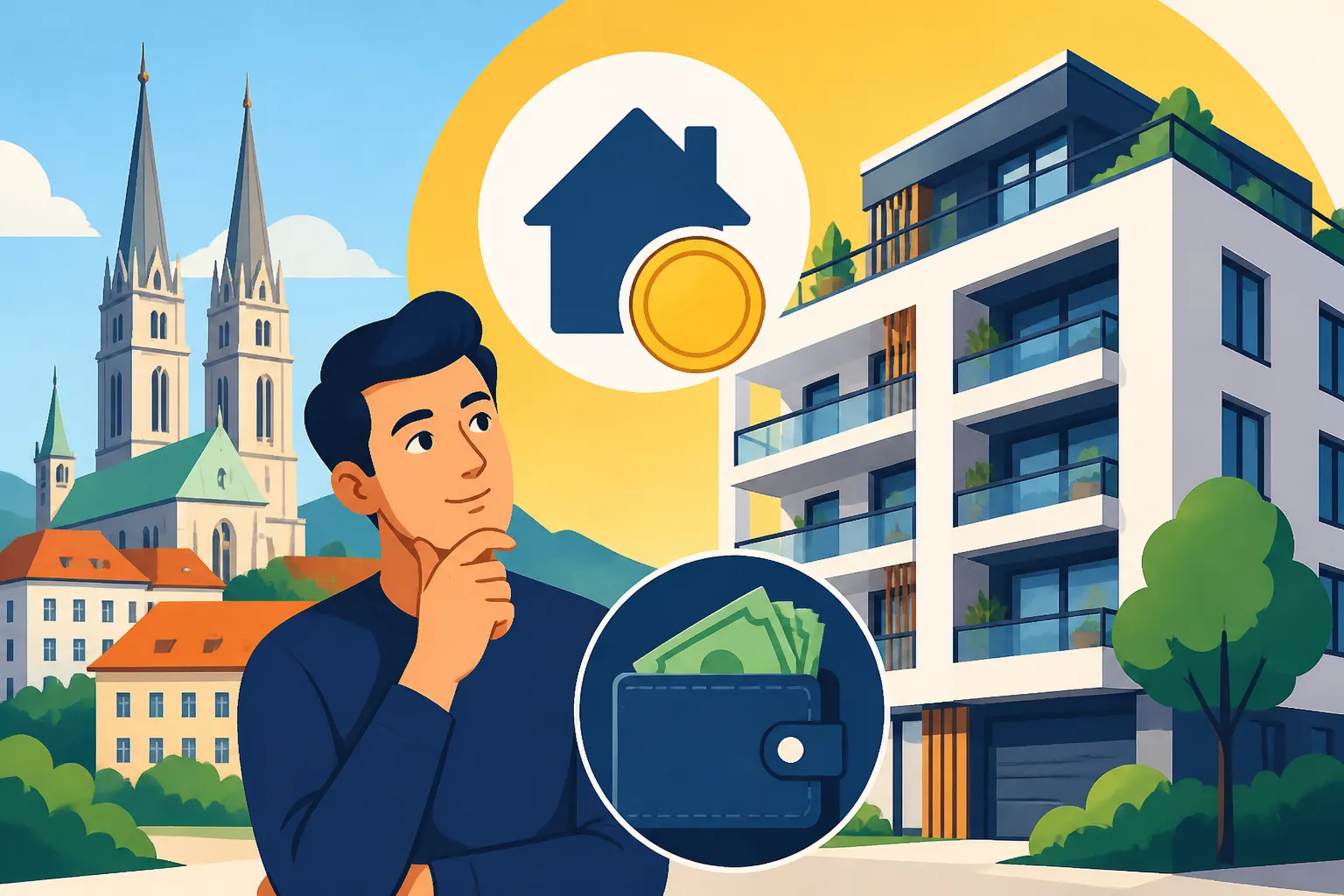
Ah, the dream of buying an apartment in Zagreb! Many of us expats have been there, gazing at beautiful old buildings in the Upper Town, imagining a cozy flat in a bustling neighborhood like Trešnjevka, or a modern haven in Novi Zagreb. But let's be honest, the excitement often quickly gives way to a dizzying array of questions about costs, taxes, and legal hurdles that feel uniquely Croatian. This guide is here to cut through the confusion, give you a realistic breakdown of what you’ll actually pay, and prepare you for the true financial commitment of owning a piece of Zagreb.
Understanding Zagreb’s Apartment Market and Price Tags
When you first start looking, you'll quickly realize that Zagreb’s property market is a beast of its own, with prices varying wildly based on location, age, condition, and amenities. It’s not just about the square meters; it’s about the whole package, and often, the hidden quirks you only discover after a few viewings.
Average Price per Square Meter by Neighborhood
Let's talk numbers, because that's usually the first question on everyone's mind. As of early 2026, the average price per square meter for apartments in Zagreb hovers around €2,800 to €3,500, but this is a very broad average. The reality on the ground is far more nuanced.
For instance, if you're eyeing the coveted Donji Grad (Lower Town) or Centar areas, think closer to €4,000 to €6,000+ per square meter, especially for renovated, well-maintained apartments in prime locations or new builds. These are the historical heart of the city, brimming with architectural charm, but also come with the challenges of older buildings – think high ceilings that are a nightmare to heat, and potentially costly renovations down the line.
Move a bit west to areas like Trešnjevka or east to Maksimir, which are popular residential zones with good infrastructure and parks, and you might find prices in the €3,000 to €4,000 per square meter range. These neighborhoods offer a good balance of accessibility and local life, often with a mix of older, charming buildings and some newer constructions.
Then there’s Novi Zagreb, across the Sava River. Historically more affordable, it’s seeing a resurgence with new developments and better connectivity. Here, you could potentially find apartments in the €2,500 to €3,500 per square meter range, with some older, unrenovated units dropping below that. It offers more space for your money, often with better parking and green areas, but it’s a different vibe from the city center.
Of course, the exact price is a negotiation, but knowing these general ranges helps you understand if you're getting a fair deal or if you need to walk away. You'll spend countless hours on portals like Njuškalo, Eurovilla, and Opereta, but remember, those listed prices are just starting points.
Factors Influencing the Apartment Price
It’s never just about location, location, location, although that's a huge piece of the puzzle. Several other factors play a significant role in dictating the final price tag:
- Age and Condition of the Building: A newly built apartment with modern insulation, an elevator, and secure parking will command a higher price than an apartment in a 70-year-old building with original wiring and no lift. However, don't dismiss older buildings entirely; some have immense character and solid construction, just be prepared for potential renovation costs.
- Renovation Status of the Apartment: A fully renovated apartment with a new kitchen, bathroom, and updated installations will naturally cost more. An unrenovated apartment might seem cheaper on paper, but factor in anywhere from €500 to €1,500+ per square meter for a decent renovation, depending on your taste and materials.
- Floor and View: Ground floor or top floor (without an elevator in an old building) might be slightly cheaper. A stunning view of Sljeme, the cathedral, or a park can add a premium.
- Parking and Storage: Parking is a goldmine in Zagreb, especially in the central areas. If an apartment comes with a dedicated parking spot, garage, or even a secure outdoor parking space, expect the price to reflect that. The same goes for a proper storage unit (šupa) in the basement or attic.
- Layout and Number of Rooms: A well-designed, functional layout can increase appeal. Studios or one-bedroom apartments are often sought after for rentals, while larger family apartments are also in steady demand.
When you're comparing, it's crucial to look beyond the initial asking price and consider the full picture. You'll quickly develop an eye for what's realistic and what's a pipe dream.
The Hidden Labyrinth: Additional Costs of Buying Property in Zagreb
Alright, so you’ve found your dream apartment and negotiated a price. Congratulations! But hold your horses, because the sticker price is just the beginning. Croatia, like many European countries, has a layer of administrative and legal fees that can easily add another 5-10% (or more!) to your total outlay. This is where many expats get caught off guard, so let’s break it down meticulously.
Real Estate Agent Commission
Many expats choose to use a real estate agent, and honestly, it often makes the process infinitely smoother, especially if your Croatian isn't fluent. They know the market, they can spot red flags, and they handle a lot of the initial communication. Typically, the agent's commission in Croatia is 3% + VAT (Porez na dodanu vrijednost) of the agreed-upon purchase price, payable by the buyer. Some agents might try to charge both buyer and seller, so be sure to clarify this from the outset.
For example, on a €250,000 apartment, a 3% commission is €7,500. Add 25% VAT to that, and you're looking at €9,375 just for the agent. Yes, it's a significant chunk, but a good agent can save you far more in potential headaches and bad deals. Just ensure you sign a clear agency agreement detailing their services and fees.
Real Estate Transfer Tax (Porez na promet nekretnina)
This is a big one. When you buy property in Croatia, you are liable for a 3% Real Estate Transfer Tax on the market value of the property. This isn't based on the price you paid, but on the value assessed by the tax authorities (Porezna Uprava). Usually, they take the purchase price as the base, but they can and do adjust it if they believe the price was artificially low.
This tax is generally paid within 30 days of the contract being certified by a notary. Your lawyer or agent will usually help you with the forms, which are submitted to the local tax office. Forget to pay, and penalties accrue quickly! Understanding this tax is a crucial part of managing your finances, and you can learn more about it in our guide on Understanding the Real Estate Transfer Tax Porez na Promet Nekretnina.
Notary Fees
Every property purchase agreement (predugovor – pre-contract, and kupoprodajni ugovor – sales contract) must be certified by a public notary in Croatia. This isn't just a stamp; the notary verifies identities, checks documents, and ensures legal validity. Their fees are regulated by law and depend on the value of the transaction.
For an apartment around €200,000 – €300,000, expect notary fees to be in the range of €300 to €800, potentially higher for more complex transactions or if there are multiple documents to be certified. This fee typically covers the certification of the main sales contract, and often the signature verification on the tabularna isprava (a document allowing registration of ownership in the land registry).
Legal Fees for a Lawyer
While not strictly mandatory, hiring a good, independent lawyer is an absolute no-brainer for any expat buying property in Croatia. The legal system can be complex, and a lawyer will:
- Perform due diligence: This is critical. They will check the Land Registry (Zemljišne knjige) and Cadastre (Katastar) to ensure the property has a clean title, no encumbrances, no pending lawsuits, and that the ownership matches what the seller claims. They'll also verify the construction permits. This helps avoid nightmares later on. A great resource to understand this better is our article on Understanding the Zemljišne Knjige Land Registry in Croatia.
- Draft and review contracts: They ensure the pre-contract and final sales contract are fair, protect your interests, and comply with Croatian law.
- Assist with registration: They help ensure your ownership is properly registered in the Land Registry after the purchase.
Legal fees can vary, but generally, expect to pay 1% to 1.5% + VAT of the purchase price, or a flat fee for their services, which can range from €1,500 to €5,000 for a typical apartment purchase. It's a significant cost, but one that provides invaluable peace of mind. Seriously, don't skimp on this.
Property Appraisal (Procjena nekretnine)
If you’re taking out a mortgage from a Croatian bank to finance your purchase, the bank will almost certainly require an independent property appraisal. This ensures the property's value justifies the loan amount. The cost for an appraisal typically ranges from €200 to €500, and it's usually paid by the buyer.
Energy Performance Certificate (Energetski Certifikat)
While the seller is legally obligated to provide this document, it’s worth being aware of. This certificate rates the energy efficiency of the building, from A+ (most efficient) to G (least efficient). It gives you an idea of what your heating and cooling costs might look like. If, by some oversight, the seller doesn't provide it, you might need to arrange one, costing around €100-€300. It's vital to have, especially with rising energy costs.
To illustrate these one-time costs, let’s consider a hypothetical apartment purchase of €250,000 in Zagreb:
| Cost Item | Estimated Percentage | Estimated Cost (for €250,000 apartment) | Notes |
|---|---|---|---|
| Real Estate Agent Fee | 3% + 25% VAT | €9,375 | Often negotiable, ensure clear agreement. |
| Real Estate Transfer Tax | 3% | €7,500 | Based on market value, not necessarily purchase price. |
| Notary Fees | ~0.1-0.3% | €300 – €800 | Regulated fees, depends on transaction value. |
| Legal Fees | 1-1.5% + 25% VAT | €3,000 – €4,688 | Highly recommended for due diligence and contract review. |
| Property Appraisal (if mortgage) | Fixed | €200 – €500 | Required by banks for financing. |
| TOTAL ADDITIONAL COSTS | ~7.1% – 8.3% | €20,375 – €23,363 | These are one-time costs ON TOP of the purchase price. |
As you can see, these additional costs alone for a €250,000 apartment can easily add €20,000 to €23,000+ to your overall investment. Suddenly, that €250,000 apartment is really closer to €270,000 or even more. Being prepared for this financial reality upfront is key.
Also, before you even get to this stage, make sure you have your OIB (personal identification number) sorted. You can't do much in Croatia without it, including buying property. Our guide on How to Get an OIB Personal Identification Number in Croatia is a must-read.
The Long Haul: Ongoing Costs of Apartment Ownership in Zagreb
So you've navigated the purchase, signed the papers, and got the keys. Congratulations, you're now a proud apartment owner in Zagreb! But the financial journey doesn't end there. Just like anywhere else, owning property comes with recurring monthly and annual costs that you need to budget for.
Pričuva (Building Reserve Fund)
This is a mandatory monthly contribution for all apartment owners in a multi-unit building. It goes into a common fund used for maintenance, repairs, and improvements to the building's common areas (roof, facade, stairwells, elevator, etc.). The amount you pay is usually calculated per square meter of your apartment and varies depending on the building's age, condition, and the decisions of the owners' association (usually managed by a building management company).
Expect to pay anywhere from €0.20 to €1.00+ per square meter per month. For a 70-square-meter apartment, that could be €14 to €70+ each month. Older buildings often have higher pričuva payments as they require more upkeep. This isn't just a fee; it's an investment in your building's future and value.
Utilities (Režije)
This one is fairly straightforward, but the costs can fluctuate significantly based on your consumption and the age/insulation of your building.
- Electricity (HEP): This is usually metered. Expect to pay €30 to €100+ per month, depending on your usage, appliance efficiency, and whether you use electricity for heating or hot water. If you're running air conditioning constantly in summer or electric heaters in winter, it will climb.
- Water: Water bills are often a combination of consumption and a fixed fee. For one or two people, €15 to €40 per month is a reasonable estimate.
- Gas: If your building has central gas heating or if you use gas for cooking and hot water, this can be a significant cost, especially in winter. Expect €30 to €150+ per month in the colder months, potentially much less in summer. Many older Zagreb apartments have their own gas boilers, giving you control over usage, but also requiring regular servicing.
- Internet, TV, and Mobile: These are essential modern utilities. You can find competitive packages from providers like Hrvatski Telekom (HT), A1, or Telemach. Expect to pay €30 to €60 per month for a decent internet and TV package. Mobile plans vary widely, but for good data and calls, budget €10-€20 per month. While you're setting up all this, for immediate connectivity when you first arrive or while scouting apartments, an eSIM from a provider like Airalo can be a lifesaver, ensuring you're online without the hassle of local SIM card registration right away.
Setting up utilities can be a bureaucratic dance, so our guide on The Expat Guide to Setting Up Utilities in Croatia is highly recommended reading.
Property Insurance
While not always mandatory, it's incredibly wise to have property insurance. This covers risks like fire, flood, theft, and especially earthquakes, which are a real concern in Zagreb. The cost depends on the value of your apartment, its location, and the coverage you choose. Expect to pay €150 to €400 per year for comprehensive coverage. Considering the investment you're making, this is a small price for significant protection.
Communal Fee (Komunalna Naknada)
This is a municipal fee charged by the local city government (Grad Zagreb) for public services like waste management, public lighting, and road maintenance. It's usually a small, fixed monthly or annual fee based on the size and location of your property. For an apartment, expect it to be in the range of €5 to €20 per month.
Annual Maintenance and Repairs
Even in a new building, things break. In older buildings, things definitely break. Budget a small amount annually for unforeseen repairs, appliance replacements, or just general upkeep. This could be anything from a leaky faucet to repainting a room. A good rule of thumb is to set aside 1% of the property's value annually for maintenance, though you might not spend it all every year.
Here’s a snapshot of typical ongoing monthly costs for a 70-square-meter apartment in Zagreb:
| Cost Item | Estimated Monthly Cost | Notes |
|---|---|---|
| Pričuva | €30 – €70 | Building reserve fund, varies by building and size. |
| Electricity (HEP) | €30 – €100 | Highly variable based on consumption. |
| Water | €15 – €40 | Includes fixed and consumption-based fees. |
| Gas (heating/hot water) | €30 – €150 | Significantly higher in winter. |
| Internet & TV | €30 – €60 | Package deals often available. |
| Mobile Plan | €10 – €20 | Basic to moderate data and calls. |
| Communal Fee | €5 – €20 | Local municipal tax. |
| Property Insurance | €12 – €35 (annual / 12) | Highly recommended, especially for earthquake coverage. |
| TOTAL ONGOING COSTS | €162 – €495+ | This is a rough estimate; actual costs will vary. |
These ongoing costs might not seem as daunting as the initial purchase fees, but they add up over time. It's crucial to factor them into your overall budget to ensure comfortable living without financial surprises.
Smart Strategies for a Smooth Apartment Purchase in Zagreb
Buying property in a foreign country is a huge step, and doing it in Croatia, with its unique blend of bureaucracy and charm, requires a bit of savvy. Here are some strategies to make your journey smoother and more successful.
Securing Financing as an Expat
For many, buying an apartment means getting a mortgage. As an expat, this can be a bit trickier than for a Croatian citizen, but it's certainly not impossible.
- Croatian Banks: Major banks like Zagrebačka Banka (ZABA), Privredna Banka Zagreb (PBZ), Erste Bank, and OTP Bank are the main players. They offer mortgages to foreign residents, but you'll need to demonstrate stable income, usually from a Croatian employer, or consistent income from abroad (if you're a digital nomad or similar). They'll want to see your OIB, proof of residence, employment contracts, and bank statements. The loan-to-value (LTV) ratio might be slightly lower for non-citizens, often around 70-80% of the property's value, meaning you'll need a larger down payment.
- Foreign Banks: If you have assets or strong banking relationships in other EU countries, you might explore options there, but generally, local Croatian banks are the most practical route for financing Croatian property.
- Proof of Funds: Regardless of how you finance it, be prepared to show solid proof of funds for your down payment and closing costs. Croatian banks are very strict about anti-money laundering regulations.
It’s advisable to speak with a mortgage advisor at a few different banks to compare terms and eligibility requirements early in your process.
The Importance of Due Diligence and Professional Help
I cannot stress this enough: do not go into this alone. Croatia has made strides in streamlining its property registry, but historical complexities can still exist.
- Lawyer Up: As mentioned before, a good lawyer is your shield and sword. They will conduct thorough due diligence, checking the Land Registry (Zemljišne knjige) and Cadastre (Katastar) to confirm ownership, legal status, and any potential burdens on the property. This is where you find out if there are easements, unresolved inheritances, or if the building was built without proper permits back in the day (yes, it happens). Our guide on Understanding the Croatian Property Registry and Cadastre System delves deeper into these crucial systems.
- Reputable Real Estate Agents: While their fees are significant, a reliable agent can be invaluable. They have local knowledge, access to listings, and can guide you through the initial stages. Look for agencies with good expat reviews or recommendations. Sirelo, for example, is more known for moving services, but their network might connect you with reputable local partners or resources that understand expat needs during relocation.
- Property Inspections: Consider hiring an independent inspector, especially for older properties. They can identify structural issues, problems with installations, or hidden dampness that an untrained eye might miss. This can be a powerful negotiation tool or save you from a costly mistake.
Negotiation and Market Awareness
The Croatian property market is dynamic. While sellers often start with ambitious asking prices, there’s usually room for negotiation, especially if you have cash or pre-approved financing.
- Market Research: Do your homework. Look at comparable sales in the neighborhood. Understand if the area is developing, stagnating, or declining. If you can point out necessary renovations or structural issues, you have leverage.
- Be Patient: Don’t rush into a purchase. The right apartment at the right price will come along. Rushing can lead to oversights and regrets.
- Offer What You Believe It’s Worth: Don't be afraid to make a lower offer, especially if the property has been on the market for a while or has obvious flaws. The worst they can say is no.
For those still debating if buying is the right move, comparing it to renting can be helpful. Our article on How Much Does It Cost to Rent an Apartment in Zagreb in 2026? might offer some perspective on the rental market.
Language and Bureaucracy
Croatia, for all its beauty, has a bureaucratic system that can test the patience of a saint. Most official documents and communication will be in Croatian.
- Translators: For contracts and official communication, always use a certified court translator (sudski tumač). Your lawyer can usually recommend one.
- Learn Some Croatian: Even basic Croatian phrases will go a long way in building rapport and showing respect. It can also help you understand simple instructions or navigate local offices.
- Digital Services: Croatia is improving its digital government services, but e-Građani, the main portal, often requires a Croatian ID or mobile ID. It's a fantastic tool once you're set up, though the initial setup can be a hurdle for foreigners.
Buying an apartment in Zagreb is a significant commitment, both financially and emotionally. It’s a rewarding experience that offers a deeper connection to this beautiful country, but it requires careful planning, a realistic budget, and the right professional support. Don't be discouraged by the complexities; with the right information and approach, your dream of owning a piece of Zagreb can absolutely become a reality.
Disclaimer
The information provided in this guide is intended for general informational purposes only and does not constitute legal, financial, or real estate advice. While we strive to provide accurate and up-to-date information, laws, regulations, and market conditions in Croatia can change rapidly. It is essential to consult with qualified local legal, financial, and real estate professionals for advice tailored to your specific situation before making any property purchase decisions.