How Do I Set Up Recycling and Waste Collection in Croatia?
When you first arrive in Croatia, the sheer joy of living in this beautiful country can sometimes overshadow the nitty-gritty details of daily life. One of those details that often throws expats for a loop is figuring out the local waste management and recycling system. It's not always straightforward, and what might be common practice in your home country can be completely different here, leaving you with a pile of garbage and a lot of head-scratching. This guide is here to untangle the confusion and walk you through exactly how to set up and manage your recycling and waste collection in Croatia, ensuring you're a responsible resident and avoiding any unnecessary fines or frustrations.
Understanding Croatia's Waste Management System
Before diving into the practicalities, it’s really helpful to grasp the basic philosophy behind waste management in Croatia. Like many EU countries, Croatia is pushing hard for increased waste segregation and recycling, moving away from simply dumping everything into landfills. This means that as residents, we all have a role to play, and it starts with understanding the local structures and principles.
The Local Authority's Role
Waste collection in Croatia isn't a national, one-size-fits-all service. Instead, it’s primarily managed at the local level by municipalities or their designated public utility companies. These companies often go by names like Čistoća (meaning 'cleanliness') and operate in specific cities or regions. For instance, if you're in Zagreb, you'll deal with Zagrebački holding, Podružnica Čistoća. In Split, it's Čistoća Split, and so on.
This local control means that the exact bins you get, the collection schedule, and even some specific rules can vary from town to town, or even within different neighborhoods of the same city. It's crucial to identify your local provider as soon as you settle in. They are the ones who will ultimately provide your bins, collect your waste, and send you the bills. Remember, this service is mandatory, and you'll be paying a komunalna naknada (communal fee) which covers various municipal services, including waste management.
Segregation is Key: The "Odvojeno Skupljanje Otpada" Principle
The cornerstone of waste management in Croatia is "odvojeno skupljanje otpada," which translates to "separate waste collection." This isn't just a suggestion; it's a legal requirement, and it’s how the system is designed to function. You can’t just throw everything into one big bin like in some places; you must sort your waste at the source.
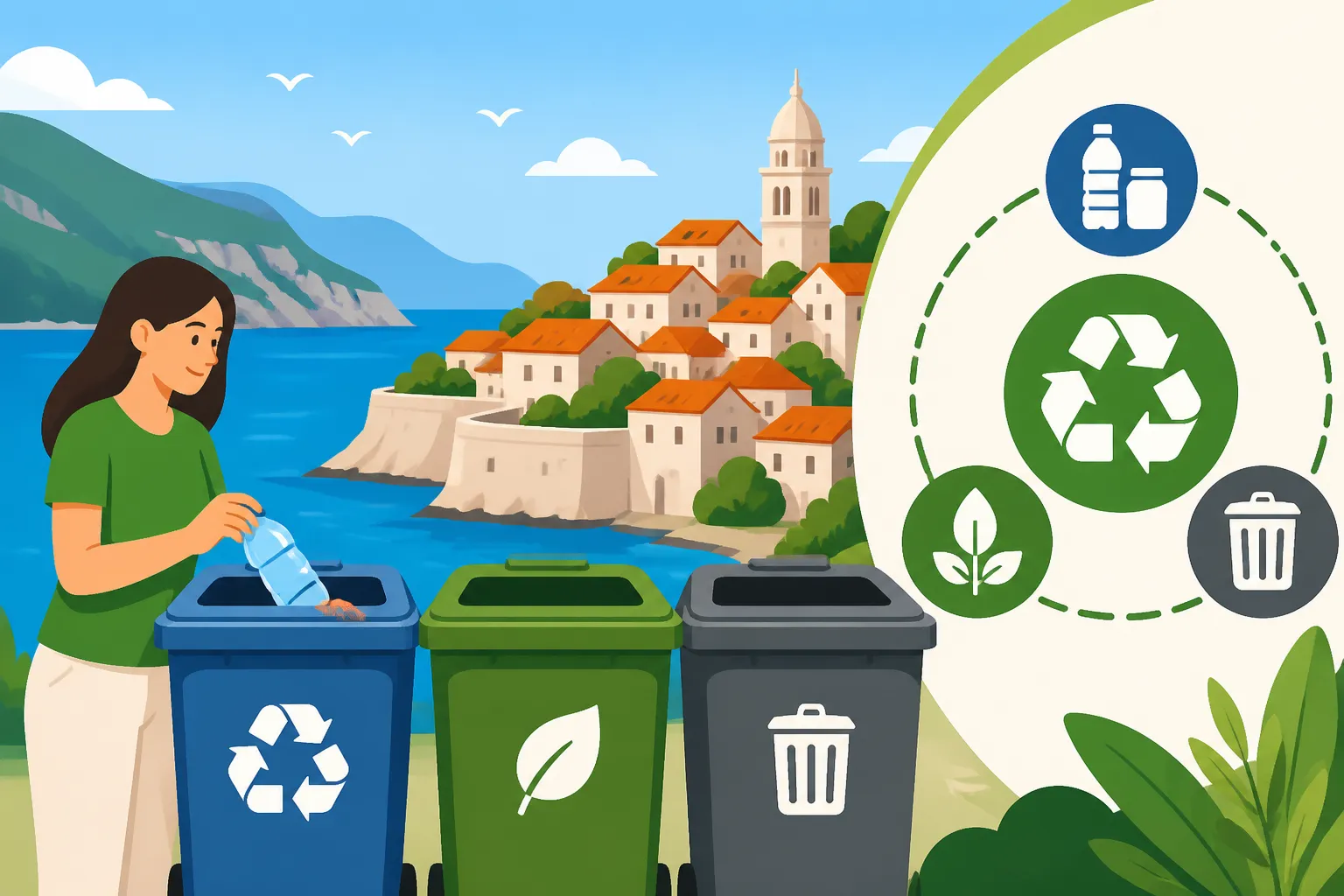
This typically involves separating your household waste into several main categories: mixed communal waste, paper, plastic (and often metal packaging), bio-waste, and glass. You'll usually be provided with different colored bins or bags for each category. Understanding what goes into which bin is the first, and arguably most important, step to successfully navigating waste collection here. It really does take some getting used to, especially if you come from a place with less stringent sorting, but once you get into the rhythm, it becomes second nature.
Step-by-Step: Setting Up Your Waste Collection in a New Home
So, you’ve just moved in, boxes are everywhere, and now you’re staring at your first bag of trash wondering what to do with it. Don't worry, we've all been there! The process of setting up waste collection differs slightly depending on whether you're renting an apartment or have become a homeowner. Let's break it down.
If You're Renting an Apartment
For many expats, especially those in urban centers like Zagreb or Split, renting an apartment is the first step. In this scenario, good news: your landlord or building manager often handles the primary setup for waste collection. Apartment buildings usually have shared communal bins located either within the building's waste room, in the courtyard, or at designated spots on the street.
Your first port of call should always be your landlord. Ask them specifically about the waste collection system. Inquire about:
- Where are the bins located?
- What days are the different types of waste collected?
- Are specific bags required (e.g., municipal plastic bags for mixed waste, like the famous yellow/blue bags in Zagreb)?
- How are the waste bills handled? In most cases, the waste collection fee is included in your monthly režije (utilities) that you pay to the landlord, who then pays the utility company.
If for some reason your landlord doesn't manage this, or if you're the very first tenant in a newly constructed building, you might need to register with the local Čistoća yourself. This is less common but can happen. You'd typically need your OIB (personal identification number) and proof of address. Having a reliable internet connection is crucial for looking up these local services and their addresses, and a temporary eSIM from providers like Airalo can be a lifesaver for immediate connectivity when you first arrive.
If You're a Homeowner or Renting a House
If you've taken the plunge and bought a house, or are renting a standalone home, then the responsibility for setting up and managing waste collection usually falls directly on you. This means contacting your local Čistoća or municipal waste company directly.
You'll need to register your property for waste collection services. The exact documents required can vary slightly, but generally, you'll need:
- Your OIB.
- Proof of ownership (e.g., vlasnički list for homeowners) or your rental contract (for house renters).
- Your address.
- A completed application form, which you can usually get from their office or sometimes download from their website.
Once registered, the company will typically provide you with the necessary bins for your property. This might include a grey/black bin for mixed waste, a blue bin for paper, a yellow bin for plastic/metal, and a brown bin for bio-waste. They will also inform you of your collection schedule. Sometimes, depending on the area, the bins might already be at the property if it had previous occupants, in which case you just need to transfer the service into your name.
Paying Your Waste Bills
Whether you're renting or owning, those waste collection bills will eventually arrive. For apartment dwellers, as mentioned, this is often bundled into your monthly utilities paid to your landlord. For homeowners and house renters, the bills will come directly to your address from the local Čistoća company.
Waste bills are typically sent out monthly or quarterly, depending on your municipality. They will specify the amount due and the payment deadline. You have several options for payment:
- Bank: You can pay at any Croatian bank (e.g., Zagrebačka Banka, Erste, OTP Banka) either in person at the counter or through their online banking platform. This is usually the most convenient method for expats, especially online.
- Hrvatska Pošta (Croatian Post Office): Most post offices allow you to pay utility bills.
- FINA (Financijska agencija): Similar to the post office, FINA branches also offer bill payment services.
- Tisak Kiosks: Many Tisak newsstands offer bill payment services for a small fee.
Always keep your payment receipts, especially if paying in person, just in case there's any discrepancy later on. Understanding how to manage these regular payments is key to managing your finances in Croatia, much like understanding your Understanding Income Tax in Croatia: The Full Expat Guide.
Navigating the Specific Waste Streams: What Goes Where?
This is where it can get a bit tricky, but once you know the system, it's quite logical. Croatian waste management relies heavily on you, the individual, making the correct choices at home. Get ready to embrace your inner waste sorter!
Mixed Communal Waste (Mješani Komunalni Otpad)
This is your general waste bin, usually grey or black. The key here is to understand that it’s for non-recyclable items, or items that are contaminated and can't be recycled. Think of it as the last resort for anything that doesn't fit into the other categories.
What goes in:
- Food scraps that cannot go into bio-waste (e.g., cooked meat, bones, dairy, greasy foods).
- Contaminated packaging (pizza boxes with cheese, greasy paper).
- Diapers, sanitary products.
- Ceramics, porcelain.
- Ash (cold, of course).
- Broken mirrors, light bulbs (non-fluorescent).
- Dust, vacuum cleaner bags.
Essentially, if it’s not paper, plastic, bio-waste, or glass, and it’s not bulky or hazardous, it probably belongs in the mixed waste bin. Many municipalities, particularly in larger cities like Zagreb, require you to use specific municipal bags for mixed waste. These are often purchased at kiosks or supermarkets and signify that you’ve paid for the collection service.
Recycling Specifics: Paper, Plastic, Bio-Waste, Glass
Now for the main event: the segregated waste. This is where you can make the biggest difference in reducing your environmental footprint in Croatia. Each category has its own bin color and specific rules.
Paper (Papir)
Look for the blue bin or blue recycling bags. This is for all your clean paper and cardboard products.
What goes in:
- Newspapers, magazines, brochures.
- Cardboard boxes (flattened, please!).
- Writing paper, envelopes.
- Paper bags.
- Cartons (like cereal boxes, shoe boxes).
What doesn't go in:
- Wet or greasy paper (e.g., used paper towels, pizza boxes with food residue).
- Carbon paper, waxed paper.
- Plastic-coated paper.
Always try to flatten cardboard boxes to save space in the bin – it's a small effort that helps a lot!
Plastic (Plastika)
This category is usually collected in a yellow bin or yellow recycling bags. This is often the trickiest one, as "plastic" encompasses a lot of different materials. In Croatia, metal packaging (aluminum cans, tin cans) is frequently collected alongside plastic.
What goes in:
- Plastic bottles (water, soda, milk – rinsed and flattened if possible).
- Plastic containers (yogurt pots, butter tubs – rinsed).
- Plastic bags, foils, wraps.
- Plastic cups and plates (clean).
- Metal cans (aluminum drink cans, tin food cans – rinsed).
- Tetra Pak packaging (milk and juice cartons – rinsed and flattened).
What doesn't go in:
- Plastic toys.
- Hard plastic items (e.g., plastic furniture).
- Styrofoam.
- Contaminated plastic (e.g., motor oil bottles, chemical containers).
- Medical waste.
Rinsing plastic containers is generally a good idea to prevent odors and keep the recycling stream clean. This attention to detail is part of the Croatian way of recycling.
Bio-Waste (Biootpad)
This is collected in a brown bin. This category is for organic waste that can be composted. Many households are given a small green kitchen caddy to collect bio-waste before transferring it to the larger brown bin.
What goes in:
- Fruit and vegetable scraps (peels, cores, spoiled produce).
- Coffee grounds, tea bags.
- Eggshells.
- Garden waste (leaves, grass clippings, small branches).
- Sawdust (untreated wood).
- Food residue from plants.
What doesn't go in:
- Cooked meat, bones, fish.
- Dairy products, oils, fats.
- Ashes.
- Animal waste.
- Plastics, metals, glass.
This system aims to reduce the amount of organic matter in landfills, which helps mitigate greenhouse gas emissions.
Glass (Staklo)
Glass is typically collected in separate green communal bins found on streets, rather than individual household bins. You'll often see these larger, bell-shaped containers in public spaces.
What goes in:
- Glass bottles (beverage bottles, food jars – rinsed, labels are usually fine).
- Other glass packaging.
What doesn't go in:
- Broken mirrors.
- Window panes.
- Ceramics, porcelain.
- Light bulbs.
- Crystal glass.
- Heat-resistant glass (e.g., Pyrex).
The key is to remember that these communal bins are for packaging glass only, not general broken glass items.
Bulky Waste (Glomazni Otpad) and Hazardous Waste
Beyond the daily bins, there are categories for larger, less frequent items and dangerous materials. Knowing how to dispose of these properly is crucial.
Bulky Waste (Glomazni Otpad)
Bulky waste includes large items that don't fit into regular bins, such as old furniture, mattresses, large appliances, and electronics. You cannot just leave these by your regular bins. There are two primary ways to dispose of bulky waste:
- Reciklažno Dvorište (Recycling Yard/Centre): These are designated collection points where you can bring various types of waste, including bulky items, electronics (often called EE otpad), construction debris, and sometimes even hazardous household waste. Every larger town and city has at least one reciklažno dvorište. You’ll need to show your ID and proof of residence (or OIB) to use them, as they are usually free for local residents.
- Scheduled Collection: Many municipalities offer a scheduled bulky waste collection service a few times a year. You typically need to call your local Čistoća to register for this service, and they will tell you when and where to place your items for pick-up. Keep an eye on your municipality’s website or local announcements for these dates. If you've just moved into Croatia with a lot of belongings, moving companies or services, such as those you might find through platforms like Sirelo, might offer disposal services for old furniture, but for self-disposal, the reciklažno dvorište is your best friend.
Hazardous Waste
This category includes items that can be dangerous to human health or the environment if not disposed of correctly. Think batteries, paints, solvents, pesticides, pharmaceuticals, motor oils, and fluorescent light bulbs.
These items never go into your regular bins. They must be taken to a reciklažno dvorište that accepts hazardous waste, or to specific collection points (e.g., pharmacies for old medications, designated spots for batteries at supermarkets). Your local Čistoća website will have information on where to safely dispose of these materials. Take this seriously, as improper disposal can lead to fines and environmental damage.
| Waste Type | Bin Color / Location | What Goes In | What Doesn't Go In |
|---|---|---|---|
| Mixed Communal Waste | Grey / Black Bin | Non-recyclable, contaminated items, diapers | Recyclables, bulky waste, hazardous waste |
| Paper (Papir) | Blue Bin / Blue Bag | Newspapers, magazines, clean cardboard, paper bags | Wet/greasy paper, plastic-coated paper |
| Plastic (Plastika) | Yellow Bin / Yellow Bag | Plastic bottles/containers (rinsed), plastic bags, metal cans (rinsed), Tetra Pak | Hard plastics, toys, Styrofoam, contaminated plastic |
| Bio-Waste (Biootpad) | Brown Bin | Fruit/veg scraps, coffee grounds, eggshells, garden waste | Cooked meat/bones, dairy, oils, animal waste, plastics |
| Glass (Staklo) | Green Communal Bin | Glass bottles, food jars (rinsed) | Mirrors, window panes, ceramics, light bulbs, crystal |
| Bulky Waste | Reciklažno Dvorište / Scheduled Pickup | Furniture, appliances, electronics (EE otpad) | Regular household waste |
| Hazardous Waste | Reciklažno Dvorište / Specific Collection Points | Batteries, paints, chemicals, old medicines | Regular household waste |
Common Challenges and Tips for Expats
Navigating a new country's administrative systems is rarely without its bumps, and waste management in Croatia is no exception. Here are some common challenges you might face and tips to overcome them.
Language Barrier and Bureaucracy
Ah, the classic expat challenge! Most of the official information from Čistoća companies, municipal websites, and even the labels on the bins themselves will be in Croatian. This can make understanding the nuances of the system quite difficult initially. You might find yourself staring blankly at a flyer, trying to decipher collection schedules or new rules.
My best advice here is threefold:
- Ask a local: Don't be afraid to ask your landlord, neighbors, or even a friendly shopkeeper for clarification. Croatians are generally helpful, and they understand the system perfectly.
- Use translation tools: Google Translate is your friend, especially for website content or official documents. While not perfect, it can give you the gist.
- Patience and persistence: Bureaucracy in Croatia can move at its own pace. Be prepared for multiple visits or calls if you need to register something new. Bring your documents, a pen, and a good dose of patience. When setting up utilities and services like How to Set Up Electricity HEP in Your Croatian Home, you'll often encounter similar hurdles.
Space and Frequency of Collection
Depending on where you live, you might find yourself with limited space for multiple recycling bins. If you're in a smaller apartment, juggling five different waste categories can feel like a game of Tetris. Also, collection frequencies vary. Mixed waste might be collected more often (e.g., twice a week), while paper or plastic might only be once every two weeks. Bio-waste collection is also quite frequent in many urban areas due to its perishable nature.
Tips for managing space and frequency:
- Utilize clever storage: Get stackable recycling bins or slim caddies that fit into tight spaces. Many kitchen stores offer these.
- Flatten everything: Seriously, flatten every cardboard box, plastic bottle, and Tetra Pak carton to maximize bin space.
- Monitor your waste: Pay attention to what you consume most. If you generate a lot of plastic, know when the yellow bin day is so you don't accumulate too much.
- Know your schedule: Get a calendar or set reminders for different collection days. Missing a collection means having to store waste longer, which is never fun. Knowing your schedule for waste is as important as knowing How to Get Your OIB and Why It Matters for Healthcare Access for daily life.
Dealing with Moving Waste
When you first move into a new place, you’re often faced with a mountain of cardboard boxes, plastic packaging, and perhaps even some unwanted items left by previous tenants or sellers. Disposing of this initial surge of waste can be overwhelming.
Here's how to tackle it:
- Break down boxes immediately: As soon as you unpack, flatten those cardboard boxes.
- Prioritize a trip to the reciklažno dvorište: For large volumes of cardboard, plastic, and especially any old furniture or electronics, a trip to your local recycling yard is often the quickest and most efficient solution. It might require a car or a borrowed van, but it saves you from waiting for scheduled bulky waste collections.
- Communicate with movers: If you used a professional moving company, ask if they offer services for disposing of packing materials. Some do, which can be incredibly helpful. If not, be prepared to sort it all yourself. This is a common part of the relocation process, whether you're moving yourself or using a service found through platforms like Sirelo.
- Check for special collection events: Sometimes municipalities organize special collection days for moving waste or specific types of materials. Keep an eye out for these announcements. It's similar to needing to understand Registering Your Residence in Croatia: The Complete MUP Guide for getting settled.
Getting a handle on waste and recycling in Croatia is definitely part of the expat initiation process. It might seem complicated at first, with all the different bins and rules, but it’s a system designed to keep this beautiful country clean and green. By understanding the local companies, the segregation principles, and where everything goes, you’ll be a pro in no time!
Disclaimer
Please note that while this guide provides comprehensive information based on current regulations and common practices in Croatia, waste management rules can be subject to local variations and changes over time. Always verify specific details, collection schedules, and waste categories with your local municipality or waste management provider (e.g., Čistoća) for the most accurate and up-to-date information relevant to your exact location. This guide is for informational purposes only and does not constitute legal or official advice.