How to Apply for Permanent Residence (Stalni Boravak) in Croatia
It's a common feeling, isn't it? You've settled into Croatia, your temporary residence permit is nearing its end, and suddenly you're faced with the next big administrative hurdle: figuring out how to make this wonderful country your permanent home. The thought of endless paperwork and navigating the MUP (Ministry of Interior) for another round can feel daunting, but rest assured, this guide is here to demystify the process of applying for permanent residence, or stalni boravak, in Croatia.
What Exactly is Permanent Residence (Stalni Boravak) in Croatia?
After years of living here on various temporary permits, you might be wondering what the big deal is with permanent residence. Is it just another piece of paper? Well, my friends, it's so much more than that. Stalni boravak marks a significant milestone in your life as an expat in Croatia, offering a level of stability and rights that temporary permits simply cannot. It's the moment Croatia truly starts to feel like 'home' in the eyes of the law.
The Benefits and Rights of a Permanent Resident
Holding permanent residence in Croatia isn't just about avoiding annual trips to the MUP (though that's a huge perk!). It grants you a much broader range of rights and opportunities that mirror those of Croatian citizens, with a few key exceptions like voting in national elections. You gain unimpeded access to the labour market, meaning no more needing a specific work permit if you change jobs, and you can even start your own business with fewer bureaucratic hurdles. Think of the freedom to pursue any career path or entrepreneurial dream without constant immigration checks!
Furthermore, permanent residents benefit from full integration into the public healthcare system, without the same restrictions or initial waiting periods that sometimes apply to temporary residents. This can be a huge relief, especially for families. It also simplifies things when it comes to things like loans, mortgages, and generally dealing with everyday bureaucracy, as you're seen as a more stable, long-term member of society. And, of course, it's a crucial stepping stone if you ever dream of pursuing Croatian Citizenship: Routes to Naturalisation and Descent.
Key Differences from Temporary Residence (Privremeni Boravak)
The most striking difference between stalni boravak and privremeni boravak (temporary residence) is, as the names suggest, permanence. A temporary permit always has an expiry date, forcing you to think about extensions and ensuring you meet the criteria for renewal. With permanent residence, you generally don't have to renew it annually, though your biometric residence card itself will have a validity period (usually 5 or 10 years), after which you simply apply for a new card, not a new permit. It's more of an identification renewal than an actual permit application.
Another significant distinction lies in the ability to leave Croatia for extended periods without jeopardizing your status. While on a temporary permit, prolonged absences can lead to issues with renewal. Permanent residents have much more flexibility. You can generally be outside of Croatia for up to six consecutive months, or up to ten months in total over a five-year period, without losing your permanent residence status. This offers incredible freedom for travel, visiting family back home, or even working abroad for a spell, knowing you have a stable base to return to.
Eligibility Criteria for Permanent Residence in Croatia
Now, let's talk about the nitty-gritty: who actually qualifies for this sought-after status? The Croatian law is quite specific, and while it might seem like a maze at first glance, the core principle is demonstrating a consistent, long-term link to Croatia. Most foreigners will apply based on living here for five continuous years.
The Five-Year Continuous Residence Rule
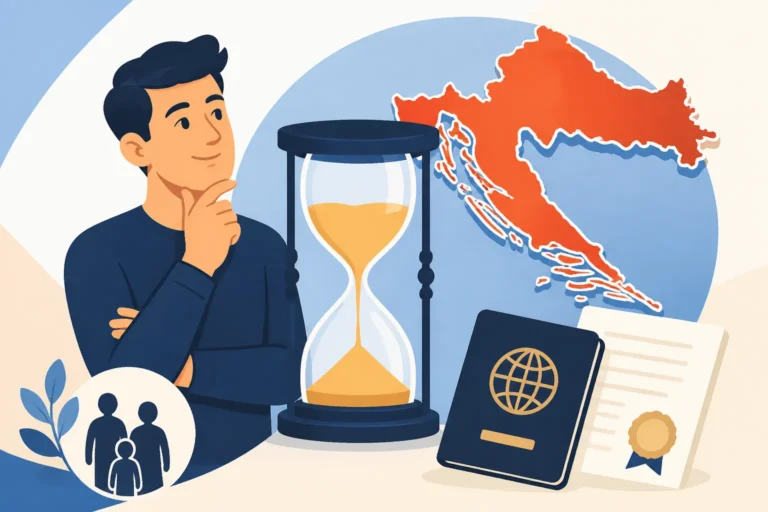
This is the most common path to permanent residence for non-EU citizens. The rule essentially states that you must have lived legally and continuously in Croatia for five years on a temporary residence permit. But "continuously" here has its own caveats. It doesn't mean you can never leave the country; quite the opposite. You're allowed to be absent from Croatia for up to six months in any single year, provided these absences don't exceed a total of ten months over the entire five-year period. It's a calculation the MUP takes seriously, so keep meticulous records of your entry and exit stamps or digital travel history if you can.
The clock for these five years usually starts ticking from the day your first temporary residence permit was issued. If you had any breaks in your temporary residence (e.g., your permit expired, and you had to re-apply, or you left the country for too long), that could reset the clock or lead to your initial years not counting. This is where it gets tricky, and why it's so important to maintain continuous legal status throughout your journey.
Special Cases and Exemptions
While the five-year rule is standard, there are always exceptions. Certain categories of individuals may be eligible for permanent residence sooner or under different conditions. For instance, close family members of Croatian citizens or those with recognized refugee status might have different pathways. Also, if you’re a third-country national who has acquired long-term EU residence status in another EU country, you might also have a slightly different process.
Furthermore, if you are a Croat by origin (even if you don't have Croatian citizenship yet), you might qualify under specific circumstances, often requiring fewer years of residence or a more streamlined application. The key here is to confirm your specific situation with the MUP or seek legal advice, as these exemptions can be complex and are subject to detailed interpretation of the law. Don't assume anything; verify, verify, verify!
Financial Stability and Means of Support
Croatia, like any country, wants to ensure that those seeking permanent residence won't become a burden on the state. Therefore, proving you have sufficient financial means to support yourself and any dependents is a critical part of the application. This isn't just about having a job; it’s about demonstrating a stable, reliable income stream. For employed individuals, this usually means providing payslips, employment contracts, and bank statements showing consistent income.
If you're self-employed, like many freelancers or paušalni obrt owners, you'll need to show your business income and tax declarations, proving your business is viable and generating enough profit. Pensioners will provide proof of their pension income. The MUP has specific thresholds, which are generally tied to the average Croatian salary or minimum wage, so it's wise to ensure your declared income comfortably exceeds these figures. Remember, they're looking for stability, so a sporadic income might raise questions.
Croatian Language and Culture Integration
One of the more challenging, yet rewarding, requirements for many is proving a basic understanding of the Croatian language and culture. This isn't about being fluent enough to debate philosophy in Croatian, but rather demonstrating a functional grasp that allows you to integrate into daily life. For most applicants, this means passing a basic Croatian language test. This test typically covers elementary communication, reading simple texts, and understanding basic questions.
The test is usually administered by approved institutions, often faculties within universities, such as the Centre for Croatian as a Second and Foreign Language (Croaticum) at the University of Zagreb. They often provide preparatory courses, which can be invaluable not just for passing the test but for genuinely improving your language skills. This requirement is a clear signal from the Croatian government that they value integration and a willingness to become part of the community, not just reside here physically. It’s a chance to truly connect with your new home.
The Application Process: Step-by-Step
Navigating the MUP can feel like an Olympic sport, but breaking it down into manageable steps makes it far less intimidating. You're essentially building a case for your long-term commitment to Croatia, one document at a time.
Initiating Your Application at the MUP
The first step is always to contact your local MUP office, specifically the department for foreigners, or stranci. It's highly recommended to make an appointment in advance, as walk-ins can lead to incredibly long waits, especially in larger cities like Zagreb or Split. You can usually find contact information on the MUP website or by calling their general line. When you go, be prepared with basic identification and a list of questions, as the officers can sometimes provide valuable, specific advice based on your individual circumstances.
You'll officially pick up the application forms (obrazac 1A for foreigners) or download them online. Ensure you have the most current version, as forms can occasionally change. This initial contact is also a good opportunity to clarify any specific documents or details that might be unique to your case. Always confirm the exact requirements for your type of application – for instance, are you applying as an employed person, a self-employed individual, or a family member of a Croatian citizen? Each category might have slightly different prerequisites. This proactive approach can save you a lot of backtracking and frustration down the line.
Required Documentation and Supporting Evidence
This is where the infamous "paper chase" begins. You'll need to gather a comprehensive set of documents, all of which must be original or certified copies, and in many cases, officially translated into Croatian by a sworn court interpreter. Don't underestimate this step; missing even one document or having an incorrect translation can lead to delays. A general list includes your valid passport, your current temporary residence card, your OIB (personal identification number), proof of financial means, proof of accommodation, your birth certificate, and usually a background check from your home country.
For the background check, ensure it’s not older than six months. If you’ve lived in other countries during the past five years, they might request checks from those places too. Proof of accommodation can be a rental agreement, property ownership title, or a statement from the person providing your accommodation. If you’re self-employed, bring your obrt registration documents, tax statements, and invoices. If you’re employed, bring your work contract and recent payslips. It’s better to bring more documents than less, just in case. And remember to get your How to Get Your OIB and Why It Matters for Healthcare Access in order early on, as it's foundational for nearly all administrative tasks here.
The Interview and Waiting Period
Once you've submitted your mountain of documents, you might be called for an interview. This isn't always the case, but it's a possibility, particularly if there are any ambiguities in your application or if the MUP requires further clarification. The interview is usually conducted in Croatian, or with the assistance of a certified interpreter if needed. It’s typically a straightforward conversation to verify the information you've provided and to ensure you understand your obligations as a permanent resident.
After submission and any potential interview, begins the infamous Croatian waiting game. The processing time can vary significantly depending on the MUP office's workload, the complexity of your case, and whether all documents were submitted correctly. It can range from a few months to over a year. During this time, it’s crucial to remain patient. The MUP generally won't provide daily updates, but you can usually check the status of your application by calling the relevant department or inquiring in person if you have an appointment. Just try to keep a cool head and know that good things come to those who wait!
Essential Documents for Your Application
Let’s dive a bit deeper into the paperwork. This is often the most stressful part for expats, so a clear checklist can be a lifesaver. Each document serves a purpose in painting a complete picture of your life and integration in Croatia.
Personal Identification and Residence History
First and foremost, you'll need your valid passport and your current temporary residence card. These prove your identity and your current legal status in Croatia. Make sure your passport has sufficient validity remaining. Alongside these, you'll need copies of all previous temporary residence permits or cards, which act as proof of your continuous legal stay over the past five years. The MUP will meticulously cross-reference these dates to ensure you meet the continuous residence requirement.
You'll also need your birth certificate. This document must be apostilled (if from a country that is part of the Hague Apostille Convention) or fully legalized (if not) in your home country, and then translated into Croatian by a certified court interpreter in Croatia. This can be a lengthy process if you're doing it from abroad, so it's wise to start this well in advance. Having a marriage certificate or any other relevant civil status documents might also be required, especially if you're applying as part of a family or have recently changed your marital status.
Proof of Financial Sustainability
As mentioned before, this is a big one. You need to convincingly demonstrate that you can support yourself and your family without relying on state welfare. For employed individuals, this means bringing your employment contract, proof of salary (payslips for at least the last three to six months), and bank statements showing these payments consistently entering your account. If your employer provides a letter confirming your employment and salary, that can also be very helpful.
If you are a freelancer or self-employed through an obrt, you'll need copies of your obrt registration, your annual tax declarations, bank statements showing regular income, and potentially a list of clients or invoices to prove the active nature of your business. Retirees will need official pension statements. In all cases, the MUP looks for consistency and sufficiency. Think of it as proving you're a responsible, contributing member of society.
Accommodation and Background Checks
Your housing situation is another critical piece of the puzzle. You'll need to provide proof of accommodation, which can be a valid rental contract (registered with the tax authority, the Porezna Uprava), a title deed if you own property, or a notarized statement from the person providing your accommodation, along with their ownership proof. The address on this document must match the address you are registering with the MUP. This is essential for proving your fixed address and connection to a specific location in Croatia.
Finally, the background check. You will generally need a criminal record certificate from your country of origin, and sometimes from any other country where you've resided for more than a specific period (e.g., one year) within the last five years. This certificate must also be apostilled or legalized and translated into Croatian. Again, pay close attention to the expiry date of these certificates – they are usually only valid for six months from the date of issue. This document ensures you have a clean record and pose no security threat to Croatia.
| Document Category | Required Documents (Common) | Notes & Tips |
|---|---|---|
| Personal ID & History | Valid Passport | Ensure sufficient validity. Original + copy. |
| Current & Previous Temporary Residence Cards | Proof of continuous legal stay. Copies required. | |
| Birth Certificate (apostilled/legalized & translated) | Start early, can take time. | |
| Marriage Certificate / Other Civil Status Docs (if applicable, apostilled/legalized & translated) | Only if relevant to your application (e.g., family reunification). | |
| Financial Proof | Employment Contract / Payslips (last 3-6 months) | For employed individuals. Proof of stable income. |
| Bank Statements (showing regular income, sufficient funds) | Show consistent financial stability. | |
| Business Registration & Tax Docs (for self-employed) | Proof of a viable business. | |
| Pension Statements (for retirees) | Official proof of regular pension income. | |
| Accommodation | Rental Agreement (registered with Porezna Uprava) OR Property Title Deed OR Notarized Statement from Host + Host's Ownership Proof | Must match your registered address. Ensure registration is valid. |
| Background & Integration | Criminal Record Certificate (from home country & other relevant countries, apostilled/legalized & translated) | Not older than 6 months. Crucial for security clearance. |
| Proof of Croatian Language & Culture Knowledge (Certificate) | Typically A2 level. Can be obtained from Croaticum or similar institutions. | |
| Health Insurance | Proof of Health Insurance (e.g., HZZO card or private policy) | While usually not a primary stalni boravak requirement, demonstrating continuous coverage is often part of overall stability. For those with private insurance like Cigna Global, ensure it is fully compliant with Croatian legal requirements for residence permits. |
| Administrative Fees | Proof of Paid Administrative Fees | Check current fees at MUP. Payment receipts. |
Common Challenges and How to Overcome Them
Let's be real, the Croatian bureaucracy can test the patience of a saint. Applying for permanent residence is no exception. But knowing what to expect can help you prepare and mitigate the stress.
Navigating Bureaucracy and Language Barriers
The MUP offices, while generally helpful, can be overwhelming, especially if you're not fluent in Croatian. Forms are often only in Croatian, and while some officers might speak English, you can't always count on it. This is where a little preparation goes a long way. Always bring a Croatian-speaking friend or hire a translator if you're unsure. Having all your documents neatly organized and correctly translated before your appointment will also significantly speed things up and reduce confusion.
It's also important to understand the hierarchy and process. Don't go to the wrong window or department; confirm where you need to be. And remember the golden rule: politeness and patience are your best tools. Getting frustrated won't help your case. If you hit a wall, sometimes it's best to step back, re-evaluate, and come back another day, perhaps after How to Book an Appointment at the MUP for Immigration Matters is sorted. Remember, this is their process, and playing by their rules, however frustrating, is the quickest path to success.
Ensuring Continuous Stay and Absence Rules
One of the trickiest parts, especially for those who travel frequently, is meticulously tracking your days outside of Croatia. The MUP has access to border crossing data, so any discrepancies will be flagged. My personal advice is to keep a simple spreadsheet documenting all your entries and exits. This way, you can easily calculate your total days outside the country within the five-year period and ensure you don't exceed the limits (six months in any single year, ten months total over five years).
If you've had an unavoidable prolonged absence (e.g., for medical reasons or a family emergency), gather supporting documentation. While such absences don't automatically exempt you from the rules, having clear proof of the extraordinary circumstances might be helpful if your case falls into a grey area. The key is transparency and being able to explain any extended periods away from Croatia.
Gathering and Translating Documents Correctly
The requirement for apostilled or legalized documents and certified translations is a frequent stumbling block. Start gathering official documents like birth certificates and criminal records well in advance, as the process in your home country can take weeks or even months. Once you have them, find a reputable sworn court interpreter in Croatia for the translations. They are the only ones whose translations are officially recognized.
Double-check every translated document against the original to ensure accuracy. A small error, like a misspelled name or an incorrect date, can invalidate the document in the MUP's eyes. It might seem tedious, but this attention to detail will save you immense headaches later. Don't be tempted to use unofficial translations or try to do it yourself unless you are a certified interpreter – it won't be accepted.
Language and Integration Test Anxiety
The Croatian language and culture test can be a source of significant anxiety for many expats. While it's not designed to be overly difficult, it does require preparation. My advice: embrace it! Think of it as an opportunity to deepen your connection to Croatia. Enroll in a language course; not only will it help you pass the test, but it will also enrich your daily life here. Many towns offer courses, and even online resources can be very beneficial.
Beyond formal classes, try to immerse yourself. Watch Croatian TV, listen to radio, and try to speak with locals whenever possible. Even simple interactions build confidence. The cultural part of the test usually covers basic knowledge of Croatian history, geography, and customs, which you can learn through reading or simply by living here with an open mind. Passing this test isn't just about ticking a box; it's about validating your genuine efforts to become a part of the Croatian tapestry. More details can be found in guides like Understanding the Croatian Citizenship Test and Language Requirement.
What Happens After Approval?
Congratulations! You've navigated the bureaucratic labyrinth and received that coveted approval for stalni boravak. But the journey isn't quite over; there are still a few essential steps to take to fully embrace your new status.
Obtaining Your Biometric Residence Card
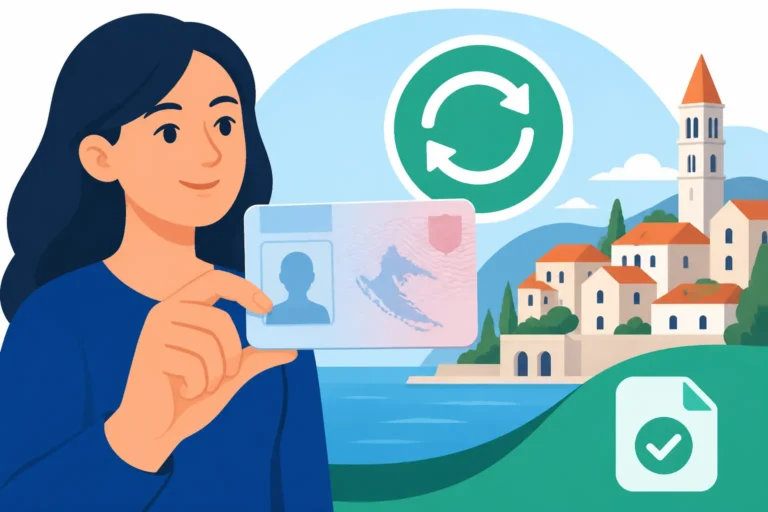
Once your application is approved, the MUP will instruct you to apply for your biometric residence card (boravišna iskaznica). This is the physical proof of your permanent residence status and will contain your photograph, fingerprints, and other personal data. You'll typically be given a date to visit the MUP (or a police station that processes these cards) to have your biometrics taken. This involves a quick photograph and fingerprint scan.
There will be a fee for the production of the card, which you'll need to pay. Once your biometrics are captured and the fee is paid, the card is usually ready within a few weeks. You'll receive an SMS notification or a call when it's ready for pickup. This card is incredibly important, as it's your primary form of identification as a permanent resident in Croatia. Carry it with you, and make sure to report any loss or theft to the police immediately.
Updating Your Status with Other Institutions
With your shiny new boravišna iskaznica in hand, it's time to inform other relevant institutions of your change in status. This includes your bank, your employer (if applicable), and crucially, the Croatian Health Insurance Fund (HZZO). While your health insurance coverage might have been continuous, officially updating your status ensures there are no hiccups. You’ll find more details on healthcare integration in posts like How the Croatian Health Insurance Fund (HZZO) Works: A Full Overview.
If you were previously on a different type of permit, your OIB record might need a minor update to reflect your permanent status, though for most, the OIB itself remains the same. Additionally, if you're receiving a pension or benefits, you might need to inform those institutions. Don't forget your utilities either. Companies like HEP for electricity or your mobile and internet provider might have your old permit details on file, so it's a good idea to update them with your new, permanent residency information. It helps keep everything consistent and avoids potential issues down the line. If you've been working, consider reviewing your Understanding Pension Contributions (HZMO) for Employees in Croatia as a long-term resident.
Future Renewals and Maintaining Your Status
As mentioned earlier, your biometric residence card will have a validity period, typically 5 or 10 years. When it nears its expiry date, you will simply apply for a renewal of the card, not a re-application for permanent residence. This is a much simpler process, primarily involving new biometrics, updated photographs, and payment of the card production fee. You won't typically need to re-prove your five years of continuous residence or retake the language test.
However, it's essential to understand that while permanent residence is, well, permanent, it can be revoked under certain circumstances. These include committing serious crimes, extended unauthorized absences from Croatia (exceeding the 6-month consecutive or 10-month total over 5 years limits), or if it's discovered that you obtained your status through fraudulent means. So, continue to abide by Croatian laws, maintain your connection to the country, and keep track of your travel, and your stalni boravak will remain your secure bridge to a long and happy life in Croatia.
Disclaimer
This guide provides general information based on current Croatian laws and expat experiences. Immigration laws are complex and subject to change. While we strive for accuracy, this information should not be considered legal advice. It is always recommended to consult with the MUP directly or seek professional legal counsel for your specific situation.