How Do I Renew My Croatian Residence Card?
The expiration date on your Croatian residence card can creep up on you, triggering that familiar expat anxiety about navigating the bureaucratic labyrinth once more. It's a universal feeling for us foreigners here – a mix of "did I get everything right last time?" and "what new hoops will I have to jump through now?" Rest assured, you're not alone. This guide aims to demystify the process of renewing your Croatian residence card, offering practical advice and empathetic insights to help you stay legally and happily settled in this beautiful country.
The Clock is Ticking: Understanding Your Renewal Timeline and Why It Matters
Let's face it, administrative tasks in Croatia can test the patience of even the most seasoned expat. Renewing your residence card (boravišna iskaznica) isn't just a formality; it's vital for maintaining your legal status, ensuring continuity of services, and avoiding unnecessary headaches. Think of it as your annual (or semi-annual) bureaucratic check-up.
Why Renewing on Time is Crucial and the Consequences If You Don't
Allowing your residence card to expire is not something you want to experience in Croatia. Your residence permit, tied to that physical card, dictates your legal right to live, work, or study here. If your permit expires, you immediately lose your legal status. This can cascade into a whole host of problems:
- Legal Jeopardy: You might be considered an irregular resident, potentially facing fines, deportation, or future bans from entering the Schengen area. The MUP (Ministarstvo unutarnjih poslova), or Ministry of Interior, takes these deadlines seriously.
- Loss of Rights: You could lose access to your public health insurance (HZZO), making medical care potentially very expensive. Your ability to work, bank, or even travel freely within the Schengen zone becomes compromised. Imagine trying to cross the border for a weekend trip, only to be stopped because your card is expired. It’s a scenario best avoided entirely.
- Administrative Delays: Even if you manage to apply late, the MUP process can be slow. You could find yourself in a limbo period, unable to access essential services or prove your residence, simply because you didn't leave enough buffer time.
The system here, while generally fair, is not always forgiving of oversight when it comes to immigration status. So, marking that renewal date on your calendar with a big, bold marker is genuinely one of the most important things you can do.
When to Start: The Golden Window for Your Application
This is where many expats get tripped up. While the official advice often suggests applying between 30 to 60 days before your current permit expires, the reality on the ground can vary.
- The "Too Early" Trap: Don't apply too early. Showing up at the MUP three months before your card expires will likely result in being politely (or not-so-politely) turned away. They operate on a specific timeline, and applying outside that window means your application might not even be accepted.
- The Sweet Spot: Aim for roughly 45-50 days before the expiration date. This gives you a decent buffer if documents are missing or if you need to re-schedule an appointment, without being so early that they reject your application outright. For example, if your card expires on December 31st, you should aim to submit your application sometime in the first two weeks of November.
- Checking Your Card: Your residence card clearly states the validity period. Look for "Vrijedi do" (Valid until) to find the exact expiration date. This is your critical deadline. Make sure you know How Long Is a Croatian Temporary Residence Permit Valid? so you can plan appropriately.
Remember, the MUP is often busy, especially in larger cities like Zagreb or Split. Factor in potential queues, limited appointment slots, and the time it takes for them to process your new card. The goal is to submit your complete application, get it approved, and ideally receive your new biometric card before the old one expires.
Your Step-by-Step Guide to a Smooth Residence Card Renewal
Renewing your residence card essentially mirrors the initial application process, but with the added convenience that you already have an OIB (Personal Identification Number) and a history with the MUP. Still, precision and patience are your best friends.
Gathering Your Arsenal: Required Documents Checklist
This is often the most anxiety-inducing part, but being prepared makes all the difference. While requirements can subtly shift based on your specific type of permit (work, digital nomad, student, family reunification, etc.), there’s a core set of documents you’ll almost certainly need. Always bring originals and photocopies of everything.
| Document Category | Example Document | Notes |
|---|---|---|
| Existing Residence Card | Your current boravišna iskaznica | Bring the original and a clear photocopy. This proves your current legal status. |
| Passport/Travel Document | Valid passport | Original and photocopy of the biographical page (the one with your photo and data) and any relevant visas or stamps. Ensure your passport is valid for at least three months beyond your intended renewed stay. |
| Proof of Accommodation | Rental contract, property ownership document, notarized statement | Original rental contract (preferably one registered with the tax administration – Porezna Uprava) or a vlasnički list (property ownership certificate) if you own property. If you're staying with family or friends, a notarized statement from the property owner confirming your residence might be required. For guidance on tenancy, check out The Complete Guide to Renting an Apartment in Croatia (2027). |
| Proof of Sufficient Funds | Bank statements, salary slips, foreign pension statements | You need to demonstrate you can support yourself without becoming a burden on the Croatian social system. This usually means providing the last three to six months of bank statements from a Croatian or foreign bank account, salary slips, or proof of pension income. The specific amount required varies by permit type and number of family members. |
| Health Insurance | HZZO card or private health insurance policy | This is absolutely mandatory. If you are employed in Croatia, your HZZO card or a certificate of active insurance is sufficient. For digital nomads, students, or those on certain self-employment permits, private health insurance is required. Ensure your private policy is valid for Croatia and covers emergency medical care for the full duration of your renewed stay. Companies like Cigna Global offer comprehensive plans tailored for expats. You might find more detail in What Health Insurance Do I Need for a Croatian Residence Permit?. |
| Reason for Stay | Work contract, student certificate, Digital Nomad decision | This is crucial. Bring the latest version of the document that justifies your continued stay. For employees, this means your renewed employment contract. For students, your current certificate of enrollment. For digital nomads, the original decision approving your permit and any proof of continued remote work. If you're self-employed with an obrt, you'll need proof of your active business registration and recent tax payments. |
| Administrative Fees | Biljezi (fiscal stamps) or payment slip | There are typically two fees: one for the permit application itself and another for the physical biometric card. These amounts change, so check with the MUP or a local Tisak kiosk for the current value of biljezi (fiscal stamps) or request a payment slip (uplatnica) to pay at a bank or post office. |
| Passport Photo | Standard passport-sized photo (3.5 x 4.5 cm) | While many larger MUP offices, particularly in Zagreb, have facilities to take your photo digitally on-site, it's always a good idea to have a couple of physical passport-sized photos with you, just in case, especially if you're renewing in a smaller town. |
It's always a good idea to cross-reference with the MUP's official website or, if possible, ask a MUP officer directly about the exact documents for your specific permit type well in advance. And don't forget, if any of your documents are not in Croatian, they will need to be officially translated by a sworn court interpreter (sudski tumač).
Navigating the MUP Appointment (or Lack Thereof)
The MUP experience can vary significantly depending on where in Croatia you live.
- Zagreb's Petrinjska 30: If you're in Zagreb, the main MUP office for foreigners is at Petrinjska 30. Historically, this meant long queues and taking a number. While some online booking options have emerged, they are often limited and hard to secure. Prepare for potential waiting times if you go without an appointment. It's wise to consult a guide like How to Book an Appointment at the MUP for Immigration Matters for the latest on their appointment system.
- Smaller Towns and Cities: In smaller towns like Poreč, Makarska, or even larger cities like Zadar or Rijeka, the process might be less formal. You might be able to walk in during working hours and submit your application without a prior appointment, but wait times can still be considerable depending on the day.
- Be Prepared to Wait: No matter where you are, come prepared. Bring a book, your phone charger, and snacks. Patience is truly a virtue when dealing with Croatian bureaucracy.
When you do get to the counter, be polite and have all your documents neatly organized. A little smile and a "Dobar dan" can go a long way!
The Interview and Biometrics: What to Expect
Once your turn arrives, you’ll typically interact with an immigration officer.
- Document Review: The officer will meticulously review all your submitted documents. They might ask clarifying questions about your stay, your work, or your financial situation. This is why having your story straight and documents in order is so important.
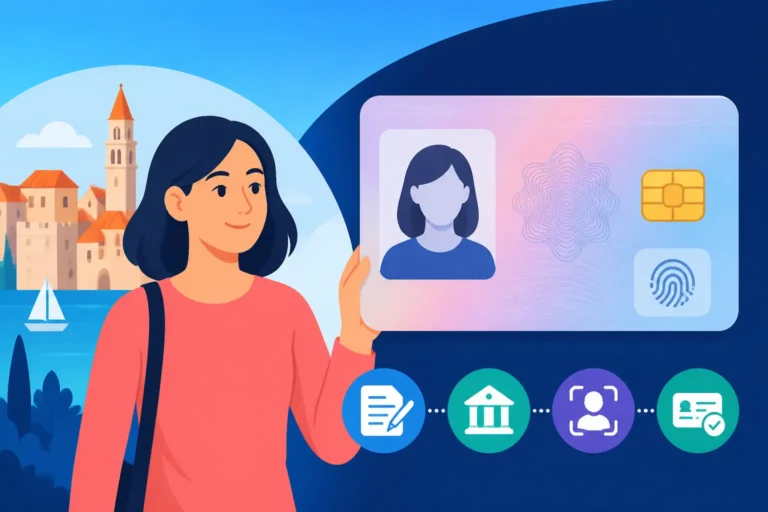
- Biometrics: If your application is accepted, you will proceed to the biometrics stage. This involves having your fingerprints taken and a digital photograph captured (often on-site). This information is embedded into your new biometric residence card, making it a secure travel document. You're effectively getting a new How to Get a Biometric Residence Card (Boravišna Iskaznica) in Croatia during this stage.
- Payment for the Card: You'll be instructed to pay the fee for the physical card. This can usually be done via a payment slip (uplatnica) at a post office (Hrvatska pošta) or bank nearby, or sometimes directly at the MUP if they have a payment terminal.
- The Waiting Game (Again): After submission and biometrics, you enter another waiting period for your new card to be produced. The officer will usually tell you approximately when it will be ready for pick-up. It can range from a few days to several weeks, so don't expect it instantly. You might receive a text message or email when it's ready, but it’s often best to check in person after the estimated time.
Common Roadblocks and Expert Tips for Expats
Even with the best preparation, unexpected issues can arise. Knowing some common pitfalls and having strategies to overcome them can save you a lot of stress.
Proof of Funds and Accommodation: Stricter Rules for Renewal?
While the initial permit application scrutinizes your financial stability and living arrangements, don't assume renewal is a rubber stamp. Sometimes, MUP officers can be even more thorough:
- Proving Sustained Funds: They want to see that your financial situation hasn't just been a one-off. Consistent income, savings, or investments are key. If your income source has changed, be ready with detailed explanations and new supporting documents. For digital nomads, the income requirements are quite specific; ensure you still meet them, as detailed in Understanding the Digital Nomad Permit Income Requirements in Croatia.
- Stable Accommodation: Your proof of accommodation needs to be current and valid. If your rental contract has expired, or if you've moved to a new address, you must provide the updated, legally registered documents. Failing to update your registered address (prebivalište) with the MUP is a common oversight that can lead to issues. This process is generally covered in Registering Your Residence in Croatia: The Complete MUP Guide.
The Health Insurance Maze: Public vs. Private Options
Health insurance is a non-negotiable requirement for residence permit renewal.
- HZZO for Employees: If you're employed by a Croatian company, your HZZO coverage should be continuous. You'll need proof of this, usually through a certificate from HZZO or by simply showing your active HZZO card. For those who rely on the public system, it's essential to understand How the Croatian Health Insurance Fund (HZZO) Works: A Full Overview.
- Private for Digital Nomads and Others: For categories like digital nomads, students (if not covered by an international agreement), or certain self-employed individuals (e.g., paušalni obrt owners before HZZO registration kicks in), private health insurance is your pathway. The policy must cover your entire stay in Croatia and meet specific minimum coverage requirements (often linked to Schengen visa insurance standards).
- This is where providers like Cigna Global come in, offering plans specifically designed for expats that meet Croatian and EU requirements. Their comprehensive coverage means you're not just ticking a box for your renewal, but genuinely protecting yourself during your time here. Ensure you have the policy documentation (in English and preferably Croatian, or with a certified translation) readily available. You can also dive deeper into Understanding Private Health Insurance Plans in Croatia to compare options.
Dealing with Changes: Job, Address, or Marital Status
Life happens, and your circumstances might change during your permit's validity.
- Job Changes: If you've changed employers, your new work contract is essential. If you've moved from employment to self-employment, or vice-versa, you'll need the relevant documentation for your new status.
- Address Changes: As mentioned, any change in your residential address requires you to update it with the MUP. This is usually a separate administrative step that ideally should be done as soon as you move. When you go for renewal, they will verify your current registered address.
- Marital Status or Family Additions: If you've gotten married, had a child, or your family reunification status has changed, these details must be updated. You'll need marriage certificates, birth certificates, and potentially new applications for family members. Remember that The Expat Guide to Temporary Residence (Privremeni Boravak) in Croatia outlines various categories, and changes in personal circumstances often mean adjustments to your permit type or supporting documents.
The golden rule for all these changes: inform the MUP as soon as they occur, rather than waiting for your renewal application. Being proactive saves a lot of potential grief.
Final Thoughts and Moving Forward
Renewing your Croatian residence card can feel like a bureaucratic chore, but it's a necessary step to continue enjoying life in this beautiful country. The key takeaways are preparation, understanding the specific requirements for your permit type, and allowing ample time for the MUP process.
Don't be afraid to ask questions at the MUP (even if it's daunting, try to find an English speaker or bring a Croatian friend). Be patient, be thorough, and keep all your documents meticulously organized. Once that new card is in your hand, you can breathe a sigh of relief and get back to what you came here for: living and enjoying Croatia.
Disclaimer
The information provided in this guide is for general informational purposes only and does not constitute legal advice. Immigration laws and procedures in Croatia can change, and individual circumstances vary. While we strive to provide accurate and up-to-date information, it is highly recommended to consult the official MUP (Ministarstvo unutarnjih poslova) website, directly contact your local MUP office, or seek advice from a qualified legal professional for your specific situation.