How Do I Get a Type D Long-Stay Visa for Croatia?
Navigating the labyrinthine world of Croatian immigration can feel like a full-time job, especially when you're trying to figure out how to stay in this beautiful country for longer than a short holiday. Many people planning a move or extended stay stumble at the first hurdle: understanding the difference between a short-stay tourist visa and what's actually needed for longer periods. If you're looking to spend more than 90 days in Croatia within any 180-day period, a standard Schengen 'C' visa simply won't cut it. This guide will walk you through the specifics of obtaining a Type D long-stay visa for Croatia, outlining who needs it, how to apply, and what to expect on your journey to calling Croatia home, or at least home for a good long while.
What Exactly is a Type D Long-Stay Visa and Who Needs It?
Let's clear up some common confusion right away. A Type D long-stay visa for Croatia is not a residence permit itself, but rather a travel document that allows you to enter and stay in Croatia for more than 90 days within a 180-day period, before you apply for your actual temporary residence permit once you're on Croatian soil. Think of it as your golden ticket to get past the initial immigration checks at the border, allowing you to legally remain in Croatia while you complete the more involved process of securing your long-term status.
The need for a Type D visa primarily falls upon non-EU/EEA citizens who plan to apply for a temporary residence permit in Croatia based on specific purposes like work, study, family reunification, or even certain types of self-employment. For instance, if you've landed a job with a Croatian company, you'll likely apply for a single work and residence permit in Croatia before arriving. If approved, the Croatian Embassy or Consulate in your home country will then issue you a Type D visa, signifying that Croatia has pre-approved your stay for that specific purpose. This process streamlines your entry and demonstrates to border officials that you're not just a tourist trying to overstay your welcome.
It’s crucial to understand that not everyone needs a Type D visa. Citizens of certain countries (e.g., USA, Canada, UK, Australia, New Zealand) are allowed to enter Croatia for short stays (up to 90 days within 180 days) without any visa at all. However, if they intend to stay longer for a specific purpose (like working or studying), they too will need a Type D visa to facilitate their entry for their pre-approved temporary residence. EU/EEA citizens, on the other hand, enjoy freedom of movement and generally only need to register their residence after arriving in Croatia.
The Type D visa serves as an essential bridge. It grants you the legal right to reside in Croatia for longer than the standard tourist allowance, typically for the duration of your residence permit application process, which can take time. Without it, attempting to enter Croatia with just a letter of pre-approval for residence might lead to complications at the border, or even being denied entry, especially if your initial entry permit has expired or is not clearly understood by border officials. This visa acts as clear evidence of your intent and pre-approval for a longer stay, making your arrival much smoother.
The Crucial Steps: Applying for Your Type D Visa
Applying for a Type D long-stay visa requires meticulous preparation and a good deal of patience. The process often feels like assembling a puzzle where all the pieces are slightly different shapes, but with persistence, it's entirely manageable.
Gathering Your Mountain of Documents
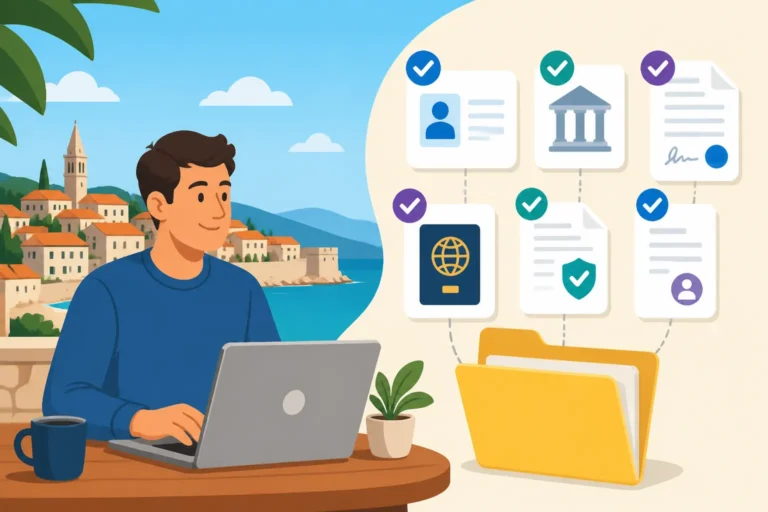
This is where the bulk of your effort will go. The specific documents required can vary slightly depending on your nationality and the purpose of your stay, but there’s a core set that almost everyone needs. You should always consult the website of the Croatian Embassy or Consulate in your country of residence for the most accurate and up-to-date list, as requirements can change.
Generally, prepare for the following:
- Visa Application Form: This needs to be accurately filled out, signed, and in some cases, submitted online.
- Valid Passport: Your passport must be valid for at least three months beyond your intended stay in Croatia, and have at least two blank pages for the visa sticker. Don't forget copies of all relevant pages.
- Photograph: Recent, passport-sized, colour photo, usually 35×45 mm, adhering to Schengen standards.
- Proof of Purpose: This is the big one. This document ties directly to your approved temporary residence permit application. It could be:
- Work Permit: If you're coming for employment, this is usually issued by the Ministry of Interior (MUP) in Croatia after your employer applies on your behalf. This is a critical step, as you cannot apply for a Type D visa for work without pre-approval. For more details on this, you might find our guide on The Complete Guide to Working in Croatia as a Foreigner (2027) helpful.
- Acceptance Letter from a University: For students, this confirms your enrolment. Check out The Complete Guide to Studying at a Croatian University (2027) for more insights.
- Proof of Family Reunification: If joining a spouse or family member, documents like marriage certificates, birth certificates, and proof of their Croatian residence.
- Digital Nomad Permit Approval: For those coming under the popular digital nomad scheme, your approval letter will be your key document. More information can be found in How to Apply for a Croatian Digital Nomad Permit.
- Proof of Funds: You'll need to demonstrate you have sufficient financial means to support yourself during your stay without relying on Croatian social assistance. This could be bank statements, scholarship letters, or employer guarantees. The exact amount often varies, so check the specific embassy requirements.
- Proof of Accommodation: This usually means a confirmed rental agreement or a statement from your host in Croatia. Even a temporary booking for your first few weeks can suffice for the visa, but you'll need a long-term plan for your The Expat Guide to Temporary Residence (Privremeni Boravak) in Croatia application.
- Travel Medical Insurance: This is non-negotiable. You'll need proof of comprehensive travel medical insurance covering your entire intended stay in the Schengen area (even though Croatia is not fully Schengen for residence purposes, it's usually the standard requirement), with a minimum coverage of €30,000 for medical emergencies, hospitalisation, and repatriation. Many expats find robust international insurance providers like Cigna Global to be excellent for this, as their plans are tailored for international living and cover you from day one. You'll want to ensure your policy explicitly covers Croatia. For a deeper dive, read our guide on What Health Insurance Do I Need for a Croatian Residence Permit?.
- Travel Itinerary: While not always strictly enforced for Type D, showing your flight bookings and planned entry date can sometimes be requested.
- Visa Fee: Be prepared to pay the non-refundable application fee.
- Criminal Record Check: Some consulates may require a criminal background check, translated into Croatian and apostilled/legalised.
The key here is thoroughness. Don't leave anything to chance. Any missing or incorrectly prepared document can lead to significant delays, extending your waiting period.
Finding the Right Place to Apply
Your application for a Type D visa must be submitted at the Croatian Embassy or Consulate in your country of permanent residence. This is a critical point; you generally cannot apply for a long-stay visa from a third country where you are merely visiting as a tourist. If Croatia doesn’t have an embassy or consulate in your country, they will usually designate another embassy in a nearby country to handle applications for your citizens. Always check the official Ministry of Foreign and European Affairs website for the specific diplomatic mission responsible for your region.
Some embassies might require you to book an appointment well in advance, and these slots can fill up quickly, especially during peak seasons. Be sure to check their specific scheduling procedures – some use online portals, others require email or phone calls. Arrive prepared, on time, and with all your documents meticulously organised. Many consulates will not accept incomplete applications.
The Waiting Game and What to Expect
Once you've submitted your application, the waiting game begins. The processing time for a Type D visa can vary significantly depending on the embassy's workload, the complexity of your case, and the time of year. While some applications might be processed in a few weeks, it's not uncommon for it to take a month or two, sometimes even longer if there are queries or additional documents requested.
During this period, avoid making non-refundable travel arrangements until your visa is approved and issued. You may be contacted for an interview or to provide further information. Respond promptly and professionally. The embassy staff are there to process your application, and cooperating fully will only help your cause. Once approved, your passport will be returned to you with the Type D visa sticker inside, indicating your authorized long-term entry into Croatia.
What Comes Next: From Type D Visa to Croatian Residence
Receiving your Type D visa is a monumental step, but it’s just the beginning of your official journey in Croatia. This visa is your gateway, but it doesn't automatically grant you permanent resident status.
Your First 90 Days: The Race to Register
Once you arrive in Croatia with your Type D visa, your clock for legally establishing your temporary residence permit begins ticking. While the Type D visa allows you to stay, you typically have a limited timeframe – often around 30 to 90 days from your entry date – to formally apply for your temporary residence permit at the local Ministry of Interior (MUP) office. This is a crucial step that many expats find surprisingly stressful. The process at the MUP can be intimidating, especially if you’re not fluent in Croatian. Be prepared for queues, multiple visits, and a good amount of paperwork. For a detailed roadmap, our article on Registering Your Residence in Croatia: The Complete MUP Guide is an invaluable resource.
This initial MUP visit is where you’ll formally submit the full application for your The Expat Guide to Temporary Residence (Privremeni Boravak) in Croatia. All the documents you prepared for your Type D visa (proof of purpose, accommodation, funds, health insurance, criminal record check) will likely be needed again, along with additional Croatian-specific forms. It’s highly recommended to have all your documents translated into Croatian by a sworn court translator, even if the MUP officer speaks English. This shows initiative and can prevent misunderstandings.
Securing Your Croatian Identity: OIB and Health Insurance
Beyond the residence permit itself, two critical pieces of your new Croatian identity will need to be sorted soon after arrival: your OIB and your health insurance.
Your OIB, or Osobni Identifikacijski Broj, is your personal identification number, similar to a tax ID or social security number in other countries. You'll need it for almost everything: opening a bank account, signing a lease, getting utilities, registering for healthcare, and paying taxes. If you haven't received it as part of your initial residence permit pre-approval, you’ll need to apply for it at the local tax administration (Porezna Uprava). Our detailed guide on How to Get Your OIB (Personal Identification Number) in Croatia will walk you through this essential process. Many expats, including those using platforms like Sirelo to arrange their moving logistics, often highlight the OIB as one of the first and most critical administrative tasks upon arrival.
Next, health insurance. While you had to prove travel medical insurance for your Type D visa, once you apply for temporary residence based on work, self-employment, or study, you’ll generally transition to the Croatian public health insurance system, HZZO. This means cancelling your initial travel insurance (or ensuring it’s supplementary to your new HZZO coverage) and registering with the Croatian Health Insurance Fund. The process involves more forms, often at another MUP office or a dedicated HZZO branch. It's a complex topic, so make sure to review Health Insurance in Croatia: Mandatory, Supplementary and Private Options Explained for a full breakdown. Keep in mind that securing comprehensive health coverage from providers like Cigna Global initially can offer peace of mind during your application phase, knowing you're fully covered until your HZZO registration is complete.
Common Pitfalls and Expert Tips for a Smoother Journey
Moving to a new country is never entirely smooth sailing, and Croatia has its unique quirks. Being aware of potential snags can help you navigate them with a little less stress.
Language Barriers and Local Support
One of the biggest hurdles expats face is the language barrier. While many Croatians, especially in tourist areas and among younger generations, speak English, government offices are often a different story. MUP officers and other administrative staff might not be fluent, and official forms are almost exclusively in Croatian. This can lead to misunderstandings and frustration.
- Tip 1: Learn Basic Croatian. Even a few key phrases can go a long way in showing respect and facilitating simple interactions.
- Tip 2: Bring a Croatian Speaker. If possible, bring a Croatian friend, colleague, or a hired translator to your MUP appointments. This can significantly speed up the process and ensure you understand everything.
- Tip 3: Join Expat Groups. Online expat groups (e.g., on Facebook) are a treasure trove of information. Others who have gone through the process can offer current advice, recommend translators, or even offer to accompany you.
Financial Preparedness
Beyond just proving you have sufficient funds for your visa, consider the financial realities of setting up in Croatia. Initial costs can add up quickly.
- Tip 1: Budget for Setup Costs. Factor in visa fees, translation costs, notary fees, initial rent deposits, and possibly higher living expenses in your first few months. Our guide on The Complete Guide to Cost of Living in Croatia for Expats (2026) can give you a clearer picture.
- Tip 2: Understand Banking. Opening a bank account as a foreigner can sometimes be delayed until you have your OIB and residence permit. Ensure you have access to funds via international debit/credit cards or transfer services until your Croatian account is fully functional.
Navigating the Type D visa process and the subsequent residence permit application is a journey that demands preparation, patience, and a bit of Croatian snalažljivost (resourcefulness). While it might feel daunting at times, remember that countless expats have successfully made Croatia their home. With the right information and a proactive approach, you'll be well on your way too.
| Feature | Type C (Schengen) Visa | Type D (Long-Stay) Visa |
|---|---|---|
| Purpose | Tourism, short business trips, transit | Entry for long-term stay, typically for residence permit application |
| Maximum Stay | 90 days within any 180-day period (across Schengen zone) | Typically 30-90 days of validity for initial entry into Croatia (can be up to 1 year depending on embassy discretion) |
| Where to Apply | Embassy/Consulate of main destination country | Croatian Embassy/Consulate in country of permanent residence |
| Key Requirement | Proof of short-term stay, travel insurance | Proof of pre-approved temporary residence in Croatia (e.g., work permit, study acceptance, digital nomad approval) |
| After Arrival | Must depart Schengen zone within 90 days | Must apply for temporary residence permit at MUP in Croatia within validity period |
| Travel | Allows travel within the Schengen area | Allows transit through Schengen, but primary purpose is Croatia; once residence permit issued, allows broader Schengen travel |
Disclaimer
The information provided in this guide is for general informational purposes only and does not constitute legal advice. Immigration laws and procedures in Croatia are subject to change. It is highly recommended to consult directly with the Croatian Ministry of Interior (MUP) or the relevant Croatian Embassy/Consulate in your country of residence, or seek advice from a qualified immigration lawyer in Croatia, for the most accurate and up-to-date information pertaining to your specific situation.