Can Non-EU Citizens Get Permanent Residence in Croatia?
Making Croatia your forever home is a beautiful dream that many of us expats share. But for those of you from outside the European Union, navigating the path to permanent residence in Croatia can feel like trying to solve a Rubik's Cube blindfolded. It's a journey riddled with paperwork, waiting games, and often, a hefty dose of confusion. This guide is here to untangle that knot, offering a realistic, step-by-step look at how non-EU citizens can achieve the coveted stalni boravak and truly settle into Croatian life.
The Eligibility Labyrinth: Who Qualifies for Permanent Residence?
Let's be brutally honest: getting permanent residence in Croatia as a non-EU citizen isn't a walk in the park. It requires patience, meticulous record-keeping, and a clear understanding of the rules. The most common pathway is through demonstrating five years of continuous temporary residence. This isn't just any five years, mind you; it's a specific kind of temporary residence.
Understanding the Five-Year Rule for Non-EU Citizens
For the vast majority of non-EU citizens, the golden ticket to permanent residence is proving you've lived here for at least five uninterrupted years on a valid temporary residence permit. This means you need to have held a "privremeni boravak" based on specific categories that count towards permanent residency. Think of it like a loyalty program, but for your life here.
Crucially, not all temporary residence permits count towards this five-year total. For instance, while incredibly popular, the digital nomad permit, often referred to as a "digital nomad visa," does not lead to permanent residency. Neither does simply owning property in Croatia without another basis for residence. The years that typically count are those spent on permits for:
- Work: If you've been employed by a Croatian company or running your own business (like an obrt or d.o.o.) and paying contributions here, these years are your strongest allies.
- Study: Time spent as a student with a valid residence permit can also be counted, often at a reduced rate (e.g., half the time counts).
- Family Reunification: If you've been living here to be with a Croatian citizen, an EU citizen with registered residence, or another non-EU citizen who already has permanent residence, your time here generally counts.
- EU Long-Term Resident in another Member State: If you hold a long-term residence status in another EU country, you might have an easier path to obtaining temporary residence in Croatia, which can then lead to permanent residence after the requisite period.
The key word here is "uninterrupted." Generally, absences from Croatia that add up to more than 10 months over the five-year period, or a single absence exceeding six months, could reset your clock or make you ineligible. The MUP (Ministarstvo unutarnjih poslova) is pretty strict about this, so if you travel a lot, you need to be very mindful of your time outside the country. Make sure you keep excellent records of your entries and exits; border stamps are your proof! If you've been diligently living and working, or studying, or reuniting with family here, you're on the right track.
Special Pathways to Permanent Residence
While the five-year rule is the most common, there are a few other specific circumstances under which non-EU citizens might be able to apply for permanent residence in Croatia, sometimes with a shorter waiting period or different requirements.
- Marriage to a Croatian Citizen: This is one of the most direct routes. If you've been married to a Croatian citizen and have continuously resided in Croatia with them for at least three years, you can apply for permanent residence. This shows a strong family tie and commitment to living in Croatia. It's essential that your marriage is genuine and that you've been living together. MUP will absolutely check these details, sometimes with home visits!
- Croatian Descent: For those who can prove their Croatian ancestry, the path can be more streamlined. If you can establish your Croatian origin, usually through birth certificates or other official documents of your ancestors, you might be eligible to apply for permanent residence directly, often without the strict five-year temporary residence requirement. This process can involve consular services and specific documentation proving your lineage. This is a common path for those from the diaspora. You'll need to gather old family records, which can sometimes feel like a treasure hunt!
- Minors with a Parent Holding Permanent Residence: If you're a non-EU citizen minor whose parent already has permanent residence in Croatia, you might be able to apply directly. This ensures that families can stay together and children aren't left in a precarious immigration status.
- Other Humanitarian Reasons: In very specific and rare cases, individuals might be granted permanent residence based on humanitarian grounds or for reasons of national interest, but these are typically decided on a case-by-case basis and are not a general pathway.
These special pathways exist because Croatia, like any country, recognizes the importance of family unity and historical ties. They offer a bit of a shortcut, but don't be fooled—the documentation and verification process is still rigorous.
Navigating the Application Process for Non-EU Citizens
Okay, so you think you meet the eligibility criteria? Fantastic! Now comes the actual application process, which can feel like deciphering ancient hieroglyphs sometimes. The key agency you'll be dealing with is the MUP – the Ministry of Interior. Every interaction, every document submission, every appointment will likely go through them.
Essential Documents and Preparing Your Dossier
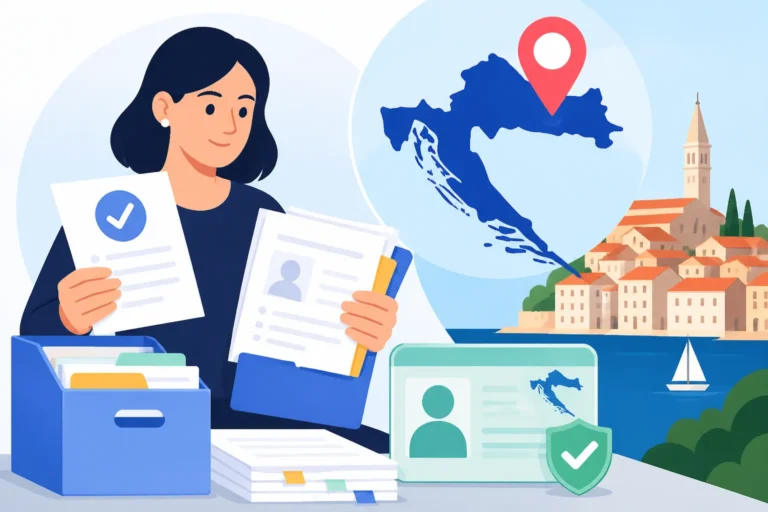
The list of documents you’ll need can be extensive and will vary slightly depending on your specific situation (e.g., applying after five years of work vs. three years of marriage). However, some core documents are almost universally required. My advice? Start gathering these well in advance, and prepare to have multiple copies, translations, and sometimes, apostilles.
Here's a general rundown of what you’ll likely need:
- Valid Passport: Of course, your passport needs to be valid for at least the next few months beyond your application date.
- Application Form: The official MUP application form for permanent residence. You can usually find this on the MUP website or at their local offices.
- Proof of Continuous Temporary Residence: This is where your detailed records come in. MUP will have records of your previous permits, but it helps to have your old residence cards and any decisions from previous approvals.
- Proof of Financial Means: You need to show you can support yourself without becoming a burden on the state. This could be bank statements, employment contracts, pension statements, or proof of income from your business. They want to see consistent income. If you're using a company like Sirelo to move your belongings, it implies a long-term commitment, but bank statements are what MUP truly cares about.
- Proof of Health Insurance: Even with permanent residence, you’ll need to be integrated into the healthcare system. If you're employed, you'll be part of HZZO. If not, you might need to show private health insurance, especially during the application process. Companies like Cigna Global offer comprehensive international health plans that might be suitable before you're fully integrated into the public system, or if you prefer private coverage. You'll also want to understand the ins and outs of how the Croatian Health Insurance Fund (HZZO) Works: A Full Overview.
- Criminal Background Check: A certificate of no criminal record from your home country, and possibly from any other country you've resided in for a significant period. This usually needs to be apostilled and officially translated into Croatian.
- Birth Certificate: An original, often apostilled and officially translated.
- Marriage Certificate (if applicable): If applying based on marriage to a Croatian citizen, the original, apostilled, and translated marriage certificate.
- Proof of Accommodation: A rental contract, property ownership document, or a statement from the person you live with, notarized, proving you have a place to live in Croatia.
- OIB (Personal Identification Number): Absolutely essential for all official dealings in Croatia. If you don't have one by now, you need to get one. You can find more information on how to get your OIB and why it matters for healthcare access.
- Passport Photos: Recent photos meeting specific requirements.
- Administrative Fees: There will be various fees to pay for the application itself and for the biometric residence card.
Remember, translations must be done by a sworn court interpreter in Croatia. Don't try to save a few euros by doing it yourself or with a non-certified translator; MUP won't accept it.
The MUP Appointment: Your Moment of Truth
Once you have your dossier meticulously prepared, it’s time to face the music at the MUP. This is often where expat patience is truly tested.
- Scheduling an Appointment: In larger cities like Zagreb, Split, or Rijeka, you must book an appointment in advance. This can sometimes be done online via the e-Građani system if you have an e-ID, or by phone/in person at the MUP desk. Getting an appointment can be a frustrating exercise, especially for foreigners, so be persistent. Consider this like a test of your resolve for living in Croatia! For insights, check out How to Book an Appointment at the MUP for Immigration Matters.
- The Submission: On your appointment day, arrive early with all your documents, originals and copies. The MUP officer will review everything. They might ask for additional documents or clarifications on the spot. Be polite, be patient, and answer truthfully. This is not the time to be vague or argumentative.
- Biometrics: If your application is accepted for processing, you'll likely be asked to provide your fingerprints and a digital photo for your biometric residence card (boravišna iskaznica).
- The Waiting Game: And so begins the longest part of the journey. Processing times can vary wildly. It could be a few weeks, or it could stretch into several months. There's no fixed timeline. You might receive a call or letter for an interview or to provide further information. My advice? Don't call every day. They will contact you when there's an update. Use this time to explore more of beautiful Croatia, perhaps even consider learning Croatian to ease future interactions.
| Aspect | Temporary Residence (Privremeni Boravak) | Permanent Residence (Stalni Boravak) |
|---|---|---|
| Duration | Typically 1 year, renewable annually | Indefinite, with a biometric card renewed every 5 years |
| Path to Obtaining | Work, study, family, digital nomad, property ownership (various criteria) | Generally 5 years of continuous qualifying temporary residence, marriage, descent |
| Required Absences | More flexible, depends on permit type | Strict: generally no more than 10 months total in 5 years, or 6 months single absence |
| Integration | Requires proof of funds/insurance, minimal integration | Requires proof of stable living, often implies full healthcare/pension integration |
| Rights | Restricted to permit type, generally needs renewal | Broader rights, similar to Croatian citizens (except voting), easier travel |
| Documents Complexity | Moderate to High | High (detailed history, deeper financial/personal scrutiny) |
| Primary MUP Section | Odjel za strance (Foreigners Department) | Odjel za državljanstvo i statusna pitanja (Citizenship and Status Issues) |
Overcoming Common Hurdles and What to Expect
Even with all your ducks in a row, the path to permanent residence can throw a few curveballs. It’s important to manage your expectations and be prepared for potential challenges.
The Administrative Marathon and Language Barrier
The Croatian bureaucracy, particularly at the MUP, is legendary for its meticulousness, and sometimes, its lack of consistency. What one officer tells you on Monday, another might interpret differently on Friday. This isn't unique to Croatia, but it can be intensely frustrating when your future in the country hangs in the balance.
- Patience is a Virtue: You'll hear this a lot from seasoned expats, and it's truly the most important tool in your arsenal. The process will take time. There will be waiting. There might be unexpected requests for more documents. Breathe.
- Language is Key: While many MUP officers in larger cities might speak some English, don't rely on it. Having a Croatian friend, a legal representative, or a sworn translator accompany you to appointments can be invaluable. It shows respect for the local system and helps avoid misunderstandings. Consider investing in some Croatian language courses; it will make your daily life infinitely easier and demonstrates a genuine commitment to living here. Learning Croatian: A Complete Guide to Language Courses and Levels can get you started.
- Be Over-Prepared: As mentioned, bring originals and multiple copies of everything. Even documents they don't explicitly ask for. It's better to have it and not need it, than need it and have to reschedule or come back another day. This goes for all the documents needed for a Croatian residence permit.
The Importance of "Sufficient Funds" and Intent
When applying for permanent residence, the MUP isn't just checking your past; they're assessing your future viability as a resident. They want to see that you have stable, sufficient funds to support yourself and your family without relying on social welfare. This isn't a fixed number printed in a manual; it's often assessed based on the average Croatian salary, the cost of living in your area, and the number of dependents you have.
- Demonstrating Stability: Consistent income from employment in Croatia, a stable business, or a reliable pension are strong indicators. They're looking for long-term financial security, not just a lump sum in your bank account today.
- Real Intent to Reside: MUP wants to be sure you genuinely intend to make Croatia your primary home. Your previous temporary residence, your integration into the community, your property ownership (if any), and even your language efforts can all play a role in demonstrating this intent. This is where your track record of living here becomes vital. They might even ask questions about your social ties, your hobbies, or your plans for the future in Croatia during an interview.
It’s a big step to commit to a country for the long haul, and preparing for permanent residence in Croatia is no small feat. But for many of us, the sunshine, the sea, the rich culture, and the slower pace of life make every bureaucratic hurdle worth it. Take it one step at a time, stay organized, and lean on fellow expats who have been through it. The dream of a permanent Croatian life is within reach for non-EU citizens, it just requires the right roadmap and a lot of determination.
Disclaimer
This article is for general informational purposes only and does not constitute professional advice. Laws, prices and regulations vary by location and change over time. Consult a qualified professional for guidance on your specific situation.