Can I Travel in the Schengen Area on a Croatian Residence Permit?
One of the absolute joys of living in Croatia is the sheer proximity to the rest of Europe, isn't it? Many of us expats dream of weekend trips to Vienna, exploring the canals of Venice, or hitting the slopes in Slovenia. But once you've gone through the rigmarole of getting your Croatian residence permit, a nagging question often surfaces: "Can I actually use this permit to travel freely in the Schengen Area, or will I be stuck at the border?" It's a valid concern, and one that often causes undue stress. Let's unpick this crucial aspect of expat life in Croatia, especially now that Croatia is fully integrated into the Schengen zone. This guide aims to clarify your travel rights and what to expect when planning your European adventures.
The Short Answer: Yes, But Let's Dive Deeper
For many years, while Croatia was part of the EU, it wasn't part of the Schengen Area, which meant a separate set of rules for travel. This caused a lot of headaches for residents, who often found themselves needing extra visas or being subject to strict border controls when trying to visit neighboring countries like Slovenia or Hungary. Thankfully, that's largely a thing of the past.
Croatia's Entry into the Schengen Area: A Game Changer
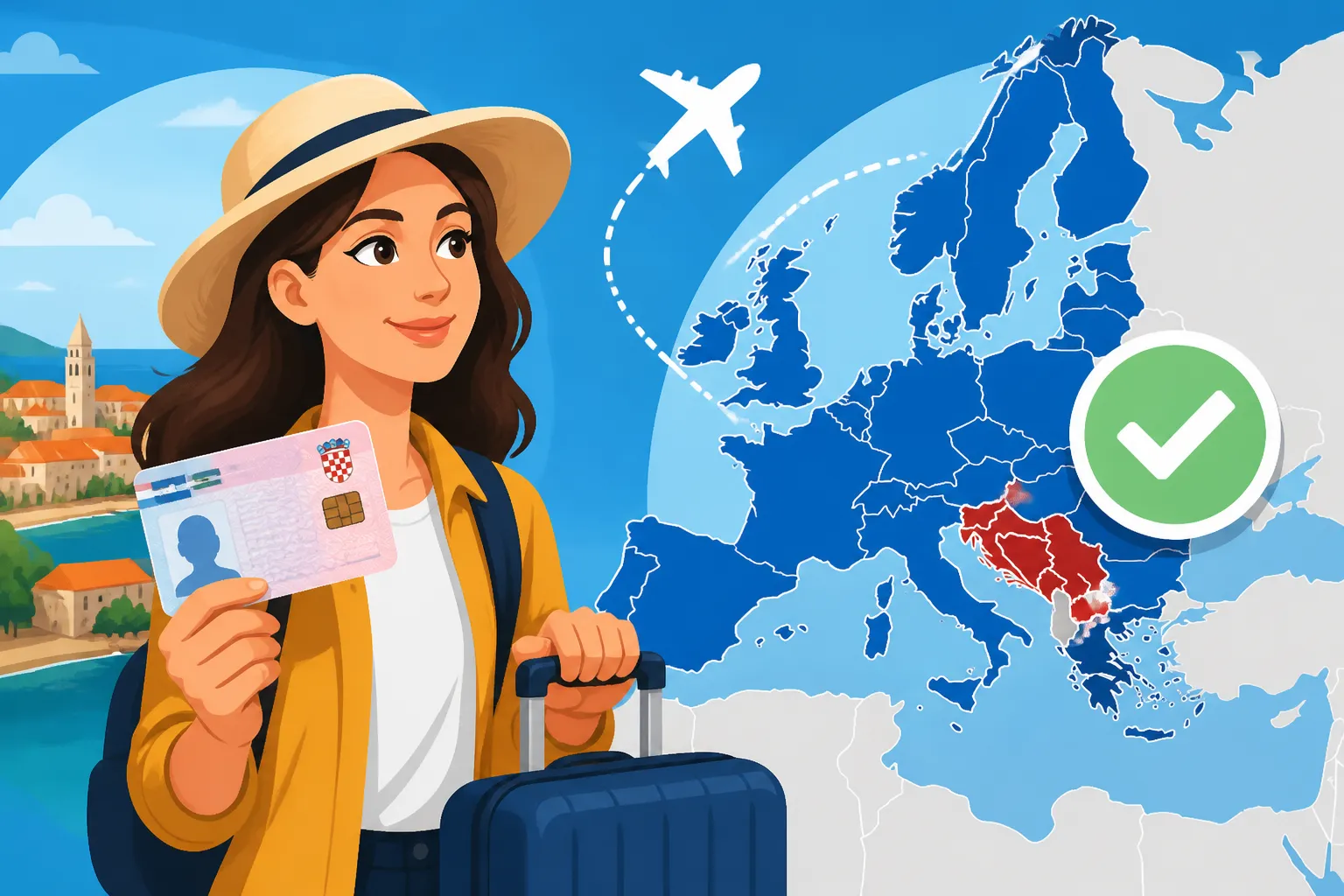
Croatia officially joined the Schengen Area on January 1, 2023. This was a monumental shift for everyone living here, including us expats. What does it mean? It means that internal border controls between Croatia and other Schengen member states have been lifted. You can now drive from Zagreb to Ljubljana, for example, without stopping for passport checks at the border. This significantly streamlines travel and reduces a lot of the logistical hurdles we used to face. For anyone holding a valid residence permit issued by Croatia, this change generally means enhanced freedom of movement within the entire Schengen zone. It's truly a game-changer for spontaneous trips and deeper exploration of Europe.
Understanding Your Croatian Residence Permit
It's crucial to understand that not all Croatian residence permits are created equal, and while the general rule is "yes, you can travel," the nuances depend on the specific type of permit you hold. Most foreign nationals who are not EU/EEA/Swiss citizens will hold a Privremeni Boravak (Temporary Residence) permit. This could be based on work, family reunification, study, or even the popular digital nomad status.
For instance, if you've gone through the extensive process of securing your work and residence permit in Croatia, that little biometric card you receive is your golden ticket. Similarly, those who have achieved Permanent Residence in Croatia: The Complete Pathway (2027) will have a permit that grants them broad travel rights within Schengen. The key is that your permit must be issued by a Schengen member state (which Croatia now is) and be valid for the entire duration of your planned travel. You can find more comprehensive information in our guide on The Complete Guide to Croatian Residence Permits for Expats (2027).
The Schengen Borders Code: What It Says for Residents
The Schengen Borders Code is the rulebook governing the crossing of external Schengen borders and the absence of internal border checks. For third-country nationals (non-EU/EEA/Swiss citizens) who hold a valid residence permit issued by a Schengen state, the code generally allows for free movement within the other Schengen states for up to 90 days within any 180-day period.
This means if you have a valid Croatian residence permit and your passport is valid for at least three months beyond your intended departure from the Schengen area, and it was issued within the last 10 years, you're usually good to go. It's about recognizing the validity of your legal stay in one Schengen country across the entire zone for short visits. Think of your Croatian residence card, specifically the How Do I Get a Biometric Residence Card (Boravišna Iskaznica) in Croatia? as effectively granting you a short-stay visa waiver for the rest of Schengen. This is a huge perk that simplifies travel for us who live here.
Practicalities of Traveling within Schengen with a Croatian Permit
While the removal of internal border checks is fantastic, it doesn't mean you can just hop on a plane with nothing but your phone. There are still practical considerations and documents you should always have on hand.
What Documents Do You Need at the Border?
Even without physical border checks, it's always wise to carry the right documentation, especially when flying or traveling by bus or train, where checks can still occur at any point. You should always carry:
- Your valid passport: It must meet the 3-month validity and 10-year issuance rule for Schengen travel.
- Your Croatian residence permit (Boravišna Iskaznica): This is your primary proof of legal residence in a Schengen country.
- Proof of sufficient funds: While often not requested, border authorities or airline staff can ask to see proof that you can support yourself during your travels and have funds to return to Croatia.
- Proof of accommodation/return ticket: Again, usually not asked for with a residence permit, but good to have if traveling to a country with stricter entry requirements or if you plan an extended stay.
- Travel insurance: While What Health Insurance Do I Need for a Croatian Residence Permit? covers you in Croatia, it's a smart move to have comprehensive travel insurance that covers you throughout Europe, especially if you're exploring for longer periods. Providers like Cigna Global offer excellent expat-focused plans that can give you peace of mind.
Remember, airlines often have their own stricter rules, so always double-check with your carrier before flying, as they might deny boarding if they believe you don't meet the entry requirements for your destination country, even if you technically do.
Duration of Stay: The 90/180 Rule Still Applies (Sometimes)
This is where it can get a little tricky, so pay close attention. For non-EU citizens, your Croatian residence permit allows you to travel to other Schengen states for tourism or short visits for a period of up to 90 days within any 180-day period. This 90-day count is cumulative across all Schengen states other than Croatia. Your time in Croatia is covered by your residence permit and doesn't count towards these 90 "tourist" days in the rest of Schengen.
Let's illustrate: If you spend 6 months living and working in Croatia on your permit, and then decide to take a month-long trip through Italy, France, and Germany, those 30 days would count towards your 90/180-day Schengen allowance. Once those 90 days are used up, you would need to leave the Schengen Area (or return to Croatia to continue your legal residence here) until a new 180-day period begins. For a deeper understanding of this rule, check out Understanding the 90/180 Schengen Rule for Croatia.
It’s crucial to distinguish between residence in Croatia (which is long-term and covered by your permit) and short-term visits to other Schengen countries (which fall under the 90/180-day rule). Your Croatian permit allows you to reside in Croatia and travel for short periods to other Schengen states. It does not grant you the right to reside long-term in Germany or France, for example.
Potential Pitfalls and Common Misconceptions
It's natural to have questions, and even seasoned expats can get caught out by misunderstandings. Here are a few common pitfalls:
- Assuming unlimited travel: As discussed, the 90/180-day rule for other Schengen countries still applies for non-EU citizens. Don't overstay this limit.
- Not carrying your physical permit: Always carry your physical biometric residence card. A photo or a digital copy might not be accepted, especially by airlines or transit authorities.
- Expired passport: Ensure your passport is always valid for travel, well beyond your planned return date. This is separate from your residence permit.
- Digital Nomad Permit confusion: This is a big one. While a Croatian Digital Nomad Permit allows you to live and work remotely from Croatia, it's generally not considered a residence permit that grants unlimited travel rights throughout the entire Schengen area in the same way a traditional work or family reunification permit might. You can transit through other Schengen countries and use your 90/180 tourist days, but you cannot set up a "second base" in another Schengen country based solely on your Croatian digital nomad status. For more details, refer to How to Apply for a Croatian Digital Nomad Permit.
Specific Scenarios: Who Can Travel and How Far?
Let's break down the travel implications based on different types of residence and nationality.
Non-EU Citizens with a Croatian Residence Permit
If you are a citizen of a non-EU/EEA/Swiss country and hold a valid Croatian Privremeni Boravak (Temporary Residence) or Stalni Boravak (Permanent Residence) permit – based on employment, study, family reunification, or even The Expat Guide to Temporary Residence (Privremeni Boravak) in Croatia – you are generally allowed to travel to other Schengen states for up to 90 days in any 180-day period, for tourism or short visits.
Your Croatian residence permit acts like a multiple-entry short-stay visa for the rest of the Schengen Area. This means you can visit France, Germany, Spain, Italy, etc., without needing a separate visa for each country, as long as your visits are short-term (under 90 days) and for non-residence purposes. It’s important to remember that this right is for travel, not for residence or employment in those other Schengen countries unless you obtain a specific visa or permit from that country.
EU/EEA/Swiss Citizens with Croatian Residence
If you're already an EU, EEA, or Swiss citizen living in Croatia, your travel rights are primarily based on your nationality and the principle of free movement for EU citizens. You can travel, live, and work in any EU/EEA/Swiss country without a visa or residence permit. Your Croatian residence registration, while important for administrative purposes within Croatia (like registering your How Do I Register My Address at the MUP in Croatia? or accessing local services), doesn't actually grant you travel rights you don't already possess. It simply formalizes your status here in Croatia. So for you, the question of Schengen travel is much simpler – your passport is your primary travel document across Europe.
Digital Nomads and Other Unique Permits
This category requires a bit more nuance. The Croatian Digital Nomad Permit is explicitly for residing and working remotely from Croatia. While it's a fantastic initiative, it comes with specific limitations regarding broader Schengen travel, especially for long-term stays.
As a digital nomad in Croatia, your permit allows you to legally reside and work in Croatia. When it comes to other Schengen countries, you generally fall back to the standard 90 days in any 180-day period rule for tourist travel. You can travel through other Schengen countries using your passport and Croatian digital nomad card, but you cannot legally set up a new base or work from another Schengen country for an extended period without securing a separate visa or permit from that specific country. Your digital nomad status is tied to your residence in Croatia. This distinction is vital to avoid overstaying or violating immigration rules in other Schengen states.
Here's a quick comparison table for clarity:
| Permit Holder Type | Primary Residence Location | Schengen Travel Rights (Outside Croatia) | Primary Document for Schengen Travel | Notes |
|---|---|---|---|---|
| Non-EU Citizen (Work/Family/Study Permit) | Croatia | Up to 90 days in any 180-day period, for tourism/short visits. | Passport + Croatian Residence Card | Can visit other Schengen states without a separate visa. Time in Croatia doesn't count towards the 90-day limit for other Schengen countries. Cannot reside or work in other Schengen countries without a specific permit from that country. |
| EU/EEA/Swiss Citizen | Croatia (or anywhere in EU) | Unlimited freedom of movement, residency, and work rights across EU/EEA/Swiss. | National ID/Passport | Croatian residence registration is for administrative purposes within Croatia. Travel rights are based on citizenship. |
| Digital Nomad (Non-EU) | Croatia | Up to 90 days in any 180-day period, for tourism/short visits. | Passport + Croatian Residence Card | Permit is for residence in Croatia. Travel to other Schengen countries falls under the tourist 90/180 rule. Cannot work or reside long-term in other Schengen countries on this permit. |
Preparing for Your Schengen Adventure
So, you've got your permit, you understand the rules, and you're ready to explore beyond Croatia's beautiful borders. Planning is key to a smooth journey.
Essential Documents to Carry
Beyond your passport and Croatian residence permit, consider having these on hand:
- Copies of your documents: Keep digital copies on your phone and email them to yourself, and perhaps even a physical copy in a separate bag, just in case. Losing your original documents abroad is a nightmare.
- Proof of accommodation for your destination: If you have hotel bookings or an address where you'll be staying, print them out or have them easily accessible.
- Return or onward ticket: Proof that you intend to leave the Schengen Area (or return to Croatia) after your trip.
- Emergency contact information: Not just for your family, but also for the Croatian MUP (police) or your embassy in Croatia.
Planning Your Journey
Consider how you'll travel. If you're driving, the internal border crossings are now seamless, which is fantastic. But always keep your documents within easy reach. If you're flying, double-check airline requirements. Remember that travel insurance is your friend here; comprehensive plans from providers like Cigna Global can cover everything from medical emergencies to lost luggage, which can be invaluable when you're far from home. If you're ever contemplating a more significant move within Europe, perhaps to another Schengen country, services like Sirelo can help with the logistics of international relocations.
Staying Informed
Immigration rules, even within the Schengen zone, can sometimes have subtle variations or undergo changes. Always consult official sources for the latest information, such as the Croatian Ministry of Interior (MUP) website or the official EU immigration portals. It's better to be overly prepared than to face an unexpected issue while trying to enjoy your hard-earned time off.
Living in Croatia offers an incredible gateway to Europe. With your Croatian residence permit, a world of travel opens up, allowing you to immerse yourself not just in Croatian culture but also in the rich tapestry of the entire Schengen continent. Enjoy your travels, and stay informed!
Disclaimer
The information provided in this guide is for general informational purposes only and does not constitute legal or immigration advice. While we strive to provide accurate and up-to-date information based on our expat experience and publicly available data, rules and regulations can change rapidly. Always consult with official government sources (e.g., Croatian Ministry of Interior, embassies, consulates) or a qualified legal professional for advice pertaining to your specific situation before making any decisions related to immigration or travel.