How Much Does It Cost to Live in Dubrovnik as an Expat?
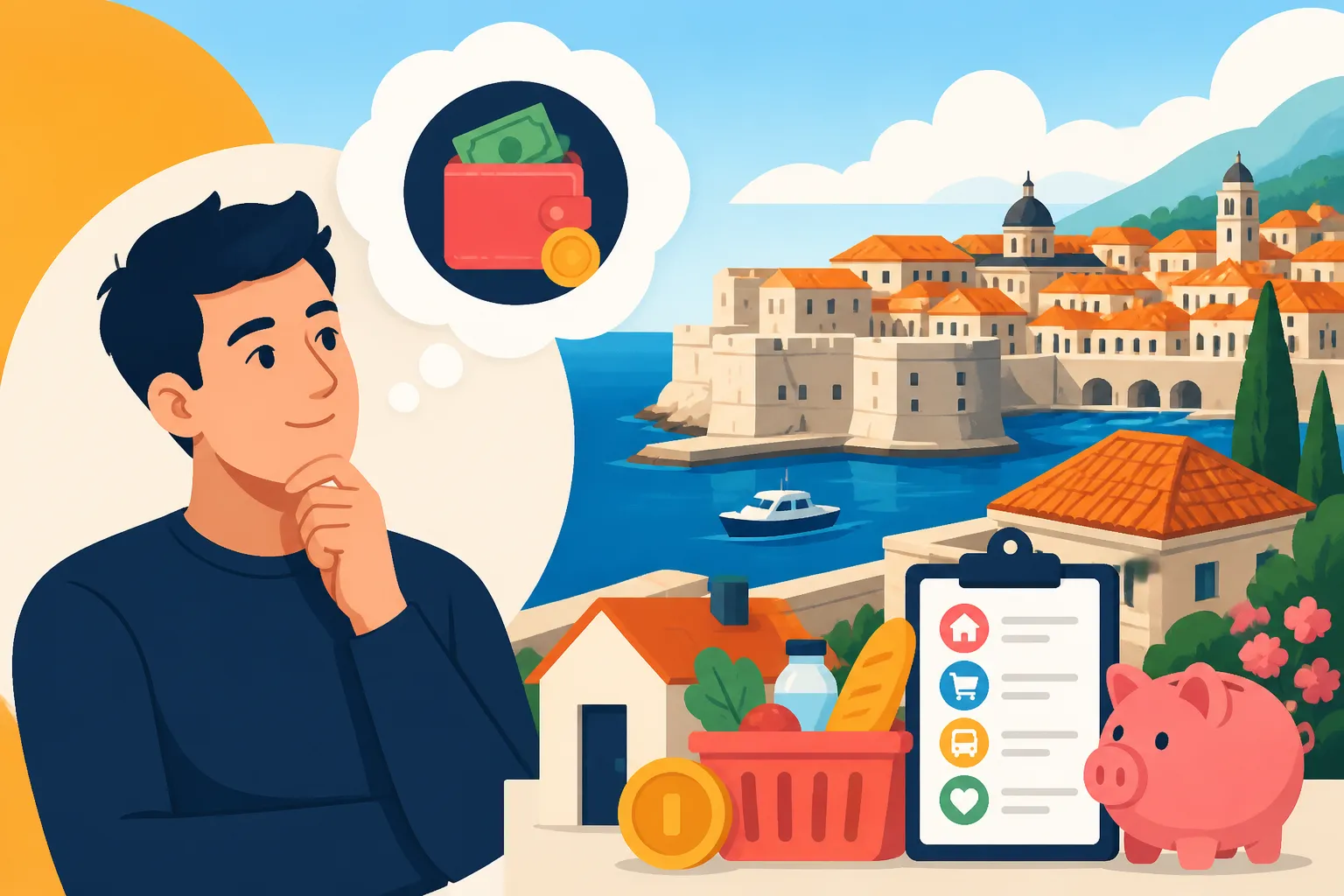
Oh, Dubrovnik! The Pearl of the Adriatic, the King's Landing of your expat dreams. You've seen the photos, imagined the sun-drenched walks along the Stradun, and pictured yourself sipping coffee by the ancient city walls. But then reality hits: whispers of "expensive" echo through the expat forums. The truth is, while Dubrovnik offers an unparalleled lifestyle, it definitely comes with a heftier price tag compared to other Croatian cities. This guide is here to strip away the guesswork and give you a real, boots-on-the-ground breakdown of what it actually costs to live in this stunning city.
The Dubrovnik Dream: Is it Worth the Price Tag?
So, you're enchanted by Dubrovnik's beauty – and who wouldn't be? But then you start looking at prices, and a cold dread might creep in. Is it really that expensive? The short answer: yes, it can be. However, it's not the full story. Living in Dubrovnik as an expat is a balancing act, and understanding the local nuances can make a significant difference.
Initial Shock vs. Long-Term Reality
Many expats arrive in Dubrovnik, especially from countries with a lower cost of living, and experience an immediate sticker shock. The price of a coffee on the Stradun, a meal in the Old Town, or even just a trip to the supermarket can feel astronomically high. This initial feeling is valid. Dubrovnik's global fame, particularly among cruise ship passengers and high-end tourists, has indeed pushed up prices for goods and services, often beyond what you'd expect in, say, Split or Zagreb.
However, once you settle in, you learn the ropes. You discover the local haunts, the markets where produce is cheaper, and the supermarkets that offer better value. You start to differentiate between "tourist prices" and "local prices." While Dubrovnik will always be one of Croatia's more expensive cities, living like a local can significantly mitigate those eye-watering costs you first encountered. It's about adjusting your habits, seeking out authentic experiences, and being mindful of where your money goes. The feeling of being overwhelmed by prices eventually gives way to a more strategic approach to budgeting.
The "Tourist Tax" Effect
Let's be blunt: a massive chunk of Dubrovnik's economy revolves around tourism, and as a resident, you'll inevitably pay a "tourist tax" on certain things. This isn't an official levy, of course, but rather the natural inflation of prices due to high demand and a constant influx of visitors with varying budgets. From April to October, the city pulsates with energy, but also with inflated prices for everything from basic groceries in convenience stores within the city walls to a simple scoop of ice cream.
This effect is most pronounced in the Old Town (Stari Grad) and along popular coastal stretches like Lapad Bay. A cup of coffee that costs €2 at a local cafe in Gruž might easily be €4-5 within the city walls. Restaurants in prime tourist locations often have higher prices for smaller portions, catering to one-off visitors rather than repeat local customers. The trick is to venture slightly off the beaten path. Explore the lesser-known streets, discover neighborhood eateries (konobas), and frequent the placa (local market) for fresh produce instead of relying solely on tourist-trap shops. Understanding this dynamic is key to surviving Dubrovnik on a budget.
Housing: Your Biggest Expense in Dubrovnik
There’s no getting around it: housing will likely be your largest monthly outlay in Dubrovnik. The stunning coastal views and the limited space, especially in popular areas, drive rental and purchase prices sky-high compared to other parts of Croatia.
Renting an Apartment: What to Expect
Finding long-term accommodation in Dubrovnik can be a bit of a gladiatorial sport, especially if you're looking for something affordable outside of the off-season. Landlords often prefer short-term tourist rentals during the summer months due to the lucrative income, which means long-term options can be scarce and pricier.
Here’s a rough breakdown of what you might expect for monthly rent in different areas:
- Old Town (Stari Grad): Forget it, unless you have unlimited funds and don't mind constant crowds and noise. Long-term rentals are rare and extremely expensive, often starting from €1,500 for a small, basic place.
- Lapad: This is a very popular residential area, offering a good balance of amenities, beaches, and proximity to the city center. Expect to pay anywhere from €800 – €1,500 for a decent one-bedroom apartment. Two-bedroom apartments can range from €1,200 – €2,000+.
- Gruž: The main port area, Gruž is a more "local" neighborhood with excellent transport links, a large market, and more affordable living. A one-bedroom might be €700 – €1,200, and a two-bedroom around €1,000 – €1,800.
- Mokošica/Komolac: These areas are a bit further out from the city center, requiring a bus or car, but offer more space and better value. Here, you might find a one-bedroom for €600 – €1,000, with two-bedrooms around €900 – €1,500.
- Ploče: Located just east of the Old Town, offering iconic views. Rents here are typically higher, on par with or even exceeding Lapad.
It's crucial to start your search well in advance, ideally outside of the peak tourist season (i.e., September to May). Be prepared for landlords to ask for a significant deposit (usually 1-2 months' rent) and for some to insist on cash payments, although this is becoming less common. You'll definitely want to ensure your lease is registered with the tax administration; you can find more information about this process in our guide on How Do I Register My Lease with the Tax Administration in Croatia?. Compared to other major cities, Dubrovnik's rental market is noticeably steeper; for context, you might want to compare with How Do I Find a Long-Term Rental in Split? to see the difference.
Utilities: More Than Just Electricity
Beyond rent, utilities add a substantial chunk to your monthly expenses. These can fluctuate based on your consumption, the size of your apartment, and the time of year.
Here’s a general idea of utility costs for an average one-bedroom apartment:
- Electricity (HEP): This is often the highest utility bill, especially if you rely on air conditioning in the sweltering summer months or electric heating in winter. Expect to pay anywhere from €50 – €120 per month, potentially more in extreme seasons.
- Water (Vodovod Dubrovnik): Water bills are generally quite reasonable, usually around €20 – €40 per month.
- Waste Collection (Čistoća Dubrovnik): This is a mandatory communal fee, typically €15 – €30 per month.
- Internet: High-speed internet (fiber optic where available) is fairly standard. Providers like Hrvatski Telekom (HT) or A1 offer packages ranging from €30 – €50 per month.
- Mobile Phone: A basic monthly plan with decent data will set you back €10 – €25. If you're just arriving and need immediate connectivity without committing to a long-term plan, a digital eSIM from providers like Airalo can be a lifesaver, giving you instant data access upon landing.
- Gas: Natural gas isn't as widespread for heating in Dubrovnik as in some other parts of Croatia. Many apartments use electric boilers for hot water and electric radiators or air conditioning for heating. If you do have gas, it would be an additional expense.
In total, expect your monthly utility bills to be in the range of €150 – €250 for a single person or a couple. For a comprehensive overview of setting up your household services, take a look at The Expat Guide to Setting Up Utilities in Croatia.
Daily Living Costs: From Groceries to Going Out
Once your housing is sorted, the daily grind of eating, commuting, and socializing comes into play. Again, Dubrovnik has its own pricing quirks.
The Supermarket Sweep
Your grocery bill can vary wildly depending on where you shop and your eating habits. The major supermarket chains in Dubrovnik include Konzum, Tommy, Pemo, and also larger stores like Lidl and Kaufland in the wider area, particularly outside the city center.
- Konzum and Tommy are ubiquitous and offer a wide range of products, but prices can be on the higher side, especially for imported goods.
- Pemo is a local chain that sometimes offers slightly better deals on certain items.
- Lidl and Kaufland (often requiring a short drive or bus ride outside the most central areas) typically offer the best value for staple items and fresh produce, often feeling more like what you might be used to from Western European discount supermarkets.
To save money, definitely embrace the local placa (market) in Gruž for fresh fruits, vegetables, and local cheeses. Not only is it often cheaper than supermarkets, but the quality is usually superior, and it's a fantastic cultural experience.
Here’s a rough idea of basic grocery prices:
- Milk (1L): €1.00 – €1.30
- Loaf of fresh bread: €1.50 – €2.50
- Dozen eggs: €2.50 – €3.50
- Chicken breast (1kg): €8 – €12
- Local cheese (250g): €4 – €7
- Bottle of local wine: €5 – €10 (supermarket)
- Local beer (0.5L): €1.50 – €2.50 (supermarket)
- Apples (1kg): €1.50 – €2.50
- Potatoes (1kg): €1.00 – €1.50
For a single person cooking mostly at home, budgeting €300 – €500 per month for groceries is a realistic starting point. For a couple or small family, this could easily jump to €500 – €800.
Dining Out and Socializing
This is where Dubrovnik's "tourist tax" hits hardest. Dining out frequently can decimate your budget.
- Coffee: A cappuccino or macchiato in the Old Town can cost €4 – €5. Venture to Gruž or Lapad, and you'll find prices closer to €2 – €3.
- Beer: A local draft beer (0.5L) in a tourist hotspot is €5 – €7. In a local bar, it's more like €3.50 – €5.
- Casual Meal: A pizza or a simple pasta dish in a mid-range restaurant in Lapad might be €12 – €20. Within the Old Town, expect €18 – €30+.
- Nice Dinner: A three-course meal for two with wine at a decent restaurant could easily be €80 – €150 or more, especially if you're looking for fine dining.
My advice: enjoy the occasional splurge, but learn to seek out the small, family-run konobas away from the main tourist drag. They offer delicious, authentic Croatian food at much more reasonable prices. Pack a picnic to enjoy by the sea instead of always buying lunch out. For a single expat, budgeting €150 – €300 per month for dining out and socializing is a reasonable starting point, assuming a mix of home cooking and occasional outings.
Transport and Connectivity
Dubrovnik's public transport system, run by Libertas Dubrovnik, is efficient and covers most areas expats would live in.
- Bus Tickets: A single bus ticket bought on the bus costs €2. It's cheaper if you buy it at a kiosk (€1.70) or via the Libertas app.
- Monthly Pass: For regular commuters, a monthly pass (mjesecna karta) is the most economical option, typically costing around €30 – €40. This is a great way to save money if you rely on public transport daily, much like the systems in other Croatian cities; you can learn more about general costs in How Much Does Public Transport Cost in Zagreb?.
- Taxis/Uber: These are available but can be expensive, especially during peak season or late at night. A short ride could be €8 – €15.
- Car Ownership: Owning a car in Dubrovnik comes with significant challenges and costs. Parking is notoriously difficult and expensive, especially near the Old Town. Fuel prices are also high (around €1.50 – €1.70 per liter). Unless you plan extensive travel outside the city, relying on buses, walking, and occasional taxis is often more practical.
For internet and mobile services, as mentioned before, expect around €30 – €50 for home internet and €10 – €25 for a mobile plan. For more detailed information on getting connected, check out How Do I Set Up Internet and Mobile Service in Croatia?.
Healthcare and Personal Care: Budgeting for Well-being
Taking care of your health and personal needs is an essential part of your expat budget, and Croatia has a system that might be different from what you're used to.
Navigating the Medical System
As a resident in Croatia, you are typically required to register with the Croatian Health Insurance Fund (HZZO) for basic public health coverage. This is mandatory if you are employed or self-employed in Croatia, or if you are a long-term resident. While HZZO covers a significant portion of medical costs, there are participacija (co-payments) for doctor visits, prescriptions, and specialist consultations. Many expats opt for dopunsko zdravstveno osiguranje (supplementary health insurance) to cover these co-payments, which typically costs an additional €10 – €20 per month. You can find more details about this in Understanding Dopunsko Zdravstveno Osiguranje (Supplementary Insurance) in Croatia.
For faster appointments, English-speaking doctors, or specific treatments, many expats also turn to private clinics or polyclinics. A private GP visit can range from €40 – €70, while a specialist consultation might be €70 – €150. Medications prescribed by an HZZO doctor are often subsidized or free with dopunsko, but over-the-counter drugs and some specialty medications can add up.
Budgeting for healthcare involves understanding the HZZO system and deciding if supplementary or private insurance is right for you. It's a critical part of expat life in Croatia, and our guide, The Complete Guide to Healthcare in Croatia for Expats (2027), offers a deep dive. For a foundational understanding of the public system, you'll want to read How the Croatian Health Insurance Fund (HZZO) Works: A Full Overview, and for finding your general practitioner, this might help: The Expat Guide to Finding a Family Doctor (Obiteljski Liječnik) in Croatia.
Personal Services and Wellness
Basic personal care costs in Dubrovnik are generally reasonable:
- Haircut: A men's haircut might be €15 – €25, while a women's cut and style could range from €30 – €60+.
- Gym Membership: Expect to pay around €30 – €60 per month for a standard gym membership. Dubrovnik has a few good options with modern equipment.
- Toiletries: Prices for shampoo, soap, toothpaste, etc., are comparable to other European countries, perhaps slightly higher than discount stores but less than specialty shops.
These are the kinds of expenses where finding a local provider can make a big difference in cost versus opting for a more "Western" or tourist-oriented service.
The Bottom Line: Sample Monthly Budgets for Dubrovnik Expats
Let's pull it all together with some realistic monthly budget estimates. Remember, these are highly dependent on your lifestyle, whether you're living alone or with family, and how much you embrace local habits versus maintaining habits from your home country.
| Expense Category | Single Expat (EUR) | Couple/Small Family (EUR) | Notes |
|---|---|---|---|
| Rent (1-2 bed) | 800 – 1,500 | 1,200 – 2,000 | Lapad/Gruž vs. prime locations; long-term can be hard to find |
| Utilities (approx.) | 150 – 250 | 200 – 350 | Electricity (seasonal), water, internet, mobile, waste |
| Groceries | 300 – 500 | 500 – 800 | Cooking at home, local markets save money |
| Public Transport | 30 – 50 | 50 – 100 | Monthly pass, occasional taxi |
| Dining Out/Social | 150 – 300 | 250 – 500 | 2-3 casual meals out, coffee, drinks per week; avoid tourist traps |
| Healthcare (private) | 50 – 150 | 100 – 300 | Beyond HZZO/Dopunsko, supplements or private visits |
| Personal Care/Misc. | 50 – 100 | 100 – 200 | Haircuts, gym, toiletries, minor household expenses |
| Total Estimated | 1,530 – 2,850 | 2,900 – 4,250 | Excludes major purchases, international travel, or large indulgences |
Single Expat Budget
As a single expat, you have the most flexibility. You can choose a smaller apartment further from the center, shop predominantly at Lidl or local markets, and limit your dining out to once or twice a week. The lower end of the budget (€1,530) is achievable if you're very frugal and truly live like a local. The higher end (€2,850) allows for a nicer apartment, more frequent dining out, and perhaps a gym membership or other activities. Dubrovnik offers a fantastic quality of life, but it demands conscious budgeting.
Expat Couple/Family Budget
For couples or families, the costs naturally scale up. Rent for a two-bedroom apartment is significantly higher, groceries double or more, and transport costs increase. If you have children, you’ll need to factor in additional expenses for schooling, whether that's public kindergarten or a private international school. The latter can be a major budget item, often running into several hundred euros per child per month. Our guide on Schools and Education in Croatia: A Complete Guide for Expat Families can give you more insights here.
Moving with a family also introduces additional logistical challenges, from finding suitable housing to organizing the actual relocation. Services like Sirelo can be incredibly helpful in comparing quotes and coordinating your move, saving you a lot of stress (and potentially money) in the long run. The overall cost of living in Croatia is a big topic, and for a broader perspective, you might find our guide on The Complete Guide to Cost of Living in Croatia for Expats (2026) useful for comparing Dubrovnik to other regions.
Living in Dubrovnik as an expat is a unique experience, blending historical charm with stunning natural beauty. While it demands a higher budget than most other Croatian cities, with careful planning and a willingness to embrace local living, it is absolutely achievable and incredibly rewarding.
Disclaimer
Please note that this guide provides general information based on current knowledge and typical expat experiences in Croatia. Costs, regulations, and procedures can change. We recommend verifying all specific details with official sources, financial advisors, or relevant government bodies before making any decisions.