How Much Is the Property Transfer Tax in Croatia?
One of the biggest hurdles when you're finally taking the plunge and buying property in Croatia is wrapping your head around all the associated costs, and perhaps none loom larger or cause more confusion than the property transfer tax. It’s a significant expense that often gets overlooked in the excitement of finding your perfect spot, but trust me, ignoring it isn't an option. This guide will walk you through everything you need to know about the property transfer tax in Croatia, ensuring you're prepared and confident when it’s time to seal the deal on your new Croatian home.
Understanding the Property Transfer Tax (Porez na Promet Nekretnina) in Croatia
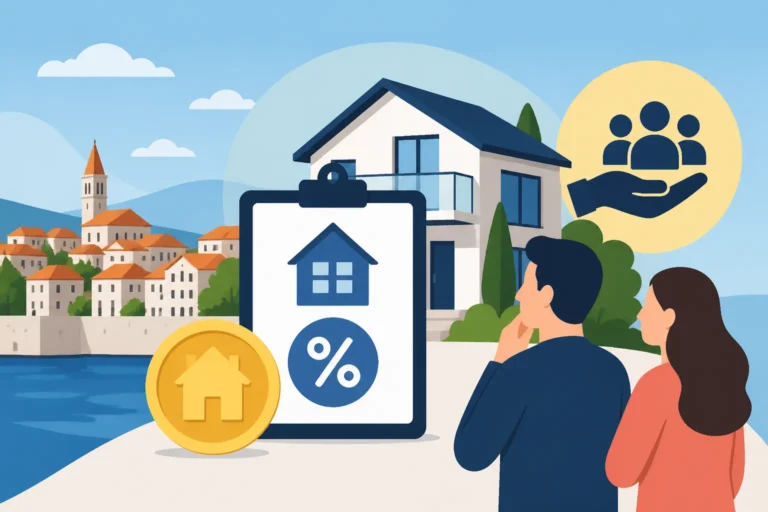
So, you've found your dream apartment in Split, or maybe a charming stone house in Istria. Congratulations! But before you pop the champagne, let's talk about the Porez na Promet Nekretnina, or Property Transfer Tax (PPT). This is one of the fundamental financial obligations you'll encounter when acquiring real estate in Croatia. It’s not just a flat fee; it’s a percentage of the property's market value, and understanding its nuances is absolutely crucial for any expat looking to buy here.
What Exactly Is This Tax?
At its core, the Property Transfer Tax is a state tax levied on the acquisition of real estate within Croatia. It applies every time there’s a change in ownership, unless a specific exemption applies. This isn't a new concept; most countries have something similar. However, the exact rate, the method of calculation, and the administrative process can differ significantly from what you might be used to back home. For new expats, this often means confronting a bureaucratic system that operates on different principles and timelines. It's not just about the monetary amount; it's about navigating a process that can feel opaque if you don't know the rules of the game.
The tax aims to capture value when property changes hands. It's a key revenue stream for the Croatian state, contributing to public services and infrastructure. When you’re signing that purchase agreement, remember that you’re not just agreeing to pay the seller for the property; you’re also implicitly agreeing to pay the state for the privilege of transferring that ownership into your name. This tax applies to land, residential buildings, commercial buildings, and essentially anything classified as real estate. It's separate from other costs like notary fees, legal fees, or real estate agent commissions, which can really add up. To get a full picture of all these charges, you might want to delve into a broader guide like The Complete Guide to Property and Real Estate Taxes in Croatia (2027).
The Current Rate and How It's Applied
Currently, the property transfer tax in Croatia stands at 3%. This 3% is applied to the market value of the property at the time of transfer. This is where it gets interesting – and sometimes a little frustrating for foreigners. The "market value" isn't always precisely what you paid for the property. While the purchase price stated in your contract is usually the starting point for the tax base, the Tax Administration (Porezna Uprava) has the final say. They have their own internal valuation methods and may assess the market value to be higher than your agreed purchase price, especially if they believe the stated price is artificially low for tax evasion purposes.
Imagine you've agreed to buy a charming old fisherman's house for €100,000. You might expect your tax to be €3,000. However, the Porezna Uprava in that particular region might have records suggesting similar properties in that area recently sold for €120,000. In such a scenario, they could re-evaluate your property's market value at €120,000, meaning your tax bill would then be €3,600. This is a common point of contention and surprise for many foreign buyers, so it's always wise to factor in a buffer for potential re-evaluations. It highlights why having a local real estate agent or legal counsel who understands regional market values is invaluable. For more on the buying process generally, check out How to Buy Property in Croatia as a Foreigner: The Full Guide (2027).
Who Pays and When: Unpacking the Obligations
One of the first questions almost every expat asks when they're confronted with a new tax is, "Who's actually on the hook for this?" When it comes to the property transfer tax in Croatia, the answer is usually quite clear, but the timing and the exact process for notification and payment can sometimes feel like a bit of a moving target.
The Buyer's Burden: Who is Responsible?
In the vast majority of real estate transactions in Croatia, the buyer is the one legally obliged to pay the property transfer tax. This is a standard practice and is almost always stipulated in the purchase agreement. So, if you're the one acquiring the property, prepare to factor this 3% into your total budget. It’s an unavoidable cost, much like the notary and registration fees.
However, it's not always as simple as signing a contract and waiting for a bill. The responsibility actually rests on the purchaser to ensure this tax is paid. This means that after the purchase agreement is notarized, the notary public is usually the one who electronically submits the necessary documentation to the local Porezna Uprava (Tax Administration). They act as a crucial link in the chain, preventing you from having to navigate this step directly in Croatian. Once the Porezna Uprava processes the submission and determines the final tax base, they will issue a formal decision (rješenje) indicating the exact amount you owe. This decision is then sent directly to the buyer's registered address. Receiving this official document can sometimes take a few weeks, or even a couple of months, depending on the workload of the local Porezna Uprava office. Patience, my friend, is a virtue here!
Deadlines and the Payment Process
Once you receive that official decision from the Porezna Uprava, the clock starts ticking. You typically have a deadline of 15 days from the date of receiving the decision to pay the property transfer tax. Missing this deadline can lead to penalties and interest, so it’s something you absolutely want to avoid. Given that the postal system can sometimes be a bit leisurely, it's a good idea to stay in touch with your notary or lawyer to track the status of your tax decision. They might even receive an electronic notification before your physical letter arrives.
The payment itself is usually made via a bank transfer, either through your Croatian bank account or via an international transfer if you're still waiting to set up your local banking. Services like Wise can be incredibly helpful for making international payments to Croatia, often offering better exchange rates and lower fees than traditional banks, which can really add up when you're transferring a significant sum for property or tax payments. The rješenje will contain all the necessary bank details, including the IBAN of the Porezna Uprava and the specific reference numbers (poziv na broj odobrenja) you need to include in the payment description. Get these details right, as an incorrect reference number can cause delays and administrative headaches.
Table: Key Steps and Deadlines for Property Transfer Tax
| Step | Responsible Party | Typical Timeline | Important Notes |
|---|---|---|---|
| 1. Purchase Agreement Signed | Buyer & Seller | Initial step | Must be notarized to be legally binding and for tax purposes. |
| 2. Submission to Tax Administration | Public Notary (or Buyer's Lawyer) | Within 30 days of contract notarization | The notary electronically submits the agreement and related documents to the relevant Porezna Uprava. This is generally a smooth process handled by professionals. |
| 3. Tax Decision Issued | Porezna Uprava (Tax Administration) | Typically 1-3 months (can vary) | The Porezna Uprava assesses the market value and issues a formal rješenje (decision) with the tax amount. This is mailed to the buyer’s registered address. |
| 4. Tax Payment Due | Buyer | Within 15 days of receiving the decision | Crucial deadline! Payment must be made to the Porezna Uprava via bank transfer using the details provided in the rješenje. Ensure correct reference numbers are used. Avoid penalties by paying on time. |
| 5. Property Registration | Buyer (via Notary/Lawyer) | After tax payment is confirmed | Proof of paid tax is usually required for the final registration of ownership in the Land Registry (Zemljišne Knjige). This is how your ownership is officially recorded. Learn more about it here: Understanding the Zemljišne Knjige (Land Registry) in Croatia. |
Exemptions and Special Circumstances
While the 3% property transfer tax is the general rule, like most things in Croatian bureaucracy, there are always exceptions and specific scenarios where the rules might bend or even disappear entirely. Knowing these can potentially save you a significant amount of money or at least prevent unnecessary stress.
When VAT (PDV) Applies Instead
One of the most important exemptions to the property transfer tax applies to the purchase of newly built properties directly from a company (usually the developer) that is a registered VAT (PDV) payer. In these cases, you won’t pay the 3% property transfer tax, but instead, the purchase price will include the standard Croatian VAT rate, which is currently 25%. This might seem like a much higher percentage, but remember that the developer usually builds this into their pricing strategy, and it applies to the construction cost, not necessarily the full market value of the land and finished building in the same way the PPT does.
This is a critical distinction. If you’re buying a brand-new apartment from a developer, scrutinize your contract to ensure it clearly states that VAT is included. If it’s not from a VAT-registered company, or if you’re buying a second-hand property (even if it’s only a few years old), then the 3% property transfer tax will almost certainly apply. The logic here is to avoid double taxation – either you pay VAT on the new construction, or you pay property transfer tax on the transfer of an existing property. Understanding VAT in Croatia can be quite complex, especially for businesses, so consider looking into The Complete Guide to VAT (PDV) in Croatia for Businesses.
Limited Exemptions for First-Time Home Buyers
Historically, Croatia had more generous exemptions for first-time home buyers, especially for younger individuals. However, these benefits have largely been phased out or significantly restricted over the years. Currently, there are no broad, automatic exemptions from property transfer tax simply for being a first-time buyer. Any specific programs that exist tend to be temporary, highly conditional, and often linked to social housing initiatives or specific demographics (e.g., young families in certain areas).
It’s crucial not to rely on anecdotal information from previous years regarding these exemptions. Always check the very latest regulations with a legal professional or the Porezna Uprava itself. If you're a first-time buyer hoping for a break, it's certainly worth inquiring, but manage your expectations; for most expats, this particular exemption won't be applicable.
Inheritance, Gifts, and Family Transfers
Transfers of property through inheritance or gifts also fall under the purview of property tax, but with significant exemptions depending on the relationship between the parties. Close relatives are often exempt. For instance, direct line descendants (children, grandchildren), spouses, and registered life partners are generally exempt from paying property transfer tax on inherited property or gifts. This also often extends to parents and siblings in certain scenarios.
However, if the inheritance or gift is between more distant relatives or unrelated parties, the 3% property transfer tax will apply. It's vital to clearly establish the relationship and the nature of the transfer when dealing with such situations. This area can be particularly complex and is often intertwined with broader inheritance and gift tax laws. For navigating the intricacies of all things tax, especially if you have international assets or income, a specialized service like Taxes for Expats can be invaluable for ensuring compliance both in Croatia and in your home country. Understanding your overall tax residency is paramount too, as outlined in Tax Residency in Croatia: A Definitive Guide for Expats (2027).
Other Less Common Scenarios
There are other niche situations where property transfer tax might be affected:
- Property Swaps/Exchanges: If properties are exchanged, both parties are generally liable for the property transfer tax on the value of the property they receive.
- Property Contributions to Companies: When real estate is contributed as capital to a company, the transaction might be subject to PPT unless specific VAT rules apply.
- Court Decisions: Transfers based on court decisions (e.g., divorce settlements, forced sales) are still typically subject to the tax.
Each of these scenarios comes with its own set of rules and potential interpretations. This is precisely why engaging a local lawyer or tax advisor is not just a suggestion, but a necessity when dealing with property in Croatia. They can help you navigate the system, understand specific exemptions, and ensure you're fully compliant, avoiding costly mistakes or unexpected tax bills down the line.
Getting Your Finances in Order for Property Purchase
Beyond understanding the tax itself, the practicalities of paying for a property and its associated taxes as an expat in Croatia can present its own set of challenges. From international money transfers to ensuring you have the necessary identification, foresight and planning are key.
Preparing for Large Payments from Abroad
Most expats purchasing property in Croatia will be transferring funds from bank accounts in their home countries. This means dealing with exchange rates, transfer fees, and potentially limits on daily or weekly transactions. It's not just the purchase price, but also the notary fees, lawyer fees, and this significant property transfer tax that need to be accounted for.
Before you initiate any large transfers, compare different services. Traditional banks can be expensive, with less favorable exchange rates and higher transfer fees. Modern online money transfer services, such as Wise, often offer much more competitive rates and transparent fee structures, potentially saving you thousands on a large property purchase and tax payment. Make sure to factor in the time it takes for funds to clear, as you don't want to miss that 15-day tax payment deadline because your money is stuck in transit. Also, be aware that for large international transfers, banks will often ask for the source of funds as part of anti-money laundering regulations. Have your documentation ready to avoid delays.
The Importance of Your OIB
No matter what administrative task you're undertaking in Croatia, from opening a bank account to registering for healthcare, your Osobni Identifikacijski Broj (OIB) is absolutely essential. This unique personal identification number is your key to engaging with the Croatian state, and paying property transfer tax is no exception. You cannot complete a property purchase or pay associated taxes without it.
If you haven't already obtained your OIB, make it a top priority. It's usually one of the first things you'll need when you start your relocation journey. You can apply for it at any Porezna Uprava office, typically with your passport. If you're buying property through a lawyer, they can often assist you in obtaining it by proxy. For a detailed walkthrough of this crucial step, read How to Get an OIB (Personal Identification Number) in Croatia. Ensure your OIB is linked to all your property documents and tax decisions to avoid any mix-ups down the line.
Accounting for All Property-Related Costs
The 3% property transfer tax is just one piece of the financial puzzle when buying property in Croatia. It's easy to get tunnel vision on this one big cost, but a truly realistic budget needs to encompass everything. Here's a quick rundown of other expenses you should anticipate:
- Notary Fees: A mandatory cost for authenticating your purchase agreement and other documents. These are typically calculated based on the purchase price.
- Legal Fees: Highly recommended to engage a lawyer to review the contract, check property titles, and guide you through the process. Fees vary but are a wise investment.
- Real Estate Agent Commission: If you used an agent, expect to pay a commission, usually a percentage of the purchase price (often 2-3% + VAT for each side, buyer and seller, though this is negotiable).
- Land Registry Fees: Smaller administrative fees for registering your ownership in the official Zemljišne Knjige.
- Energy Performance Certificate: Required for all properties when selling or renting, so factor this in if your seller doesn't already have one.
- Potential Renovations/Furnishing: Even if your new place is perfect, there's always something.
By considering all these costs upfront, you can create a comprehensive budget and avoid any unwelcome surprises, ensuring your move to Croatia is as smooth as possible.
Disclaimer
The information provided in this article is for general informational purposes only and does not constitute legal, financial, or tax advice. While we strive to keep the information up-to-date and accurate, tax laws and regulations in Croatia can change frequently. It is essential to consult with a qualified legal professional, tax advisor, or the Croatian Tax Administration (Porezna Uprava) for advice tailored to your specific situation before making any property purchase or financial decisions. The author and publisher are not liable for any actions taken based on the information provided herein.