Understanding Kindergarten (Vrtić) Enrolment in Croatia
Trying to navigate the Croatian education system, especially something as fundamental as kindergarten, can feel like stepping into a bureaucratic maze, even for those of us who've been here a while. You're trying to settle your family, maybe you're still figuring out where to buy a property in Croatia, and suddenly you're faced with forms, deadlines, and a language barrier. This guide is here to cut through the confusion and give you a clear, empathetic roadmap to understanding kindergarten (Vrtić) enrollment in Croatia for your little ones.
Understanding the Croatian Kindergarten System (Vrtić)
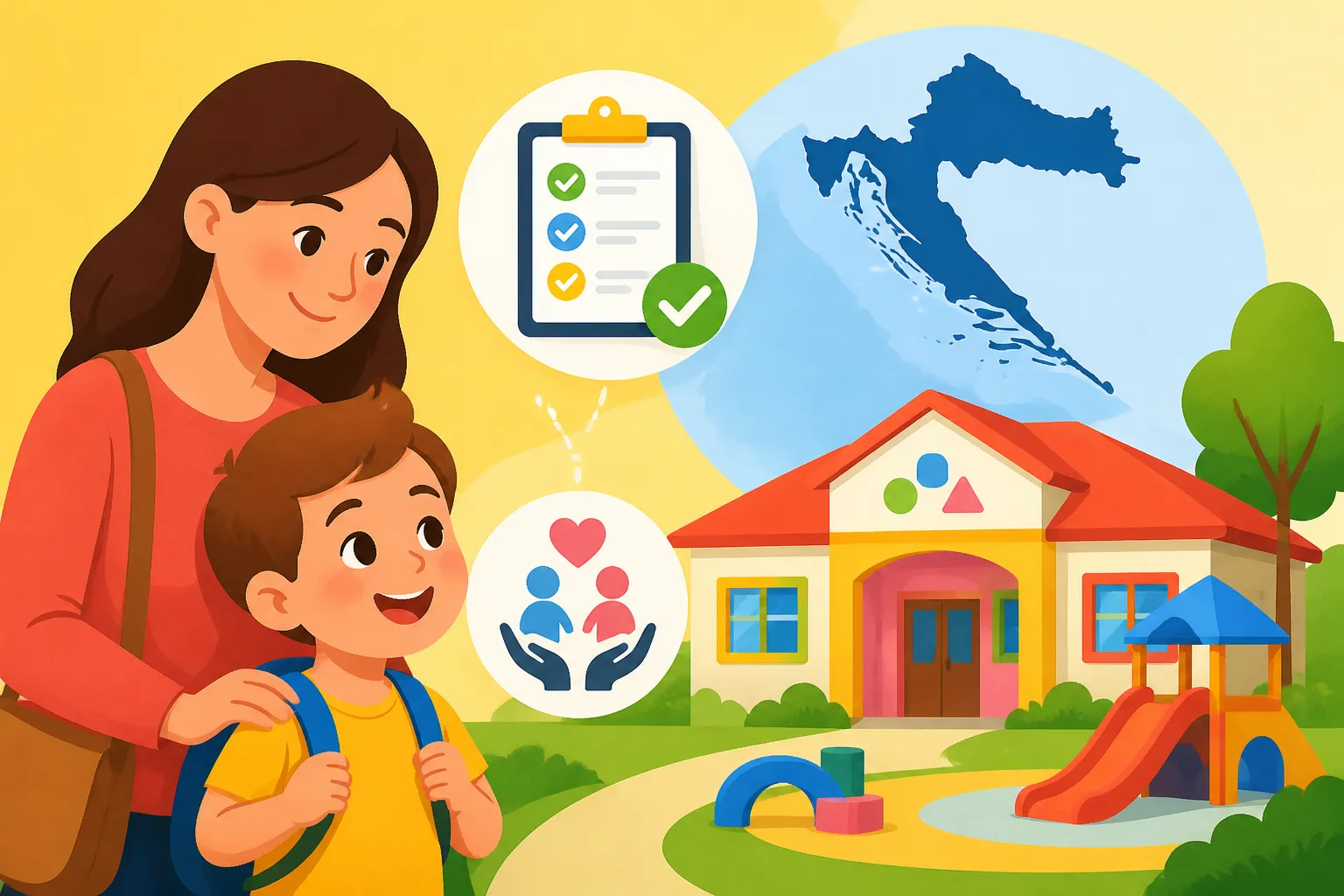
Croatia’s early childhood education system, known as vrtić, is a vital part of a child's development and an essential resource for parents. It's not just daycare; it's a structured environment where children learn, play, and socialize before they hit primary school. For expat families, getting a handle on how this system works is the first crucial step in ensuring a smooth transition for your kids.
What is a Vrtić? Age Groups and Philosophy
A vrtić broadly encompasses both nurseries (jaslice) for the youngest children, typically from six months to three years old, and kindergartens (vrtić itself) for those aged three years up to school age, usually six or seven. The philosophy is very much rooted in holistic development – encouraging play-based learning, social interaction, and early literacy and numeracy skills, all within a safe and stimulating environment. It's a place where they learn those all-important social graces, how to share, and how to navigate group dynamics, which is incredibly valuable for their later schooling.
What you'll find is that many Vrtići aim to integrate children into Croatian culture and language, which can be both a challenge and a fantastic opportunity for your child to become truly bilingual. The staff, known as odgajatelji, are trained professionals who focus on child development. However, finding English-speaking staff can be a hit or miss, especially in public institutions outside of the major cities. So, be prepared for a potential language immersion experience for your little one, which, while daunting at first, can lead to incredible language acquisition.
Types of Programs Offered: Half-Day, Full-Day, Specialized
Croatian kindergartens offer a variety of programs to suit different family needs, though availability can certainly vary by location and demand. The most common options include half-day programs, often running from morning until early afternoon, and full-day programs, which usually extend until late afternoon or early evening. These full-day options are a godsend for working parents, providing consistent care and structured activities throughout the day.
Beyond these standard offerings, some kindergartens, particularly in larger cities like Zagreb or Split, might have specialized programs. These could include specific pedagogical approaches, like Montessori-inspired activities, or programs with an emphasis on a particular area, such as music, art, or even early foreign language learning (beyond Croatian). It's always worth asking about these options when you're inquiring, as they might perfectly align with your child's interests or your family's values. However, these specialized programs tend to be more common in private Vrtići, which often have more flexibility in their curriculum and staffing.
The Importance of Early Registration
This is one of those pieces of advice I wish someone had screamed at me when I first moved here: start early! Seriously, do not underestimate the importance of early registration. Enrollment periods for public kindergartens in Croatia are typically quite short and usually take place once a year, often in May or June, for the following academic year starting in September. Spots, especially in public Vrtići, are incredibly competitive, and waiting lists can be long. If you miss the window, you might find yourself scrambling for alternatives, which can add unnecessary stress to your already busy expat life.
Even if you're not planning to arrive in Croatia until later in the year, it’s crucial to research and understand the deadlines well in advance. Some municipalities, especially the larger ones, might have online portals for applications, such as Zagreb's E-Upisi system, which can be helpful if you're applying from abroad. But even then, gathering all the necessary documents takes time. Thinking ahead, planning your move, and perhaps even using a service like Sirelo to help organize your relocation while you manage these administrative tasks can make a huge difference in reducing stress.
Eligibility and Required Documents for Expat Children
Navigating the bureaucratic labyrinth of documents is a rite of passage for every expat in Croatia, and kindergarten enrollment is no exception. It’s not just about filling out a form; it’s about proving your legal standing, your child’s health, and your genuine intent to integrate into the local community.
Residency and Legal Status Requirements
For your child to be eligible for a Croatian vrtić, particularly a public one, you generally need to demonstrate legal residency in Croatia. This means you (or at least one parent) will need to have a valid residence permit – whether that’s temporary residence (privremeni boravak) or permanent residence (stalni boravak). If you're an EU citizen, you'll need to have registered your residence at the MUP (Ministry of Interior). The kindergarten will almost certainly ask for proof of your registered address, often called prebivalište. This is crucial because municipal subsidies for public Vrtići are typically tied to your child's officially registered address within that municipality.
For non-EU citizens, your child’s legal status will usually be tied to your own residence permit, often under family reunification. This means you need to have successfully navigated that process first. If you’re still working on getting all your family's documents in order, you might want to check out a guide on Family Reunification in Croatia: A Complete Guide for Expats as it will significantly impact your ability to enroll your children in local institutions. It's a chicken-and-egg situation sometimes, but the residency permit nearly always comes first.
Essential Paperwork for Foreign Children
Prepare yourself for a pile of paperwork. While exact requirements can vary slightly by municipality and specific kindergarten, here’s a general rundown of what you’ll likely need:
- Child's Birth Certificate: This is a given. Make sure it's an international one (izvadak iz matice rođenih) or officially translated and apostilled/legalized.
- Proof of Croatian Residency (for parents and child): This could be copies of your residence permits/cards (boravišna iskaznica) or confirmation of registered residence from the MUP. This is where your Registering Your Residence in Croatia: The Complete MUP Guide comes in handy.
- Child's OIB: Every resident, including children, needs a personal identification number. If your child doesn't have one yet, you'll need to apply for it. A guide on How to Get an OIB (Personal Identification Number) in Croatia can walk you through that process.
- Medical Certificate (Liječnička potvrda): Your child will need a health check-up by a Croatian pediatrician (or family doctor if a pediatrician isn't accessible) who will issue a certificate stating your child is healthy and up-to-date on vaccinations according to Croatian schedules. This often needs to be done shortly before enrollment.
- Vaccination Records: Bring your child’s full vaccination booklet from your home country. These will need to be reviewed and potentially matched against Croatian requirements. Your chosen doctor will help with this.
- Proof of Income/Employment (for parents): Some municipalities use this for fee calculation or priority for public Vrtići. This could be salary slips, employment contracts, or proof of self-employment registration.
- Other specific forms: The kindergarten itself will provide its own application forms.
My advice? Start collecting these documents as soon as you even think about applying. Getting your child's OIB, scheduling doctor appointments, and getting translations takes time.
Translating and Certifying Documents
This often trips up new arrivals. Many official documents submitted to Croatian institutions, including kindergartens, need to be officially translated into Croatian by a sworn court interpreter (sudski tumač). This isn't just a friendly neighbor translating for you; it needs to be an official, stamped translation. Birth certificates, marriage certificates (if relevant for family status), and often detailed medical histories or vaccination records might fall into this category.
Furthermore, some documents, particularly those from non-EU countries, might also require an Apostille stamp or full diplomatic legalization to be recognized in Croatia. This process certifies the authenticity of the public document. Always check with the specific kindergarten or your local MUP office what their exact requirements are for documents originating from your home country. Over-preparing is always better than under-preparing when it comes to Croatian bureaucracy. It can be a bit of a headache, but once you have that certified translation, it’s usually good for future administrative tasks too.
The Application and Enrollment Process: Step-by-Step
Once you've got your head around the system and gathered your mountain of paperwork, it's time for the actual application. This part can feel like a race against the clock, especially with those tight deadlines and competitive spots.
Finding Available Vrtići and Application Deadlines
Your first port of call should be your local municipality's website (e.g., Grad Zagreb, Grad Split, Grad Rijeka) or the website of the Dom Zdravlja (local health center) in your area. These sites often list the public kindergartens within their jurisdiction and provide information on enrollment periods, required documents, and application forms. In larger cities like Zagreb, many public kindergartens are managed centrally, and there's often an online application portal. For example, the City of Zagreb uses an "E-Upisi" system for public Vrtići, where you can submit applications digitally during the designated period. This is a game-changer compared to hunting down paper forms!
For private Vrtići, you'll need to contact them directly. Many have their own websites where they list their programs, fees, and application procedures. They often have more flexible enrollment periods, sometimes accepting children throughout the year if spots are available. This can be a huge relief if you’ve missed the public kindergarten window. Don't forget to ask about International Schools and Their Costs in Croatia as they often include kindergarten sections and might be an option if you prefer an English-speaking environment. Regardless, be diligent about checking those deadlines – usually in May or June for public Vrtići – and set reminders!
Navigating the Application Form (Often in Croatian!)
The application form itself will, more often than not, be entirely in Croatian. This is where your language skills (or a very patient Croatian friend, neighbor, or a hired translator) will be put to the test. These forms ask for basic information about the child and parents, but also often delve into details like your work status, income, whether you receive social benefits, and if your child has any special needs or siblings already enrolled. These details are used to prioritize applicants, especially in public Vrtići where demand outstrips supply.
Don’t be afraid to ask for help! The staff at the kindergarten or the municipal office handling enrollments might speak some English, but it’s not guaranteed. Having a Croatian speaker accompany you or at least help you fill out the forms correctly is highly recommended to avoid any costly mistakes that could delay or invalidate your application. Remember, precision is key in these administrative tasks.
The Selection Process and Waiting Lists
Once applications close, the selection process begins. For public Vrtići, this process is usually formalized and points-based. Criteria often include:
- Both parents working: This usually gives higher priority.
- Single-parent households: Also often prioritized.
- Parents with low income: Some municipalities offer additional points or reduced fees.
- Siblings already attending: Children with a brother or sister already enrolled might get preference.
- Child with special needs: These children are typically given priority.
- Date of application: Sometimes, earlier applications are given preference, though not always.
Due to high demand, particularly in larger urban centers like Zagreb, Split, and Rijeka, public Vrtići often have long waiting lists. It’s not uncommon for families to apply to several public Vrtići and still not get a spot in their preferred choice. This can be incredibly frustrating, especially when you’re relying on that spot for childcare. If you find yourself in this situation, don't despair. Explore private options immediately, and keep your child on waiting lists – sometimes spots open up unexpectedly due to families moving or changing plans. It’s a bit of a nail-biter, so have a Plan B (and C!).
Public vs. Private Kindergartens: Weighing Your Options
The choice between public and private kindergarten is a significant one for any family, but for expats, it often comes with additional layers of consideration, primarily revolving around language, cost, and availability. Both have their merits and drawbacks, and understanding them will help you make the best decision for your child and your family's circumstances.
Benefits and Drawbacks of Public Vrtići
Public kindergartens (javni vrtići) are typically the most affordable option, as they are subsidized by the local municipality. This is a huge benefit, especially for families budgeting for the overall The Complete Guide to Cost of Living in Croatia for Expats (2026). The quality of care and education is generally high, with qualified educators and standardized curricula approved by the Ministry of Science and Education. Your child will be immersed in the Croatian language and culture, which is fantastic for integration.
However, the drawbacks can be significant for expats. The primary language of instruction is Croatian, which can be a steep learning curve for non-Croatian speaking children and can make communication with staff challenging for parents. Waiting lists are often long, and spots are highly competitive, making enrollment difficult, especially if you apply outside the main registration period. Class sizes can also be larger than in private institutions. For me, the language barrier for parents was the biggest hurdle – trying to understand daily reports or specific instructions in a language I was still grappling with felt like another full-time job.
Advantages and Considerations for Private Institutions
Private kindergartens (privatni vrtići) offer more flexibility and often cater to specific needs. Many private Vrtići, especially in larger cities, offer bilingual or English-speaking programs, which can be a huge relief for expat children who are not yet proficient in Croatian. These institutions often boast smaller class sizes, a wider range of extracurricular activities, and sometimes more modern facilities. They also tend to have more flexible enrollment periods, making them a viable option if you arrive mid-year or miss public application deadlines.
The main consideration, of course, is the cost. Private kindergartens are significantly more expensive than their public counterparts, as they receive little to no municipal subsidies. While some might still be cheaper than international schools, they can put a dent in your budget. You’ll also need to carefully vet each private institution, as the quality can vary more widely than in the standardized public system. Always ask for their curriculum, staff qualifications, and references. Communication is usually easier, but you might miss out on that full immersion experience into Croatian daily life.
International Kindergartens as an Alternative
For many expat families, international kindergartens are the go-to choice, particularly if your child is older or if you plan to move between countries frequently. These kindergartens typically follow an international curriculum (e.g., IB Primary Years Programme, British Curriculum, American Curriculum) and instruction is entirely in English (or another major foreign language). They are often integrated into larger international schools, which provides a seamless transition into primary education.
The biggest advantage is the continuity of education and the familiar language environment for your child. It also simplifies communication for parents. However, international kindergartens are by far the most expensive option, with fees comparable to those in other Western European countries. Spots can also be limited, so early application is still crucial. If you're weighing your options, exploring Understanding International Schools and Their Costs in Croatia can give you a better idea of what to expect financially and academically. This table offers a quick overview:
| Feature | Public Vrtić (Javni Vrtić) | Private Vrtić (Privatni Vrtić) | International Kindergarten |
|---|---|---|---|
| Cost (Monthly) | Lower (€70-€200, subsidized) | Medium-High (€200-€500+) | High-Very High (€500-€1000+) |
| Language of Instruction | Predominantly Croatian | Often Croatian, some bilingual/English | Predominantly English (or other) |
| Application Process | Strict annual deadlines, competitive | More flexible, year-round possible | School-specific, often competitive |
| Class Size | Generally larger | Often smaller | Generally smaller |
| Curriculum | National, standardized | Varied, sometimes specialized (Montessori etc.) | International (IB, British, US) |
| Expat Integration | High linguistic/cultural immersion | Moderate-High, depends on language | Lower, primarily expat community |
| Availability | Limited spots, long waiting lists | Better availability, more options | Limited number of institutions |
Costs, Subsidies, and Financial Considerations
Understanding the financial side of kindergarten enrollment in Croatia is crucial for expat families. While public Vrtići are generally affordable thanks to municipal subsidies, private and international options can add up quickly. It's not just the base monthly fee; there are often hidden costs that you need to factor into your budget.
Average Monthly Fees for Public and Private
For public Vrtići, the monthly fees are significantly lower because they are heavily subsidized by the local government. The exact amount varies by municipality and can also depend on family income and the number of children in the kindergarten. Generally, you can expect to pay anywhere from €70 to €200 per month for a full-day program. For jaslice (nursery for infants), fees might be slightly higher due to the increased care needs. Some municipalities even offer further reductions or free kindergarten for families with very low income or for a third or subsequent child.
Private Vrtići, on the other hand, don't receive the same level of public funding, so their fees are considerably higher. You're looking at a range of €200 to €500 or even more per month, depending on the city, the program, and the facilities. International kindergartens will be at the very top end of this scale, often exceeding €500-€1000+ per month, sometimes with additional registration fees or annual charges. It's a significant jump, but for some, the benefits of language and curriculum continuity are worth the investment. Always ask for a full breakdown of fees to avoid surprises.
Municipal Subsidies and How to Apply
One of the biggest advantages of enrolling your child in a public vrtić (or sometimes even a private one that has a contract with the municipality) is access to municipal subsidies. These subsidies significantly reduce the monthly fee for parents. Eligibility for these subsidies is usually tied to your legal residence within that particular municipality. When you fill out the application form for a public vrtić, you'll typically be asked to provide income statements and other family details that the municipality uses to calculate your subsidy level.
For expat parents, this means having all your personal income documentation in order, whether it's from Croatian employment, self-employment, or even foreign income if you're a tax resident in Croatia. You might be asked for your porezna kartica (tax card) or recent payslips. If you're running a paušalni obrt, you'll need to show proof of your income through your tax declarations. It's essential that your registered address (your prebivalište) matches the municipality where you're applying for the subsidy.
Additional Costs: Meals, Activities, Supplies
Beyond the monthly tuition, it’s important to factor in other potential costs. Meals are usually included in the monthly fee for full-day programs in both public and private Vrtići, offering breakfast, a snack, and lunch. However, always confirm this. Some Vrtići might have optional extra activities, such as swimming lessons, dance classes, or foreign language workshops (beyond Croatian/English), which will incur additional charges.
You'll also need to consider the cost of basic supplies. While Vrtići provide most learning materials, you might be asked to provide specific items like slippers (papuče), a change of clothes, perhaps a small blanket for nap time, and personal hygiene items. For special events or holidays, there might be small contributions requested. These aren’t usually budget-breakers, but it’s good to be aware that the monthly fee isn’t always the only outgoing. Having some reliable connectivity, perhaps a good data plan from Airalo if you're frequently on the go, can help you manage these small, unexpected charges through online banking or communication with the vrtić.
Tips for a Smooth Transition and Integration
Moving to a new country and enrolling your child in a new school system is a big adjustment for everyone involved. As an expat who’s been through it, I can tell you that a little foresight and a lot of patience go a long way in making this transition as smooth as possible for your child.
Language Barriers and Support for Non-Croatian Speakers
The language barrier is often the biggest hurdle, both for your child and for you as a parent. Your child, especially if young, is likely to be an absolute sponge and pick up Croatian incredibly quickly. However, the initial weeks or even months can be challenging as they adjust to a completely new linguistic environment. Some Vrtići, particularly in larger expat hubs, might have staff with basic English, but don't count on it. My advice is to try and learn some basic Croatian phrases yourself, especially those related to common kindergarten activities or your child's needs. Even "Dobar dan" (Good day) and "Hvala" (Thank you) go a long way.
For your child, be prepared for potential frustration and withdrawal initially. They might come home exhausted from trying to understand and communicate all day. Reinforce their efforts, celebrate small victories, and consider exposing them to Croatian cartoons or songs at home. Some Vrtići might have specific programs for language integration, but often, it's a learn-by-doing approach. Don't forget that learning Croatian can also be a family affair! You might find it useful to check out Learning Croatian: A Complete Guide to Language Courses and Levels to help you and your child navigate the language.
Preparing Your Child for Vrtić Life
Preparation is key to reducing anxiety for your child. Talk to them about what kindergarten will be like, even if they don't understand Croatian yet. Use pictures, draw little stories, or watch videos of Croatian kindergartens if you can find them. Emphasize the fun aspects: new friends, toys, games, and outdoor play. If possible, visit the vrtić beforehand to familiarize them with the environment and meet the odgajatelji.
Explain the routine: when you'll drop them off, what they'll do during the day (play, eat, nap), and when you'll pick them up. Consistency in your routine at home during the first few weeks can also provide a sense of security amidst the newness of vrtić. A familiar comfort item, like a small toy or blanket, can also be incredibly helpful, if the kindergarten allows it. Expect some tears, both from them and maybe from you, especially during the first few drop-offs. It's completely normal, and it gets better, I promise.
Engaging with the Kindergarten Community
Engaging with the kindergarten community is crucial for both your child's integration and your own. Attend parent-teacher meetings, even if you need a translator. Offer to help with school events if your time allows. Get to know other parents – they can be an invaluable source of information, support, and even friendships. Many Vrtići have WhatsApp groups or similar communication channels for parents, which can be a lifeline for staying informed (again, a good mobile plan from Airalo helps here!).
Even if language is a barrier, showing that you are present and interested in your child's education and the kindergarten community will make a huge difference. The more you engage, the more comfortable both you and your child will become, and the more supported you will feel in this new chapter of your expat life in Croatia. Remember, you're not just enrolling a child; you're joining a community. For overall guidance on your initial settling period, a look at The Complete Guide to Moving to Croatia: Your First 90 Days (2027) might provide helpful broader context.
Disclaimer
Please remember that while I strive to provide accurate and up-to-date information based on my personal experience and available resources, regulations and procedures in Croatia can change. This guide is for informational purposes only and should not be considered legal or official advice. Always consult with official government sources, specific kindergarten administrations, or legal professionals for the most current and personalized information.