What Documents Do I Need to Open a Bank Account in Croatia?
Ah, the joys of Croatian bureaucracy! If you're new to Croatia, one of the first and often most bewildering tasks is figuring out how to set up a bank account. It can feel like you need a secret decoder ring and a small army of documents, making you wonder if you'll ever get your finances sorted. But don't despair – this guide is here to walk you through exactly what documents you'll need, what to expect, and even some common pitfalls, making this essential step a whole lot less stressful.
The Initial Hurdles: Why Croatian Banking Feels Different
When you first arrive in Croatia, everything can feel a little bit like deciphering an ancient scroll, and banking is no exception. It's not necessarily more difficult than in other countries, but it certainly has its own unique flavour, often heavily reliant on specific physical documents and a certain order of operations. What might be straightforward back home can involve a few extra steps here, and understanding the underlying philosophy of the system can save you a lot of grief.
Understanding the Croatian Bureaucracy Mindset
Croatia, like many countries in Central and Eastern Europe, operates on a system that often prioritizes official stamps, original documents, and adherence to very specific procedural steps. This isn't out of malice, but rather a deeply ingrained administrative culture. For expats, this can be incredibly frustrating. You might walk into a bank with what you think are all the necessary papers, only to be told you're missing one obscure document or that a photocopy isn't sufficient. This isn't a personal slight; it's simply how the system works. Patience is genuinely your most valuable asset here, alongside a willingness to ask clarifying questions – sometimes multiple times, to multiple different people, just to be sure. Expect to visit the bank more than once, and always bring more documents than you think you'll need.
The Importance of the OIB Personal Identification Number
Before you even think about opening a bank account, or really doing anything official in Croatia for that matter, you absolutely must have your OIB (Osobni identifikacijski broj). Think of it as your unique identification number, similar to a Social Security Number, Tax ID, or National Insurance number in other countries. It's utterly central to every administrative process, from registering for healthcare to paying taxes, and yes, opening a bank account. Without an OIB, Croatian banks simply won't be able to process your application.
The good news is that obtaining an OIB is usually one of the easier administrative tasks. You typically apply for it at the local tax administration office (Porezna Uprava). You'll usually need your passport and perhaps your proof of residence application form. For a deeper dive into this crucial step, check out our guide on How to Get an OIB Personal Identification Number in Croatia. Seriously, get this first. It's non-negotiable and will be requested at virtually every official window you encounter.
Essential Documents for Opening a Personal Bank Account
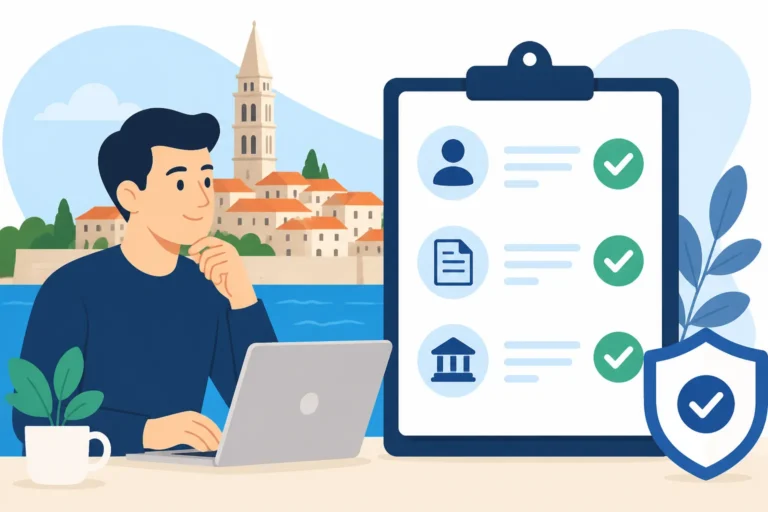
Once you've wrapped your head around the Croatian way of doing things and have your all-important OIB in hand, you can start gathering the actual documents for your bank account. While exact requirements can vary slightly between banks and depending on your residence status, there's a core set of documents that almost every expat will need. Don't try to wing it; having everything prepared in advance will save you multiple trips and a good deal of stress.
Proof of Identity: Passport and Other IDs
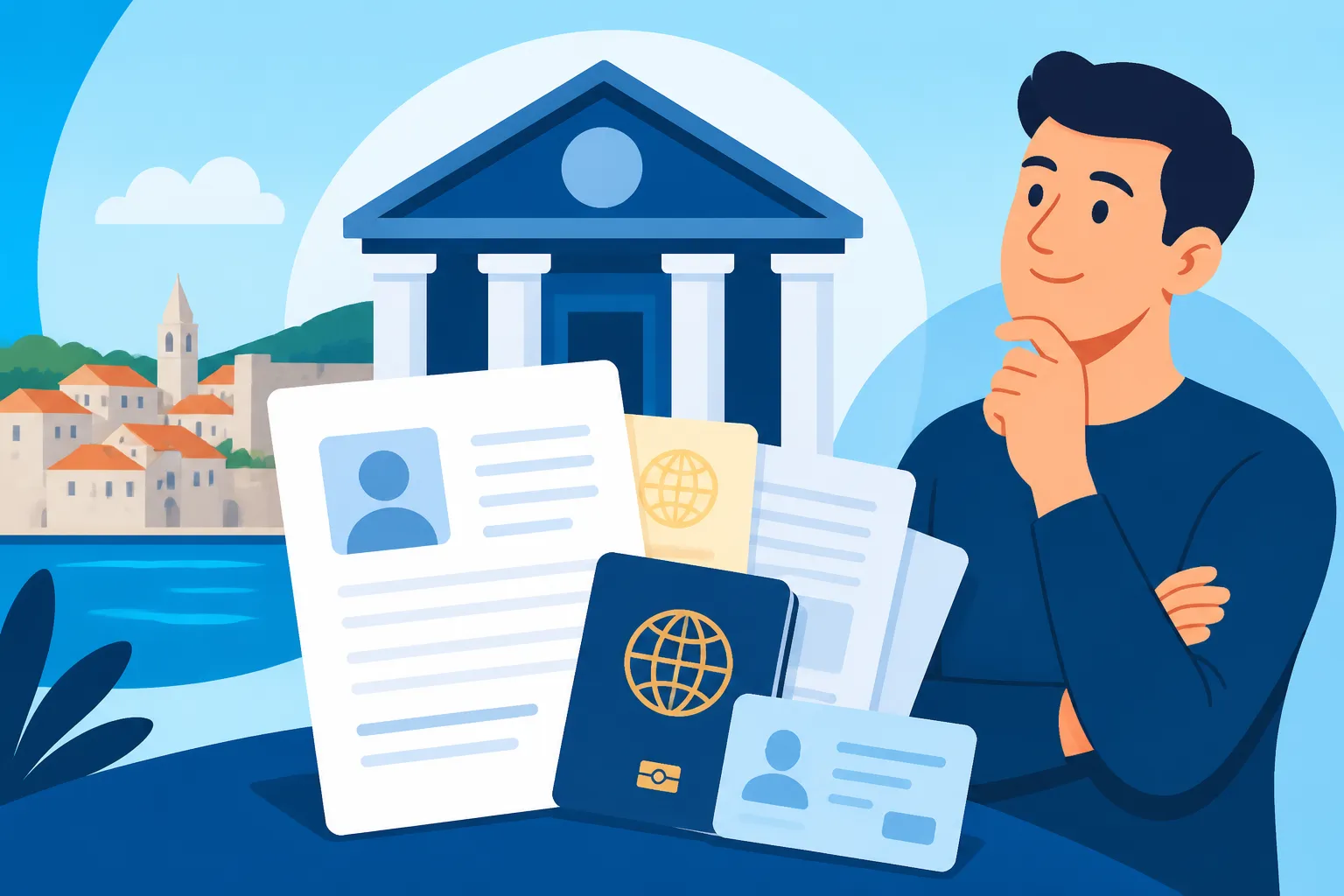
This is fairly standard worldwide, but in Croatia, they are particularly stringent about verifying who you are. Your primary form of identification will almost certainly be your valid passport. Make sure it’s not expired and has at least six months of validity left. Some banks might also ask for a secondary form of ID, though this is less common for non-EU citizens presenting a passport.
For EU citizens, a national ID card might suffice, but a passport is always the safest bet. Crucially, they’ll want to see the original document, not just a photocopy. Sometimes, they’ll make a copy for their records, and occasionally, they might even ask you to come back with a certified translation if your ID isn't in English or Croatian. While this is rare for standard passports, it’s a possibility if you're using a more obscure national ID. Always assume they want the original and that it must be pristine.
Proof of Residence: Showing You're Actually Here
This is where it gets a bit more specific for expats. Banks need to verify that you are legally residing in Croatia. For most foreigners, this means providing your temporary residence permit (privremeni boravak). This will typically be your physical biometric residence card, issued by the Ministry of Interior (MUP). If you're an EU citizen, your certificate of registered residence from the MUP will serve this purpose.
What if you've just arrived and haven't received your physical residence card yet? This can be a tricky situation. Sometimes, the official MUP confirmation that your application is being processed or has been approved (even if the card itself hasn't arrived) might work. However, this is at the bank's discretion and can vary widely. My advice? Try to get your residence permit sorted and in hand before attempting to open a bank account. It simplifies everything immensely. The bank needs to see that you're not just passing through, but are a legitimate resident in their system.
Proof of Income or Funds: Why They Need to Know Your Money Source
This requirement often catches new expats off guard. Unlike some countries where a simple ID and address are enough, Croatian banks often want to see proof of how you're supporting yourself. This isn't just about ensuring you're not a financial risk; it's also about anti-money laundering regulations.
Typical documents include:
- Employment contract: If you're employed by a Croatian company, a copy of your signed employment contract will usually suffice.
- Bank statements from your home country: Showing a consistent income or a substantial balance can work, especially if you're working remotely or are self-employed. Often, they want to see at least 3-6 months of statements. If you're bringing funds from abroad, a statement showing the origin of these funds might be requested.
- Proof of self-employment/business registration: If you've opened a Paušalni Obrt or d.o.o. in Croatia, your registration documents will be needed. You can find detailed information on this process in guides like Self-Employment in Croatia: The Paušalni Obrt Guide for Foreigners.
- Pension statements: For retirees, official documents proving your pension income.
- Scholarship/student loan documents: For students.
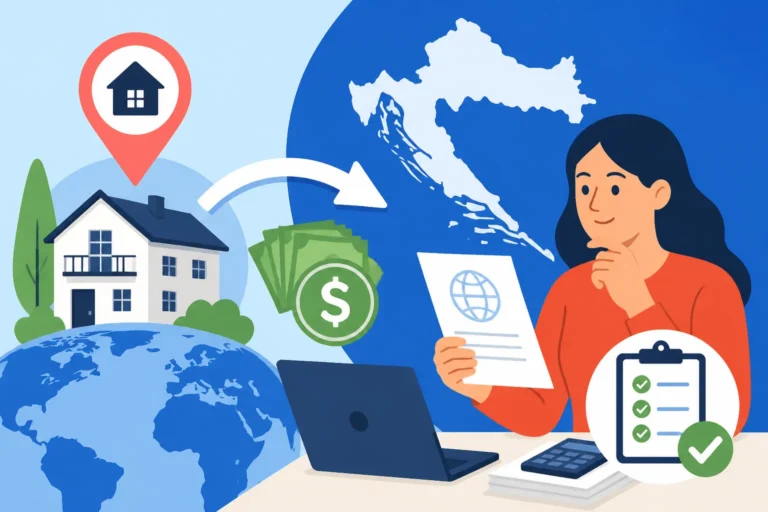
The key here is transparency. Banks want to understand the source and legitimacy of your funds. Be prepared to explain your financial situation clearly. If your income is coming from abroad, services like Wise can be incredibly helpful for moving funds to Croatia once your account is open, but for the initial proof of funds, they often want official bank statements from the originating country. This information also helps them classify you for various services and potential credit limits.
Special Cases and Additional Considerations
While the core documents are essential, certain situations might require additional paperwork or present unique challenges. It’s always best to be prepared for these nuances, especially if your circumstances deviate from a standard employment scenario.
Digital Nomads and Non-Residents: Can You Even Do It?
This is a frequently asked question, and the answer is… complicated, but generally possible. As a digital nomad in Croatia, you'll have a temporary residence permit specifically for digital nomads. This is your key. While it’s not an employment permit in Croatia, it does establish your legal residence. So, the process for you will largely mirror that of any other temporary resident: OIB, passport, and your digital nomad residence permit.
The main difference for digital nomads comes with the "proof of income" part. Since you're not employed by a Croatian company, you'll need to provide bank statements from your foreign bank account, demonstrating consistent income that meets or exceeds the digital nomad visa requirements. You might also need your foreign employment contract or proof of freelance client agreements. Banks like Zagrebačka Banka and PBZ are generally more accustomed to dealing with foreign clients, including digital nomads, but patience is still advised. For further details on this, you might find our guide Can I Use Public Healthcare in Croatia on a Digital Nomad Visa? helpful, especially as health insurance is also a key part of your legal stay.
For true non-residents (people without any form of Croatian residence permit, just visiting), opening a full bank account for daily transactions is typically not possible. Croatian banks are reluctant to open accounts for individuals who don't have a clear, legal link to the country through residency or business. You might be able to open a very basic, non-resident savings account in some niche scenarios, but for a current account with a debit card and online banking, residence is almost always a prerequisite. For those just visiting or transiting, a multi-currency account from a service like Wise or Revolut might be a more practical solution for managing Euros without a local Croatian bank account.
Self-Employed and Business Accounts: A Different Beast Entirely
If you're opening an Obrt or a d.o.o. in Croatia, you'll need two distinct types of accounts: a personal account (for your personal finances, salary, etc.) and a business account (for your company's income and expenses). The documents for a personal account remain the same, but for a business account, you'll enter a whole new administrative jungle.
For a business account, you'll typically need:
- Company registration documents: This includes your rješenje o upisu (decision on entry into the court register for a d.o.o.) or your obrtnica (trade license for an Obrt).
- OIB for the company: Yes, your company gets its own OIB!
- Your personal OIB and ID: As the owner/director.
- Proof of registered business address.
- VAT registration (if applicable): If you've registered for PDV (VAT), that document will be needed. Our guide on How to Register for VAT PDV in Croatia offers more insights into this.
The process for business accounts is often more involved, with more forms to fill out and potentially a longer approval time. Banks will want to see that your business is legitimately registered and compliant. It’s highly recommended to consult with an accountant when setting up a business in Croatia, as they can guide you through the banking requirements and ensure you have all the correct documentation from the start.
Minor Accounts and Joint Accounts
Opening an account for a minor (under 18) in Croatia requires the presence and identification of both parents or legal guardians, along with the child's birth certificate and OIB. The parents' ID and residence permits will also be necessary. It's essentially a proxy application where the parents are responsible for the account.
Joint accounts are possible for spouses or partners. Both individuals will need to be present and provide all the standard documents (ID, OIB, residence permit, proof of income). Some banks might ask for a marriage certificate or proof of life partnership to establish the relationship, though this isn't always strictly required if both parties are present and clearly stating their intention. Each bank has its own policy, so it's always best to call ahead and confirm their specific requirements for joint accounts.
The Process: What to Expect at the Bank
You’ve got your OIB, your residence permit, and a hefty stack of documents. Now what? The actual experience of opening a bank account in Croatia can be a mixed bag, but knowing what to anticipate can make it a smoother ride.
Choosing Your Bank: A Quick Overview of Options
Croatia has several prominent banks, and most will serve expats, but some have better English-speaking staff or more expat-friendly services. The largest and most commonly used banks include Zagrebačka Banka (often simply called 'Zaba'), Privredna Banka Zagreb (PBZ), Erste & Steiermärkische Bank (Erste), OTP Banka, and Raiffeisen Bank (RBA).
- Zagrebačka Banka (Zaba): Often seen as a market leader, good online banking, relatively modern.
- PBZ: Another major player, generally good service, a lot of branches.
- Erste: An Austrian bank, often has good English support, popular with some expats.
- OTP Banka: Growing presence, competitive offerings.
- Raiffeisen Bank (RBA): Another international bank with a strong Croatian presence.
When choosing, consider factors like branch proximity to your home or work, ATM network, online banking features (does it have an English interface?), and fees. It's worth visiting a couple of branches or checking their websites to compare. For a more detailed comparison, you can look into articles like Which Bank Is Best for Expats in Croatia?. Don't be afraid to ask about specific services important to you, like international transfers or multi-currency accounts, during your initial inquiries.
The Appointment and the Paperwork Marathon
Once you've chosen a bank, it's usually best to schedule an appointment, especially in larger cities like Zagreb or Split. While walk-ins are sometimes accommodated, an appointment ensures you get dedicated time with a representative, ideally one who speaks English if your Croatian isn't up to par yet. You can often book these appointments online or by calling the branch directly.
During the appointment, you'll present all your documents. The bank representative will meticulously review them, make copies, and input your data into their system. This is where your patience will truly be tested. There will be forms to sign – lots of them. You'll sign agreements for the account itself, for online banking, for your debit card, possibly for a mobile banking app, and various declarations related to anti-money laundering and tax residency. Don't be afraid to ask for explanations, especially if the forms are only in Croatian. Remember, once you sign, you're bound by the terms. This is particularly important for understanding any fees or charges associated with the account.
Many banks now also have a strong focus on "knowing your customer" (KYC) and international tax regulations. You'll likely be asked to declare your tax residency and potentially fill out forms like a W-9 (for US citizens) or provide your tax identification number from your home country, as per FATCA or CRS rules. This ties into ensuring compliance and avoiding issues with entities like 'Taxes for Expats' later on.
Post-Opening Steps: Cards, Online Banking, and Activation
After the initial paperwork marathon, you usually won't walk out with a working bank account immediately. Here’s what typically happens next:
- Debit Card Arrival: Your debit card will almost certainly be mailed to your registered Croatian address. This can take anywhere from a few days to a couple of weeks. It usually arrives in a plain envelope, separate from the PIN, which will follow in another mailing for security reasons. Keep an eye on your mailbox!
- PIN Activation: Once both the card and PIN arrive, you'll need to activate the card. This is often done at an ATM with your first transaction (e.g., checking your balance) or by following instructions in the letter.
- Online and Mobile Banking: During your initial appointment, you'll typically set up your online and mobile banking access. This usually involves receiving some initial login credentials, often via SMS or a separate letter. You might also be given a security token or a mobile app to generate codes for logging in or authorizing transactions. Make sure you fully understand how to activate and use these services before leaving the bank, as they are crucial for managing your finances.
- Initial Deposit: You might be required to make an initial deposit to activate the account fully. This can be done immediately at the bank counter or later via transfer if you're bringing funds from abroad. If you're transferring money from a foreign account, be mindful of transfer fees and exchange rates. Services like Wise can often offer better rates and lower fees for international money transfers compared to traditional bank wire transfers.
The entire process, from application to fully functional account with online banking and a debit card, can take anywhere from one to three weeks. Plan accordingly and don't leave it until the last minute if you need a Croatian bank account for urgent matters.
Summary of Key Documents
To make things easier, here's a quick reference table of the core documents you'll typically need to open a personal bank account in Croatia. Always bring the originals!
| Document Category | Specific Documents Typically Required | Notes |
|---|---|---|
| Identity Proof | Valid Passport (for non-EU citizens) | Original, not expired. |
| National ID Card (for EU citizens) | Original, not expired. Passport is always a safe alternative. | |
| Croatian ID | OIB (Osobni identifikacijski broj) | Your Croatian personal identification number. Absolutely mandatory. |
| Residence Proof | Temporary Residence Permit (Biometric Card/Certificate) | Issued by MUP (Ministry of Interior). Original document. |
| Income/Funds Proof | Employment Contract (Croatian employer) | If employed locally. |
| Foreign Bank Statements (3-6 months) | Showing consistent income or significant funds, especially for digital nomads or self-employed individuals with foreign clients. | |
| Business Registration Documents (Obrtnica/Rješenje o upisu) | If self-employed in Croatia. | |
| Pension Statements / Scholarship Letters | For retirees or students. | |
| Additional (Situational) | Marriage Certificate / Life Partnership Document | For joint accounts, if requested. |
| Foreign Tax ID number / W-9 form (for US citizens) | For compliance with international tax regulations. |
Remember, this isn't an exhaustive list for every single scenario, but it covers the vast majority of cases for expats. Being over-prepared is always better than under-prepared when dealing with Croatian banks.
Disclaimer
Please note that the information provided in this article is for general guidance only and is based on typical procedures at the time of writing. Banking regulations and requirements in Croatia can change, and individual bank policies may vary. It is always recommended to verify the most current requirements directly with your chosen bank or a legal/financial professional in Croatia before proceeding.