How to Register a Vehicle and Get Croatian Plates
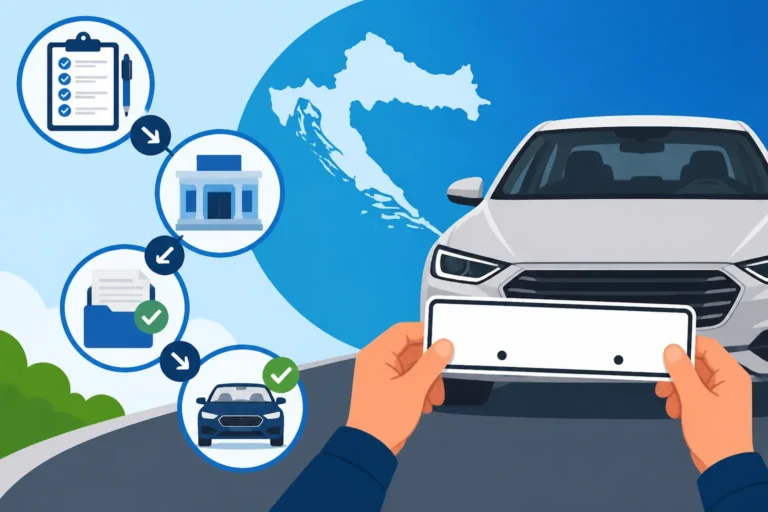
Moving to Croatia is exciting, but let's be real, the administrative stuff can feel like wading through treacle. One of the biggest head-scratchers for new arrivals, especially if you've brought your beloved car with you, is figuring out how on earth to register it and get those iconic Croatian plates. This guide is here to untangle that knot, walking you through every bewildering step from customs to your shiny new prometna dozvola.
Understanding the Initial Hurdles: Why Registering a Car in Croatia Can Feel Like a Marathon
Bringing your car to Croatia isn't just about driving it across the border. Oh no, my friend. Croatia, like many EU countries, has a meticulous (read: sometimes maddening) process to ensure every vehicle on its roads meets stringent standards and has paid its dues. For expats, this can feel particularly daunting because the system often assumes you already know the ropes, which, of course, you don't! It’s not simply a matter of swapping out a license plate; it's a full administrative and technical gauntlet. You're not alone if you feel a surge of panic just thinking about it. Many of us have been there, juggling papers and trying to translate technical terms while dealing with officials.
The Bureaucratic Maze for Foreigners
As a foreigner, the first hurdle is often establishing your right to even start this process. You need to have secured your residency in Croatia, because without it, the MUP (Ministry of Interior) won't even look at your application for vehicle registration. This means ensuring you have your privremeni boravak (temporary residence) or even stalni boravak (permanent residence) sorted. For many, this also ties into having a valid How to Get Your OIB and Why It Matters for Healthcare Access, which is your personal identification number and absolutely critical for any official dealings, including vehicle registration. The bureaucracy here thrives on interconnected systems, so if one piece is missing, the whole puzzle grinds to a halt. You might find yourself running between different offices, each asking for a document that you thought the last office was supposed to give you. It's a dance, and sometimes you feel like you've got two left feet.
Key Documents You'll Need to Gather
Before you even think about setting foot in a Stanica za tehnički pregled (STP – Technical Inspection Station) or the MUP, you need a veritable mountain of paperwork. The exact list can vary slightly depending on whether your car is from an EU country or a non-EU country, and whether it’s new or used, but a core set of documents is always required. This usually includes your passport and residence permit, proof of OIB, and the original vehicle documents from your home country – think registration certificate (both parts if applicable), proof of ownership, and possibly a certificate of conformity (CoC) if it’s an EU vehicle. If you're coming from a non-EU country, you'll also need customs documentation. It’s highly advisable to make multiple copies of everything, both physical and digital. Trust me, you'll thank yourself later when an official asks for "just one more copy" of something you only printed once. Keeping your phone charged with data, perhaps with a local eSIM from a provider like Airalo, can be a lifesaver for quickly looking up terms or finding addresses when you’re out and about.
The Step-by-Step Process: Importing Your Vehicle to Croatia
So, you've decided to bring your car. Great! Now comes the actual importation. This stage is particularly complex for those bringing vehicles from outside the EU, but even intra-EU vehicle transfers have their specific checks. The goal is to formally introduce your vehicle into the Croatian system, making it legal to even contemplate driving it here long-term.
Customs Clearance and Paying Duties/VAT
For vehicles arriving from outside the EU, this is your first major hurdle. Your car must go through customs clearance, which means paying any applicable customs duties and Value Added Tax (VAT). The amount depends on the vehicle's value, age, and origin. You'll need to work with a customs broker, or the process will become an absolute nightmare. They will guide you through submitting the necessary declarations and ensure all taxes are paid. This is where you'll be faced with the real costs of bringing a non-EU car. You'll often hear stories of expats underestimating these costs, so do your research beforehand! For those moving personal belongings, including a vehicle, from outside the EU, some exemptions may apply under specific conditions (e.g., if you've owned the car for at least six months and are transferring your normal residence). However, proving eligibility for these exemptions can be another paperwork-heavy task. If you used a professional moving service like Sirelo to transport your car, they might offer assistance or advice on this step.
Getting Your Vehicle Certified for Croatian Roads (Homologation)
This is a crucial, and often frustrating, step. Homologation (or conformity assessment) is the process of verifying that your imported vehicle meets Croatian (and thus EU) technical standards.
For vehicles from EU countries, if your car has a valid European Certificate of Conformity (CoC), this process is generally simpler. You’ll usually just need to present this document at the STP. However, for vehicles from non-EU countries, or older EU vehicles without a CoC, it gets tougher. You'll likely need to undergo a full individual approval process, which involves a detailed technical inspection and verification of numerous components, from lights to emissions. This might mean getting an expert opinion, sometimes even modifying your vehicle to meet local standards. This can be time-consuming and costly, potentially requiring replacement parts. The STP technicians will meticulously check everything against Croatian regulations, and if anything doesn't match up, you'll need to rectify it before proceeding. This step often surprises expats with its thoroughness and potential for unexpected expenses.
The Technical Inspection (Tehnički Pregled): Your Vehicle's Health Check-Up
Once your vehicle has cleared customs (if applicable) and had its initial conformity checks, it’s time for its official Croatian tehnički pregled. Think of this as the ultimate health check-up for your car, ensuring it's roadworthy and safe for Croatian roads. This is an annual requirement for all vehicles in Croatia, but your first one is extra special because it's part of the initial registration.
What the Technical Inspection Entails
The technical inspection is a comprehensive examination of your vehicle's mechanical and safety components. This includes brakes, steering, suspension, lights, tires, exhaust system, and emissions. They’ll also check your vehicle identification number (VIN) against your documents, and ensure all safety equipment (first aid kit, reflective vest, warning triangle, spare tire or repair kit) is present and correct. For many expats, this is the moment of truth. The technicians are thorough, and they speak Croatian, which can add another layer of complexity if your language skills aren't up to snuff. Don't be shy about bringing a Croatian-speaking friend or asking the STP if they have English-speaking staff, though it's not guaranteed. The goal here is to get the "green light" – a certificate confirming your car has passed and is ready for registration.
Here's a simplified checklist of what's typically inspected:
| Component Category | Key Checks | Potential Issues for Expats |
|---|---|---|
| Documents | Original registration, ownership, CoC, OIB, ID | Missing CoC for non-EU cars, incorrect names |
| Safety Equipment | First aid kit, reflective vest, warning triangle, spare tire/kit | Foreign kits may not meet Croatian standards |
| Lights & Electrics | Headlights, tail lights, indicators, horn, battery | Incorrect beam pattern (left/right drive cars) |
| Brakes | Condition of pads, discs, lines, brake fluid, handbrake | Wear and tear from driving, fluid levels |
| Tires | Tread depth, condition, pressure, correct size | Worn tires, incorrect tire type for season |
| Chassis & Suspension | Rust, damage, shock absorbers, springs | Road damage, age-related wear |
| Engine & Exhaust | Fluid leaks, exhaust leaks, emissions levels | High emissions, engine warning lights |
| Interior | Seatbelts, dashboard warnings, mirrors, wipers | Non-compliant child seats (if applicable) |
| VIN Number | Match with documents, physical location | Illegible VIN, inconsistencies in paperwork |
Addressing Common Issues and Preparing Your Vehicle
It's not uncommon for vehicles, especially older ones or those from different climates, to fail their first technical inspection on some minor point. Common reasons include worn tires, non-compliant headlights (especially if your car is from a country that drives on the left and you haven't adjusted them for right-hand traffic), high emissions, or even just missing safety equipment. It’s always a good idea to have your car serviced by a trusted mechanic before the tehnički pregled. They can often spot potential issues that would lead to a failure, saving you the hassle of a re-inspection. Make sure your car is clean, inside and out. While it might seem trivial, a tidy vehicle gives a better impression. And definitely double-check your safety kit – a proper first aid kit (komplet prve pomoći), a reflective vest (reflektirajući prsluk), and a warning triangle (sigurnosni trokut) are absolute must-haves. If your car doesn't have a spare tire, you must have a tire repair kit.
Insurance and Registration Fees: Understanding the Costs Involved
Once your vehicle has passed its tehnički pregled, you’re past the biggest technical hurdle. Now, it’s all about making it official and paying the necessary fees. As an expat figuring out the cost of living in Croatia, understanding these recurring expenses is key. These aren't just one-off payments; some are annual, so factor them into your budget.
Mandatory Traffic Insurance (Obvezno Osiguranje)
Before your vehicle can be registered and issued Croatian plates, you absolutely must have valid traffic insurance (obvezno osiguranje). This is third-party liability insurance, mandatory for all vehicles on Croatian roads, covering damages you might cause to other vehicles or individuals in an accident. You can choose from various insurance providers, such as Croatia Osiguranje, Allianz, Generali, or Triglav. It’s worth shopping around to compare prices, as they can vary. Factors like the vehicle's engine size, age, and your driving history will influence the premium. Some companies might offer a discount if you’ve had no claims in your previous country, but you’ll need to provide proof of this, usually a letter from your previous insurer translated into Croatian. This step is usually done at the STP directly after passing the technical inspection, as most STPs have insurance agents on site or affiliated with them. They will issue you an insurance policy instantly, which is required for the final registration.
Road Tax and Administrative Fees
Beyond the insurance, there are several fees you'll need to pay to get your Croatian plates and prometna dozvola. These include:
- Road Tax (Cestarina or Naknada za ceste): This is an annual tax based on your vehicle's engine power (in kW).
- Special Vehicle Tax (Porez na cestovna motorna vozila): This is typically paid upon first registration and depends on the age and type of the vehicle.
- Administrative Fees (Upravne pristojbe): These cover the cost of issuing your registration document, plates, and other bureaucratic services.
- Fees for Technical Inspection: The cost of the tehnički pregled itself.
- Ecology Tax (Naknada za okoliš): A small fee related to environmental impact.
These fees are generally paid directly at the STP on the day of registration. They can add up, so be prepared for a significant outlay. For a clear picture of all the potential financial implications of owning a car, you might find it useful to compare with broader discussions on The Cost of Healthcare in Croatia: A Complete Breakdown for Foreigners (2026) or The Complete Guide to Taxes in Croatia for Expats (2027) to understand how different expenses fit into your overall budget here.
Getting Your Croatian Plates and Registration Document (Prometna Dozvola)
You're almost there! With the technical inspection passed and all fees paid, the final stage is getting your official Croatian identification for your vehicle. This is the moment you've been waiting for: when your car officially becomes a Croatian resident.
The Final Visit to the MUP/STP
The actual issuance of your vehicle's registration document (prometna dozvola) and license plates happens at the Stanica za tehnički pregled (STP), which acts as a proxy for the MUP for this process. After all the checks and payments are complete, the STP staff will process your application electronically. They will then hand you your new Croatian license plates and the prometna dozvola. This document is your car's ID card, containing all essential information about the vehicle and its owner. Make sure all the details on it are correct before you leave. This is where your Registering Your Residence in Croatia: The Complete MUP Guide and How to Get a Biometric Residence Card (Boravišna Iskaznica) in Croatia become critical, as your personal details on the vehicle registration must perfectly match your official residence records.
It’s a truly satisfying moment when you finally peel off those old plates and screw on the new Croatian ones! Don’t forget to properly dispose of your old plates according to the regulations of your previous country.
Understanding Your New Croatian Vehicle Documents
Your prometna dozvola is a small, usually pink or green, multi-page booklet. It includes details such as:
- Owner Information: Your name, address, and OIB.
- Vehicle Information: Make, model, year of manufacture, VIN, engine size, fuel type, number of seats.
- Technical Specifications: Weight, dimensions, tire sizes, emissions data.
- Registration Details: Date of first registration, license plate number, date of next technical inspection.
It's absolutely vital to keep this document safe and always carry it with you when driving. It serves as legal proof that your vehicle is registered and compliant. Losing it can lead to hefty fines and a bureaucratic headache to replace. Along with your driver's license (which you might be in the process of exchanging, see How to Exchange Your Foreign Driving Licence in Croatia) and proof of insurance, it’s one of the three documents you must present if stopped by the police.
Special Scenarios and Common Expat Questions
The general process covers most situations, but naturally, expat life throws up some unique twists. It's helpful to be aware of these common questions and specific scenarios that might arise during your vehicle registration journey in Croatia.
Registering a Newly Purchased Croatian Vehicle
If you decide to buy a car already registered in Croatia, the process is considerably simpler than importing one. When you purchase a used vehicle from a private seller, you’ll usually complete the transfer of ownership at a notary public (or sometimes directly at the STP). You’ll need the seller’s vehicle documents, your ID and OIB, and proof of payment. The notary will officially record the sale, and then you’ll take these documents to the STP. There, you'll pay the vehicle transfer tax (a percentage of the vehicle's value, which can be found in a table issued by the Ministry of Finance) and any administrative fees, get a new prometna dozvola issued in your name, and potentially new plates if you want a custom number or if the previous ones were damaged. For brand new vehicles purchased from a Croatian dealership, they will usually handle most of the initial registration paperwork for you, often including the tehnički pregled and arranging insurance. This is definitely the path of least resistance for many new arrivals!
Temporary Plates and Driving Permits
What if you've just arrived with your car and need to get around before you've completed the full registration? This is where temporary plates and permits come in. If you've driven your car into Croatia from another country, you typically have a grace period (often 15 or 30 days) during which you can drive on your foreign plates, provided your foreign insurance is valid (e.g., Green Card system for EU/EEA countries). However, for a longer period, or if your foreign plates/insurance are expiring, you might need to apply for temporary Croatian plates (probne tablice) and a temporary driving permit (potvrda o registraciji vozila). These are issued by the MUP or an STP for a limited time, usually 30 days, and are intended to allow you to complete the full registration process or move the vehicle. You'll need proof of ownership, a valid ID, and sometimes proof of temporary insurance. It’s crucial not to overstay your welcome with foreign plates without taking steps towards Croatian registration, as penalties can be severe. Always check the current regulations with the MUP, as rules can change. This can feel like a tricky interim period, but remember to stay connected to resources like those found on Navigating the Croatian Healthcare System: An Expat's Roadmap (2027) for essential information while you're sorting out your vehicle.
Navigating the waters of vehicle registration in Croatia is undeniably complex, but with patience, preparation, and this guide in hand, you’ll soon be cruising the beautiful Croatian roads with confidence.
Disclaimer
Please note that while this guide aims to provide comprehensive and up-to-date information, regulations in Croatia can change. It is always recommended to verify the latest requirements with the official Croatian authorities (MUP, STP, Porezna Uprava) or consult with a local expert before making any decisions.