How Do I Enrol My Child in School in Croatia?
Alright, let's talk about one of the biggest hurdles when you arrive in Croatia with kids: getting them settled into school. I know, you’re probably picturing endless forms, language barriers, and that all-too-familiar feeling of not knowing where to start. But trust me, while it can be a bit of a labyrinth, it’s entirely navigable. This guide is here to walk you through the nitty-gritty of enrolling your child in school in Croatia, whether you're eyeing public, private, or international options, giving you a clear roadmap to navigate the system with a bit more confidence.
Understanding Croatia's Education System for Expats
Before you even start filling out forms, it’s really helpful to get a grip on how the Croatian education system is structured. It's probably quite different from what you're used to back home, and knowing the basics will save you a lot of headaches later on. We're talking about more than just finding a school; it's about understanding the culture of learning here.
Public, Private, or International: What's the Best Fit?
This is often the first big decision expat parents face, and there’s no one-size-fits-all answer. Each option has its own set of pros and cons, and what works for one family might not work for another.
Public Schools (Javne Škole)
Public schools are, naturally, the most common choice for Croatian families. They are tuition-free and follow the national curriculum. For your child, this means full immersion into the Croatian language and culture, which can be an amazing way for them to really integrate and make local friends. However, it also means that if your child doesn't already speak Croatian, there will be a significant initial hurdle. While some schools offer supplementary Croatian language classes (dopunska nastava hrvatskog jezika) for foreign students, the availability and quality can vary wildly between institutions and cities. Expect homework and classroom instruction to be entirely in Croatian. It's a steep learning curve, but many children, especially younger ones, adapt incredibly quickly. For parents, navigating communication with teachers and the school administration will often require some Croatian language skills or the help of a translator.
International Schools
For many expat families, international schools are the go-to. They typically follow an international curriculum (like the International Baccalaureate, American, or British curriculum), teach in English (or another major world language), and cater specifically to a diverse student body. The biggest draw is that your child can continue their education in a familiar language and often a pedagogical style closer to what they've experienced before. This can significantly ease the transition, especially for older children or those who might only be in Croatia for a few years. However, these benefits come at a cost – international schools are private institutions, and their tuition fees can be substantial. For example, in Zagreb, you'll find options like the American International School of Zagreb or the British International School of Zagreb, both popular among the expat community. If you're considering this route, I highly recommend checking out "Understanding International Schools and Their Costs in Croatia" for a detailed breakdown.
Private Croatian Schools
These are less common for expats, but they do exist. Private Croatian schools also follow the national curriculum but often offer smaller class sizes, specialized programs, or a particular religious affiliation. They are a paid option, but generally less expensive than international schools. The primary language of instruction is still Croatian, so the language immersion challenge remains, but you might find more individualized support here than in some larger public schools.
Age and Grade Levels: What to Expect
The Croatian education system is mandatory from age 6 or 7, starting with primary school.
- Kindergarten (Vrtić): This isn't mandatory, but many children attend from age 1 to 6. There are public and private kindergartens, with varying costs and availability. Some public kindergartens have long waiting lists, especially in larger cities like Zagreb or Split.
- Primary School (Osnovna Škola): This lasts for eight years, typically for children aged 6/7 to 14/15. It's divided into two cycles:
- Lower Primary (Razredna Nastava): Grades 1-4, where students usually have one main teacher for most subjects.
- Upper Primary (Predmetna Nastava): Grades 5-8, where students switch between different subject teachers, much like middle school.
- Secondary School (Srednja Škola): This is for ages 14/15 to 17/18 and typically lasts three or four years. There are various types, including grammar schools (gimnazija), vocational schools (strukovne škole), and art schools. Admission to secondary schools usually depends on primary school grades and sometimes entrance exams.
For expat children, the grade level they enter will generally align with their age and previous schooling. However, schools might conduct an assessment to determine the best fit, especially if there’s a significant language barrier or differences in curriculum.
The Language Barrier and Support Options
This is probably the biggest elephant in the room for many expat parents. Moving to a new country and starting school in a new language is a huge undertaking for a child, and for you, too! The good news is, children are incredibly resilient and soak up languages like sponges.
As I mentioned, some public schools do offer supplemental Croatian language classes, known as dopunska nastava hrvatskog jezika. This usually involves a few extra hours a week dedicated to helping foreign students get up to speed. However, don't assume every school offers it, and the quality and intensity can differ. It's something you absolutely need to inquire about directly with the school during the enrollment process.
For those considering public schools, it's a good idea to start exposing your child to Croatian phrases and basic vocabulary before they even start. Apps, cartoons, and simple storybooks can make a big difference. Many expat families also opt for private Croatian tutors to accelerate their child’s language acquisition, particularly during the first year. Don't forget, there are also formal Croatian language courses available for both children and adults; "Learning Croatian: A Complete Guide to Language Courses and Levels" might be a helpful read.
The Step-by-Step Process for Enrolling in Public Schools
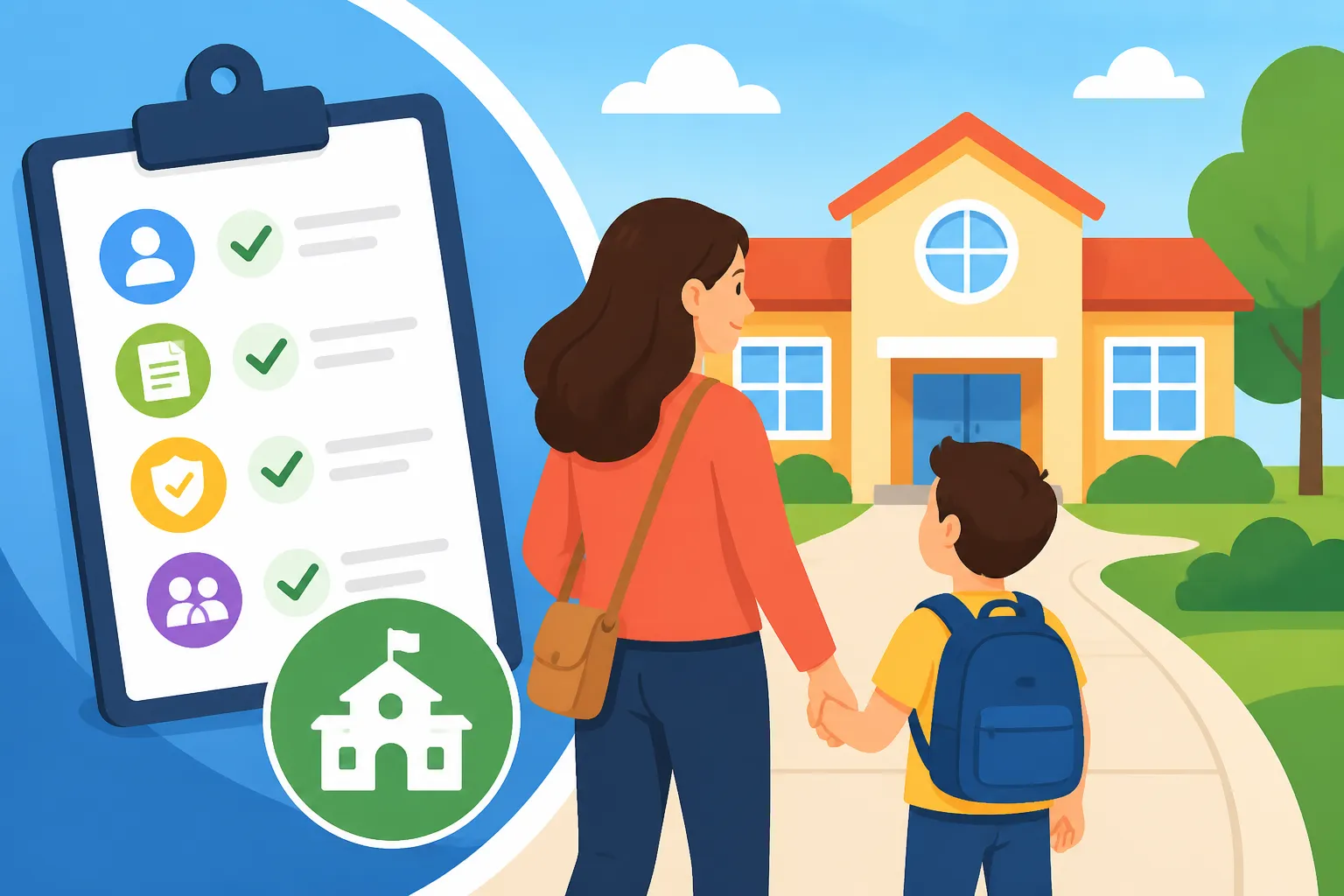
Let's dive into the practical steps for getting your child into a Croatian public school. This is where the bureaucracy often kicks in, but having a checklist makes it much more manageable. Just remember to breathe, and don't be afraid to ask for help!
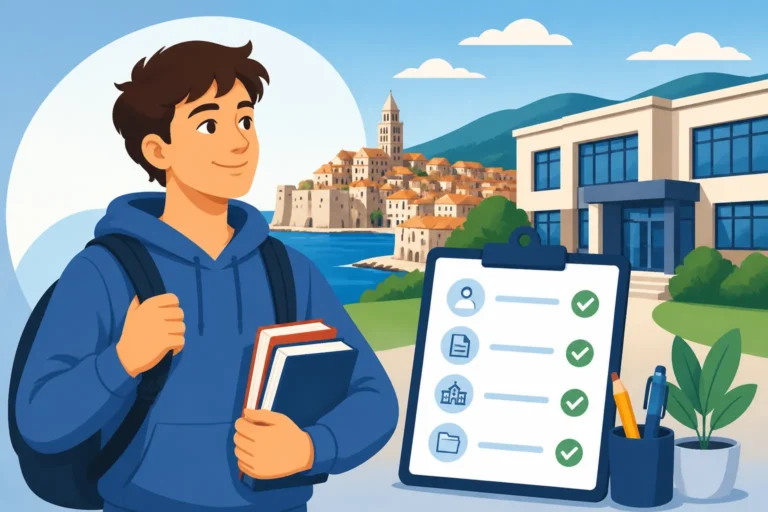
Gathering Essential Documents
The golden rule of Croatian administration: if you think you need a document, you probably do, and then some. Start gathering these well in advance, as some can take time to procure.
- OIB (Personal Identification Number): This is Croatia's equivalent of a social security number or tax ID. Both you and your child will need one. Without it, you can't do much in Croatia, including enrolling in school. If you don't have it yet, "How to Get an OIB (Personal Identification Number) in Croatia" provides all the details.
- Proof of Residence (Potvrda o Prebivalištu/Boravište): The school your child attends will be determined by your registered address. You'll need to prove your legal residence in Croatia, which typically means your residence permit (boravišna iskaznica) and a certificate of residence from the MUP (Uvjerenje o prebivalištu). This is critical, as public schools are usually assigned based on your upisno područje (enrollment zone). Make sure your address is properly registered with the police, as outlined in "Registering Your Residence in Croatia: The Complete MUP Guide".
- Child's Birth Certificate (Rodni List): You'll need an official, often apostilled or translated, copy.
- Previous School Records/Transcripts: While not always strictly required for primary school enrollment, having these translated can be helpful for the school to understand your child's academic background and determine appropriate placement, especially for older children.
- Proof of Health Insurance: Your child will need valid health insurance. If you're registered with HZZO (the public health insurance fund), you’ll provide proof of that. "The Complete Guide to Healthcare in Croatia for Expats" can help clarify this.
- Photocopies: Always, always bring multiple copies of everything. Just trust me on this.
Finding Your Local School (Škola)
Public schools are zoned, meaning your child will attend the school assigned to your specific residential address. You can't just pick any school you fancy, unless you have a very compelling reason and the school agrees to accept an out-of-zone student (which is rare).
- Contact your local Upravni odjel za obrazovanje (Administrative Department for Education): This is typically part of your city or county government. They can tell you which primary school your address is zoned for. A quick online search for "Upravni odjel za obrazovanje [Your City/County]" should lead you to their contact information.
- Visit the School Directly: Once you know your zoned school, it’s best to make an appointment to speak with the principal (ravnatelj) or school secretary (tajnik/tajnica). This is your chance to introduce yourself, explain your situation as an expat family, and inquire about the enrollment process for foreign children, including any available language support. Don't be surprised if communication requires a bit of patience or Google Translate if your Croatian isn't up to scratch yet.
The Registration and Medical Check-up
Enrollment into public primary school (upis u prvi razred osnovne škole) typically happens in late spring (around April-May) for the following school year, which starts in early September. For older children transferring mid-year or to higher grades, the process is usually more flexible but still requires contacting the school directly.
- Pre-Enrollment Assessment: For first-graders, there’s usually a mandatory pre-enrollment assessment that checks the child's readiness for school. This might include psychological, pedagogical, and sometimes speech therapy assessments. This isn't an "entrance exam" to determine if your child is smart enough, but rather to identify any potential learning needs or areas where they might need extra support. If your child doesn't speak Croatian, the assessors will be aware of this and focus on non-verbal communication and cognitive development.
- Mandatory Medical Examination: All children enrolling in primary school must undergo a mandatory medical examination with a school doctor (školski liječnik). This is usually done at a local Dom Zdravlja (health centre) or a dedicated school medicine department. The doctor will check your child's overall health, vaccination status, vision, hearing, and provide a medical certificate of fitness for school. It’s part of "The Complete Guide to Healthcare in Croatia for Expats", so make sure your child’s health records are in order. You'll likely need to call and schedule this appointment yourself, and again, be prepared for potential language challenges.
- Formal Enrollment: Once these assessments and examinations are completed and you have all your documents, the school will guide you through the final registration. You'll fill out official forms, present your child's OIB, birth certificate, proof of residence, and the medical certificate.
Croatian Language Support
As mentioned earlier, dopunska nastava hrvatskog jezika is the formal support for non-native speakers. It's crucial to confirm during your initial contact with the school whether they offer this. If they do, inquire about:
- Schedule and Frequency: How often are the classes? Are they during regular school hours or after?
- Curriculum: What is taught? Is it focused on conversational Croatian, grammar, or academic language?
- Teacher Qualifications: Are the teachers specifically trained in teaching Croatian as a second language?
If your local public school doesn't offer adequate support, or if your child is struggling, seriously consider private tutoring. Many expat parents find this to be an invaluable investment in their child's successful integration. Finding an English-speaking GP, or even a local language tutor, can often be facilitated by connecting with other expat parents in the area. Initial communication in a new country can be tricky, but getting an eSIM from a provider like Airalo can make sure you're connected right from the moment you land, making it easier to arrange those crucial first appointments and translations.
Considering International and Private Schools
While public schools offer a truly immersive experience, international and private schools can provide a softer landing, particularly for older children or those with specific educational needs.
Advantages and Disadvantages
Advantages:
- Language of Instruction: Primarily English or another major world language, eliminating the immediate language barrier.
- Familiar Curriculum: Often follows international standards (IB, American, British) which can ease transitions between countries.
- Diverse Student Body: Your child will be surrounded by children from various cultures, fostering a global perspective.
- Resources and Facilities: Tend to have excellent facilities, a wider range of extracurricular activities, and sometimes smaller class sizes.
- Easier Parent Communication: Staff are usually fluent in English, making communication much simpler for expat parents.
Disadvantages:
- Cost: Tuition fees can be very high, making them inaccessible for some families.
- Limited Immersion: While they may offer Croatian language classes, the overall immersion into Croatian culture and language will be less intense than in a public school.
- Location: International schools are primarily found in Zagreb and, to a lesser extent, Split. If you live elsewhere, this might not be an option.
- Potential for "Expat Bubble": While diverse, your child might primarily interact within an expat community, potentially limiting deeper connections with local Croatian culture and people.
Application Process and Costs
The application process for international and private schools is generally more straightforward than public schools, though it still requires diligent document submission.
- Research and Shortlist: Look into the schools available in your area (mainly Zagreb and Split). Check their curricula, ethos, facilities, and accreditations.
- Contact Admissions: Reach out to the admissions office of your chosen schools. They will provide you with their specific application forms, document requirements, and deadlines. It’s usually a far more streamlined process, often entirely in English.
- Required Documents: Typically includes your child's birth certificate, previous school records (translated), vaccination records, a copy of your child’s passport, and potentially a parent statement or recommendation letters.
- Assessments/Interviews: Many international schools require an entrance assessment or interview with the child to ensure they are a good fit for the school's program and to determine their academic level.
- Tuition and Fees: Be prepared for tuition fees, application fees, and sometimes additional charges for things like school trips, uniforms, or specialized programs. These can range from a few thousand Euros to upwards of €20,000 per year, depending on the school and grade level. Always ask for a full breakdown of all costs. "How Much Does Private Health Insurance Cost in Croatia in 2026?" might be a helpful read to compare with other potential private costs.
Practical Tips and Common Challenges
Moving and settling your family into a new country is a huge undertaking. Here are some extra tips and things to prepare for, based on what many expats experience here.
Dealing with Bureaucracy and Translation
This is Croatia, folks. Bureaucracy is a way of life. Forms, certificates, stamps – it's all part of the charm.
- Patience is Key: Things might not move as fast as you're used to. Adopt a patient mindset.
- Get Everything Translated by a Certified Translator: For official documents like birth certificates or school transcripts, you'll often need a certified court translator (sudski tumač). Don't try to save money by doing it yourself; official bodies rarely accept non-certified translations.
- Be Over-Prepared with Documents: Bring the originals and several copies of everything. It's always better to have too many documents than to be sent home for one missing piece of paper.
- Bring a Croatian Speaker: If you're not confident in your Croatian, bring a friend, a hired translator, or a patient colleague with you to important meetings at the MUP, Dom Zdravlja, or school administration. It makes a world of difference. When you're first moving and dealing with these complexities, having your belongings handled by a reliable international moving service like Sirelo can free up your mental space to focus on these administrative tasks.
Connecting with Other Expat Parents
One of the best resources you'll find is other expat parents who have already gone through this process.
- Online Groups: Join expat groups on Facebook (e.g., "Expats in Croatia," specific city groups like "Expats in Zagreb"). Ask questions, share experiences, and seek recommendations. You'll find a wealth of information and support there.
- School Community: If you choose an international school, their parent-teacher associations are a great way to meet other international families. Even in public schools, try to connect with other parents during drop-off or pick-up.
- Embassies/Consulates: Your country's embassy or consulate in Croatia might also have resources or connect you with local expat networks.
Getting Ready for the School Year
The school year in Croatia typically starts in the first week of September and ends in mid-June, with breaks for winter and spring holidays.
- School Supplies: The school will provide a list of required supplies (notebooks, pens, textbooks, etc.). These are readily available at bookstores (knjižare) and supermarkets. Textbooks for public schools are often free or heavily subsidized by the government.
- Communication: Find out how the school communicates with parents – usually through an online portal (e-Dnevnik for grades 1-8, or a similar system for high school), notices, or direct communication with teachers. For digital communication, having a reliable internet connection is key, so check out "How to Set Up Internet at Home in Croatia".
- Extracurriculars: Many public and international schools offer a variety of extracurricular activities (sports, music, art, chess, etc.). Encourage your child to participate to make friends and integrate.
| Step | Public Schools (Osnovna Škola) | International/Private Schools |
|---|---|---|
| Finding a School | Zoned by residence. Contact Upravni odjel za obrazovanje for assignment. | Research schools online (e.g., American International School of Zagreb, British International School of Zagreb), contact admissions directly. |
| Key Documents Needed | Child's OIB, Proof of Residence (MUP certificate), Birth Certificate (translated/apostilled), Previous School Records (optional, translated), Health Insurance Proof, Medical Certificate. | Child's Passport, Birth Certificate (translated), Previous School Records (translated), Vaccination Records, Application Form, Recommendation Letters (sometimes), Parent Statement. |
| Enrollment Timeline | First Grade: Pre-enrollment assessment & medical check in late spring (April-May). Formal enrollment in May-June for September start. | Rolling admissions, but best to apply well in advance (6-12 months before desired start date). |
| Language of Instruction | Croatian. Supplementary Croatian classes (dopunska nastava) might be available. | Primarily English (or other major world language). |
| Cost | Tuition-free (textbooks often subsidized). | Significant tuition fees (€5,000 – €20,000+ per year), plus application, registration, and activity fees. |
| Medical Requirement | Mandatory school doctor examination (školski liječnik) for fitness and vaccination status. | Usually require current medical/vaccination records from your home country. |
| Key Challenges | Language barrier, navigating local bureaucracy, finding specific information. | High cost, potentially less cultural immersion. |
| Recommended Support | Private Croatian tutoring, expat parent groups, certified translator. | Engage with school's expat community, ensure continued cultural exposure outside school. |
Navigating the school system in Croatia can be a bit of a journey, but it's a rite of passage for expat families here. With a little preparation and a lot of patience, your children will be settled in and thriving before you know it. Welcome to the adventure!
Disclaimer
Please note that while I strive to provide accurate and up-to-date information, administrative procedures and regulations in Croatia can change. It is always recommended to verify specific requirements with the relevant local authorities, such as the Ministry of Science and Education, your local Upravni odjel za obrazovanje, and the specific school you are interested in. This guide is for informational purposes only and does not constitute legal advice.