Can I Rent an Apartment in Croatia Without an OIB?
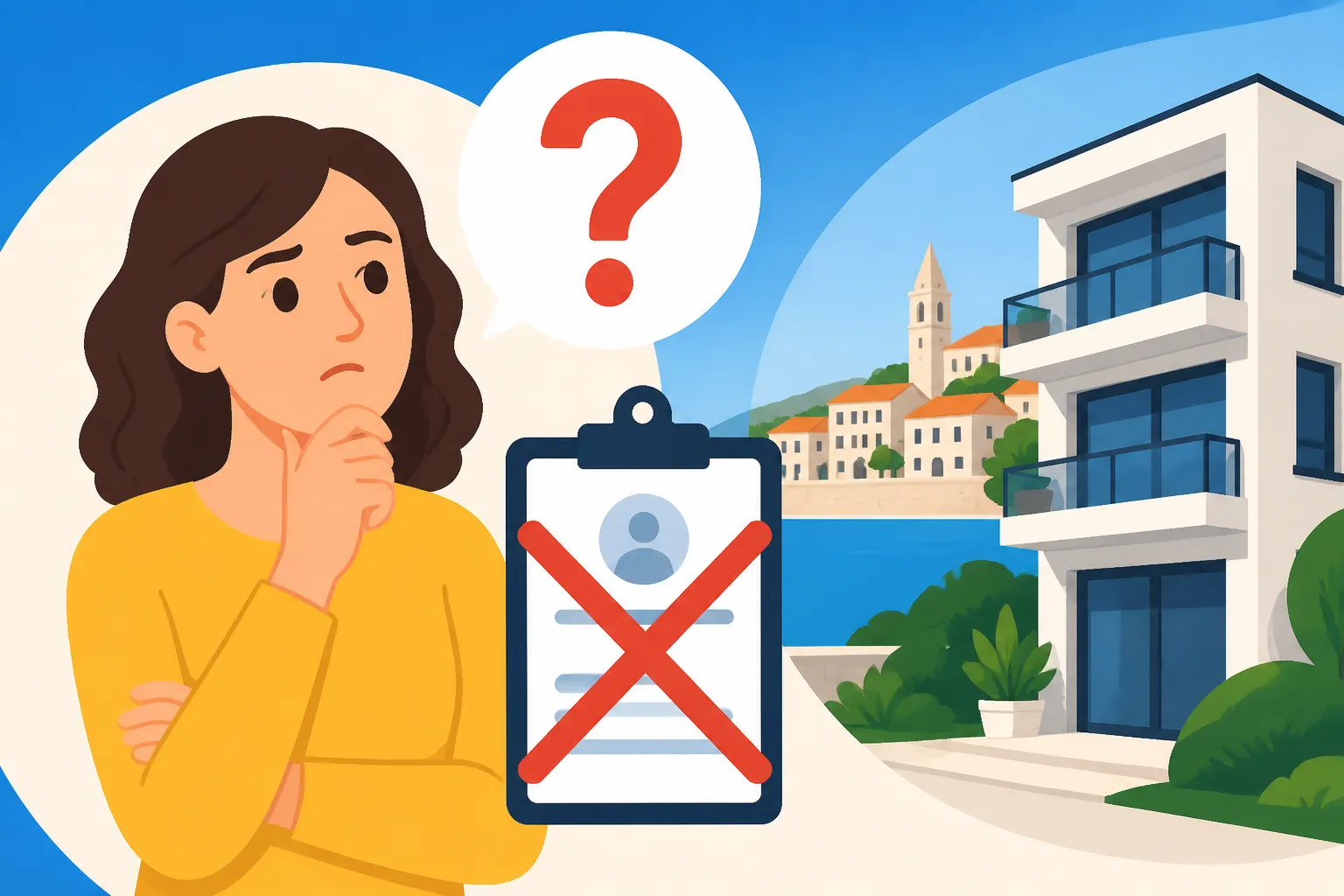
Moving to Croatia is an adventure, but let’s be honest, it often feels like an administrative obstacle course designed to test your patience. One of the biggest head-scratchers newcomers face is the seemingly endless loop: you need an OIB to do anything, but sometimes you need to do something (like rent an apartment) to get an OIB. This guide is here to untangle that very specific knot, offering practical advice and realistic expectations for securing your home in Croatia, especially in those initial, OIB-less days.
The OIB: Croatia's Ubiquitous (and Essential) Identification Number
If you’ve spent any time researching a move to Croatia, you’ve undoubtedly encountered the term "OIB." It's one of those acronyms that quickly becomes central to your entire existence here, and without it, you'll feel like you're constantly hitting a brick wall.
What Exactly Is an OIB and Why Is it So Important?
The OIB, or Osobni identifikacijski broj, translates to Personal Identification Number. Think of it as your unique tax identification number, social security number, and all-purpose government ID rolled into one. It's an alphanumeric code assigned to every natural person and legal entity in Croatia, serving as the primary identifier for almost all official transactions. From the moment you step foot on Croatian soil with the intention of staying, the OIB will be requested for everything from opening a bank account to registering for healthcare, paying taxes, and yes, even securing a long-term rental.
The reason it’s so critical for renting is that rental agreements, by law, must be registered with the Croatian Tax Administration (Porezna Uprava). This isn’t just a formality; it ensures the landlord declares their income and the tenant’s residency status can be officially recorded. Without an OIB, you, the tenant, don’t officially exist in their system, making legal registration of a long-term lease nearly impossible for the landlord. This legal requirement protects both parties and ensures compliance with tax laws, which is why most legitimate landlords and agencies won't even entertain a long-term lease without it.
The Catch-22: Needing an OIB to Get Anything Done, But How Do You Get One?
Ah, the classic expat conundrum! Many foreigners arrive in Croatia expecting to secure housing first, then sort out their ID numbers. However, the system often feels reversed. You need an OIB for a legally binding lease, but sometimes you need a temporary address to even apply for certain residence permits which then lead to the OIB. It can feel like you're running in circles, and believe me, many of us have been there, pulling our hair out in frustration. It's a rite of passage, almost.
Thankfully, obtaining an OIB itself is usually one of the more straightforward administrative tasks in Croatia. You generally apply for it at a local Tax Administration office, presenting your passport or another form of identification. For many residence permit applications, the OIB is actually processed as part of the residence application by the police (MUP). This means you might not even need to visit the Porezna Uprava yourself, as it will be issued automatically once your residence permit is approved. This process is crucial, and you can get a more detailed look at the steps in our guide on How to Get an OIB (Personal Identification Number) in Croatia. It’s typically among the very first things you sort out, right alongside applying for your initial residence.
Navigating the Rental Market Without an OIB: Realities and Workarounds
So, you’ve just arrived, or you’re planning your move, and you don’t have an OIB yet. What are your actual options when it comes to finding a place to live? The honest answer is that for a legally registered long-term rental, it’s extremely difficult, bordering on impossible. But don’t despair; there are nuances and temporary solutions.
The Official Stance: Why Landlords and Agencies Prefer an OIB
As mentioned, Croatian law dictates that all long-term rental contracts must be registered with the Porezna Uprava. This is not just a landlord's preference; it's a legal obligation. When a landlord registers a contract, they declare the rental income, which then becomes subject to tax. Simultaneously, the tenant's OIB is recorded, linking them to that address for various purposes, including residency registration with the MUP (Ministry of Interior).
If a landlord doesn't register the contract, they are operating "under the radar," which carries significant risks for them in terms of fines and legal repercussions. More importantly for you, if your rental contract isn't registered, you won't be able to officially register your address (prebivalište or boravište) with the MUP. This is a critical step for obtaining or extending your residence permit, accessing healthcare, and basically living legally in Croatia. Any reputable real estate agency will also insist on an OIB for this very reason, as they are facilitating a legal transaction.
The Short-Term vs. Long-Term Distinction: Where an OIB Becomes Crucial
Here's where the waters get a little clearer. The OIB becomes absolutely crucial for long-term, legally registered leases. These are the contracts intended for extended stays, typically six months to a year or more, where you're establishing official residency. These are the rentals that allow you to register your address, get a residence card, and generally integrate into Croatian society.
However, for short-term tourist rentals, the OIB requirement for the tenant simply doesn't apply. If you're booking an Airbnb, a guesthouse, or a hotel for a few days, weeks, or even a month or two, you won't be asked for your OIB. This type of accommodation falls under tourism regulations, where the property owner registers your stay as a guest with the local eVisitor system, not as a long-term tenant. So, if you're arriving in Croatia without an OIB and need a place to stay immediately, looking for these types of short-term options is your best bet.
Short-Term Solutions for Your Initial Arrival
Given the OIB hurdle for long-term rentals, your initial days or weeks in Croatia will almost certainly involve a short-term solution. This is completely normal and expected for most expats.
- Tourist Accommodation: Websites like Booking.com, Airbnb, Expedia, or even local hotel chains are your friends. You can easily book stays ranging from a few nights to several weeks without ever being asked for an OIB. This gives you a crucial buffer period to settle in, explore the area, and most importantly, start the process of obtaining your OIB. Many expats opt for a longer Airbnb stay (e.g., a month) when they first arrive. It's more expensive than a long-term rental, but it buys you precious time and a roof over your head.
- Apart-hotels or Serviced Apartments: These options bridge the gap between hotels and private apartments, often offering better rates for longer stays (e.g., a few months) than standard tourist rentals, while still operating under a tourist registration model that doesn't require an OIB from the tenant. They also often come fully furnished and with utilities included, simplifying your initial setup.
- Friends or Family: If you're lucky enough to have connections in Croatia, staying with them temporarily can provide a huge relief and a stable base while you navigate the administrative maze.
During this initial period, you'll want to stay connected. Getting a local SIM card without an OIB can be tricky, but options like Airalo for eSIMs can be a lifesaver. It allows you to have data and communication immediately upon arrival, enabling you to coordinate with MUP, landlords, and anyone else without needing a local Croatian number tied to an OIB just yet.
| Rental Type | OIB Required for Tenant | Contract Registration (Porezna Uprava) | MUP Residence Registration Possible | Typical Duration |
|---|---|---|---|---|
| Short-Term (Tourist) | No | No (eVisitor system used) | No | Days to 2-3 months |
| Long-Term (Official) | Yes | Yes | Yes | 6 months to several years |
Strategies for Securing a Long-Term Rental While Awaiting Your OIB
So, you've got your temporary digs sorted, and now you're keenly aware that you need an OIB to move into anything truly long-term. What can you do in the meantime to minimize the stress and speed up the process?
The "Pre-OIB" Search: What You Can Do
While you can't sign a legally binding long-term lease without an OIB, you can absolutely begin the groundwork. Don't wait until your OIB is in hand to start looking! The Croatian rental market, especially in popular cities like Zagreb, Split, or Rijeka, can be competitive, and good apartments go quickly.
- Browse Online Listings: Familiarize yourself with prices, neighborhoods, and typical apartment conditions. Websites like Njuskalo.hr (Croatia's dominant classifieds site) are excellent for this. Real estate agency websites (e.g., Eurovilla, Biliškov Nekretnine) also offer many listings. This gives you a feel for what’s available.
- Contact Agencies/Landlords (with full disclosure): Reach out to landlords or real estate agents and be completely upfront about your situation. Explain that you are in the process of obtaining your OIB and residence permit, and provide an estimated timeline. Some landlords might be understanding and willing to show you apartments, even if they can't sign a contract immediately. They might even hold a place for a small, non-refundable deposit (always get this in writing!), but this is rare without an OIB.
- Viewings and Negotiations: Use this "pre-OIB" phase to actively visit apartments, meet potential landlords, and ask all your questions. This is crucial for making an informed decision once your OIB arrives. You can even express your strong interest and discuss rental terms, preparing the groundwork for a quick signing.
Remember, landlords are often looking for reliable, long-term tenants. Present yourself as such, even if you’re still navigating the paperwork. This proactive approach can make a huge difference in how smoothly your transition goes.
The Role of a Trusted Intermediary or Temporary Arrangement
In some specific scenarios, you might wonder if someone else can help you bypass the OIB requirement.
- Friend with an OIB: While a friend could theoretically sign a lease on your behalf, this is generally not advisable for a long-term arrangement. The lease would legally be in their name, making them responsible for rent and potentially tax implications. It also doesn't solve your personal need for a registered address for your residence permit. However, if you're solely trying to establish an address for your OIB application and are staying with a friend or family member, they can provide a signed statement (often notarized) confirming you reside at their address, which can be sufficient for the MUP for your initial residence application. This then leads to your OIB.
- Longer Short-Term Rentals: As highlighted earlier, extending your tourist stay (e.g., booking an Airbnb for two or three months) is a very common strategy. It offers flexibility and buys you the time needed to secure your OIB and then find a proper long-term rental. While it’s more costly upfront, it reduces the pressure and stress of finding a permanent place under a tight deadline.
This intermediary period allows you to complete crucial administrative steps. Once you have your OIB, the real work of securing a permanent home begins. For broader assistance with the overall moving process, international moving services or platforms often provide resources beyond just shipping. For instance, Sirelo can connect you with various relocation services, which while not directly solving the OIB issue, can ease other moving burdens as you navigate Croatia's specific requirements.
Getting Your OIB Expedited or Understood
The OIB isn't something you can truly "expedite" in the traditional sense, but understanding the process and having all your documents in order can certainly prevent delays.
The process for most non-EU citizens involves applying for your residence permit (privremeni boravak) at the MUP. As part of this application, the MUP will request an OIB for you from the Porezna Uprava. This means you typically don't need to visit the tax office separately. You submit your residence application, and once approved, your OIB is generated. For EU citizens, the process is usually faster, as you can often apply for an OIB directly at the Porezna Uprava with just your ID.
Crucial documents for OIB application (if done separately, or for MUP):
- Valid passport or ID card
- Completed OIB request form (usually available at the Porezna Uprava office or online)
It's vital to remember that the OIB is usually issued very quickly once the request is made – often on the spot at the Porezna Uprava, or within a few days if through MUP. The delay isn't usually in getting the OIB itself, but in completing the preceding steps (like your residence permit application) that trigger its issuance. Ensure you have all necessary documents for your residence permit in order, as delays there will directly impact your OIB timeline. You can read more about this in The Complete Guide to Croatian Residence Permits for Expats (2027).
What Happens When You Do Get Your OIB and Sign a Lease
Congratulations! You’ve navigated the initial OIB hurdle and are ready to officially put down roots. This is where the systems finally start to make sense, connecting all the administrative dots.
The Lease Agreement and Registration Process
Once you have your OIB, you can confidently sign a long-term rental agreement. This lease (ugovor o najmu) should be in writing and include crucial details:
- Names and OIBs of both landlord and tenant(s)
- Address of the property
- Monthly rent amount and payment due date
- Deposit amount (usually one or two months' rent)
- Duration of the lease
- Notice period for termination
After signing, the landlord is legally obligated to register this contract with the Porezna Uprava within 30 days. They will provide a copy of the registered contract to you, which is an essential document for your next step: registering your address. Always insist on receiving a copy of the registered contract; it is your official proof of address and tenancy. Understanding these agreements is vital, so consider reviewing resources like Understanding Croatian Employment Contracts: A Complete Guide for broader insights into contract specifics, even if it's not a rental contract, as the principles of formal agreements often overlap.
Registering Your Address with MUP
With your registered lease in hand, your very next stop is the local MUP station to register your official residence. This is critical for maintaining your legal status in Croatia.
- For Non-EU Citizens: You will register your prebivalište (permanent residence) or boravište (temporary residence/address) based on your residence permit. The registered lease proves you have a legal address. This step is a prerequisite for receiving your biometric residence card (boravišna iskaznica). You can find comprehensive details in Registering Your Residence in Croatia: The Complete MUP Guide.
- For EU Citizens: You also need to register your boravište or prebivalište with the MUP within 90 days of arrival, using your lease as proof of address.
Failing to register your address with the MUP is a serious offense and can lead to fines or complications with your residence status. Do not delay this step!
Setting Up Utilities
Once your lease is registered and you've officially moved in, the next practical step is getting your utilities set up in your name. This is another area where your OIB is indispensable.
- Electricity (HEP): Croatia's national electricity provider, HEP, will require your OIB to set up a new account or transfer an existing one into your name.
- Water, Gas, Internet, and Phone: Similarly, local water companies, gas providers, and internet/mobile phone providers (like A1, Hrvatski Telekom, Telemach) will all ask for your OIB. Without it, you’ll struggle to put these services in your name.
Having utilities in your name is important not just for billing, but it also serves as additional proof of residence if ever needed. Many landlords prefer tenants to put utilities in their name to avoid issues, so be prepared for this. A thorough understanding of how this works can be found in The Expat Guide to Setting Up Utilities in Croatia.
Remember, moving to a new country like Croatia is a marathon, not a sprint. The OIB might seem like an annoying hurdle at first, but once you have it, the path to settling in becomes significantly smoother. Take it one step at a time, be patient with the bureaucracy, and don't hesitate to ask for help from fellow expats or local friends.
Disclaimer
Please note that while this guide provides comprehensive information based on current regulations and common expat experiences in Croatia, laws and procedures can change. It is always advisable to verify the latest requirements with official sources such as the Croatian Ministry of Interior (MUP), the Tax Administration (Porezna Uprava), or consult with a legal professional specializing in immigration or real estate in Croatia for advice tailored to your specific situation.