How Do I Set Up Fibre Internet in Zagreb?
Ah, the quest for decent internet in Zagreb! I swear, settling into a new place, especially abroad, often feels like a never-ending scavenger hunt for the most basic services. And in today's world, reliable internet isn't a luxury; it's practically oxygen, whether you're working remotely, trying to stream a taste of home, or just staying connected with family. If you've just landed in this beautiful country and are staring down the barrel of sluggish Wi-Fi or ridiculously expensive mobile data, trust me, you're not alone. This guide is going to walk you through the ins and outs of getting fibre internet set up in your Zagreb home, saving you from countless headaches and a significant language barrier struggle.
Why Fibre Internet is Your Best Bet in Zagreb
When you're new to Croatia, particularly a bustling city like Zagreb, the internet options can feel a bit overwhelming. You'll hear terms like "broadband" and "fibre," and it’s easy to get lost in the technical jargon. But for those of us who rely heavily on a stable connection, understanding the difference and why fibre is usually the superior choice is crucial.
Understanding the Croatian Internet Landscape
Croatia, like many countries, has a mix of internet infrastructure. Traditionally, many homes relied on ADSL or VDSL broadband, which uses older copper telephone lines. While these connections can get the job done for basic browsing and email, they're often plagued by slower speeds, especially upload speeds, and can be quite inconsistent, particularly during peak usage times. Imagine trying to have a video call with your family back home, only for your screen to freeze every few minutes – it's frustrating, to say the least.
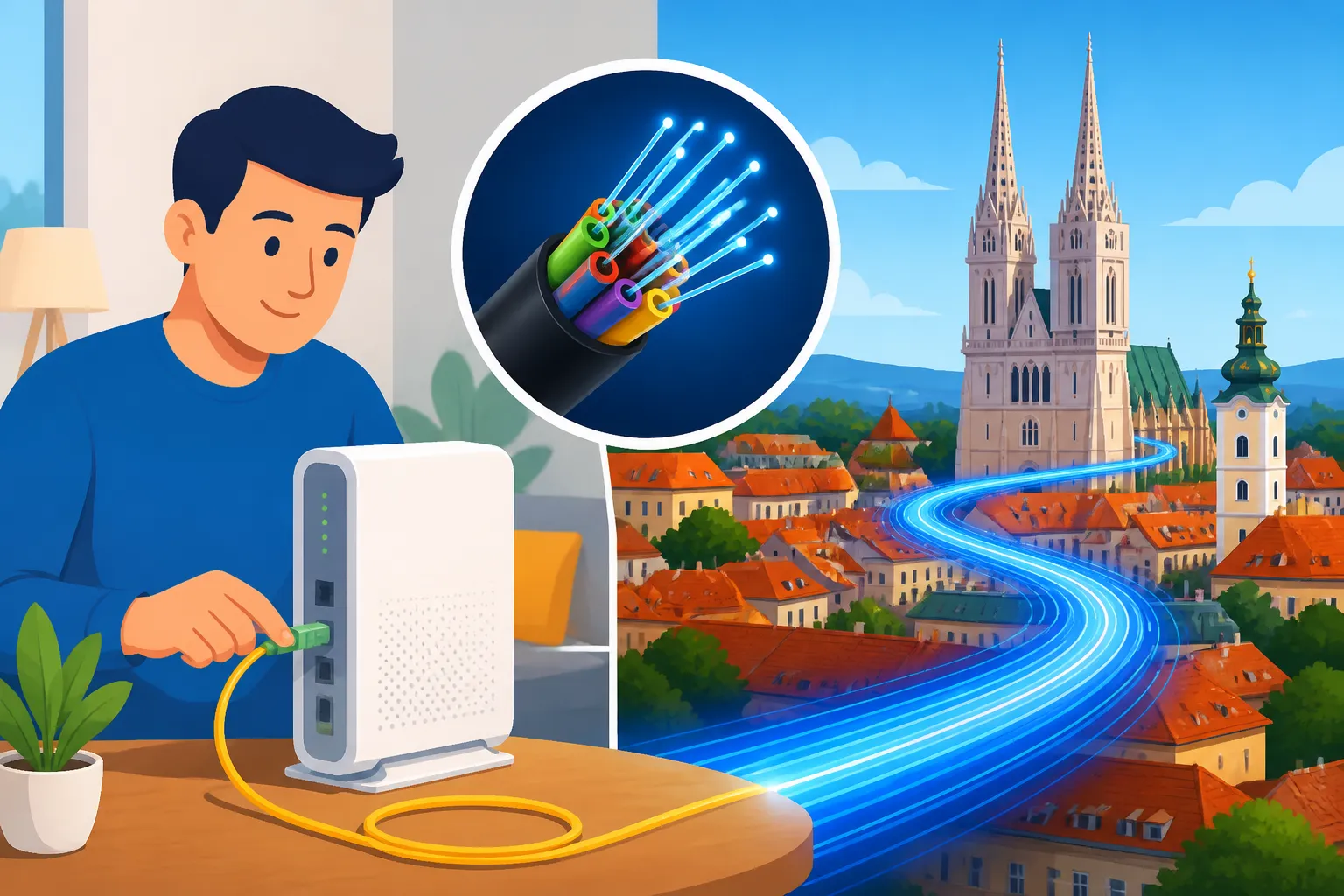
Fibre optic internet, on the other hand, is a game-changer. It uses strands of glass or plastic to transmit data using light signals, allowing for incredibly fast speeds over long distances without significant loss. This means you get a much more stable, reliable, and significantly faster connection. For an expat in Zagreb, this translates to smooth streaming of your favourite shows, crystal-clear video calls for work or with loved ones, and quick downloads without the constant buffering annoyances that plague older connections. While the rollout of fibre is still ongoing, Zagreb is one of the better-covered cities in Croatia.
Key Benefits for Expats and Digital Nomads
If you're an expat, chances are you're relying on the internet for more than just checking social media. Many of us work remotely, run online businesses, or simply need a robust connection to bridge the geographical gap between us and our former lives. Fibre internet offers undeniable advantages in these scenarios.
Firstly, for digital nomads or those working remotely from Zagreb, consistent high-speed internet is non-negotiable. Imagine trying to meet project deadlines or attend important online conferences with a connection that constantly drops or lags. Fibre provides the stability and speed required to seamlessly integrate into your global workflow, making working from your Zagreb apartment as efficient as working from a major tech hub. You won't have to worry about frustrating delays when uploading large files or screen-sharing during presentations.
Secondly, maintaining connections with family and friends scattered across the globe becomes effortless. High-definition video calls are smooth and uninterrupted, making you feel closer to home. Entertainment-wise, you can stream Netflix, YouTube, or any other service in glorious 4K without a hiccup. If you're into online gaming, fibre drastically reduces latency, giving you a much more enjoyable experience. Beyond that, many expats use services that require significant bandwidth, such as cloud storage, online courses, or even managing smart home devices. Fibre makes all of this not just possible, but pleasant.
Navigating the Providers: Who's Who in Zagreb's Fibre Scene
Once you've decided that fibre is the way to go – and trust me, it is – the next step is figuring out which provider can actually get it to your doorstep. Zagreb has a few major players in the telecommunications market, and knowing who they are and how to check availability is crucial.
Major Fibre Optic Providers in Zagreb
In Zagreb, you'll primarily be looking at three big names when it comes to fibre internet: Hrvatski Telekom (HT), A1, and Telemach. Each has its own network infrastructure, coverage areas, and package offerings, so it's not a one-size-fits-all situation.
- Hrvatski Telekom (HT): Often considered the incumbent provider, HT has a very extensive network across Croatia, including a significant fibre footprint in Zagreb. They generally offer a wide range of packages, often bundled with TV and mobile services. Their network can be quite robust, and they are continuously expanding their fibre optic infrastructure. You'll find their stores throughout the city, making in-person inquiries relatively easy, although brace yourself for potential queues.
- A1: A strong competitor to HT, A1 also has a substantial fibre network in Zagreb and is actively expanding. They are known for competitive pricing and often offer appealing bundles that include mobile phone plans. Their customer service is generally considered responsive, and they also have physical stores where you can discuss options.
- Telemach: While a bit newer to the fixed-line game compared to HT and A1, Telemach has been aggressively investing in its fibre network, particularly in urban centres like Zagreb. They often try to disrupt the market with attractive introductory offers and competitive speeds. They also offer bundled services, and their presence is growing.
It's worth noting that while all three are major players, their specific coverage can vary street by street, or even building by building, especially in older parts of the city. What's available to your friend a few blocks away might not be available to you.
Here's a quick overview of what you might encounter:
| Provider | Typical Fibre Speeds (Download/Upload) | Common Contract Lengths | Notes for Expats |
|---|---|---|---|
| Hrvatski Telekom | 100/50 Mbps to 1000/500 Mbps | 12 or 24 months | Widest coverage, established network, bundled offers. |
| A1 | 100/50 Mbps to 1000/500 Mbps | 12 or 24 months | Competitive pricing, often good mobile bundles. |
| Telemach | 100/50 Mbps to 1000/500 Mbps | 12 or 24 months | Aggressive expansion, often strong promotional deals. |
Note: Speeds can vary based on specific packages and promotions. Always check the latest offers directly with the providers.
Checking Fibre Availability at Your Address
This is perhaps the most critical step, and where many expats hit their first hurdle. You can't just pick a provider based on their marketing; you need to verify if fibre actually reaches your specific building.
The easiest way to do this is to use the online availability checkers on each provider's website. They usually have a dedicated section where you input your exact address (street name and house/building number). It's a quick way to get an initial idea of who serves your location. However, be aware that these tools aren't always 100% accurate, especially for newly laid fibre or in complex apartment buildings.
A more reliable method, though more time-consuming, is to call the customer service lines of HT, A1, and Telemach. Even better, if you're comfortable, visit one of their physical stores. Bring your exact address with you. The staff there can often perform a more detailed check using their internal systems. If you don't speak Croatian, it's a good idea to bring a Croatian-speaking friend, neighbour, or even a trusted acquaintance to help translate. This simple act can save you a world of misunderstanding and frustration.
It’s absolutely crucial to remember that fibre installation sometimes requires access to communal parts of your building, or even agreement from the building's management. If you're renting, you must inform your landlord and get their permission before initiating any installation. They might already have a preferred provider or existing infrastructure that can simplify the process. For more on settling into your home, you might find our guide on How to Find and Rent Long-Term Accommodation in Croatia helpful. Don't assume anything; always double-check with your landlord first!
The Nitty-Gritty: Setting Up Your Fibre Connection
So, you've found a provider that offers fibre at your address – fantastic! Now comes the actual setup, which involves gathering documents and navigating the installation process. This is where patience truly becomes a virtue.
Required Documents and Initial Steps
Getting anything administrative done in Croatia starts with one key thing: your OIB. This personal identification number is your lifeline for almost everything, including setting up utilities. If you haven't got one yet, make it your priority; you'll need it for tax, banking, and pretty much every official interaction. You can learn more about How to Get Your OIB and Why It Matters for Healthcare Access in another one of our articles.
Beyond your OIB, you'll typically need:
- Valid Passport or National ID Card: As an expat, this is your primary form of identification.
- Proof of Residence/Address: This could be your rental agreement (signed and notarised, ideally) or a temporary residence permit document showing your address. The MUP issues a "Uvjerenje o prebivalištu" (certificate of residence) once you've registered, which is excellent proof. Check out our guide on How Do I Register My Residence (Prebivalište) at the MUP for more details on that process.
- Croatian Bank Account Details: For setting up direct debits for monthly payments. If you haven't opened one yet, our guide on The Expat Guide to Opening a Bank Account in Croatia can walk you through it. Some providers might allow manual payments or even foreign cards for a period, but a local account simplifies everything.
- Residence Permit: Your boravišna iskaznica (biometric residence card) or the decision approving your residence permit will be required, proving your legal stay in Croatia.
Once you have these documents, you can start the application. You usually have a few options:
- Online Application: Many providers allow you to apply through their websites. This can be convenient, but if you have specific questions or need clarification, it might be challenging without fluent Croatian.
- Phone Application: You can call their customer service lines. Again, a language barrier can be an issue. Always ask if they have an English-speaking agent, or have a Croatian speaker assist you.
- In-Store Visit: This is often the most reliable method for expats. You can bring all your documents, ask questions face-to-face, and get immediate feedback. Be prepared for potential waiting times, especially in larger branches like those in the centre of Zagreb. It’s a bit like pulling teeth sometimes, but persistence pays off.
Installation Process and Waiting Times
After successfully applying and signing a contract – make sure you understand the terms, including any contract length commitments and early termination fees! – the provider will schedule an installation appointment.
What to expect during installation:
- Technician Visit: A technician will come to your address. They will need access to your apartment and potentially the building's communal areas where the fibre optic cables enter.
- Cable Routing: The technician will run a thin fibre optic cable from the building's main fibre distribution point to your apartment. This might involve drilling a small hole in your wall or door frame, so again, landlord permission is key! They will typically aim for the least intrusive route.
- Equipment Setup: Inside your apartment, they will install an optical network terminal (ONT) and connect it to your Wi-Fi router. The provider usually supplies these devices as part of your package. They should ensure the internet signal is live and your Wi-Fi is working before they leave.
- Testing: Don't let them leave without testing the speed! Use an online speed test tool (like Speedtest.net) to verify you're getting close to the speeds you're paying for.
Realistic waiting times for installation can vary wildly. It could be anywhere from a few days to a couple of weeks, or even longer if there are infrastructure issues or high demand. Public holidays or busy periods (like late summer when many return from holidays) can also extend waiting times. Don't plan on having instant internet, especially if you've just arrived.
In the interim, while waiting for your fibre to be installed, you'll need a temporary solution. Consider purchasing a local SIM card with a generous data plan or even an eSIM. Services like Airalo offer convenient eSIM packages that can get you online immediately upon arrival, providing that crucial connectivity for maps, translations, and initial communication while you navigate the setup process. It’s a lifesaver for those first few weeks!
Troubleshooting and Tips for a Smooth Experience
Even with the best planning, living in Croatia as an expat means you'll eventually encounter a snag or two. Internet setup is no different, and knowing how to tackle common issues can save you a lot of stress.
Common Challenges and Solutions
The biggest hurdle for many expats is, unsurprisingly, the language barrier when dealing with customer service. While larger providers like Hrvatski Telekom and A1 often have some English-speaking agents, they might not always be readily available.
- Solution: When calling, politely ask: "Govorite li engleski?" (Do you speak English?). If not, try calling at a different time, or, as mentioned before, ask a Croatian-speaking friend to help. Many younger Croatians speak excellent English, and they might be able to help you over the phone, or even sit with you in an office visit. Another option is to use online translation tools for chat support, but be mindful of nuance.
Technical issues are another common frustration. Slow speeds, intermittent disconnections, or a complete outage can feel like a disaster when you rely on the internet.
- Solution: First, try the basics: restart your router and ONT. If that doesn't work, check the provider's website or social media channels for any known outages in your area. If it's still not working, contact customer support. Be prepared to describe your issue clearly, including any error lights on your router. Having a Croatian speaker on standby can be invaluable here. Sometimes, it might be an issue with your internal wiring or equipment, which a technician can assess.
Understanding contracts and hidden fees can also be tricky. Promotions might entice you, but always read the fine print, especially regarding post-promotional pricing, mandatory add-ons, and early termination penalties.
- Solution: Before signing anything, ask for a copy of the contract (or at least the key terms) in English if available. If not, take photos of the important sections and use a translation app or ask for help. Clarify the total monthly cost after any promotional period ends, what equipment is included, and the exact terms for cancelling. Be firm about understanding what you’re signing. This thoroughness is important for all utilities, not just internet. You can find more general advice in The Expat Guide to Setting Up Utilities in Croatia.
Complementary Internet Solutions
While your fibre connection will be your primary internet source, having backup or complementary solutions is just smart planning, especially for those crucial first weeks or if you travel frequently within Croatia.
Your mobile phone can be an excellent personal hotspot. Croatian mobile providers generally offer competitive data plans, and 4G/5G coverage is widespread in urban areas and along the coast. This is a perfect stop-gap solution if your fibre installation is delayed or if you experience a temporary outage. Just be mindful of your data limits, as sustained heavy use can quickly eat through your allowance.
For true flexibility, consider purchasing a local SIM card with a generous data package or, even easier for new arrivals, an eSIM. Services like Airalo provide virtual eSIMs that allow you to get online as soon as your plane lands, without needing to find a physical store or swap out cards. You can buy data packages specifically for Croatia or Europe, giving you immediate internet access for navigation, communication, and basic browsing. It’s a fantastic way to bridge the gap until your home fibre is up and running, or for staying connected when you’re out and about exploring Zagreb or beyond.
For a broader understanding of how these mobile and internet solutions integrate, our guide on How to Choose a Mobile and Internet Provider in Croatia might provide further valuable insights. Remember, having options ensures you’re never truly disconnected.
Costs and Contract Considerations
Understanding the financial aspect of fibre internet in Zagreb is just as important as knowing who the providers are. You don't want any nasty surprises on your first bill!
What to Expect: Monthly Fees and Initial Costs
The monthly cost for fibre internet in Zagreb can vary significantly based on the speed package you choose, the provider, and whether you opt for bundled services (e.g., internet + TV + phone).
- Monthly Fees: For a decent fibre package (e.g., 200/100 Mbps), you can expect to pay anywhere from €25 to €40 per month. Higher speeds, like 500/250 Mbps or 1000/500 Mbps, will naturally push this price higher, potentially up to €50-€70, especially if bundled with premium TV channels. Always compare the total monthly cost, not just the advertised base price, as additional services or equipment rental fees can add up.
- Installation Fees: Often, providers will waive the installation fee as part of a promotional offer, especially if you commit to a 24-month contract. However, if there's no promotion, or if your installation requires significant additional work (e.g., complex cable routing in an old building), you might face a one-time installation charge, which could range from €20 to €100. Always clarify this upfront.
- Activation Fees: Some providers also charge a small, one-time activation fee when you sign up. This is separate from installation.
- Equipment Rental/Purchase: The modem/router and ONT are usually included in the monthly fee, essentially rented from the provider. If you decide to cancel your service, you'll need to return this equipment. Failure to do so can result in hefty charges.
Keep these costs in mind when budgeting for your life in Zagreb. The internet, while essential, is one of many expenses you'll manage. Our comprehensive guide on The Complete Guide to Cost of Living in Croatia for Expats (2026) can help you get a clearer picture of overall expenses.
Understanding Contract Terms and Exiting Agreements
Signing a contract for fibre internet in Croatia usually means committing to a specific period, most commonly 12 or 24 months. While shorter contracts offer more flexibility, they often come with higher monthly fees or fewer benefits compared to longer-term commitments.
-
Contract Lengths: The 24-month contract is prevalent because it allows providers to spread the cost of installation and equipment over a longer period, thus offering you lower monthly rates or waived installation fees. If you're confident you'll be staying in Croatia for at least two years, this can be the most economical option.
-
Early Termination Penalties: This is where many expats get caught out. If you decide to cancel your contract before the agreed-upon term (e.g., moving out of Croatia unexpectedly, or finding a better deal elsewhere), you will almost certainly incur an early termination fee. This fee can be calculated in different ways:
- Remaining promotional discounts: You might have to pay back the difference between the discounted price you received and the standard price for the period you used the service.
- A flat fee: Some contracts specify a fixed penalty amount.
- Remaining monthly payments: In some cases, you might be liable for a portion or even all of the remaining monthly payments.
Always, always, clarify the early termination clause before you sign. Ask for a clear explanation in writing if possible.
-
Renewals and Changes: When your contract is nearing its end, providers will often offer you a new deal to retain you as a customer. This is a good opportunity to negotiate for better terms or to switch providers if you're not satisfied. If you don't actively renew or change your plan, your service might roll over to a more expensive, non-promotional monthly rate, or even a flexible month-to-month plan that lacks the initial benefits.
-
Returning Equipment: As mentioned, when you terminate your service, you are responsible for returning all rented equipment (modem, router, ONT, TV boxes if applicable). The provider will usually give you instructions on where to drop them off (e.g., a specific store location). Keep proof of return!
Navigating these contract specifics requires diligence. Don't rush into signing anything you don't fully understand. It's often helpful to compare these details with other major contractual obligations, such as those you'd encounter when working. Our guide on Understanding Croatian Employment Contracts: A Complete Guide can give you an idea of the general contractual landscape here.
Setting up fibre internet in Zagreb doesn't have to be a nightmare. With a little preparation, an understanding of the local providers, and a healthy dose of patience, you'll be enjoying lightning-fast speeds in no time. Just remember to gather your documents, get that OIB, and don't be afraid to ask for help when the Croatian gets too complex! The comfort of a stable connection makes all the initial effort worthwhile.
Disclaimer
Please note that while we strive to provide the most accurate and up-to-date information, rules, regulations, and service offerings in Croatia can change rapidly. This guide is intended for informational purposes only and does not constitute legal, financial, or professional advice. Always consult official sources, relevant government bodies, or qualified professionals for specific advice pertaining to your individual situation. Prices and service availability are subject to change by providers.