How to Register Your Residence as an EU Citizen in Croatia
Moving to a new country can feel like navigating a maze, even when you're an EU citizen with the right to free movement. While you might expect smooth sailing, the reality of registering your residence in Croatia often involves a fair bit of bureaucratic back-and-forth and a mountain of paperwork. This guide will walk you through the precise steps for EU citizens to legally register their temporary residence in Croatia, ensuring you understand the process, requirements, and common pitfalls.
Understanding Your Status as an EU Citizen in Croatia
Let's get one thing straight: as an EU citizen, you have fundamental rights when it comes to living and working in other EU member states. Croatia is no exception. However, "free movement" doesn't always mean "free from paperwork." It means you have the right to reside here, but the host country still needs to know who's living within its borders for various administrative and public service reasons. This initial registration is crucial, not just for legal compliance but for accessing things like healthcare, opening a bank account, and just generally feeling settled.
The Initial 90-Day Grace Period
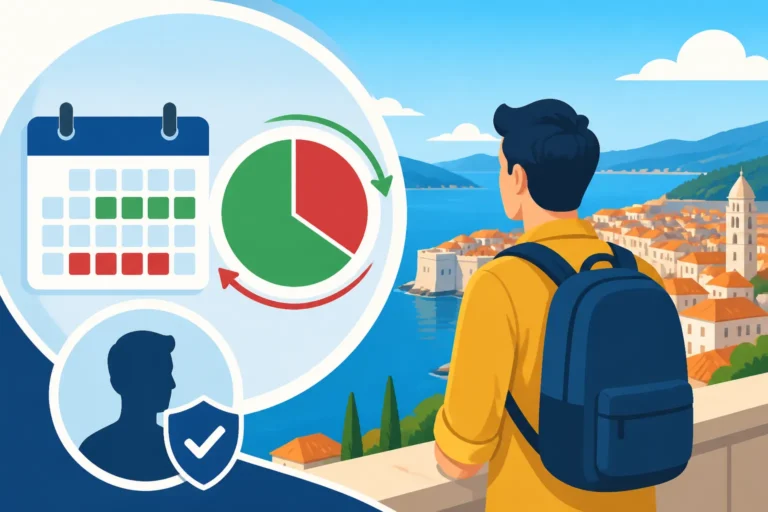
When you first arrive in Croatia as an EU citizen, you automatically have the right to stay for up to 90 days within any 180-day period without needing to register your residence. This is much like a tourist stay for non-EU citizens, except you don't need a visa. Many people use this period to scout out apartments, look for jobs, or simply get a feel for the country. It's a great time to explore whether Croatia is truly the right fit for you.
However, if you intend to stay longer than 90 days, perhaps you've found a job, enrolled in a university, or simply fallen in love with the Croatian lifestyle, then you absolutely must register your temporary residence. This isn't just a suggestion; it's a legal obligation. Failing to do so within the prescribed timeframe can lead to fines and complications down the road, making future administrative tasks even more painful. Don't fall into the trap of thinking "it'll be fine" – the Croatian authorities do track these things, and it's always better to be proactive than reactive when dealing with bureaucracy.
Why Formal Registration Matters
So, why bother with all this paperwork if you're an EU citizen? Well, beyond the legal requirement, formal registration of your temporary residence (known as prijava privremenog boravka or just privremeni boravak) is your golden ticket to truly integrating into Croatian life. Without it, you'll hit roadblocks at every turn. Need to get your OIB (Croatian tax number)? You'll need proof of residence. Want to register for public healthcare through HZZO? Same story. Trying to open a local bank account, even at major banks like Zagrebačka Banka or PBZ? They'll want your registered address.
This registration effectively transforms you from a visitor with an extended stay into a resident. It gives you an official paper trail, allowing you to participate fully in the administrative systems of your new home. It’s the foundational step that unlocks all other necessary services and rights. Think of it as laying the groundwork for your entire expat journey here. It might feel like an unnecessary hurdle, but it's the one that lets you truly start building your life in Croatia.
Key Differences from Non-EU Citizens
While the paperwork can feel daunting, it’s important to remember that as an EU citizen, your process is significantly simpler than that for non-EU citizens. For instance, you generally don't need to apply for a separate work permit; your right to work is inherent with your EU citizenship. The "labour market test" that often complicates things for non-EU nationals? Not something you have to worry about.
Additionally, the types of permits available to you are different. Non-EU citizens often deal with a single work and residence permit, whereas EU citizens register their residence based on their 'purpose' – employment, self-employment, study, sufficient funds, or family reunification. The required documentation reflects this purpose, but the fundamental right to reside is already established. This makes the path to temporary and eventually permanent residence in Croatia much more straightforward, bypassing many of the complex visa and permit stages that others must endure.
The MUP: Your Go-To for Residence Registration
When it comes to anything immigration or residence-related in Croatia, the Ministry of Interior, or MUP (Ministarstvo unutarnjih poslova), is the only game in town. This is where you'll be submitting your application, dealing with potentially long waits, and ultimately, collecting your precious Boravišna Iskaznica (residence card). Be prepared for an experience that can range from surprisingly efficient to utterly baffling, depending on the day, the office, and the civil servant you encounter. Patience, my friend, is your greatest virtue here.
Locating Your Local MUP Office
The first step is figuring out which MUP office you need to visit. It’s not just any MUP; it has to be the one responsible for your place of residence. If you’re living in a major city like Zagreb, Split, Rijeka, or Dubrovnik, you'll likely go to the main police station's administrative affairs department (Upravni poslovi). In smaller towns, the local police station will handle these matters. It's always a good idea to double-check the exact address and opening hours for the specific MUP office you need. A quick online search for "MUP [your city/town] upravni poslovi" usually does the trick.
Keep in mind that some MUP offices are better equipped and more accustomed to dealing with foreigners than others. Larger city offices tend to have more experience, but also longer queues. Don't be shy about asking locals or other expats in online groups for their specific MUP experiences in your area; local knowledge can be invaluable in navigating these processes.
Booking an Appointment vs. Walk-ins
Ah, the age-old question: appointment or walk-in? For many years, walk-ins were the norm, leading to legendary queues forming before dawn. While some MUP offices still operate primarily on a walk-in basis, increasingly, larger city MUPs are moving towards an appointment system, often through the e-Građani portal (if you have it and are technically savvy enough to navigate it, which is a whole other saga!) or via phone. This has been a blessing and a curse. On one hand, it can cut down on waiting times if you manage to secure an appointment. On the other hand, getting an appointment can sometimes feel like trying to win the lottery.
My advice? Check the specific MUP's website or call them directly to see their preferred method. If appointments are an option, definitely try to book one. It saves you sitting for hours in a waiting room, questioning all your life choices. If walk-ins are your only option, prepare for it: bring a book, a fully charged phone, snacks, and a strong dose of patience. Arriving well before opening hours can sometimes make a difference, but there are no guarantees. You can find more specific guidance on how to book an appointment at the MUP for immigration matters.
What to Expect at the MUP
Once you're there, whether by appointment or after a long wait, the process generally involves speaking with a civil servant at the Upravni poslovi desk. They will review your documents, ask questions about your purpose of stay, and might request additional paperwork if anything is missing or unclear. This is where those language barriers can really kick in. While some officials in larger cities might speak a passable level of English, it's certainly not a guarantee. Having a Croatian friend accompany you or at least a translation app handy can be incredibly helpful.
Be prepared for potential inconsistencies. One official might accept a certain document, while another might insist on a slightly different format or an additional stamp. This isn't uncommon in Croatian bureaucracy and is often a source of great frustration for expats. Try to remain polite and calm, even if you feel like you're going in circles. Remember, they hold the keys to your residence permit. Once your documents are accepted, you'll usually be given a payment slip for the administrative fees and instructions for the next steps, which typically include taking your fingerprints and photo for your biometric residence card.
Essential Documents for EU Residence Registration
The Croatian MUP is notoriously fond of paperwork, and while your EU citizenship simplifies things, you'll still need to provide a solid stack of documents. The exact requirements depend on your reason for staying, so it’s crucial to know which category you fall into. Generally, the MUP needs to see proof of your identity, your means of support, and your accommodation.
Proof of Identity and Nationality
This is the most straightforward part, thankfully. You will need your valid national ID card or passport. Make sure it hasn't expired or isn't about to expire soon. The MUP will typically want to see the original and will make a copy for their records.
It’s always a good idea to have a few extra photocopies of your passport or ID card on hand, just in case. While they usually make copies themselves, you never know when a copier might be "out of order" or they might appreciate you making their life a little easier. This small act of preparedness can sometimes smooth over minor bureaucratic bumps.
Proving Sufficient Funds or Employment
This is often the trickiest part for many expats. Croatia wants to ensure you won't become a burden on their social system. How you prove this depends on your situation:
- If you are employed: You'll need an employment contract from a Croatian employer. This contract should clearly state your position, salary, and duration of employment. It's often helpful if your employer provides an accompanying letter confirming your employment status. This is your strongest proof of self-sufficiency. For those looking for work, you might find The Expat Guide to Finding a Job in Croatia (2026) helpful.
- If you are self-employed: You'll need documentation proving the establishment of your business in Croatia (e.g., an Obrt registration document) and potentially proof of initial capital or a business plan. The Paušalni Obrt model is quite popular for freelancers and small business owners, and there’s a great guide on Self-Employment in Croatia: The Paušalni Obrt Guide for Foreigners that details this.
- If you are a student: You'll need proof of enrolment from a recognised Croatian educational institution, like a university or language school. This is usually an official letter or certificate from the institution confirming your student status. Check out The Complete Guide to Studying at a Croatian University (2026) for more on this.
- If you are a pensioner: You'll need documentation proving your pension income from your home country or another EU member state. This usually comes in the form of official pension statements.
- If you have "sufficient funds": This category is for those not working, studying, or retired, but who can support themselves financially. You'll need bank statements showing regular income or a substantial balance that proves you can support yourself without recourse to public funds. The exact amount required can vary, but generally, it should be enough to cover your basic living expenses comfortably for your period of stay.
Regardless of your category, always bring original documents and photocopies. If documents are not in Croatian, they often need to be officially translated by a sworn court interpreter (sudski tumač). This can be an added expense and time commitment, so factor it in.
Accommodation Documentation
You can't register your residence without proof of where you'll actually be living. This is straightforward if you're renting:
- Rental Contract: A valid rental agreement (Ugovor o najmu stana) is the most common proof. It needs to be properly drafted, signed by both parties, and ideally, registered with the Tax Administration (Porezna Uprava) by your landlord. If your landlord hasn't done this, it can complicate things, but the MUP usually accepts an unregistered contract initially, though they might strongly advise you to get it registered. For more on this, see The Complete Guide to Renting an Apartment in Croatia (2026).
- Property Ownership: If you own property in Croatia, you'll need a copy of your Vlasnički list (property ownership certificate) as proof.
- Statement from Host: If you're staying with friends or family without a formal rental agreement, they might need to provide a certified statement (izjava) confirming you are residing with them, along with proof of their own property ownership or rental agreement. This statement may need to be notarized.
Health Insurance Requirements
Even as an EU citizen, you need to prove you have comprehensive health insurance. This is a critical point that sometimes trips people up.
- European Health Insurance Card (EHIC): If you are temporarily residing in Croatia and still covered by your home country's public health system, your EHIC can serve as proof. However, it's primarily for temporary stays and necessary medical care, not as a replacement for full health insurance when you are residing long-term.
- Public Health Insurance (HZZO): Once you become a resident (especially if employed or self-employed in Croatia), you are generally obligated to join the Croatian Health Insurance Fund (HZZO). You'll usually get initial temporary residence approval based on your EHIC or private insurance, and then register with HZZO. Understanding how the Croatian Health Insurance Fund (HZZO) Works: A Full Overview is essential here, as is Registering with HZZO in Croatia: The Complete Expat Guide (2026).
- Private Health Insurance: If you're not yet employed, self-employed, or a student and are relying on "sufficient funds," you will likely need to show proof of comprehensive private health insurance. This should cover all necessary medical care during your stay. Companies like Cigna Global offer international health insurance plans that are often accepted by immigration authorities and can provide peace of mind before you get set up with HZZO. Remember, the MUP wants to see coverage for the entire period of your requested temporary residence.
The Step-by-Step Registration Process
Alright, you've gathered your documents, possibly practiced a few Croatian phrases, and mentally prepared for the MUP. Now, let’s go through the actual process of getting that temporary residence permit. It’s a series of distinct steps, each requiring your attention and, yes, more paperwork.
Gathering Your Paperwork
Before you even think about setting foot in the MUP, ensure every single document on your checklist is in order. This means not just having the originals but also photocopies of everything. Some documents, particularly those not originally in Croatian, might require official translations by a sworn court interpreter. Don't skip this step; an untranslated document will almost certainly lead to your application being rejected.
Consider organizing your documents in a clear folder. Label sections for "Identity," "Employment/Funds," "Accommodation," and "Health Insurance." This might seem excessive, but it helps you quickly retrieve what the civil servant asks for, and it subtly signals that you’re organized and prepared, which can sometimes work in your favour. Think about what a company like Sirelo might advise for a smooth relocation – meticulous planning of logistics, and that includes paperwork. You'll also need to fill out the application form, known as Obrazac 1a, which you can usually download from the MUP website or get directly at the office. Fill it out completely and accurately before your appointment.
Submitting Your Application
This is the big day. You go to the MUP, take your number (if applicable), and wait for your turn. When called, present all your documents to the civil servant. They will review everything, and this is where they might ask for clarification, additional documents, or raise any issues they find. They'll also check if you’ve already registered your prebivalište (permanent address) or boravište (temporary address for short-term stays) which is a separate but related administrative task often done at the MUP as well.
If everything is in order, they will issue you a payment slip (uplatnica) for the administrative fees. These fees are usually quite modest, but you’ll need to pay them at a post office or bank. Keep the stamped receipt as proof of payment. You'll then return to the MUP with this receipt. After this, they will usually direct you to another counter within the MUP (or sometimes a separate office) where your fingerprints will be taken, and your photo will be snapped for your new Boravišna Iskaznica. This biometric data is standard for residence cards across the EU.
The Biometric Residence Card (Boravišna Iskaznica)
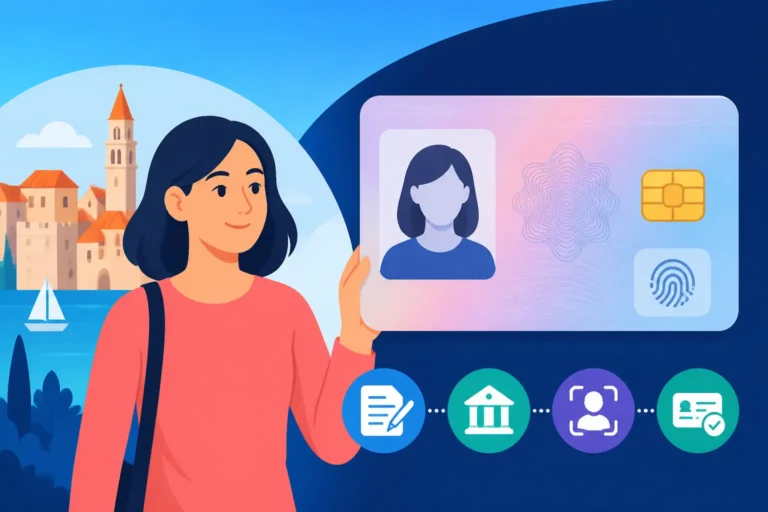
After successfully submitting your application, paying the fees, and providing your biometrics, you enter the waiting game. The MUP will process your application, and if approved, your Boravišna Iskaznica (biometric residence card) will be issued. The processing time can vary significantly, from a couple of weeks to over a month, depending on the MUP office and the time of year. Summer months or periods around holidays can often see longer waits.
You will typically be notified when your card is ready for collection, either by mail or a phone call. Sometimes, however, you might just need to go back to the MUP to check. This residence card is your official proof of legal temporary residence in Croatia and will display your photo, personal details, and the validity period of your permit. Make sure to keep it safe; it's an incredibly important document. You can learn more about how to get a biometric residence card (Boravišna Iskaznica) in Croatia.
Common Challenges and Troubleshooting for EU Citizens
Even with your EU rights, navigating Croatian bureaucracy can test the patience of a saint. Many expats experience similar frustrations, and understanding them beforehand can help you prepare emotionally and practically.
Language Barriers and Bureaucracy
This is probably the biggest hurdle for most foreigners. While you might find English speakers in tourist areas or amongst younger generations, many civil servants at the MUP, especially outside of major cities, might have limited or no English proficiency. This can turn a simple question into a drawn-out, confusing exchange. Imagine trying to explain a nuance of your financial situation through Google Translate – it’s not ideal.
Troubleshooting:
- Bring a Croatian Speaker: If possible, have a Croatian friend, colleague, or even a professional assistant accompany you. Their presence can be invaluable.
- Learn Basic Phrases: Even a few basic Croatian phrases related to your purpose (e.g., Želim prijaviti privremeni boravak – "I want to register temporary residence") can show effort and sometimes help break the ice.
- Be Patient and Clear: Speak slowly and clearly, and be patient. Don't assume they understand if they nod; they might just be trying to be polite. Have your documents clearly labelled and ready to present.
Dealing with Incomplete Applications
It's common for applicants to be told their application is incomplete, even if they've diligently followed the instructions. This could be due to a misunderstanding, a specific requirement that wasn't explicitly stated, or simply an official having a different interpretation of the rules. For example, your bank statement might not be considered "recent enough" or your rental contract might be missing a specific clause.
Troubleshooting:
- Ask for Specifics: If your application is deemed incomplete, always ask exactly what is missing or incorrect. Write it down if you can. Don't leave until you have a clear understanding of what you need to provide next.
- Return Promptly: Once you know what's needed, try to obtain it and return to the MUP as soon as possible. Prolonging this can sometimes lead to further delays or questions.
- Documentation, Documentation, Documentation: When in doubt, provide more documentation rather than less. If you think a letter from your employer might help clarify your contract, bring it.
Maintaining Your Registered Status
Your initial temporary residence permit isn't usually forever. It will have an expiry date, often one year from the date of issue. Forgetting to renew it can lead to legal complications. Similarly, if your circumstances change – for example, you change jobs, move to a new address, or your marital status changes – you are generally obligated to inform the MUP within a certain timeframe.
Troubleshooting:
- Set Reminders: Mark your calendar for your residence permit expiry date well in advance. Start the renewal process a couple of months before it expires to avoid any last-minute stress. You can find more information on how to extend your temporary residence permit in Croatia.
- Report Changes: As soon as you change your address or employment, contact the MUP to find out how to update your records. This is crucial for maintaining legal compliance.
- Keep Copies: Keep copies of all correspondence with the MUP, every document you submit, and all receipts. This paper trail is vital if any disputes or questions arise in the future.
Beyond Initial Registration: What's Next?
Getting your initial temporary residence registered is a huge milestone, but it's just the beginning of your official journey in Croatia. There are further steps and considerations for staying long-term and fully embedding yourself into the administrative landscape.
Renewing Your Temporary Residence
Your first temporary residence permit will likely be valid for one year. As the expiry date approaches, you'll need to apply for a renewal if you intend to continue living in Croatia. The renewal process is very similar to the initial application, requiring you to prove your identity, means of support, accommodation, and health insurance once again.
You'll need to demonstrate that the conditions under which you were granted temporary residence still apply. For instance, if you were employed, you'll need a current employment contract. If you were self-employed, proof of your ongoing business activity and tax payments will be necessary. It’s crucial to start this process well before your current card expires to avoid any gaps in your legal status. The MUP generally expects you to apply for renewal at least 30 days before expiry, but I'd recommend giving yourself more buffer time, ideally 60-90 days, just in case.
Pathway to Permanent Residence
After five continuous years of legal temporary residence in Croatia, EU citizens (and often their family members) become eligible to apply for permanent residence (stalni boravak). This is a significant step, granting you many of the same rights as Croatian citizens, with a few exceptions (like voting in national elections). The clock for those five years generally starts from the date of your initial temporary residence registration.
Applying for permanent residence requires demonstrating continuous residence, meaning you haven't been absent from Croatia for more than a certain period (usually a total of 10 months over the five years, with no single absence exceeding 6 consecutive months). You'll also need proof of stable financial means and continued integration into Croatian society. This is a much more robust application than temporary residence, and you can delve deeper into it with resources like How to Apply for Permanent Residence (Stalni Boravak) in Croatia.
Other Essential Registrations
Beyond the MUP, there are a few other critical administrative tasks you need to tick off to truly settle in:
- Getting Your OIB: Your OIB (Osobni identifikacijski broj) is your personal identification number, similar to a tax ID. You'll need it for everything from opening a bank account to registering for health insurance. Often, the MUP will help you get this when you first register your residence, or you can apply for it separately at the Tax Administration. Learn more in How to Get Your OIB and Why It Matters for Healthcare Access.
- Registering for HZZO: If you're employed or self-employed in Croatia, you're obligated to join the public health insurance scheme, HZZO. This usually happens after you’ve obtained your temporary residence permit. This is absolutely critical for accessing healthcare services at a reasonable cost. You will find comprehensive information on this topic in articles such as Registering with HZZO in Croatia: The Complete Expat Guide (2026) and Health Insurance in Croatia: Mandatory, Supplementary and Private Options Explained.
- Opening a Bank Account: Once you have your OIB and proof of residence, you can open a bank account at a local Croatian bank. This is essential for receiving salary, paying bills, and managing your daily finances. Popular choices include Zagrebačka Banka, PBZ, and Erste. Read The Expat Guide to Opening a Bank Account in Croatia for detailed steps.
These steps, while seemingly endless, are what transform you from a newcomer into a settled resident. Take them one by one, arm yourself with patience, and don't be afraid to ask for help when you need it.
| Document Category | Required for (Example) | Details / Notes |
|---|---|---|
| Proof of Identity | All applicants | Valid national ID card or passport (original + photocopy). |
| Proof of Funds / Purpose | ||
| – Employment | Employed | Valid employment contract from a Croatian employer (original + photocopy), may need accompanying letter from employer. |
| – Self-Employment | Self-employed | Proof of business registration (e.g., Obrt registration), possibly business plan or proof of initial capital. |
| – Study | Students | Certificate of enrolment from a recognized Croatian educational institution (original + photocopy). |
| – Sufficient Funds | Non-workers/students/pensioners | Bank statements showing sufficient regular income or savings to cover living expenses for the period of residence. |
| – Pension | Pensioners | Official pension statements from home country or another EU member state (original + photocopy). |
| Proof of Accommodation | All applicants | Rental contract (registered or unregistered), Vlasnički list (if property owner), or notarized statement from host with their property proof (original + photocopy). |
| Health Insurance | All applicants | Valid EHIC card, proof of private comprehensive health insurance covering the entire period, or proof of HZZO registration (if already in the system). For initial applications, EHIC or private insurance is often used. |
| Application Form | All applicants | Completed Obrazac 1a (available at MUP or online). |
| Administrative Fees | All applicants | Payment slips (uplatnice) for administrative fees. Paid at a bank or post office, then return with stamped receipts to MUP. Amounts are modest and vary. |
| Passport Photos | All applicants (for biometric card) | While often taken at the MUP, it's good practice to bring a few recent, standard passport-sized photos, just in case. |
Disclaimer
The information provided in this guide is for general informational purposes only and does not constitute legal advice. While we strive to keep the information accurate and up-to-date, immigration laws and procedures in Croatia can change. It is always recommended to verify the latest requirements directly with the Croatian Ministry of Interior (MUP) or consult with a qualified legal professional specializing in Croatian immigration law for advice tailored to your specific situation.