How Do I Get a Biometric Residence Card in Croatia?
Oh, the biometric residence card! If you've just received that glorious notification that your Croatian temporary residence permit has been approved, you're probably feeling a huge wave of relief. But then, almost immediately, a new question pops up: "Okay, so when do I actually get the card? And how?" It’s a common point of confusion and frankly, a bit of a bureaucratic black hole that can leave even the most seasoned expats scratching their heads. This guide is here to demystify that final, crucial step: how to get your hands on your physical biometric residence card, or Boravišna Iskaznica, in Croatia.
Your Croatian Biometric Residence Card: What It Is and Why It Matters
After all the paperwork, the MUP visits, and the anxious waiting, the approval for your residence permit is a huge milestone. But remember, the approval itself isn't the end of the journey. You need the physical card to prove your legal status, unlock services, and navigate daily life in Croatia.
The Boravišna Iskaznica Explained
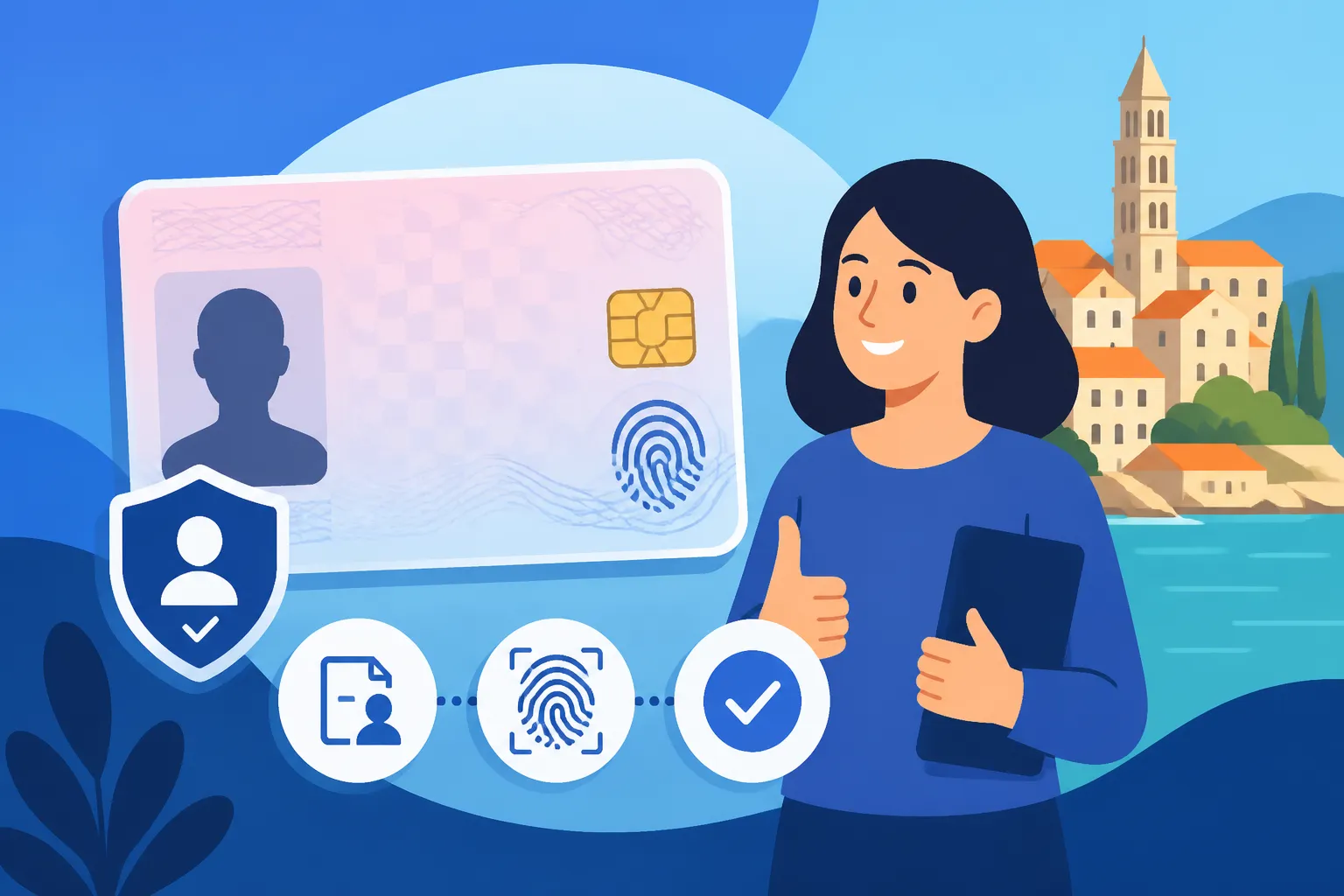
Your Boravišna Iskaznica is essentially your official ID card as a foreign resident in Croatia. It’s a small, plastic card, much like a Croatian ID card or driving license, that contains your personal data, photo, signature, and, crucially, a biometric chip. This chip stores your fingerprints and other identifying information, making it a secure and internationally recognized travel document within the Schengen Area. Without it, even with an approval letter, you're essentially still in limbo when it comes to proving your legal right to reside here.
Think of it as your passport to actually live in Croatia, not just be allowed to live here. It’s what you’ll present at the bank, when applying for Registering with HZZO in Croatia: The Complete Expat Guide (2027), enrolling your children in school, or even just picking up a package from the post office. When you’re dealing with the complexities of moving to a new country, having this tangible proof can make all the difference, cutting down on awkward explanations and validating your new life here. Moving here can feel like a maze, and resources like Sirelo can help with the larger relocation, but this card is a specific, local hurdle many forget about.
The Crucial Step After Residence Permit Approval
Many expats mistakenly believe that once their residence permit is approved by the MUP (Ministarstvo unutarnjih poslova, or Ministry of Interior), the card will magically appear in their mailbox. While the MUP handles the approval of your residence status, the actual production and issuance of the physical biometric card is a separate, albeit integrated, process. It involves a visit to your local police station to provide your biometrics and, later, to pick up the card.
This two-step process can be a source of frustration. You've been approved, you've jumped through countless hoops, and now there's another waiting period and another appointment. It often feels like the final boss level of Croatian bureaucracy! But understanding this distinction is key to setting realistic expectations and proactively managing the final stages of your residence journey. Your approval means you're legally allowed to stay, but the card is your everyday proof of that right.
Navigating the Application and Collection Process
Getting the physical card in your hand involves a few more steps after your residence permit has been officially granted. This part of the process is less about eligibility and more about administrative procedure, but it's vital to follow closely to avoid unnecessary delays.
Receiving Your Notification and Initial Steps
Once your temporary residence permit has been approved, you’ll typically receive a notification. This might come via regular mail to your registered address in Croatia, or sometimes, depending on the MUP branch and your communication preferences, you might receive a phone call or an email. This notification is your golden ticket, confirming that your application was successful and instructing you on the next steps to obtain your Boravišna Iskaznica.
The letter will usually detail which police station (or MUP department) you need to visit for your biometrics appointment, what documents to bring, and, importantly, the payment slips for the card issuance fee. Don't underestimate the importance of these payment slips; you'll need to pay the fees before your appointment, and presenting the proof of payment is non-negotiable. Missing this letter or not understanding its contents can significantly delay your final card, so be vigilant with your mail, especially after you've been told your permit is approved. If you're wondering How Long Does It Take to Get a Croatian Residence Permit?, remember this post-approval step adds its own timeline!
The Biometrics Appointment: What to Expect
Once you have your notification and the payment slips (and have paid them!), your next step is the biometrics appointment. This usually takes place at the local police station's administrative affairs department, not necessarily the main MUP headquarters where you might have submitted your initial application. The notification letter should specify the exact location. Sometimes, you need to How Do I Book a MUP Appointment for My Residence Application? in advance, while other smaller offices might operate on a walk-in basis, so clarify this when you get your instructions.
At the appointment, you'll need to bring your passport, the original approval document, and proof that you’ve paid the required fees. They will take your photograph (so try to look presentable, even if you're frazzled by bureaucracy!), scan your fingerprints, and collect your signature digitally. This is where your unique biometric data is linked to your residence permit. The whole process is usually quick and straightforward once you're called, but waiting times can vary wildly depending on the location and time of day.
From Production to Picking Up Your Card
After your biometrics appointment, the waiting game begins anew, I'm afraid. Your biometric data and personal information are sent for the physical production of your Boravišna Iskaznica. This process typically takes anywhere from a few weeks to over a month, sometimes even longer during peak seasons or if there are any technical glitches. There's usually no real-time tracking system that's easily accessible to the public, which can add to the suspense.
You’ll receive another notification (again, usually by mail) when your card is ready for collection. This letter will instruct you to pick up your card at the same police station where you provided your biometrics. When you go to collect it, remember to bring your passport or another form of identification, and sometimes, they might ask for your old temporary residence permit if you're renewing it. Finally, holding that plastic card in your hand feels like a real accomplishment after all the hoops you've jumped through!
Understanding the Documents and Fees
Let's talk brass tacks: what exactly do you need to bring, and how much is this little piece of plastic going to set you back? Croatian bureaucracy loves its documents and fees, and getting your biometric card is no exception.
Your Essential Checklist for the Biometrics Session
To make your biometrics appointment as smooth as possible, ensure you have these documents ready and, ideally, organized in a folder. Being prepared can save you a trip home or, worse, having to reschedule.
- Valid Passport: This is your primary identification. Ensure it's current and exactly matches the details on your residence permit approval.
- Original Residence Permit Approval Document: This is the letter or official decision from the MUP confirming your residence permit has been granted. It will contain instructions and the payment details.
- Proof of Paid Administrative Fees: This is crucial. You'll receive payment slips (uplatnice) with your approval notification. You need to take these to a post office, Fina (Financial Agency), or your bank to pay the specified amounts and then bring the stamped proof of payment (potvrde) to your biometrics appointment. No proof of payment, no card.
- Proof of Accommodation: While usually not needed again at this stage, it's always wise to have it, just in case. This could be your rental agreement or a statement from your landlord.
- OIB (Personal Identification Number): You should have received your OIB as part of your initial residence permit application. While it's printed on the card, it's a good idea to know it and have it handy. You'll definitely need it when applying for things like your How Do I Apply for an OIB for My Residence Application?.
It sounds like a lot, but having everything in one place, including a few copies of each document, can prevent a lot of headaches. For a broader overview of initial documents, you might want to review What Documents Do I Need for a Croatian Residence Permit?.
Breaking Down the Costs of Your Boravišna Iskaznica
The cost of your biometric residence card typically consists of two main fees: the administrative fee and the card issuance fee itself. These fees are subject to change, so always check the latest amounts on your official payment slips or the MUP website. As of my last check, the fees are roughly:
| Fee Type | Approximate Cost (EUR) | Payment Method | Notes |
|---|---|---|---|
| Administrative Fee | €31.85 | Post office, Fina, bank (using uplatnica) | Payable directly to the state budget |
| Card Issuance Fee | €4.77 | Post office, Fina, bank (using uplatnica) | For the production of the physical biometric card |
| Urgent Procedure Fee | Additional €60-€75 | Post office, Fina, bank (using uplatnica) | If you need the card processed faster (check availability) |
(Please note: These figures are approximate and subject to change by the Croatian government. Always refer to the official payment slips provided by the MUP for the exact, current amounts.)
You’ll typically receive two separate payment slips, one for each fee. You must pay both of these at a Fina office, Hrvatska Pošta (post office), or any commercial bank in Croatia. Keep the stamped receipt of payment for each one; these are your proof and are absolutely required at your biometrics appointment. Don't lose them!
Common Expat Hurdles and Practical Solutions
Navigating any bureaucratic process in a new country can be tough, and getting your biometric card in Croatia is no different. You're bound to encounter a few bumps along the way, but armed with a bit of knowledge and a good dose of patience, you can overcome them.
Dealing with Language and Bureaucracy
Let's be real: Croatian administration isn't always set up for English speakers. While larger MUP offices in Zagreb or Split might have some staff who speak English, smaller regional offices often operate entirely in Croatian. This can make everything, from understanding instructions to asking questions, incredibly challenging. The feeling of not understanding and the fear of making a mistake is a valid frustration.
Practical Solutions:
- Bring a Croatian Speaker: If possible, bring a Croatian friend, colleague, or even a professional translator to your appointments. This can alleviate immense stress and ensure clear communication.
- Use Translation Apps: While not perfect, Google Translate or similar apps can help with basic instructions or understanding documents.
- Write Down Questions: Prepare your questions in Croatian beforehand, using a translator. It shows initiative and makes it easier for the officials to help you.
- Be Patient and Polite: A friendly attitude, even when you're feeling utterly lost, goes a long way. Officials appreciate politeness, and it might just get you a bit more leeway or a more helpful response. It's often asked Do I Need to Speak Croatian to Get a Residence Permit?, and while not strictly mandatory for the permit itself, it certainly helps with these follow-up steps.
When Delays Happen: Tracking Your Card
Delays are, unfortunately, a fairly common part of the process in Croatia. You've done your biometrics, you're waiting for that notification that your card is ready, and weeks turn into a month, then two. It’s anxiety-inducing, especially if you have travel plans or need the card for other administrative tasks. Don't panic immediately, but don't just sit and wait indefinitely either.
Practical Solutions:
- Check Back with the Police Station: After the expected waiting period (usually 3-4 weeks), if you haven't heard anything, it's perfectly acceptable to call or visit the administrative department of the police station where you submitted your biometrics. They are usually the ones who can check the status of your card production.
- Keep Your Approval Documents: Always carry your residence permit approval letter with you. In some situations, this document can serve as temporary proof of your legal status while you wait for the physical card.
- Plan Travel Accordingly: If you anticipate needing to travel, especially outside Croatia or the Schengen Area, allow ample time for your card to be produced. Don't book flights for the week after your biometrics appointment. Remember, you might eventually want to Can I Travel in the Schengen Area on a Croatian Residence Permit?, but you need the card first!
What to Do If Your Card Is Lost or Damaged
Accidents happen. Whether your Boravišna Iskaznica gets lost, stolen, or damaged, you need to act quickly. Your card is an official document, and losing it means you temporarily lose proof of your legal residency.
Practical Solutions:
- Report to the Police: If your card is lost or stolen, your first step is to report it to the nearest police station immediately. You'll need an official police report for the replacement process.
- Apply for a Replacement: With the police report (if applicable) and your passport, return to the administrative department of your local MUP or police station to apply for a replacement card. The process will be similar to getting your original card, including providing biometrics and paying the associated fees again. Yes, it's another round of fees, unfortunately.
- Keep a Copy: Although it doesn't replace the original, always keep a photocopy or a digital scan of both sides of your Boravišna Iskaznica somewhere safe. This won't help you travel, but it can be useful for remembering your details or having proof of the card's existence if you need to report it. If you need to How Do I Renew My Croatian Residence Card? in the future, the process is very similar to replacing a lost card.
The Power of Your Biometric Residence Card in Croatia
Finally, when you have that shiny new Boravišna Iskaznica in your hand, you'll realize it's more than just a piece of plastic. It's your tangible key to truly settling into Croatian life.
Your Gateway to Travel and Legal Status
The most immediate and obvious benefit of your biometric residence card is that it serves as definitive proof of your legal temporary residence in Croatia. This is essential for all official interactions. Furthermore, for non-EU/EEA citizens, your Croatian biometric residence card generally allows you to travel within the Schengen Area for short stays (up to 90 days in any 180-day period) without needing a separate Schengen visa. This is a huge advantage and a true perk of living in an EU member state.
However, always carry your passport along with your residence card when traveling internationally, even within Schengen countries. Border officials appreciate seeing both documents, and it helps clarify your status quickly. Having this card means you've completed the primary hurdle of establishing your legal presence, giving you peace of mind whether you're staying put or exploring Europe.
Unlocking Daily Life: Services and Privileges
Beyond travel, your Boravišna Iskaznica is indispensable for accessing the everyday services and privileges that are crucial for a comfortable life in Croatia. Without it, many doors simply remain closed, regardless of your verbal assurances or approval letters. This card tells everyone, from your bank to your healthcare provider, that you are a legitimate resident.
Consider these scenarios:
- Banking: Opening a bank account, applying for a loan, or even just setting up direct debits for utilities often requires presenting your physical residence card.
- Healthcare: While you may have obtained a private health insurance policy, perhaps from a reputable provider like Cigna Global, to meet your visa requirements, registering with the public health insurance fund (HZZO) and subsequently finding a family doctor will require your Boravišna Iskaznica.
- Employment & Business: If you’re working or setting up a business, this card is vital for proving your right to work or operate.
- Education: Enrolling children in schools, whether public or private, typically requires a copy of their (or your) residence card.
- General Administration: From applying for a library card to receiving mail at the post office, many routine interactions in Croatia will involve showing your residence card as proof of identity and residency.
In essence, your Boravišna Iskaznica transforms you from an approved applicant into an active, recognized member of the Croatian community. It's the final piece of the puzzle that truly makes Croatia feel like home.
Disclaimer
The information provided in this guide is intended for general informational purposes only and does not constitute legal advice. While we strive to keep the content accurate and up-to-date, immigration laws, administrative procedures, and fees in Croatia can change rapidly. Always consult official Croatian government sources (such as the Ministry of Interior – MUP) or seek advice from a qualified immigration lawyer or expert for the most current and specific guidance pertaining to your individual situation.