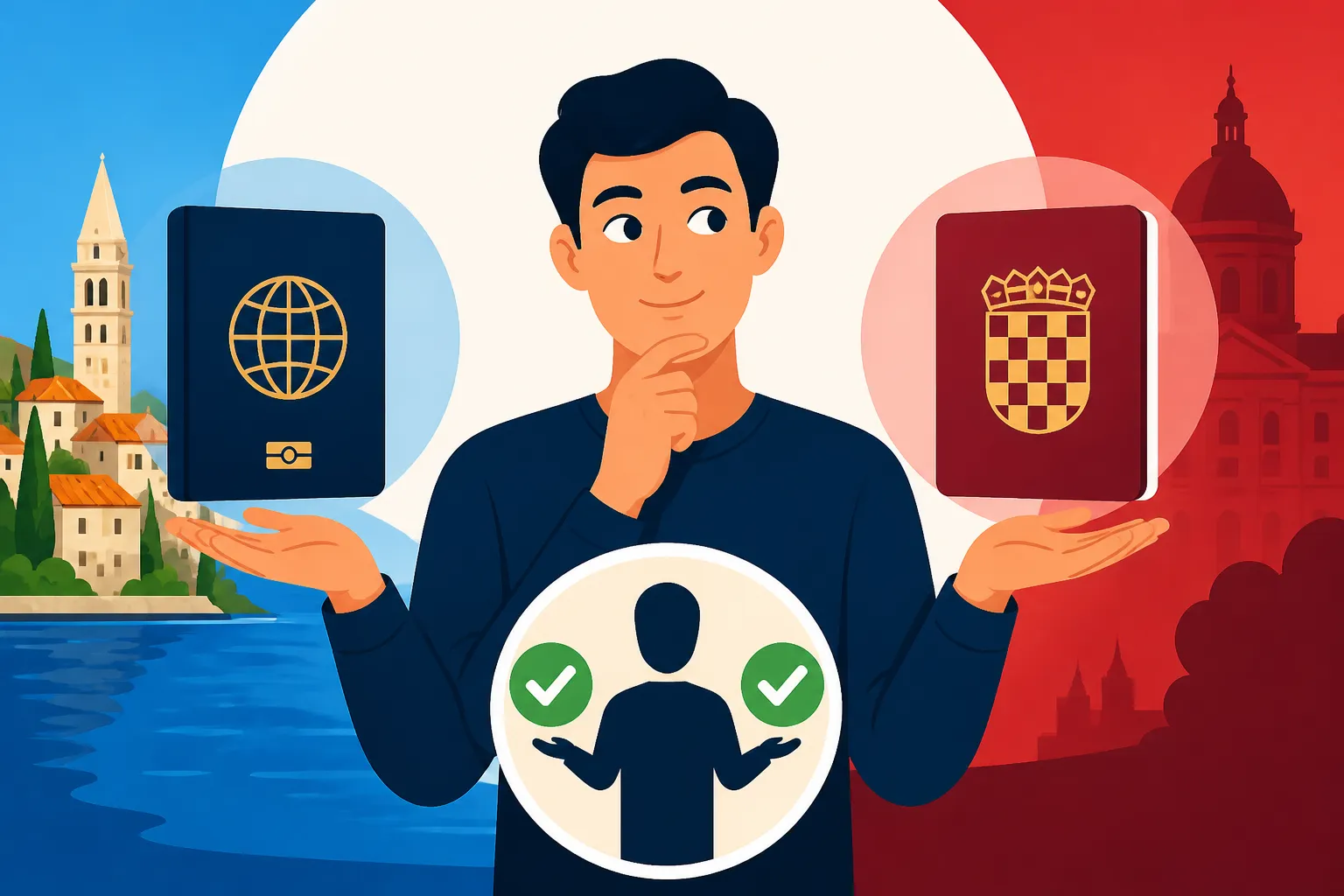
Can I Become a Croatian Citizen Without Giving Up My Passport?
Ah, the age-old question that keeps so many of us expats up at night when we start dreaming of officially calling Croatia home: can I actually become a Croatian citizen without having to sever ties with my homeland and give up my original passport? This isn't just a legal query; it's deeply personal, touching on identity and the desire to maintain connections. This guide is here to walk you through the nuances of dual citizenship in Croatia, giving you the realistic picture so you can plan your future here with open eyes.
The Croatian Stance on Dual Citizenship: It's Complicated!
Let's cut right to the chase because, like many things in Croatia, the answer isn't a simple yes or no. Croatia's citizenship law, the Zakon o hrvatskom državljanstvu, generally leans towards the principle of a single citizenship. This means that if you're looking to naturalize as a Croatian citizen, the standard expectation is that you will renounce your previous citizenship. It’s a bitter pill for many of us, I know, because for some, that original passport represents a lifetime, family, and deep roots that are hard to simply give up.
General Rule for Naturalization: Renounce Your Roots (Usually)
When an expat seeks to become a Croatian citizen through the process of naturalization, which is the most common path for those without Croatian ancestry, the law typically requires you to prove that you have renounced your existing foreign citizenship. This isn't about the Croatian authorities trying to be difficult; it often stems from older legal traditions that preferred a clear, singular national identity. For many countries, including Croatia, the idea was that a citizen should have undivided loyalty to one state. It’s a concept that feels increasingly outdated in our globalized world, but it’s still firmly embedded in the legal framework.
Imagine you've lived in Zagreb for eight years, built a successful life, perhaps even married a local, and now you feel genuinely Croatian. You speak the language fluently, pay your taxes, and contribute to the community. You decide it’s time to apply for citizenship. When you delve into the requirements for naturalization, you'll inevitably hit the roadblock of the renunciation clause. This means going through the often complex and sometimes costly process of giving up your original passport, a process that varies wildly depending on your country of origin. Some countries make it easy, others nearly impossible. For some, like certain Middle Eastern or Asian countries, it's not even an option, which can leave you in a real bind. This requirement can be a significant emotional and practical hurdle, forcing expats to make a choice they might not want to.
Key Exceptions to the Renunciation Rule
Now, don't despair entirely! As with most bureaucratic rules, there are exceptions. These exceptions are critical for many expats, especially those with family ties to Croatia, or in specific, rare circumstances. Understanding these nuances is key to determining if you can indeed keep your original passport. It's often where the "complicated" part of the answer truly lies, offering a glimmer of hope where there might have seemed to be none.
Citizenship by Descent (Podrijetlo): Your Best Bet for Dual Citizenship
This is hands down the most significant and most common exception, and it's a huge relief for many who have Croatian roots. If you are acquiring Croatian citizenship based on descent – meaning through a parent, grandparent, or even more distant ancestor who was a Croatian citizen – you are generally not required to renounce your existing citizenship. The logic here is that you are not "naturalizing" as a new citizen in the same way; rather, you are affirming a citizenship that is considered inherent to your heritage.
For example, if your grandparents were born in Croatia before it became Yugoslavia, or if your parents were Croatian citizens who emigrated, you likely qualify under podrijetlo. This path allows countless members of the Croatian diaspora to reclaim their heritage without giving up their current nationality. It truly feels like a recognition of belonging rather than an adoption of a new identity, and it’s a wonderful avenue for maintaining dual nationality. You can learn more about this process by looking at How Do I Get Croatian Citizenship by Descent?.
Citizenship by Naturalization for "National Interest"
This is a much rarer exception, but it does exist. The Croatian government can grant citizenship without the renunciation requirement if it's deemed to be in the "national interest" of the Republic of Croatia. What constitutes "national interest"? Well, it's a high bar and typically reserved for individuals with extraordinary achievements in science, arts, sports, or other fields that bring significant international prestige or benefit to Croatia. Think Olympic medalists, world-renowned scientists, or high-level investors.
This isn't a path for your average expat, and it's certainly not something you can apply for speculatively just to avoid giving up your passport. The decision is entirely at the discretion of the Ministry of Interior and is granted only in exceptional circumstances. It's important to be realistic about this clause; while it technically allows for dual citizenship, it's not a common route for most people.
Minor Children
Here's another important exception: minor children who acquire Croatian citizenship (either by descent or through their parents' naturalization) generally retain their existing foreign citizenship. The law often defers the choice of citizenship until they reach adulthood. This means that if you and your spouse become Croatian citizens, your children might automatically receive Croatian citizenship while also keeping their original nationality, at least until they are 18 or 21, depending on the specifics of both countries' laws. At that point, they may be required to choose one citizenship, though this also varies. This offers families a degree of flexibility and continuity during the crucial developmental years.
Cases Where Renunciation is Impossible or Unreasonable
In some specific situations, an applicant for naturalization might be excused from the renunciation requirement if it's proven that their home country does not allow renunciation of citizenship, or if the process of renunciation is excessively difficult or impossible under their foreign laws. This is not a blanket waiver but a case-by-case assessment. You would need to provide official documentation from your country's authorities stating that renunciation is not possible. This can be a complex and lengthy process to prove, but it provides a lifeline for individuals trapped by conflicting national laws. It adds another layer of bureaucracy, but for some, it's the only way forward.
Navigating the Legal Labyrinth: Pathways to Croatian Citizenship
So, with the dual citizenship question somewhat clarified, let’s talk about the actual pathways to becoming a Croatian citizen. It’s a journey that demands patience, meticulous documentation, and a good understanding of the system. Whether you're reconnecting with your past or simply building a new future here, knowing the path is crucial.
Citizenship by Descent (Podrijetlo): Your Best Bet for Dual Citizenship
As we discussed, this is where the magic often happens for those seeking to keep both passports. If you can prove your Croatian lineage, this path offers the clearest route to dual citizenship. The key is to gather an impeccable trail of documents. This often means delving into family history, collecting birth certificates, marriage certificates, and even death certificates that link you back to an ancestor who was a Croatian citizen (or a citizen of the Kingdom of Croatia, Slavonia, Dalmatia, or other historical Croatian entities). The critical part is proving that your ancestor was a Croatian citizen at the time relevant to the specific law under which you are applying.
The application process typically involves submitting these documents, along with your own personal identification, to the Ministry of Interior (MUP). Be prepared for extensive waiting periods and potentially multiple requests for additional documentation. It's a bureaucratic marathon, not a sprint. However, the reward of affirming your heritage and potentially keeping your original passport makes it worthwhile for many. For detailed guidance on the specific documents and steps involved, you should consult guides like How Do I Get Croatian Citizenship by Descent?. This is truly the most direct way to get Croatian citizenship while retaining another.
Citizenship by Naturalization: The Standard Path (with Renunciation)
For those without Croatian ancestry, naturalization is the main path. This route generally involves a set of stringent requirements, including a specified period of continuous residency in Croatia, a clean criminal record, proof of means of support, and, yes, the aforementioned renunciation of your prior citizenship. The general residency requirement is eight years of continuous temporary and/or permanent residence in Croatia, though this can be reduced for certain groups, such as spouses of Croatian citizens.
You'll also need to demonstrate a command of the Croatian language and familiarity with Croatian culture and social order. This isn't just a casual conversation; you'll likely undergo an interview or even a formal test. You can get insights into these requirements through resources like Understanding Naturalisation Requirements in Croatia and information on How to Prove Croatian Language Skills for Citizenship.
The process begins with submitting an application to the MUP, supported by all the necessary documents, including proof of your continuous residence, which ties into understanding The Complete Guide to Croatian Residence Permits for Expats (2027). Once your application is reviewed and if you meet all the criteria, the MUP will issue a decision. If approved, you will then be required to provide proof of renunciation of your foreign citizenship before the final Croatian citizenship certificate is issued. This can be a challenging sequence, requiring coordination with your home country's diplomatic missions in Croatia or elsewhere.
Practical Considerations and What to Expect
Embarking on the journey to Croatian citizenship is a significant undertaking. It's not just about filling out forms; it's about navigating a system, understanding cultural nuances, and often, managing your own expectations. Having lived through these processes, I can tell you that preparation and a good dose of patience are your best friends.
The Application Process and Bureaucracy
The Croatian administrative system, while it has made strides in digitalization, can still feel like a maze, especially for foreigners. Dealing with the MUP is often an experience in waiting, revisiting, and re-submitting. Be prepared for potentially long waiting times for appointments, and even longer processing times for your application. It’s not uncommon for citizenship applications to take well over a year, sometimes two or even three. It’s a test of endurance.
Always double-check the required documents against official sources and consider getting professional legal advice to ensure everything is in order. Documents often need to be officially translated into Croatian by a sworn court interpreter (sudski tumač), and some might require an apostille for international recognition. These steps add time and cost. Booking an appointment at the MUP can be a hurdle in itself; sometimes, it feels like winning the lottery just to get a slot. Learning How Do I Book a MUP Appointment for Immigration Matters might give you an edge, but flexibility is key.
Financial and Legal Implications
The journey to citizenship is not without its costs. Beyond application fees, you’ll incur expenses for official translations, apostilles, and potentially legal consultation. If you decide to go the naturalization route and renounce your current citizenship, there may be fees associated with that process in your home country.
Furthermore, consider the tax implications. While becoming a Croatian citizen generally aligns your tax residency, it’s always wise to consult with a tax advisor, especially if you retain dual citizenship or have income streams from abroad. Your financial setup might need adjustment, and it’s important to understand your obligations under Croatian tax law.
During the lengthy waiting period for your citizenship application to be processed, it's absolutely crucial to maintain valid residency and robust health insurance. Relying solely on the public healthcare system before your citizenship is finalized can leave you exposed to significant co-payments (participacija) and limited choices. Many expats opt for comprehensive private international health insurance to bridge this gap, ensuring peace of mind. Companies like Cigna Global offer a wide range of plans that can provide excellent coverage, not just in Croatia but globally, which is invaluable during these uncertain times. Understanding What Health Insurance Do I Need for a Croatian Residence Permit? is vital for your well-being throughout this period.
Moving Your Life (and Belongings) to Croatia
Even if you’re already here, the act of securing citizenship or long-term residency often feels like another major step in your relocation. For those contemplating this move, or who are perhaps still in the early stages, remember the practicalities of moving your entire life. From packing your cherished belongings to figuring out the logistics of international shipping, it’s a lot to manage. Services like Sirelo can be incredibly helpful in comparing quotes from various moving companies, ensuring your possessions arrive safely and efficiently. Planning this aspect well in advance can alleviate a lot of stress, whether you’re moving your entire household or just a few treasured items. The broader context of settling in, including The Complete Guide to Moving to Croatia: Your First 90 Days (2027) and understanding The Complete Guide to Cost of Living in Croatia for Expats (2026), are invaluable resources as you make Croatia your permanent home.
Frequently Asked Questions about Dual Citizenship in Croatia
Let's summarize some key points with a quick reference table to help clarify the main scenarios regarding dual citizenship when seeking Croatian citizenship. This table should give you a clear, concise overview of what to expect based on your pathway.
| Pathway to Croatian Citizenship | General Requirement for Foreign Citizenship | Likelihood of Retaining Dual Citizenship | Key Considerations |
|---|---|---|---|
| By Descent (Podrijetlo) | No renunciation required | Very High | Prove clear Croatian ancestry; extensive documentation. |
| By Naturalization | Renunciation is required | Very Low | Meet residency, language, and other criteria; process can be long. |
| National Interest | No renunciation required | Extremely Low | Reserved for exceptional contributions; MUP discretion. |
| Minor Children | No renunciation required initially | High (until adulthood) | Parents' citizenship status often dictates; choice may be required later. |
| Renunciation Impossible | Waiver may be granted | Medium (case-by-case) | Prove impossibility of renunciation with official docs. |
This table provides a snapshot, but as with all things immigration, the devil is in the details. Always consult the official MUP website or seek professional legal advice tailored to your specific situation.
Disclaimer
The information provided in this guide is for general informational purposes only and does not constitute legal or professional advice. While we strive to provide accurate and up-to-date information, laws and procedures can change rapidly. It is essential to consult with the official Croatian authorities (such as the Ministry of Interior – MUP) or a qualified legal professional specializing in Croatian immigration law for advice pertaining to your individual circumstances. We cannot be held responsible for any actions taken based on the information contained herein.