How Do I Prove Croatian Language Skills for Citizenship?
Okay, so you've decided to take the plunge and apply for Croatian citizenship. Bravo! That's a huge step, and one that many expats dream of. But as you probably already know from living here, nothing in Croatia is ever quite as straightforward as it seems on paper. One of the biggest hurdles, and often the most anxiety-inducing, is proving your command of the Croatian language. It's not just a box to tick; the Ministry of Interior (MUP) genuinely wants to see that you can function and integrate into society. This guide is here to walk you through exactly how to navigate this requirement, demystify the process, and help you present your best linguistic self to the Croatian authorities.
The Mandate: Why Language Proficiency is Key for Croatian Citizenship
You might be thinking, "Do I really need to speak Croatian? I get by with English just fine in my everyday life here!" And while it's true that many Croatians, especially younger generations and those in tourist areas, speak excellent English, when it comes to official matters like citizenship, the game changes. The Croatian state has a vested interest in ensuring its citizens can communicate in the official language, primarily for administrative purposes, but also as a fundamental aspect of cultural integration.
Understanding the Legal Requirement
When you delve into the requirements for Croatian Citizenship: Routes to Naturalisation and Descent (2027), you'll quickly find that language proficiency is a non-negotiable part of the naturalisation process for most applicants. It’s laid out in the Law on Croatian Citizenship itself. The MUP isn't looking for you to be a poet or a university professor of Croatian literature; what they want to see is a practical, functional understanding of the language. This means you should be able to hold a basic conversation, understand simple instructions, fill out forms, and comprehend general information.
The specific level often cited or implied for naturalisation is B1 of the Common European Framework of Reference for Languages (CEFR). This means you should be able to understand the main points of clear standard input on familiar matters regularly encountered in work, school, leisure, etc., and produce simple connected text on topics that are familiar or of personal interest. You should also be able to describe experiences and events, dreams, hopes, and ambitions and briefly give reasons and explanations for opinions and plans. It’s a reasonable bar, but one that does require dedicated effort if you're starting from scratch.
Different Paths, Different Demands
It’s important to clarify that not all paths to Croatian citizenship carry the exact same language burden. For instance, if you're applying for citizenship through descent (by origin), particularly if you have strong family ties or can prove continuous Croatian identity, the language requirements might be significantly less stringent, or even waived in some specific scenarios. These cases often involve proving lineage rather than integration into modern Croatian society, though a basic understanding can still be beneficial.
However, for the vast majority of expats who are pursuing citizenship through naturalisation, having lived in Croatia for a certain number of years and meeting other criteria, the language requirement is very much at the forefront. This is the path where the MUP needs to be convinced you are truly integrated. This guide will focus predominantly on how to prove your language skills for this most common naturalisation route, as this is where most expats will encounter the challenge. So, while it might feel like a daunting task, remember that countless others have successfully navigated it, and with the right approach, you can too.
Demonstrating Your Croatian: Accepted Methods and Documentation
So, how exactly do you prove to the MUP that you can speak Croatian? It’s not enough to just say, "Oh, yeah, ja govorim hrvatski." They need tangible, official proof. Thankfully, there are clear, established ways to do this, with some methods carrying more weight than others.
Formal Language Certificates
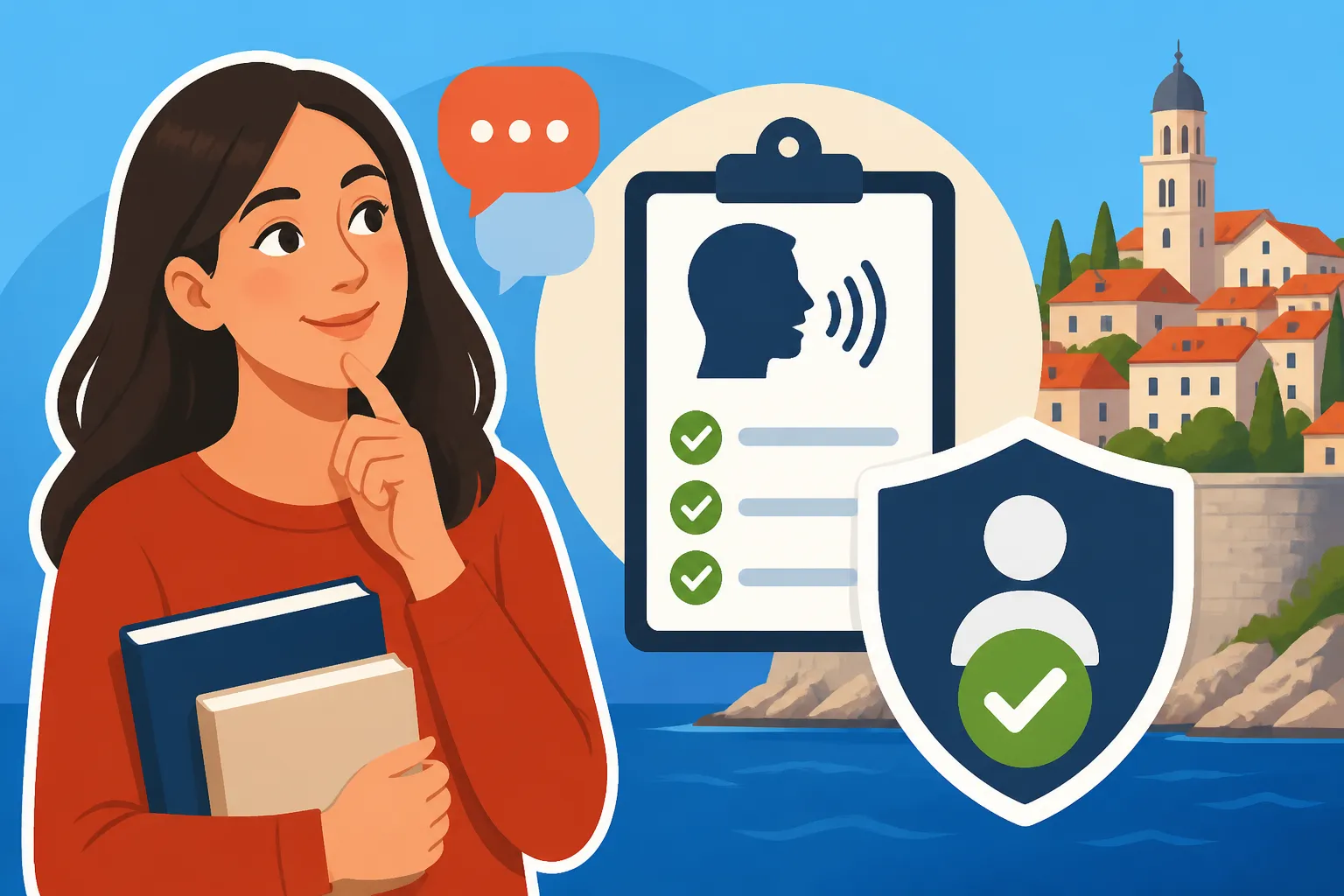
Without a doubt, the most universally accepted and recommended way to prove your Croatian language proficiency is through a formal language certificate issued by an accredited institution. This provides an objective, standardized measure of your skills. The gold standard in Croatia for this is the Centre for Croatian as a Second and Foreign Language, affectionately known as Croaticum, at the Faculty of Humanities and Social Sciences in Zagreb.
Croaticum offers various courses and exams, including a highly respected Croatian Language Proficiency Examination (Ispit iz hrvatskoga jezika) specifically designed for foreigners applying for citizenship or needing official proof of language knowledge. Passing their B1 or B2 level exam will give you an invaluable certificate that the MUP fully recognizes and trusts. The process usually involves a written part (grammar, comprehension, essay) and an oral interview. It's thorough, but a clear pathway. Many expats travel to Zagreb specifically to take this exam, as its reputation and acceptance nationwide are unparalleled.
While Croaticum is the premier option, other accredited language schools across Croatia, particularly those part of public adult education institutions (like Pučko otvoreno učilište in various cities), may also offer recognized proficiency tests. However, always double-check with the MUP or seek advice from a legal professional if you plan to use a certificate from an institution other than Croaticum, just to be absolutely sure it will be accepted for your citizenship application. When researching language courses, make sure the final certificate they issue is officially recognized for such purposes.
Educational Attainment in Croatia
Here's some good news for those who have spent a significant portion of their lives studying in Croatia: your educational journey itself can serve as proof of language proficiency. If you have completed primary, secondary, or even university education in Croatia, particularly if those studies were conducted in Croatian, your diplomas and transcripts can often be presented to waive the need for a separate language certificate.
The rationale is straightforward: if you successfully navigated the Croatian education system, you clearly possess a functional command of the language. This isn't just about attending classes; it’s about demonstrating that you absorbed and processed information, communicated with teachers and peers, and successfully completed academic requirements, all in Croatian. This is a huge advantage for expats who moved here at a younger age or chose to pursue higher education locally.
You'll need to provide original documents or certified copies of your diplomas and transcripts. The MUP will verify these. This method implicitly proves language immersion and active use of the language over an extended period. For those who didn't go through the Croatian school system, however, this option won't apply, and they will need to look at formal testing.
Exemptions and Special Circumstances
Like many bureaucratic processes, there are sometimes exceptions to the rule. While language proficiency is generally mandatory, certain circumstances might lead to an exemption or a less demanding assessment. For example, individuals of older age or those with severe health conditions that genuinely impair their ability to learn or speak Croatian might be considered for an exemption. This is usually determined on a case-by-case basis and requires strong medical documentation or other verifiable proof.
Furthermore, if you are applying for citizenship through specific, less common routes, such as having been a member of the Croatian people living abroad (often requiring proving active participation in Croatian cultural institutions) or other unique scenarios, the language requirement might be adapted. However, it’s crucial not to assume an exemption applies to you. These are rare and granted under very specific, tightly defined conditions.
In all cases of potential exemption, it is absolutely essential to consult with the MUP directly or engage a legal professional specializing in Croatian immigration and citizenship law. They can provide accurate advice based on your individual situation. Do not rely on hearsay or anecdotal evidence. While the MUP usually wants official proof, they also retain a certain level of discretion. A strong interview and a clear demonstration of integration might sometimes sway a decision, but it's risky to rely solely on this without formal evidence.
Preparing for the Language Hurdle: Practical Steps for Expats
So, you know what you need to do, but how do you actually do it? Preparing for this language requirement involves more than just hitting the books. It's about strategic planning, consistent effort, and understanding the entire process.
Choosing the Right Language Course
Embarking on your Croatian language journey is a significant commitment. There are many options out there, each with its own benefits. For most people, a structured language course is the best way to get started or to reach the required B1/B2 level. Croaticum, as mentioned, is highly recommended not just for its certificate but for the quality of its instruction. They offer intensive summer schools and semester-long courses, catering to different schedules. You can learn more about specific programs in our guide Learning Croatian: A Complete Guide to Language Courses and Levels.
Beyond Croaticum, look into local adult education centers, often called "Pučko otvoreno učilište" in larger cities like Zagreb, Split, Rijeka, and Osijek. These centers frequently offer Croatian language courses for foreigners at various levels and are generally more affordable than private institutions. They often have flexible schedules, including evening classes, which can be great if you're working. Private language schools also exist, and a one-on-one tutor can provide a personalized learning experience tailored to your specific needs and pace. The key is consistency; regular attendance and dedicated study outside of class are paramount. Find a method that suits your learning style and commitment level.
Gathering Your Documentation
Once you've achieved the necessary language proficiency, or if you believe you meet one of the exemption criteria, the next critical step is meticulously gathering all your documentation. This is Croatia, after all, and paperwork is king! If you've passed a formal language exam, you'll need the original certificate from the institution. If your educational background in Croatia is your proof, ensure you have your original diplomas and transcripts, along with any necessary certified translations if they were not originally issued in Croatian (though Croatian institutions issue documents in Croatian, of course).
Always, and I mean always, check the most up-to-date requirements directly with the MUP department handling citizenship applications. They can sometimes be a moving target, and you don't want to be caught off guard. You might need to get your documents notarized or apostilled, depending on their origin and the MUP's current guidelines. For a general overview of document preparation, our guide How to Prepare Documents for a Croatian Residence Application offers valuable insights, many of which apply to citizenship as well. Having all your paperwork in order before your appointment will save you immense stress and potential delays.
Here's a quick reference table for common ways to prove language proficiency:
| Method | Description | Key Requirements | Pros | Cons/Caveats |
|---|---|---|---|---|
| Formal Language Certificate | Official certificate from an accredited institution proving B1/B2 CEFR level proficiency. | Pass a recognized exam (e.g., Croaticum). Original certificate. | Most widely accepted and trusted by MUP. Clear, objective proof. | Requires dedicated study and passing a formal exam. Can be costly and time-consuming. |
| Croatian Educational Attainment | Diploma/transcript from primary, secondary, or tertiary education completed in Croatia. | Original diplomas/transcripts. Proof of studies conducted in Croatian. | Waives need for separate language exam. Implicit proof of long-term integration. | Only applicable if you've studied extensively in Croatia. Not an option for most adult expats. |
| MUP Interview/Discretion | Assessment of language skills during the MUP interview, sometimes coupled with other supporting evidence. | No formal document, relies on conversational ability and MUP's judgment. | Can be an informal way if skills are evident. | Highly subjective and unreliable as a primary method. Not a guaranteed path. Only applicable in very specific, rare exemption cases; usually supplemental to other proof. |
The Interview Component
Even if you walk into the MUP with a shining B1 or B2 Croaticum certificate, don't expect to sail through without speaking a word of Croatian. A crucial part of the naturalisation process is the interview with a MUP official. This interview, which is generally required for all naturalisation applications as outlined in How to Apply for Croatian Citizenship Through Naturalisation, serves multiple purposes, and demonstrating your conversational Croatian is definitely one of them.
The officials will likely ask you basic questions about yourself, your reasons for wanting Croatian citizenship, your life in Croatia, and perhaps some general knowledge questions about the country. This isn't usually a formal test, but more of a conversation to gauge your ability to understand and respond in Croatian. They want to see that you can comfortably engage in everyday communication. It's a chance to show them that you're not just academically proficient but truly integrated. Be polite, try to speak clearly, and don't be afraid to ask for clarification if you don't understand a question. They understand that it's not your native language, but they appreciate the effort and ability to communicate.
Remember, the interview is also a chance for you to ask questions, though you should focus on your application. For scheduling and general MUP interactions, our guide How to Book an Appointment at the MUP for Immigration Matters might provide some helpful tips, even though the citizenship interview is a specific step within that broader process.
Common Challenges and Insider Tips
Navigating bureaucracy in a foreign country is challenging enough, and adding a language requirement to the mix can feel overwhelming. But it's entirely doable with the right mindset and strategy.
Navigating Bureaucracy with Language Barriers
The ultimate expat frustration, right? You're trying to prove you can speak Croatian, but in the process, you have to deal with MUP officials whose English might be limited, or who simply prefer to conduct official business in Croatian. This can feel like a catch-22, and it’s a source of genuine stress for many foreigners. My advice here is multifaceted:
Firstly, for initial inquiries or scheduling, if your Croatian isn't quite up to scratch, don't hesitate to bring a trusted Croatian-speaking friend or hire a professional translator to accompany you, if allowed. This can help clarify crucial details and prevent misunderstandings. However, for the actual citizenship interview, you are expected to demonstrate your own language skills. Bringing a translator to interpret for you during that specific interview might send the wrong message about your readiness.
Secondly, patience is your greatest ally. Things in Croatian administration often take time, and a polite, persistent approach, even if you’re struggling a bit with the language, usually yields better results than frustration. Use online translation tools beforehand to write down specific questions or phrases you anticipate needing. The MUP officials are accustomed to dealing with foreigners learning the language, so a little goodwill on both sides goes a long way.
Sustaining Your Language Learning Journey
Getting that B1 certificate is a fantastic achievement, but don't let it be the end of your Croatian language journey. Real life in Croatia is the best classroom you'll ever find. True integration, which is what the language requirement ultimately aims to assess, goes far beyond a piece of paper. You'll find that continuing to practice and improve your Croatian will enrich your life in countless ways, from understanding local jokes to fully participating in community events.
Make it a part of your daily routine. Watch Croatian news and TV shows – start with subtitles, then try without. Listen to Croatian radio. Seek out opportunities to speak with locals; most Croatians are genuinely delighted when foreigners make an effort to speak their language, even if you make mistakes. Join local clubs or volunteer groups. Visit local markets and chat with vendors. The more you immerse yourself, the more natural and effortless your Croatian will become. This continuous effort will not only deepen your connection to Croatia but also make your life here much smoother and more enjoyable in the long run.
Disclaimer
Please remember that the information provided in this guide is for general informational purposes only and does not constitute legal advice. While we strive to ensure accuracy, immigration laws and administrative procedures in Croatia can change. Always consult with the official Croatian Ministry of Interior (MUP) or a qualified legal professional specializing in Croatian immigration law for advice pertaining to your specific situation regarding Croatian citizenship and language requirements.