What Documents Do I Need to Renew My Residence Permit?
Ah, the annual dance with the Croatian bureaucracy – it’s a rite of passage for every expat here, isn't it? Just when you think you’ve mastered the art of gathering obscure documents, it’s time to renew your residence permit, and suddenly, you’re plunged back into a labyrinth of paperwork. Trust me, we’ve all been there, staring at a list of requirements wondering if the MUP (Ministry of Interior) clerk is secretly collecting ancient scrolls. This guide is here to shed some light on precisely what documents you'll need to navigate the renewal process for your Croatian residence permit, helping you keep your sanity and your legal status.
The General Gauntlet: Core Documents for Renewal
No matter what type of residence permit you hold in Croatia, there’s a foundational set of documents that every expat needs to have in order, year after year. Think of these as your bureaucratic "passport" to continued stay, absolutely essential and non-negotiable. Missing even one can send you spiraling back to square one, often with a fresh appointment needed.
Your Existing Residence Permit and Passport
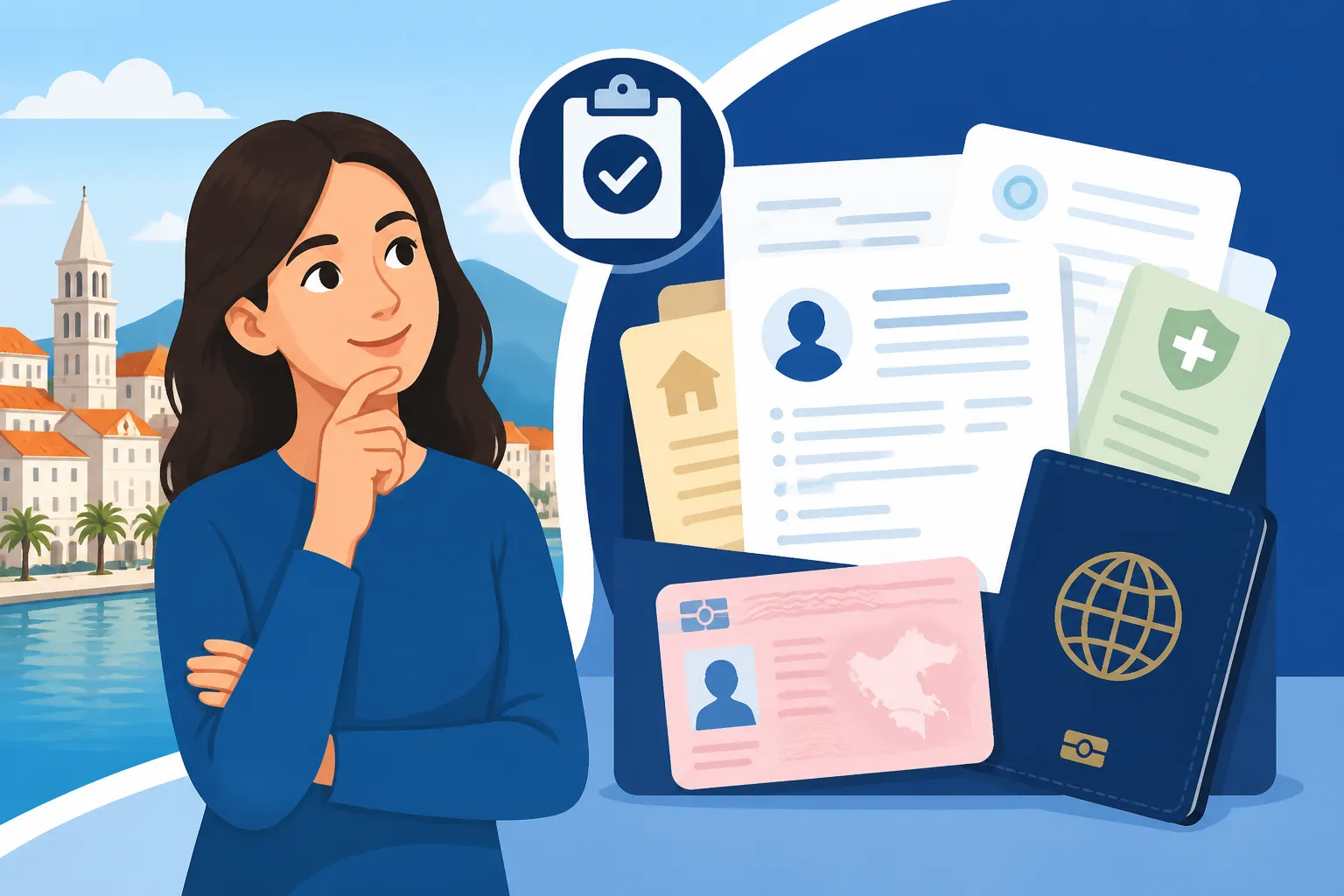
First things first, your current, valid foreign passport and your existing Croatian residence permit (boravišna iskaznica) are your starting points. These are the documents that prove who you are and that you’ve previously been granted temporary residence.
When you go to renew, the MUP will, of course, need to see your valid passport. Make sure it's not set to expire within the next year or so, as some MUP offices might be hesitant to issue a new permit for a longer duration if your passport is nearing its end date. It's an unspoken rule, but having a passport with ample validity always helps. As for your existing residence permit card, they’ll ask for it back when they issue your new one, so don't worry about holding onto it – it's part of the process of updating your official records. Sometimes, they might just want to see it, especially if you’re applying before it actually expires. Keep in mind that applying for renewal usually means initiating the process before your current permit expires, often within a window of 30 to 60 days. This buffer is crucial to avoid any awkward gaps in your legal status. To learn more about this process, you can check out our comprehensive guide on How to Extend Your Temporary Residence Permit in Croatia.
Proof of Financial Means
This is where things can feel a bit like a personal finances interrogation, but it's entirely standard. The Croatian state wants to ensure you can support yourself (and any dependents) without becoming a burden on their social system. The exact amount and type of proof depend on your permit category, but generally, you need to demonstrate a consistent, reliable source of income or sufficient funds.
For employed individuals, this typically means recent pay stubs (three to six months, for instance) and a valid employment contract from your Croatian employer. If you’re self-employed, like many 'paušalni obrt' owners, you'll need bank statements showing consistent income, proof of paid contributions, and possibly recent invoices. Digital nomads, you’re often asked for bank statements showing regular income from your foreign employer or clients, usually for the past three to six months, along with your contract outlining your work for a non-Croatian entity. Students might need proof of a scholarship or bank statements from a parent/guardian, along with a notarized statement of financial support. Pensioners will show pension statements. The rule of thumb for sufficient funds is usually a monthly average that covers your basic living expenses, often pegged around the average net salary in Croatia, which in 2024 hovers around €1,200 to €1,400. However, for some permit types, a lower amount, sometimes closer to 0.75 or 1.0 of the average net salary, or even the minimum wage, might be accepted as a baseline. The MUP officer will assess this, and it’s always better to show more rather than less.
Proof of Accommodation
Another critical piece of the puzzle is demonstrating that you have a place to live. The MUP needs to know you have a stable address in Croatia. This isn't just a formality; it's how they track residents and ensure you're genuinely integrated into the community.
If you’re renting, you’ll need your rental agreement (ugovor o najmu or ugovor o zakupu) and, crucially, proof that it’s registered with the Tax Administration (Porezna Uprava). Landlords are legally required to register these contracts, and you should always get a copy of this registration. If you own property, a copy of your ownership certificate (vlasnički list) will suffice. Sometimes, if you're staying with friends or family without a formal rental agreement, you might need a notarized statement from the owner of the property (izjava vlasnika nekretnine) confirming you reside there, along with their ownership documents. Ensure the address on your MUP application matches your actual residence exactly. If you’ve moved since your last permit was issued, this is the time to update your registered address with the MUP, which is a separate but related process. Understanding the specific requirements for different situations is key, and our guide on How Do I Prove Accommodation for a Croatian Residence Permit? can offer more detailed insights. It's also worth noting that if you're using services like Sirelo for moving, they can help you with logistics around your new address, which might impact what documents you need to submit.
Tailoring Your Application: Category-Specific Documents
While the core documents are universal, the bulk of your renewal application will consist of paperwork specific to the basis of your stay. Croatia has different requirements for workers, digital nomads, students, and those here for family reunification. This is where attention to detail really pays off.
For Work Permits
If your residence in Croatia is based on employment, your employer plays a significant role in your renewal process. The documents you need will primarily revolve around proving your continued employment and the necessity of your role.
You'll need a new employment contract or an annex to your existing one, explicitly stating the continuation of your employment. Your employer will also need to provide a statement (potvrda poslodavca) confirming your employment, your position, and sometimes even justifying why you, a foreign national, are still needed for the role. This can sometimes involve a renewed labor market test, though exceptions exist for certain professions and for permit renewals. Crucially, evidence of salary payment via bank statements or pay slips is vital. The MUP wants to see that you are actively employed and receiving a regular income from your Croatian employer. Sometimes, depending on the specific MUP office or the type of work permit, they might also ask for a recent overview of your paid contributions to the Croatian pension and health funds (HZMO and HZZO). These documents confirm your legitimate employment and contribution to the Croatian system.
For Digital Nomads
The digital nomad permit is a relatively new and exciting option in Croatia, but its renewal has specific requirements that reflect its unique nature. It’s all about proving you’re still working remotely for a non-Croatian entity and maintaining self-sufficiency.
You’ll need to resubmit proof of your work arrangement with a foreign company or your self-employment abroad. This typically means a renewed contract or a letter from your foreign employer confirming your continued engagement and remote status. Financial proof is paramount here: recent bank statements (again, usually 3-6 months) showing the required income threshold. This threshold is tied to the average net salary in Croatia and is adjusted annually. For an individual digital nomad, the monthly income requirement for 2024 is generally set at 2.5 times the average gross salary from the previous year, which translates to a substantial amount, currently over €4,000 per month. You can find detailed, up-to-date figures on Understanding the Digital Nomad Permit Income Requirements in Croatia. This income must come from outside Croatia, as working for Croatian companies is not permitted on this visa. Furthermore, you'll need proof of comprehensive health insurance for the entire duration of your renewed stay. A robust international plan, like those offered by Cigna Global, is often a preferred choice, ensuring you have adequate coverage while living and working remotely here.
For Family Reunification
Renewing a family reunification permit involves demonstrating the continued stability of your family unit in Croatia and the ongoing support from your sponsoring family member.
You'll need updated documents from your Croatian spouse or partner, or the primary permit holder you're joining. This includes their current residence permit, proof of their financial means (employment contract, pay slips, bank statements), and their proof of accommodation, all to show they can continue to support you. Additionally, original or certified copies of your marriage certificate or birth certificates (if renewing for children) may be requested, especially if there have been any changes or if the MUP wants to verify documents again. The MUP's focus is on ensuring the family bond and the financial capacity to support dependents remain strong. If you’ve welcomed new family members, like a newborn, you’ll need to register them for residence and health insurance as part of this process. This can often feel like a deeply personal inquiry, but it's crucial for the MUP to confirm the legal basis of your family's continued stay.
For Students
For students, the renewal process hinges on your continued enrollment and your ability to support yourself through your studies.
You'll need an updated certificate of enrollment from your Croatian university or educational institution, confirming your active student status for the upcoming academic year. This certificate should clearly state the program, duration, and that you are a full-time student. Proof of financial means is also essential, demonstrating that you have sufficient funds to cover your living expenses and tuition fees. This could be bank statements showing a consistent balance, proof of scholarship, or a notarized statement of financial support from a parent or guardian, accompanied by their bank statements. Health insurance coverage for the renewed period is also mandatory. Often, students can register with HZZO after gaining their initial permit, but if not, proof of private health insurance is required. For more specific guidance on student permits, take a look at our article on Understanding Residence Permits for Students in Croatia.
The Nitty-Gritty: Supporting Documents and Common Pitfalls
Beyond the main categories, there are always those crucial supplementary documents and procedural quirks that can make or break your application. These details often trip up even seasoned expats.
Health Insurance
Regardless of your permit type, valid health insurance for your entire period of stay is a non-negotiable requirement for renewing your residence permit. This means you need to show proof that you are covered by either the Croatian public health insurance fund (HZZO) or an approved private health insurance policy.
If you are registered with HZZO, you’ll need to provide proof of your active status, often a confirmation letter or a recent payment slip for your contributions. If you’re covered under a private plan, you'll need the policy document clearly stating the period of coverage and the extent of the benefits, particularly ensuring it meets the minimum requirements for temporary residence – usually covering emergency medical treatment, repatriation, and other essential care up to a certain sum. Many expats opt for comprehensive private health insurance providers like Cigna Global to ensure they meet all requirements and have peace of mind. Remember, the insurance must be valid for the entire period you are requesting for your permit renewal. This topic is so critical that we dedicated an entire guide to it: What Health Insurance Do I Need for a Croatian Residence Permit?.
Administrative Fees and Stamps
Welcome to the world of upravne pristojbe and državni biljezi! Croatia, like many European countries, requires you to pay administrative fees for processing your application and for the biometric residence card itself.
The administrative fees are typically paid via uplatnica (payment slip) at a bank, post office, or FINA. The MUP office will usually give you the precise payment details. Then there are državni biljezi, or "state stamps," which are essentially tax stamps. These used to be physical stamps you’d buy at a post office, but increasingly, the MUP prefers you pay these fees via uplatnica as well, often bundling them into one payment. The exact amounts can vary slightly year to year, so always confirm with the MUP when you submit your application. It’s always a good idea to pay these before your MUP appointment if you can, to avoid a last-minute scramble. Keep the receipt (potvrda o uplati) safe, as you’ll need to submit it with your documents.
The Dreaded OIB and MUP Appointments
Your OIB, or personal identification number, is your lifeblood in Croatia – you can't do much without it, including renewing your permit. If you don't have it or have somehow misplaced it, make getting it your top priority. You can learn more about its importance in our guide on How to Get Your OIB and Why It Matters for Healthcare Access.
Then there’s the MUP appointment system. This can be a significant source of frustration for expats. In larger cities like Zagreb or Split, you often need to book an appointment online, which can sometimes be as challenging as winning the lottery, with slots disappearing instantly. In smaller towns, it might be a walk-in system, but even then, waiting times can be long. My best advice: start trying to book your appointment as early as possible, well within that 30-60 day window before your current permit expires. Be persistent, refresh the booking page frequently, and if all else fails, consider going in person to your local MUP office to inquire about booking options. Patience is truly a virtue here. For detailed steps on how to navigate this, check out How Do I Book a MUP Appointment for My Residence Application?.
Dealing with Changes
Life happens, and sometimes, between one permit and the next, your circumstances change. Maybe you’ve moved house, changed jobs, or even gotten married. It’s crucial to report these changes to the MUP promptly, as they can impact your renewal.
If you’ve changed your address, you need to update your registered residence (prebivalište) with the MUP first. This is a prerequisite for renewing your permit with your new address. If you’ve changed jobs, the MUP will need to see your new employment contract and potentially a termination letter from your previous employer. For significant life events like marriage or divorce, you’ll need to provide updated legal documents (marriage certificate, divorce decree). Don't try to hide these changes; transparency is always the best policy. The MUP has access to various databases, and inconsistencies can lead to delays or even rejection. For assistance with relocating and dealing with address changes, resources like Sirelo can be quite helpful in managing the practical aspects of your move, allowing you to focus on the paperwork.
Navigating the renewal of your Croatian residence permit can feel like a formidable task, but by gathering the right documents and understanding the process, you can make it significantly smoother. Be thorough, be patient, and always double-check everything before your MUP appointment.
Summary of Key Documents for Residence Permit Renewal
Here's a quick rundown of the most commonly required documents. Remember, this table is a general guide, and specific requirements can vary based on your individual situation and the MUP office.
| Document Category | General Requirement | Specific for Work Permit | Specific for Digital Nomad Permit | Specific for Family Reunification | Specific for Student Permit |
|---|---|---|---|---|---|
| Identity & Status | Valid Passport (with sufficient validity) | Valid Passport | Valid Passport | Valid Passport | Valid Passport |
| Existing Residence Permit Card (Boravišna Iskaznica) | Existing Residence Permit Card | Existing Residence Permit Card | Existing Residence Permit Card | Existing Residence Permit Card | |
| Financial Means | Bank Statements (3-6 months) showing sufficient funds | Employment Contract | Contract with Foreign Company | Sponsor's Employment/Pension Proof | Certificate of Enrollment |
| Recent Pay Slips (3-6 months) | Foreign Bank Statements (showing required income) | Sponsor's Bank Statements | Bank Statements (applicant or sponsor) | ||
| Confirmation of Employment from Employer | Proof of Scholarship (if applicable) | ||||
| Accommodation | Registered Rental Agreement (Ugovor o Najmu) | Registered Rental Agreement | Registered Rental Agreement | Sponsor's Proof of Accommodation | Registered Rental Agreement |
| Proof of Ownership (Vlasnički List) or Notarized Statement | Proof of Ownership or Notarized Statement | Proof of Ownership or Notarized Statement | Sponsor's Ownership or Notarized Statement | Proof of Ownership or Notarized Statement | |
| Health Insurance | Proof of HZZO Coverage or Private Health Insurance | Proof of HZZO or Private Health Insurance | Proof of Comprehensive Private Health Insurance | Proof of HZZO or Private Health Insurance | Proof of HZZO or Private Health Insurance |
| Administrative | OIB (Personal Identification Number) | OIB | OIB | OIB | OIB |
| Paid Administrative Fees (Uplatnice for pristojbe & biljezi) | Paid Administrative Fees | Paid Administrative Fees | Paid Administrative Fees | Paid Administrative Fees | |
| Other (as requested) | Photos (if biometric data update needed) | Recent Photo (if biometric data update needed) | Recent Photo (if biometric data update needed) | Recent Photo (if biometric data update needed) | Recent Photo (if biometric data update needed) |
| Criminal Background Check (rare for renewal, but possible) | Marriage/Birth Certificates |
Disclaimer
The information provided in this guide is intended for general informational purposes only and does not constitute legal advice. While we strive to keep the information accurate and up-to-date, immigration laws and procedures in Croatia can change rapidly. It is always recommended to consult with the official MUP (Ministry of Interior) website, contact your local MUP office directly, or seek advice from a qualified legal professional specializing in Croatian immigration law for your specific situation. Reliance on any information in this guide is solely at your own risk.