How Do I Get a Croatian Residence Permit as a Student from Abroad?
Dreaming of studying in beautiful Croatia, perhaps soaking up history in Zagreb or enjoying the vibrant student life in Split, is an exciting prospect. However, the path to getting here as an international student from outside the EU/EEA often feels like navigating a bureaucratic maze, especially when you’re applying from thousands of kilometers away. This guide is here to demystify the process of securing your Croatian student residence permit from abroad, providing you with clear, actionable steps and validating some of the common frustrations you might encounter along the way.
Laying the Groundwork: Before You Even Apply
Before you can even think about submitting an application, there’s a crucial phase of preparation that needs to happen. This isn't just about gathering documents; it's about understanding the specific requirements and setting yourself up for success in a system that can be quite particular. Many international students initially underestimate this pre-application stage, leading to delays and unnecessary stress.
Getting Accepted and Initial Document Gathering
The very first step, and arguably the most important, is securing an official acceptance letter from a recognized Croatian educational institution. This could be a university in Zagreb, Rijeka, Split, or any other city. Without this, your application for a student residence permit won't even be considered. This letter needs to be in Croatian or officially translated by a sworn court interpreter. Always get multiple copies, and keep the original safe!
Once accepted, the document hunt begins in earnest. You'll need a valid passport, of course, with sufficient validity beyond your intended stay. Recent passport-sized photos are also essential, usually 35x45mm, taken on a light background. Beyond these basics, the real challenge often comes with proving your financial stability. Croatia wants to ensure you can support yourself without becoming a burden on the state. This means providing bank statements showing adequate funds (often around €1,500 per month for the duration of your studies or a lump sum covering your entire academic year), scholarship letters if you're fortunate enough to have one, or a notarized statement of financial support from a parent or guardian, accompanied by their bank statements. It's not enough to just say you have money; you need to prove it with official, translated documents.
Another significant hurdle for many is arranging accommodation. You need proof that you have a place to live in Croatia. This could be a dormitory confirmation, a rental agreement (pred-ugovor or signed agreement), or a notarized statement from a property owner confirming you will be staying with them. Trying to secure a long-term rental from abroad can feel like a game of chance, especially if you're not physically present to view properties. Don't forget a clean criminal background check from your home country, often needing to be apostilled or super-legalized, and certified translations of any document not originally in Croatian or English. This initial scramble for documents can be incredibly overwhelming, especially when official government websites might offer only vague instructions, leaving you to piece things together from various sources.
Understanding the "Why" and "Where" of Your Application
The specific type of permit you'll be seeking is called "privremeni boravak u svrhu studiranja," which translates to "temporary residence for the purpose of studying." This is a crucial distinction, as Croatia has various types of temporary residence permits, and each has its own set of requirements. Knowing the correct category from the outset ensures you're gathering the right documentation and following the correct procedures.
For non-EU/EEA citizens, it's absolutely vital to understand that you must apply for your temporary residence permit from your home country, or from a country where you hold long-term residence, through the Croatian embassy or consulate. This is a common point of confusion and frustration for many prospective students. While some other countries allow you to arrive on a tourist visa and then apply for a residence permit, Croatia generally does not permit this for students. Trying to apply from within Croatia if you entered as a tourist will almost certainly result in your application being rejected, and you'll likely be required to leave the country and reapply from abroad. This seemingly rigid rule is in place to manage immigration and ensure all necessary background checks and procedures are completed before you even set foot on Croatian soil. Don't try to circumvent this; it will only complicate your journey.
Navigating the Application Process from Abroad
Once you've meticulously gathered all your documents, the next phase involves actually assembling your application dossier and submitting it to the relevant Croatian diplomatic mission. This stage requires precision, patience, and a good understanding of what the Croatian authorities expect.
Compiling Your Application Dossier
Your application dossier is essentially a complete package of all the documents you've gathered, presented in a clear and organized manner. Besides your acceptance letter, passport, photos, proof of funds, and accommodation, you’ll need to include the completed application form (often referred to as Obrazac 1a). This form is available on the Ministry of Interior (MUP) website or at the embassy/consulate. Fill it out accurately and legibly. Any errors could lead to delays or rejection.
Remember that any official documents not in Croatian (and sometimes not even in English, depending on the embassy) must be translated by a sworn court interpreter in Croatia or by a sworn translator recognized by the Croatian diplomatic mission in your country. Furthermore, many documents, such as your birth certificate, marriage certificate (if applicable), and criminal background check, will need an apostille stamp if your country is part of the Hague Apostille Convention. If not, they may require super-legalization through your country's foreign ministry and then the Croatian embassy. This step ensures that the documents are recognized as legitimate by the Croatian authorities. It's a fiddly, time-consuming process that often catches applicants by surprise. For more detailed guidance on preparing these crucial documents, you might want to check out resources on How to Prepare Documents for a Croatian Residence Application.
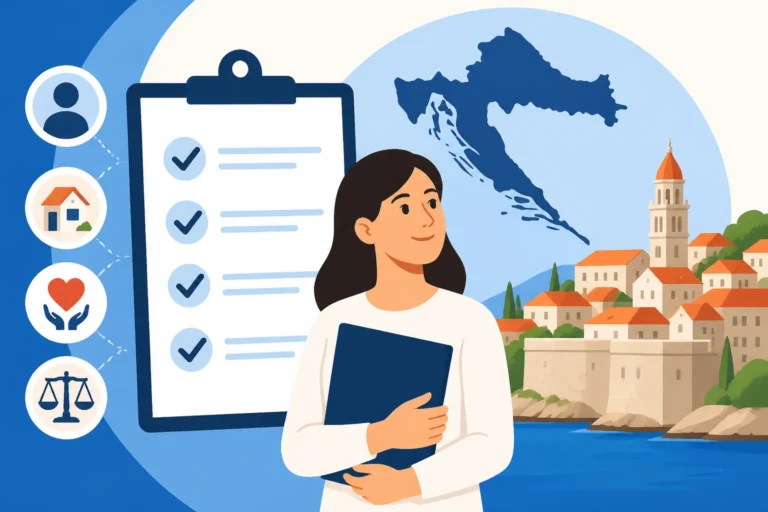
Here's a quick checklist of common documents for your student residence permit application:
| Document Type | Description | Notes |
|---|---|---|
| Application Form | Obrazac 1a | Duly filled and signed. |
| Passport | Valid passport | Original and copies of all used pages. Must be valid for at least 3 months beyond intended stay. |
| Passport Photos | Recent 35x45mm photos (usually 2-4) | White background, meeting biometric standards. |
| Acceptance Letter | Official letter from Croatian educational institution | Original, in Croatian or certified translation. |
| Proof of Funds | Bank statements, scholarship letter, notarized sponsor statement | Showing sufficient funds (e.g., ~€1,500/month or annual lump sum). In English or Croatian, or certified translation. |
| Proof of Accommodation | Dorm confirmation, rental agreement, notarized host statement | In Croatian or certified translation. |
| Criminal Background Check | From home country | Apostilled/super-legalized, with certified translation. Must not be older than 6 months. |
| Health Insurance | Travel health insurance for initial period (e.g., Cigna Global) | Proof of comprehensive insurance covering your first few months until HZZO is activated. |
| Birth Certificate | Original or certified copy | Apostilled/super-legalized, with certified translation. |
| Administrative Fees | Proof of payment for application | Check current fees with the embassy/consulate. |
It's a good idea to create a checklist for yourself and make photocopies of everything you submit. This will save you a lot of headaches later if any documents go missing or if you need to refer back to something. Should you need to ship these vital documents, or indeed any of your belongings once your permit is approved, remember that services like Sirelo can help you find reputable international movers.
The Embassy or Consulate Interview and Submission
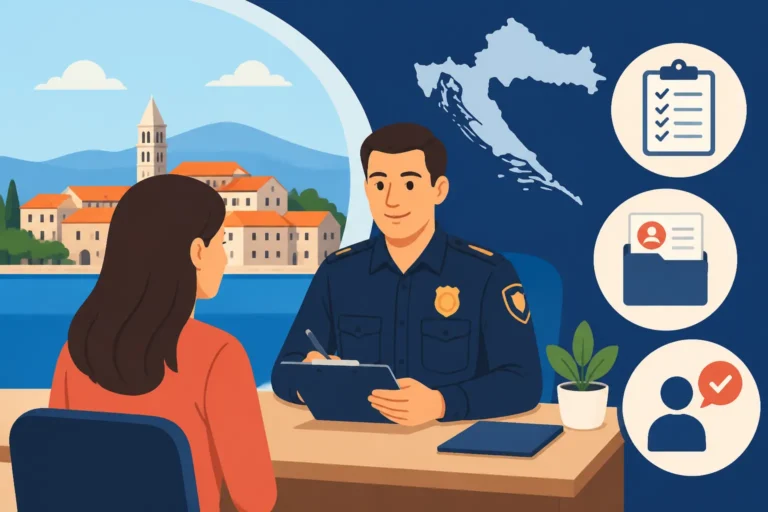
With your dossier complete, you'll need to schedule an appointment at the Croatian embassy or consulate in your jurisdiction. Be prepared for potentially long waiting times for appointments, especially during peak application seasons. It's wise to book as far in advance as possible. When you attend your appointment, dress professionally and bring all original documents, even if you’re only required to submit copies. The consular officer might want to see the originals for verification.
During the interview, the officer will review your application and documents. They may ask questions about your study plans, why you chose Croatia, your financial situation, and your intentions after completing your studies. Answer truthfully and confidently. This is your chance to demonstrate your genuine intent to study. You will also need to pay the administrative fees, which vary, so confirm the exact amount and accepted payment methods beforehand.
Processing times for student residence permits can fluctuate wildly, from a few weeks to several months. There's no fixed timeline, and it largely depends on the volume of applications and the efficiency of the specific diplomatic mission. Patience is truly a virtue here. If your application is successful, you'll likely be issued a Type D long-stay visa, which allows you to enter Croatia and then complete the final steps of obtaining your residence card. For a deeper dive into this type of visa, check out How to Apply for a Long-Stay (Type D) Visa for Croatia.
Arrival in Croatia and Finalizing Your Residence Permit
Congratulations! You've received your permit approval or Type D visa and are ready to embark on your Croatian adventure. But the administrative journey isn't quite over. There are a few critical steps you must take immediately upon arrival to finalize your legal status as a student in Croatia.
Your First Steps Upon Arrival
The moment you step foot on Croatian soil, a ticking clock begins. You have a legal obligation to register your address (your "prebivalište") with the local police, specifically the Ministry of Interior (MUP) foreign nationals department, within three days of your arrival. Even if you already submitted proof of accommodation with your application, this step is mandatory. You’ll need your passport and the document proving your accommodation (e.g., rental agreement or a signed statement from your landlord). This is a crucial step that many newcomers, especially students, sometimes overlook, leading to potential fines or issues with their permit. You can find more comprehensive details on this process in Registering Your Residence in Croatia: The Complete MUP Guide.
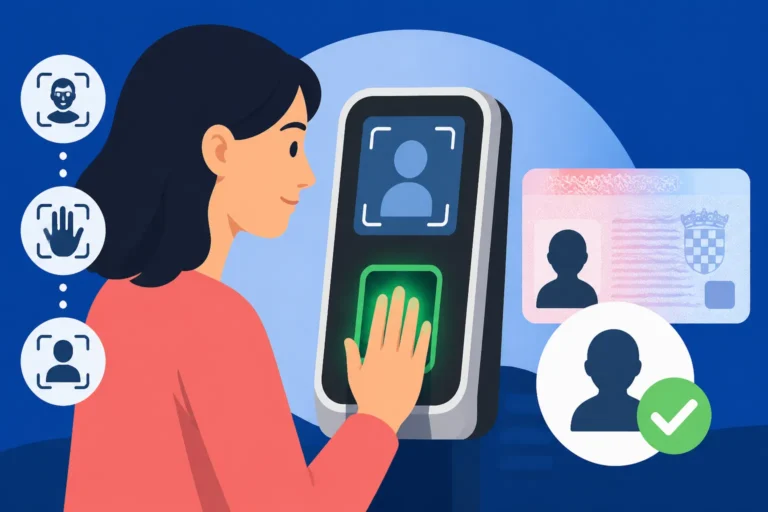
After registering your address, your next immediate task at the MUP is to apply for your biometric residence card, known as the "boravišna iskaznica." This physical card is your official proof of temporary residence in Croatia. You'll typically need to provide your fingerprints, signature, and have your photograph taken at the MUP office. The MUP visit can be a daunting experience, with queues, potentially confusing instructions, and language barriers, especially if you're in a larger city like Zagreb or Split. It's often best to go early in the morning and be prepared for a wait.
Securing Your Health Insurance and OIB
As a student in Croatia, comprehensive health insurance is not just recommended; it's mandatory. When you applied for your permit from abroad, you likely had to show proof of travel health insurance for your initial period. Once your temporary residence permit is granted in Croatia, you'll generally be required to register with the Croatian Health Insurance Fund (HZZO) to get into the public healthcare system. This process usually involves providing your MUP-issued residence permit, passport, and sometimes your acceptance letter. The HZZO system offers a good level of basic care, but navigating it can be challenging initially. For a detailed breakdown of how HZZO works, refer to How the Croatian Health Insurance Fund (HZZO) Works: A Full Overview.
Until your HZZO coverage is fully set up, or if you prefer additional coverage, it's wise to maintain private health insurance. International providers like Cigna Global offer robust plans that can bridge gaps or provide access to private clinics, which can be invaluable when dealing with language barriers or longer wait times in the public system. Having such a plan can offer peace of mind during those first few months.
Concurrently with sorting out your residence and health insurance, you'll need to obtain your OIB, which is your Croatian personal identification number. This nine-digit number is absolutely essential for almost every administrative process in Croatia – from opening a bank account to registering for university courses, setting up utilities, and eventually, if you plan to, working part-time. You'll typically apply for this at the Tax Administration (Porezna Uprava) after your residence permit is approved, using your passport and MUP decision. Don't underestimate the importance of your OIB; it's your key to functioning in Croatia. Learn more about its significance and how to get it by reading How to Get Your OIB and Why It Matters for Healthcare Access.
Living as an International Student in Croatia
Life as an international student in Croatia is incredibly enriching, but it comes with ongoing responsibilities regarding your legal status. Your temporary residence permit will have an expiry date, usually aligned with your academic year. It is your responsibility to keep track of this date and initiate the renewal process well in advance, typically 60 to 90 days before expiry. Renewing late can lead to complications, fines, or even issues with your student status.
Many students also consider part-time work to help cover their expenses. As an international student from a non-EU/EEA country, you are generally permitted to work part-time, but there are specific rules and limitations. You'll usually need to have your residence permit for study purposes, and employers will need to follow certain procedures. This can be a great way to gain local experience and supplement your income. To understand the specifics of working while studying, explore Understanding Student Work Contracts (Studentski Ugovor) in Croatia. If your studies are in a field like IT, you might even consider exploring general job markets in Croatia after graduation, which you can learn about in The Expat Guide to Finding a Job in Croatia.
Finally, while many courses are taught in English, immersing yourself in the Croatian language will significantly enhance your experience and make daily life much easier. Even learning basic phrases can go a long way. There are numerous language courses available throughout Croatia. Consider enrolling in one to deepen your connection with the culture and community. Learning Croatian: A Complete Guide to Language Courses and Levels can point you in the right direction.
Common Challenges and Troubleshooting
Despite your best efforts, the path to obtaining and maintaining a student residence permit in Croatia can throw a few curveballs your way. Understanding these common challenges beforehand can help you navigate them more effectively.
Dealing with Delays and Missing Documents
Bureaucracy, unfortunately, is a universal language, and Croatia is no exception. Delays in processing your application are not uncommon, whether it’s at the embassy abroad or the MUP in Croatia. This can be incredibly frustrating when you have deadlines for tuition payments or travel plans. If your application is taking longer than expected, the first step is always to politely follow up with the office where you submitted your application. Keep a record of all communication, including dates, names, and what was discussed. While patience is absolutely key, respectful persistence can sometimes help move things along.
Another frequent issue is a request for "missing" or "additional" documents. Even if you think you've submitted everything, an officer might request something further. This is why making and keeping copies of every single document you submit is paramount. If you're asked for a document you know you already provided, you can present your copy as proof. Always double-check the exact requirements, and if anything seems unclear, ask for clarification. Sometimes, a document deemed sufficient by one official might not be by another, or new regulations might have come into effect.
Financial Requirements and Proof
The requirement to prove sufficient funds is a significant hurdle for many international students. The stipulated amount (e.g., at least €1,500 per month or a yearly equivalent of around €18,000 to €20,000) is designed to ensure you won't struggle financially. This can be challenging for students relying on family support, as their sponsors will also need to provide official, translated bank statements and perhaps a notarized letter of support. The Croatian authorities want to see stability and consistency in these funds.
For students planning to work part-time to supplement their income, it's important to remember that prospective earnings from future work cannot typically be used as proof of funds for the initial residence permit application. The MUP needs to see that you have existing funds or guaranteed support to cover your living expenses for the initial period. Any income from a student work contract will come after you've secured your permit and started your studies. If you're concerned about meeting these requirements, it's always best to have a buffer or explore scholarship options. More detailed insights into financial requirements can be found in How Much Income Is Required for a Croatian Residence Permit?.
Successfully navigating the Croatian student residence permit process from abroad is entirely achievable, but it demands careful planning, meticulous document preparation, and a healthy dose of patience. While the bureaucracy can test your resolve, remember that many have walked this path before you and emerged victorious. Soon, you could be among them, enjoying your student life in Croatia.
Disclaimer
The information provided in this guide is intended for general informational purposes only and does not constitute legal or professional advice. While we strive to keep the information accurate and up-to-date, immigration laws and procedures in Croatia can change rapidly. Readers are strongly advised to consult with the official Croatian Ministry of Interior (MUP) website, the Croatian embassy or consulate in their home country, or a qualified immigration lawyer in Croatia for the most current and specific advice pertaining to their individual circumstances. We do not accept any responsibility for any loss or damage incurred as a result of relying on the information presented herein.