How Do I Get My US Degree Recognised in Croatia?
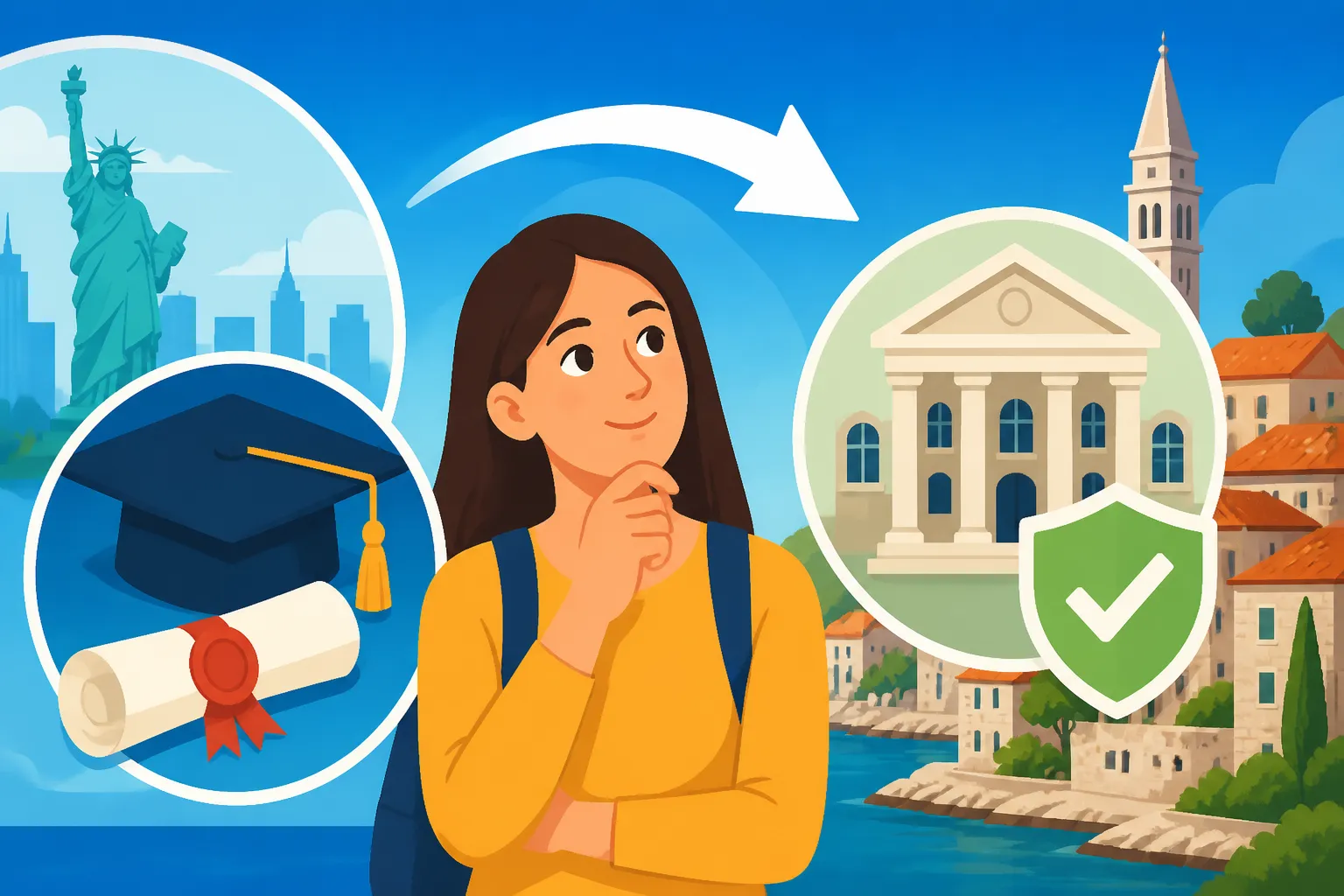
Moving from the United States to Croatia is an exhilarating leap of faith, but many expats hit a brick wall when they realize their hard-earned American degree isn't automatically recognized by Croatian employers or universities. Whether you are chasing a job in Zagreb's tech scene or applying for a Master’s at the University of Split, you need a formal validation of your credentials. This guide breaks down the complex ENIC-NARIC process to ensure your US education translates into Croatian opportunities.
Professional Recognition for the Labor Market
If your primary goal is to land a job with a Croatian company, you are looking for professional recognition of your higher education qualifications. This isn't just a formality; it is a legal requirement for many positions, especially if the company has strict HR protocols or if you are dealing with the public sector. Unlike the US, where an employer might just glance at your diploma and call your registrar, Croatia relies on a centralized authority to "translate" your US credits into the European Credit Transfer and Accumulation System (ECTS).
The Role of AZVO and the ENIC-NARIC Office
The Agency for Science and Higher Education (AZVO) is the gatekeeper for foreign degree recognition in Croatia. Within AZVO, the ENIC-NARIC office handles the heavy lifting. I remember the first time I walked past their office in Zagreb; it felt like the most important building in the country for my career. They evaluate your US degree based on several factors: the accreditation of your US university, the duration of your studies, and the specific curriculum you completed.
For most "unregulated" professions—think marketing, business administration, or software development—the How to Get Your Foreign Degree Recognised in Croatia: The AZVO Guide is your best friend. The process for these careers is generally smoother because the employer has more leeway. However, AZVO still needs to issue a formal document stating that your Bachelor of Science from a US state university is equivalent to a Croatian Prvostupnik or Magistar degree. This document is often what stands between you and a signed contract.
Regulated vs. Unregulated Professions
This is where things can get tricky. If you are a doctor, nurse, lawyer, architect, or teacher, your profession is "regulated" in Croatia. Professional recognition for these fields involves more than just AZVO. You will likely need to deal with specific professional chambers (like the Croatian Medical Chamber) and may even be required to take "differential exams" to prove you understand Croatian laws or specific local standards.
If you find yourself in a regulated field, start the process immediately. It is notoriously slow and requires a high level of Croatian language proficiency. While you are preparing for these hurdles, using a platform like iTalki to find a tutor who specializes in professional or legal Croatian can be a lifesaver. You don't just need to know how to order a coffee; you need to know the terminology of your industry to pass these local assessments. Once you have your recognition and start earning, don't forget that as a US citizen, you still have reporting obligations back home, which is where specialized services like Taxes for Expats become essential to navigate the dual-taxation landscape.
The Document Checklist and the Apostille Requirement
The most common mistake American expats make is assuming a "notarized copy" of their diploma is enough. In the international world of bureaucracy, the Apostille is king. Because the US and Croatia are both parties to the Hague Convention, your documents must bear this specific international stamp to be considered authentic. Without it, the Croatian Ministry of the Interior (MUP) and AZVO will likely reject your application before they even read your name.
Securing Your Apostille in the US
An Apostille for a degree usually happens in two stages. First, your US university's registrar must notarize your diploma or transcripts. Second, that notarization must be certified by the Secretary of State in the state where the university is located. If you are already in Croatia, this becomes a logistical nightmare of international couriers.
I’ve seen people try to bypass this by going to the US Embassy in Zagreb, but the embassy generally does not apostille academic documents. You have to send them back to the States. Once you have that gold-sealed paper in hand, you are ready for the next step. It is also a good time to ensure you have your personal identification sorted, so make sure you know How to Get an OIB (Personal Identification Number) in Croatia as you will need this number for almost every form you fill out at AZVO.
Certified Translations by a Sudski Tumač
Once your US documents are apostilled, they must be translated into Croatian. However, you cannot just do this yourself or use a standard translation agency. In Croatia, documents for official use must be translated by a Sudski Tumač (Court Interpreter). These are individuals authorized by the Croatian courts to provide "sworn translations" that carry legal weight.
The translator will bind your original (or a certified copy) with the Croatian translation using a specific colored string and their official seal. When you submit your degree to AZVO, they want to see this bundle. While you wait for these translations, you might want to brush up on your conversational skills. Using iTalki to practice explaining your educational background to potential employers can help you bridge the gap between "having the paper" and "getting the job." Learning the local nuances is just as important as the paperwork itself, especially if you are looking at How to Find English-Speaking Jobs in Croatia while the recognition process grinds along.
Navigating Academic Recognition for Further Study
If you aren't looking for a job but rather want to continue your education at a Croatian university, the process changes. This is called "Academic Recognition." Instead of going through the central AZVO office for a general labor market certificate, you typically apply directly to the university you wish to attend.
University-Level Validation
Each university in Croatia, from the University of Zagreb to the University of Rijeka, has its own office for the recognition of foreign higher education qualifications for the purpose of continuing studies. They will look at your US transcripts through a different lens than an employer would. They want to see if your undergraduate coursework provides the necessary prerequisites for their specific graduate program.
Expect to provide a detailed syllabus of the courses you took in the US. This can be a massive undertaking if your US university doesn't have an easy way to export course descriptions. You might find that some of your US "Liberal Arts" credits don't transfer perfectly into the highly specialized Croatian system. Being prepared for this discrepancy is vital. During this transition, understanding the broader context of The Complete Guide to Working in Croatia as a Foreigner (2027) can help you decide if staying in school or entering the workforce is the better move for your residency status.
Comparing Education Systems
The US system and the Croatian system (which follows the European Bologna Process) are quite different. In the US, a Bachelor's is usually four years. In Croatia, a Prvostupnik (Bachelor) is often three years, followed by a two-year Magistar (Master). This often means that a US Bachelor's degree is viewed very favorably, sometimes sitting in a grey area between a Croatian Bachelor's and a Master's depending on the credit count.
| US Degree Level | Croatian Equivalent (ECTS Approx) | Recognition Body |
|---|---|---|
| Associate Degree | Often not recognized as a full degree | AZVO (Professional) |
| Bachelor’s (BA/BS) | Prvostupnik (180 – 240 ECTS) | AZVO or University |
| Master’s (MA/MS) | Magistar struke (300 ECTS total) | AZVO or University |
| Doctorate (PhD) | Doktor znanosti | AZVO or University |
Timelines, Fees, and Practical Tips for Success
The recognition process is not fast. Official estimates often say two to four months, but in reality, it can take longer if your US university is slow to respond to AZVO’s verification emails. I always tell newcomers to treat the recognition process as a part-time job for the first few months of their arrival.
What it Costs and How to Pay
There are several layers of fees. AZVO charges a processing fee (typically around 50 to 100 Euros), but your biggest expenses will be the Apostilles in the US and the sworn translations in Croatia. A full "packet"—degree, transcripts, and diploma supplement—can easily cost 300 to 500 Euros by the time it is fully translated and stamped.
As you plan these expenses, keep in mind your overall financial health. If you are working remotely or for a US company while waiting for recognition, you need to be very careful about how you report this income. Services like Taxes for Expats are invaluable here because the Croatian tax office (Porezna Uprava) will eventually want to know why you are living in the country without a local salary. For a deeper dive into these requirements, see The Complete Guide to Taxes in Croatia for Expats (2027).
Transitioning to the Croatian Workforce
Once you have that recognition document from AZVO, the doors start to open. You can officially register with the Croatian Employment Service (HZZ) and start applying for roles that require specific qualifications. You will also be able to justify a higher salary bracket. In Croatia, salaries are often tied to your level of education, so having your US Master's officially recognized can directly impact your take-home pay. Check out the latest data on Understanding Minimum Wage and Average Salary in Croatia to see where your degree places you in the local market.
While you are waiting for the bureaucracy to finish, don't stay idle. Use iTalki to refine your interview skills in Croatian or English, depending on the firm. Many international companies in Zagreb or Split conduct interviews in English but appreciate a candidate who understands the local administrative landscape. Showing an employer that you have already initiated your AZVO recognition proves that you are serious about staying and are Learning Croatian: A Complete Guide to Language Courses and Levels to better integrate.
Finally, remember that healthcare is tied to your status. As soon as you are "in the system" with a job or as a student, you'll need to navigate How to Register for HZZO Health Insurance as a Foreigner in Croatia. Your recognized degree is the first domino in a long line of administrative wins that will eventually make Croatia feel like home.
Disclaimer
The information provided in this guide is for informational purposes only and does not constitute legal or professional administrative advice. Regulations regarding degree recognition and immigration in Croatia are subject to change, and users should always verify the latest requirements with the Agency for Science and Higher Education (AZVO) and the Croatian Ministry of the Interior (MUP).