What Is the Cost of a Dental Implant in Croatia?
If you have lived in the United States, Canada, or the United Kingdom, you know that the quote for a single dental implant can feel like a down payment on a small house. This guide solves the mystery of dental pricing in Croatia by providing actual 2026 cost breakdowns and explaining the administrative realities of navigating both the public and private dental systems as a foreigner.
The Reality of Dental Costs in Croatia: Public vs. Private
When you first land in Croatia and start hearing about the healthcare system, the local acronyms will start flying at you faster than you can say "OIB." The first thing you need to understand is that the dental world here is split into two distinct universes: the public system, managed by HZZO, and the booming private sector. For an expat, the path you choose depends entirely on your residency status and how much patience you have for waiting rooms.
In the public system, if you are a resident, you will likely be registered at a local health center known as a Dom Zdravlja. While many basic services like cleanings or simple fillings are covered or heavily subsidized, dental implants are almost never included in the basic package. To get a full grasp of what is actually paid for by the state, you should read about Understanding Dental Care Coverage Under HZZO in Croatia before you assume your monthly contributions will cover a new set of teeth. Even for locals, dental implants are considered a "luxury" or "above-standard" procedure, meaning out-of-pocket payments are the norm.
The private sector is where most foreigners end up for major work. Croatia has become a massive hub for dental tourism, drawing patients from Italy, Germany, and Austria. Because of this, private clinics are exceptionally high-tech and usually staffed by dentists who speak impeccable English. However, just because it is private doesn't mean it is a free-for-all. You still need to understand Public vs Private Healthcare in Croatia: Which Should Expats Choose? to decide if you want to integrate your private dental work with your overall healthcare strategy. For those just visiting or working as nomads, having a plan like SafetyWing can provide a safety net for other medical emergencies that might arise while you are in the country for dental work, though it is important to remember that most travel-medical plans do not cover elective cosmetic dental surgery itself.
Price Breakdown of Dental Implants in 2026
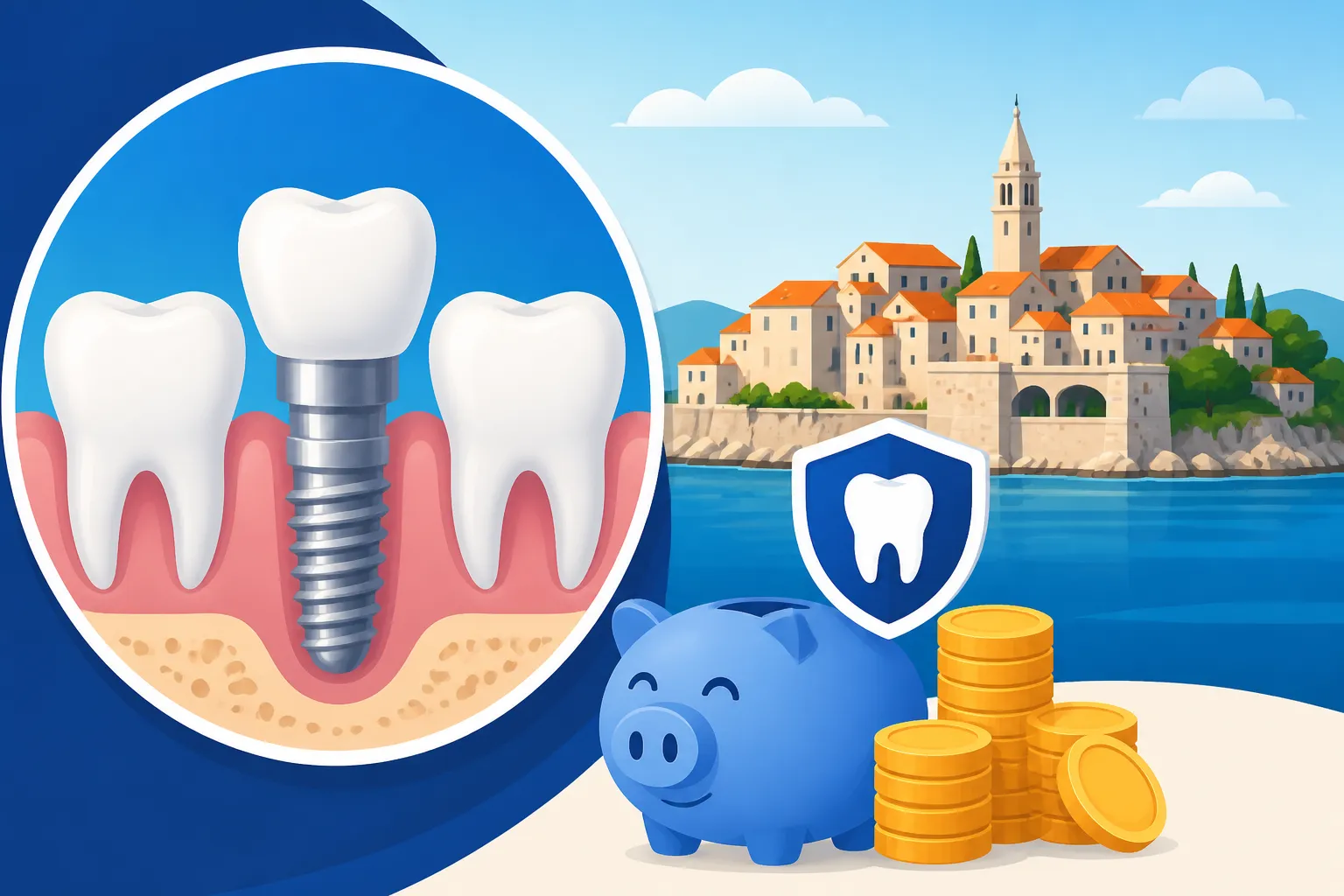
When we talk about the "cost" of an implant, many people make the mistake of only looking at the price of the titanium screw. In Croatia, the pricing is usually transparent, but it is broken down into stages. You have the surgical placement of the implant, the abutment (the connector), and finally, the crown that looks like a tooth. In 2026, despite inflation across Europe, Croatia remains significantly more affordable than Western Europe, though prices in Zagreb and coastal cities like Split have crept up due to demand.
A standard, high-quality titanium implant in a reputable clinic in Zagreb usually starts around €600 to €800 for the surgical phase alone. When you add the abutment (around €150–€250) and a high-quality ceramic or zirconia crown (around €300–€500), the total for a single tooth usually lands between €1,100 and €1,600. If you were to do this in London or New York, you would easily be looking at €3,500 to €5,000. It is vital to look at The Cost of Healthcare in Croatia: A Complete Breakdown for Foreigners (2026) to see how these dental fees compare to other medical expenses you might encounter.
Location within Croatia also dictates the price. A clinic in the heart of Dubrovnik or a high-end polyclinic in the center of Zagreb will charge a premium. If you venture to smaller cities or even the eastern part of the country like Osijek, you might find prices 10-15% lower. However, as an expat, you have to weigh those savings against the cost of travel and the ease of finding a dentist who speaks your language. Most veterans of the expat scene recommend sticking to the major hubs for complex surgery. For digital nomads using SafetyWing to cover their general health needs while roaming, staying in a major city like Split or Zagreb makes it much easier to access both the dental clinic and any other medical facilities if needed.
| Component of Dental Implant | Estimated Cost in Croatia (2026) | Estimated Cost in Western Europe/USA |
|---|---|---|
| Initial Consultation & X-Ray/CT | €50 – €100 | €150 – €300 |
| Titanium Implant (Surgical) | €600 – €900 | €1,500 – €2,500 |
| Abutment (Connector) | €150 – €250 | €400 – €700 |
| Zirconia/Ceramic Crown | €300 – €550 | €1,000 – €2,000 |
| Total Per Tooth | €1,100 – €1,800 | €3,050 – €5,500 |
Navigating the Process: From Consultation to Final Crown
One thing I learned the hard way is that you cannot just walk into a clinic and leave with a new tooth the same afternoon. The process is a biological one, and it takes time. First, you’ll need a 3D CBCT scan to check if your jawbone is thick enough. If you’ve been missing a tooth for a long time, the bone might have thinned out, requiring a "bone graft." This is an additional cost, often ranging from €200 to €500, and it can add months to your timeline because the graft needs to fuse with your natural bone.
Once the bone is ready, the surgeon places the implant. Then comes the "waiting period," which is usually 3 to 6 months. During this time, the titanium screw undergoes osseointegration, literally becoming part of your jaw. If you are an expat living here, this is no big deal. If you are a tourist, you will need two separate trips to Croatia. During these gaps in treatment, if you are traveling elsewhere, having coverage like SafetyWing is a smart move to handle any non-dental medical hiccups that might happen while you wait for your jaw to heal. To understand the wider context of how referrals and specialists work here, check out How to Access Specialist Care Through the Croatian Public System, even if you are going private, just to see how the local standards of care are structured.
The final stage is the "loading" of the crown. This involves taking impressions and having a lab custom-make your tooth. In Croatia, the labs are excellent, often using CAD/CAM technology. When choosing a clinic, always ask about the brand of the implant. Names like Straumann and Nobel Biocare are the gold standards. While local or "budget" brands exist, I always tell newcomers to spend the extra €200 for a global brand. Why? Because if you move to another country in five years and that implant needs a new screw or part, a dentist in France or Australia will have the tools for a Straumann implant, but they might not have the tools for a boutique Croatian brand. You can learn more about these types of facilities in our guide on Understanding Private Polyclinics (Poliklinike) in Croatia.
Logistics for the Foreign Patient in Croatia
Dealing with the paperwork in Croatia can feel like a full-time job. If you are a resident, you probably already have your OIB, which is your golden ticket to everything. If you don’t have one yet, you should look into How to Get Your OIB and Why It Matters for Healthcare Access. Most private clinics will handle the administrative side for you, but if you are trying to get any kind of reimbursement from your home insurance or a private provider, you will need a detailed, stamped, and signed invoice (račun).
Finding the right doctor is the most critical step. Don't just go to the place with the flashiest Instagram ad. Talk to other expats. Look for a clinic that has an "Oral Surgeon" on staff, not just a general dentist. The expertise level for implants is much higher than for a routine cleaning. If you are struggling with the language barrier, it is worth checking How to Find an English-Speaking Doctor in Croatia to see where the international community usually gravitates. Many of the top-tier clinics in Zagreb even have dedicated coordinators for international patients who will help you book hotels and organize airport transfers.
For those who are in Croatia on a temporary basis, such as on the nomad permit, remember that your status affects how you interact with the medical system. You might find it helpful to read Can Tourists Access Emergency Care in Croatia for Free? just in case your dental surgery leads to an unexpected complication while your primary insurance is still being sorted. While complications from implants are rare, they usually happen in the first 48 hours, so plan to stay near your clinic for a few days post-surgery. Using a service like SafetyWing can provide peace of mind during these travel periods, ensuring you have medical support for the unexpected while you focus on your dental recovery.
Is It Worth It? Comparing Quality and Long-Term Care
The question isn't just about the initial cost; it's about the long-term value. Croatian dentists are some of the most highly trained in Europe. The University of Zagreb’s School of Dental Medicine is prestigious, and the clinical standards follow strict EU regulations. However, you must be realistic about follow-up care. A dental implant is not a "set it and forget it" solution. It requires meticulous hygiene and annual check-ups.
If you live in Croatia, this is easy. If you are just visiting for the lower prices, you need to consider what happens if the implant fails. Most high-end clinics offer a lifetime warranty on the implant part itself, but the labor and the crown usually have a shorter warranty (often 5 to 10 years). If something goes wrong, you will likely have to fly back to Croatia to have it fixed under warranty. Before you commit to the surgery, make sure you understand the basics of the system by reading The Complete Guide to Healthcare in Croatia for Expats (2027).
Finally, consider the "Dopunsko" factor. If you are a resident, you might have supplementary insurance. While it rarely covers the implant itself, it can cover the costs of the medications or the preliminary treatments needed to get your mouth healthy enough for surgery. You can find more details on this in our article Understanding Dopunsko Zdravstveno Osiguranje (Supplementary Insurance) in Croatia. Overall, the cost savings in Croatia are substantial enough that even with the cost of flights and a few nights in a nice hotel, you will likely save thousands of euros compared to having the work done in a high-cost country.
Disclaimer
The information provided in this article is for informational purposes only and does not constitute professional medical or financial advice. Healthcare costs and regulations in Croatia are subject to change, and you should always consult with a qualified dental professional and the relevant authorities regarding your specific situation and insurance coverage.