Understanding the Energy Performance Certificate (Energetski Certifikat)
Moving to Croatia, whether you're dreaming of a seaside villa or a bustling city apartment, comes with its own unique set of administrative challenges. Among the myriad of documents and bureaucratic hurdles, one that often pops up with a quizzical look on many expats' faces is the Energetski Certifikat, or Energy Performance Certificate (EPC). This isn't just some obscure paper; it's a vital document for anyone looking to buy, sell, or even rent property here, and understanding it can save you a world of headaches and unexpected costs. This guide will walk you through everything you need to know about the Croatian EPC, from why it exists to how you get one, so you're not left scratching your head.
What is an Energy Performance Certificate Energetski Certifikat?
The Energetski Certifikat is essentially a report card for your property's energy efficiency. Think of it like the energy efficiency labels you see on refrigerators or washing machines, but for an entire building or a specific residential unit within it. It quantifies how much energy a building consumes for heating, cooling, hot water, ventilation, and lighting under standardized conditions. This isn't just a random requirement; it's deeply rooted in European Union directives aimed at promoting energy efficiency and reducing carbon emissions across member states, which Croatia, as an EU member, fully adheres to.
The Legal Basis and Purpose in Croatia
Croatia implemented its energy certification system in alignment with EU Directive 2002/91/EC and later 2010/31/EU on the energy performance of buildings. The core legislative acts governing this in Croatia include the Law on Construction (Zakon o gradnji) and several implementing ordinances, most notably the Rulebook on Energy Audit and Energy Certification of Buildings (Pravilnik o energetskom pregledu i energetskom certificiranju zgrada). These laws dictate that virtually all buildings or their independent units being sold, rented, or built must possess a valid EPC. The primary purpose is transparency: to inform potential buyers or renters about the energy performance of a property. This empowers them to make more informed decisions, factoring in not just the purchase or rental price, but also the potential long-term utility costs. It also serves as a push for property owners to invest in energy-saving improvements.
Key Components of an Energy Performance Certificate
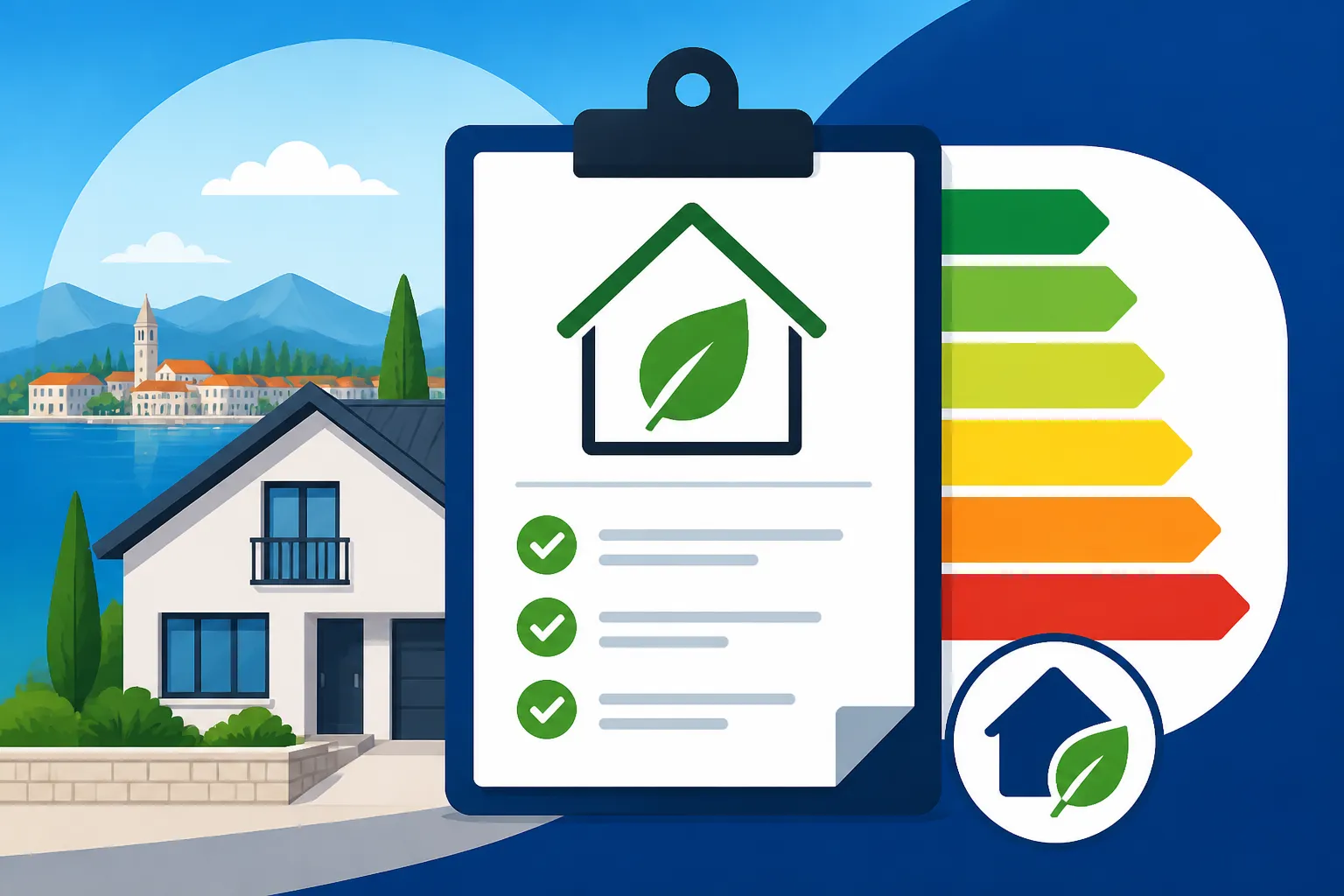
When you finally get your hands on an Energetski Certifikat, you'll find it's more than just a single letter grade. It's a comprehensive document that provides a detailed overview of the property's energy characteristics. At its heart, it will prominently display the energy class, ranging from A+ (most efficient) to G (least efficient). But it doesn't stop there. The certificate will include specific data about the building's thermal envelope (walls, roof, floor), windows, heating and cooling systems, ventilation, and domestic hot water production. Crucially, it also contains a section with cost-effective recommendations for improving the energy performance. These recommendations can range from simple insulation upgrades or window replacements to more complex overhauls of heating systems or the integration of renewable energy sources. This part of the certificate is invaluable, especially if you're considering a property that's in a lower energy class but has potential for improvement, giving you a roadmap for future investments.
Why is an EPC Mandatory in Croatia?
The mandatory nature of the Energy Performance Certificate often causes a bit of a stir, particularly for those new to the Croatian system. It feels like another layer of bureaucracy, another hurdle to jump. But there's a good reason for it, beyond just ticking an EU box. It’s about consumer protection, environmental responsibility, and encouraging investment in sustainable living, which, let's be honest, ultimately benefits us all in the long run.
The Impact on Selling Property
If you're looking to sell a property in Croatia, whether it's an apartment in Zagreb or a house on the coast, having a valid Energetski Certifikat is non-negotiable. It's a fundamental part of the sales process, right up there with having a clean title deed from the Land Registry. The law stipulates that the seller must provide the buyer with a copy of the EPC at the time of sale. Without it, the notary public may refuse to certify the sales contract, effectively stalling the entire transaction. This certificate isn't just a formality; it directly impacts the property's market value and its attractiveness to potential buyers. A property with an A+ or B rating, for example, will generally fetch a higher price or sell faster than an identical property with a D or E rating, simply because buyers know they'll have lower utility bills and a more comfortable living environment. It also provides a clear basis for negotiation; if a property has a poor rating, a buyer might negotiate a lower price, knowing they'll need to invest in upgrades. For those embarking on the journey of homeownership, understanding the intricacies, including documents like this, is crucial, as highlighted in "How to Buy Property in Croatia as a Foreigner: The Full Guide (2027)".
EPC Requirements for Renting Property
Similarly, if you're a landlord, or looking to rent long-term accommodation in Croatia, the EPC is just as important. For long-term rental agreements (typically those exceeding one year), the landlord is legally obligated to provide the tenant with a copy of the Energetski Certifikat. This isn't usually required for short-term tourist rentals, like those common during the summer season along the Adriatic, but for residential leases, it's a must. The intent here is to give tenants transparency regarding their potential energy costs. Imagine moving into an apartment only to find your heating bills are astronomically high in winter because the insulation is terrible – the EPC aims to prevent these kinds of unpleasant surprises. While it might feel like an added expense for landlords, it also provides a clear benchmark for the property's quality and can even be a selling point for energy-conscious tenants. Just like when you're navigating other essential steps, such as when you're trying to figure out how to set up utilities in your new Croatian home, understanding your rights and obligations as a tenant or landlord regarding the EPC is vital for a smooth process.
How to Obtain an Energetski Certifikat?
Navigating the process of getting an Energetski Certifikat can feel a bit daunting, especially when you're new to the system and might be dealing with language barriers. It's not something you can just download from a government website; it requires a professional assessment. But rest assured, it's a well-established process, and with the right information, you can get it done without too much fuss. Many expats find tools like Airalo invaluable for staying connected and finding local services online during these processes.
Finding an Authorized Energy Certifier
The first crucial step is to find an authorized energy certifier (ovlašteni energetski certifikator). These are licensed professionals, typically engineers (civil, mechanical, or electrical) or architects, who have undergone specific training and are authorized by the Ministry of Physical Planning, Construction and State Assets (Ministarstvo prostornoga uređenja, graditeljstva i državne imovine). You can usually find a list of authorized certifiers through the Croatian Chamber of Civil Engineers (Hrvatska komora inženjera građevinarstva) or the Croatian Chamber of Architects (Hrvatska komora arhitekata), or simply by searching online for "energetski certifikator" in your specific city or region. It’s always a good idea to ask for recommendations from real estate agents or other expats who have gone through the process. When contacting them, clearly state the type of property (apartment, house, commercial space) and its size, as this will influence the quote and the documentation they'll need. Don't be shy about asking if they speak English if your Croatian isn't up to scratch; many professionals in larger cities cater to international clients.
Required Documentation and Site Visit
Once you've chosen a certifier, they will ask you to provide certain documents to initiate the process. The more information you can provide upfront, the smoother and potentially quicker the process will be. Essential documents typically include:
- Proof of ownership: This could be a vlasnički list (ownership certificate) from the land registry, which you can often obtain online or from the municipal court.
- Cadastral map excerpt: A copy of the cadastral map (katastarski plan) showing the property's layout.
- Building permits/usage permits: Any relevant permits (građevinska dozvola, uporabna dozvola) you have, especially for newer constructions or properties that have undergone significant renovations.
- Project documentation: If available, architectural plans, mechanical plans, or electrical plans can significantly assist the certifier in their assessment, providing precise details about construction materials, insulation, and system specifications.
Even with comprehensive documentation, a mandatory site visit is required. The certifier will meticulously inspect the property, examining the building envelope (walls, roof, windows, doors), heating, cooling, and ventilation systems, hot water heaters, and lighting. They will take measurements, assess the condition of various components, and gather data on the type and thickness of insulation, window glazing, and the efficiency of installed systems. This on-site assessment is crucial for accurate data collection and forms the basis of the energy audit that precedes the certificate's issuance. Be prepared to provide access to all parts of the property, including attics, basements, and technical rooms where relevant equipment might be located.
Understanding the EPC Ratings and What They Mean
Once the energy certifier has completed their inspection and analysis, they will issue your property an Energetski Certifikat with a specific energy class. These classes are designed to be easily understandable, giving you a quick snapshot of how well a building performs in terms of energy consumption. It’s not just a letter; it’s a reflection of the building’s overall efficiency and your potential utility bills.
Breaking Down the Energy Classes A+ to G
The energy performance scale in Croatia ranges from A+ to G, where A+ signifies the most energy-efficient buildings and G represents the least efficient ones. Let’s break down what each class generally means:
- A+ and A: These are the cream of the crop, typically very new constructions or properties that have undergone extensive, high-quality energy renovations. They boast excellent insulation, modern efficient windows, and often incorporate renewable energy sources (like solar panels). Running costs for heating and cooling in these properties are exceptionally low.
- B and C: These are considered good to average performers. Many newer buildings from the last few decades, or older ones with decent renovations, fall into this category. They have reasonable insulation and heating/cooling systems. You can expect moderate utility bills, and minor improvements could easily push them into a higher class.
- D and E: These properties are below average in terms of energy performance. This category often includes older buildings with outdated insulation, inefficient windows, and older heating systems. Utility costs can be noticeably higher, particularly in extreme weather conditions. These properties are prime candidates for energy-efficiency upgrades.
- F and G: These are the least energy-efficient buildings. They typically have poor or no insulation, old single-pane windows, and very inefficient heating/cooling systems. Expect high energy consumption and consequently high utility bills. Buying or renting a property in this class means you should seriously consider significant renovations to improve comfort and reduce costs.
Knowing these classes helps you contextualize the property's true "cost of living" beyond the rent or mortgage. When considering your overall budget, it's wise to factor in potential energy consumption, something "The Complete Guide to Cost of Living in Croatia for Expats (2026)" extensively covers.
Recommendations for Improvement
A truly valuable part of the Energetski Certifikat is the section dedicated to recommendations for improvement. This isn't just a list of theoretical possibilities; these are practical, cost-effective measures tailored to your specific property that could enhance its energy performance and, crucially, save you money in the long run. The certifier will detail various interventions, along with estimated costs, potential energy savings, and a rough payback period.
Typical recommendations might include:
- Improving insulation: Adding thermal insulation to exterior walls, roofs, or floors.
- Replacing windows and doors: Upgrading to energy-efficient, multi-pane windows and insulated doors.
- Modernizing heating and cooling systems: Installing a more efficient boiler, heat pump, or air conditioning unit.
- Upgrading ventilation: Implementing mechanical ventilation systems with heat recovery.
- Integrating renewable energy: Suggesting solar panels for hot water or electricity generation.
For instance, if you've purchased an older stone house in Dalmatia with a D rating, the recommendations might advise installing proper wall and roof insulation, and replacing the ancient wooden windows. While these upgrades involve an initial investment, the EPC will illustrate the projected annual savings on your electricity and heating bills, showing how these improvements can pay for themselves over time. This makes the certificate a strategic planning tool for property owners.
Costs, Validity, and Penalties
Like most official documents in Croatia, the Energetski Certifikat comes with associated costs, a specific validity period, and, quite importantly, penalties if you fail to comply with the legal requirements. Understanding these aspects will help you budget and ensure you stay on the right side of the law.
Typical Costs and Factors Influencing Price
The cost of obtaining an Energetski Certifikat in Croatia can vary, but generally, it depends on several key factors:
- Type of property: An apartment is typically less complex and thus cheaper to certify than a standalone house. Commercial buildings, due to their size and complexity, are usually the most expensive.
- Size of the property: Larger properties naturally require more time and effort for inspection and analysis, leading to higher fees.
- Availability of documentation: If you have complete architectural plans and project documentation, the certifier's job is easier, which can sometimes result in a slightly lower fee. Conversely, if they have to conduct more extensive measurements and research, it might cost more.
- Certifier's rates: Like any professional service, rates can vary between different authorized certifiers. It's always a good idea to get a few quotes.
As a rough guide, for a standard apartment, you might expect to pay anywhere from €150 to €300. For a larger family house, this could range from €300 to €600 or more. Commercial properties can run into thousands of euros. These figures are illustrative, and it's best to always request a detailed quote.
Here's a general idea of estimated costs for typical residential properties:
| Property Type | Size (m²) | Estimated Cost (EUR) | Notes |
|---|---|---|---|
| Studio Apartment | 25-40 | 150 – 200 | Simpler, quicker assessment |
| 1-Bedroom Apartment | 40-70 | 180 – 250 | Most common residential certification |
| 2-3 Bedroom Apartment | 70-120 | 220 – 300 | Larger units, potentially more complex systems |
| Small House | 80-150 | 300 – 450 | Multiple stories, more exposed surfaces |
| Large Family House | 150-300+ | 400 – 600+ | Greater complexity, more detailed analysis |
Remember, these are estimates. Always get a firm quote before committing to a certifier.
Validity Period and Renewal
The Energetski Certifikat is not a one-time document that lasts forever. It has a specific validity period, which is 10 years from the date of issuance. This makes sense because buildings, their systems, and even energy efficiency standards can change over a decade. Systems degrade, renovations happen, and technology improves.
You'll need to obtain a new certificate if:
- The existing one expires after 10 years.
- The property undergoes significant reconstruction or renovation that impacts its energy characteristics. For example, if you replace all windows, add external insulation, or install a new, more efficient heating system, the old certificate might no longer accurately reflect the property's energy performance. In such cases, it's advisable to get a new certificate to showcase the improved energy class and potentially increase its value or appeal.
Keeping track of these deadlines is important, especially if you plan to sell or rent out the property again in the future.
Penalties for Non-Compliance
Croatia takes its energy efficiency regulations seriously, and there are legal penalties for failing to comply. For sellers and landlords who are legally required to provide an EPC but fail to do so, fines can be substantial.
- For legal entities (e.g., companies that own property): Fines can range from €2,000 to €10,000.
- For individuals (private sellers or landlords): Fines can range from €500 to €1,500.
These penalties are designed to ensure compliance and promote the overall goal of transparency and energy efficiency. It's simply not worth trying to bypass the requirement, as the fines easily outweigh the cost of obtaining the certificate itself. Moreover, a lack of an EPC can cause significant delays or even cancellation of a sale or rental agreement, adding further frustration to the already complex process of "The Complete Guide to Moving to Croatia: Your First 90 Days (2026)".
Common Challenges for Expats and Practical Advice
Living and dealing with administrative tasks in Croatia can be an adventure, to say the least. While the Energetski Certifikat process is straightforward in principle, it can present specific challenges for expats. From language barriers to navigating local customs, it's easy to feel overwhelmed. But with a bit of foresight and the right approach, you can manage it smoothly.
Overcoming Language Barriers
One of the most frequent hurdles expats face in any administrative process in Croatia is the language barrier. While many younger professionals in urban areas speak excellent English, this isn't always the case, especially with smaller, independent certifiers or if you're dealing with older documentation. Trying to explain technical details about your property or understand complex recommendations in a language you're not fluent in can be incredibly frustrating.
Here’s how to tackle it:
- Seek English-speaking certifiers: When searching for an authorized energy certifier, specifically ask if they or a member of their team speaks English. Many professional offices catering to foreign clients will be able to accommodate this.
- Use translation apps: For initial communications or understanding basic terms, a reliable translation app on your phone can be a lifesaver.
- Bring a Croatian friend: If you have a trusted Croatian friend or colleague, ask if they can accompany you to the site visit or help with initial phone calls. Their presence can make a world of difference in clarifying details and ensuring nothing gets lost in translation.
- Hire an interpreter: For more complex situations or if you prefer a professional touch, consider hiring a sworn court interpreter for crucial discussions, especially if you're dealing with legal implications.
Staying connected during your property search and administrative tasks is paramount, and reliable mobile connectivity, perhaps with a local eSIM solution like Airalo, can help with those spontaneous translation needs or quick searches for professional help.
Navigating Croatian Bureaucracy
Ah, Croatian bureaucracy! It's legendary, and for good reason. What seems like a simple process on paper can often involve multiple steps, unexpected requirements, and a general sense of slow-motion efficiency. The Energetski Certifikat process, while relatively streamlined compared to some other administrative behemoths, still requires patience.
- Be Prepared for Delays: Don't expect things to happen overnight. Professionals are busy, and scheduling site visits and generating reports takes time. Factor in a few weeks for the entire process, especially if you're trying to meet a strict deadline for a property sale or rental.
- Have All Documents Ready: As mentioned earlier, having all your property documentation – ownership papers, cadastral excerpts, building permits – ready and organized will significantly speed things up. The less legwork the certifier has to do to gather basic information, the better. If you’re also exploring other aspects of property ownership, such as understanding the Zemljišne Knjige (Land Registry) in Croatia, you'll find that meticulous documentation is always key.
- Ask for Clarification: Never hesitate to ask for clarification if something isn't clear. It's better to ask a "silly" question than to make an assumption that leads to problems down the line.
- Leverage Local Expertise: If you're buying or selling property, your real estate agent can often recommend trusted certifiers and guide you through the process. They deal with these documents daily. Similarly, relocation services often offer assistance with this kind of paperwork, integrating seamlessly with your broader moving plan, whether you're using a moving service like Sirelo or handling it yourself. You might even find it beneficial to consult a professional for a comprehensive overview like "How to Find a Reliable Real Estate Agent in Croatia" to ensure you have good support.
Embrace the journey, be persistent, and don't be afraid to seek help when you need it. Remember, countless expats have successfully navigated this path before you, and you will too!
Disclaimer
Please remember that while this guide provides extensive information based on current regulations and common expat experiences in Croatia, laws and procedures can change. Always consult with authorized legal professionals, real estate agents, or energy certifiers for the most up-to-date and specific advice tailored to your individual situation. This content is for informational purposes only and does not constitute professional legal or financial advice.