How to Buy a Used Car in Croatia as a Foreigner
Oh, the joy (and sometimes utter despair!) of trying to buy a car in a new country. I remember the headaches, the endless paperwork, and the cultural nuances that made even a simple transaction feel like scaling Mount Everest. For many of us expats in Croatia, eventually, public transport just won't cut it, especially if you want to explore beyond the main cities, live somewhere a bit more rural, or simply crave the freedom of the open road. This guide is going to walk you through the labyrinthine process of buying a used car in Croatia as a foreigner, step by agonizing (but ultimately rewarding!) step, from finding your wheels to getting them on the road.
Understanding the Croatian Used Car Market and the Hurdles
Navigating the used car market in Croatia can feel like a sport, especially when you're not fully acquainted with the local rules, customs, and administrative quirks. It's not just about finding a car you like; it's about understanding the underlying system, the expectations, and the potential pitfalls that many foreigners encounter. Believe me, I’ve seen it all, and it pays to be prepared.
Initial Research and Expectations
Before you even start browsing, you need to set realistic expectations. Croatia, while part of the EU, still has its own unique market dynamics. For starters, the selection might not be as vast or as competitively priced as in some larger Western European countries. Many cars are imported, which means extra administrative steps and costs might have been incurred by the seller or the dealership, potentially affecting the final price. You’ll find a mix of older, well-maintained vehicles and some that might have seen better days. It's crucial to research common car models in Croatia, their typical prices, and what kind of mileage is considered standard for their age. Don’t expect to snag an absolute bargain on a nearly new model; those are rare gems here. Instead, focus on reliability and whether the car meets your actual needs for driving on Croatian roads, which can be quite diverse, from smooth highways to bumpy village paths.
Another thing to keep in mind is the local preference for diesel cars, especially for older models, due to historical tax structures and fuel prices. This is changing, but you'll still see a lot of them. Be clear about your own preferences – petrol, diesel, or even a hybrid – and be prepared to potentially compromise if your ideal car isn't readily available within your budget. Understanding the market means knowing that patience is often your best friend.
Common Pitfalls for Foreign Buyers
Let's be brutally honest: being a foreigner can sometimes make you a target for less scrupulous sellers. One of the biggest pitfalls is language barriers. While many Croatians speak English, particularly in tourist areas and larger cities, the specifics of car sales, legal documents, and technical details can be lost in translation. Always try to bring a Croatian-speaking friend, colleague, or even a professional translator to serious viewing and negotiation appointments. This isn't just about understanding; it’s about showing you’re serious and less likely to be taken advantage of.
Another common issue is incomplete or fraudulent paperwork. Always double-check everything. Does the car's VIN (Vehicle Identification Number) match the documents? Are all the service records present and legitimate? Has the car been properly deregistered by the previous owner? You wouldn't believe how many times I’ve heard stories of expats getting stuck with cars that have outstanding fines, unpaid taxes, or even liens against them, simply because they didn't know what to look for. And let's not forget the "Kilometarica" – the practice of rolling back odometers, sadly not uncommon. This is where a thorough technical inspection is absolutely non-negotiable. Don't rush into a purchase just because you're excited. Slow and steady wins the race, and saves you a lot of grief (and money) in the long run.
The Importance of the OIB and Residence
Before you even think about buying a car, you absolutely must have your OIB (Osobni identifikacijski broj), which is your personal identification number in Croatia. This is your key to almost all administrative processes here, including purchasing property, paying taxes, and yes, buying a car. Without an OIB, you simply cannot register a vehicle in your name. If you haven't already obtained one, make it a priority. You can learn more about how to get this crucial number by checking out our guide on How to Get an OIB (Personal Identification Number) in Croatia.
Beyond the OIB, you also need to have a registered residence in Croatia, or at least temporary residence (privremeni boravak). The car will be registered to your official address. This means you can't just arrive as a tourist and decide to buy a car to tour the country; you need to be a resident. If you’re an EU citizen, you'll need to register your stay with the MUP (Ministry of Interior) within 90 days. For non-EU citizens, your residence permit serves this purpose. The MUP office is where much of your car registration journey will take place, so having your residence sorted beforehand is fundamental. You can find detailed information on this process in our article about Registering Your Residence in Croatia: The Complete MUP Guide. Without these two foundational elements, the rest of the process is a non-starter.
Where to Find Your Dream (or at least reliable) Ride
Once you’ve got your administrative ducks in a row, the exciting part begins: the hunt for your new (to you) vehicle! Just like anywhere else, Croatia offers various avenues for buying used cars, each with its own pros and cons. It’s smart to explore a few different options to get a feel for the market and what’s available.
Online Platforms and Dealerships
The digital age has certainly made car hunting a lot easier, even in Croatia. The most popular online platform for used cars here is Njuškalo, which is essentially Croatia's version of Craigslist or Gumtree but specifically tailored for classifieds, including an enormous section for vehicles. You'll find everything from private sellers listing their family car to small dealerships uploading their entire inventory. It's a goldmine for options, but also a place where you need to be extra vigilant about scams and misrepresentations. When browsing Njuškalo, filter by location (e.g., Zagreb, Split, Rijeka) to find cars convenient for viewing. Pay close attention to the description, the number of photos, and whether a servisna knjižica (service book) is mentioned.
Besides Njuškalo, you'll also find some listings on international platforms like Mobile.de, particularly for cars imported into Croatia from Germany or Austria. These might offer a slightly different range, often with more premium models, but always double-check the import status and associated costs.
Then there are dealerships. You have official brand dealerships that also sell "used certified" cars (often trade-ins or lease returns), offering a level of guarantee and peace of mind that private sales rarely do. These are generally more expensive but come with a warranty and a thorough check, reducing the risk of nasty surprises. Beyond official dealerships, there are also independent used car lots (often called auto kuće or auto saloni) scattered around larger towns. They offer a wider variety of brands and models, but the quality control can vary wildly. Some are reputable and offer decent post-sale support, others are a bit more "fly-by-night." Always do your research on their reputation before committing.
Local Options and Word-of-Mouth
While online platforms are dominant, don't underestimate the power of local connections and word-of-mouth. Especially if you're settling into a smaller community, asking around might lead you to a fantastic deal on a well-cared-for car from a trusted neighbor or acquaintance. Local garages, too, often know who in the community is looking to sell their car. These informal channels can sometimes bypass the headaches of online listings, offering a more personal touch and a clearer history of the vehicle.
Another local avenue could be car auctions, though these are less common for the general public and often involve vehicles seized or repossessed, which might come with their own set of complications. For most expats, Njuškalo and reputable dealerships will be the primary hunting grounds. Remember, when you’re out and about, keeping your eyes peeled for "Na Prodaju" (For Sale) signs on cars parked on the street can also yield results. You never know where your perfect match might be hiding!
Things to Look for in a Listing
When sifting through listings, whether online or at a dealership, there are several red flags and green lights to watch for. Firstly, a detailed description with clear photos from multiple angles is a good sign. If a seller only posts one blurry photo, move on. Look for mentions of a servisna knjižica (service book) and registracija (registration) status. A car with a full service history is almost always a better bet, indicating regular maintenance.
Check the year of manufacture and the mileage. Be wary of unusually low mileage for an older car; this could be a sign of odometer tampering. Compare the listed price with similar models on the market – if it’s significantly lower, there might be a reason (and usually not a good one). Also, pay attention to the location. If the car is several hours away, factor in the travel time and cost for viewing.
Finally, always ask if the price is fiksna (fixed) or po dogovoru (negotiable). In Croatia, prices are often negotiable, especially for private sellers, but it's good to know upfront. If you’re traveling to view cars, having a reliable internet connection is super helpful. Perhaps consider an eSIM from Airalo so you can quickly check other listings, research seller reviews on the go, and even pull up car history reports if you have access to such services. Staying connected is key to making informed decisions on the fly.
The Nitty-Gritty: Inspections, Paperwork, and Payments
So, you've found a car that looks promising. Great! Now comes the critical phase where you transition from browsing to serious consideration. This stage involves meticulous checks, understanding the necessary documents, and safely handling the financial transaction. This is not the time to be shy or rush things.
Technical Inspection (Tehnički Pregled) and Pre-Purchase Checks
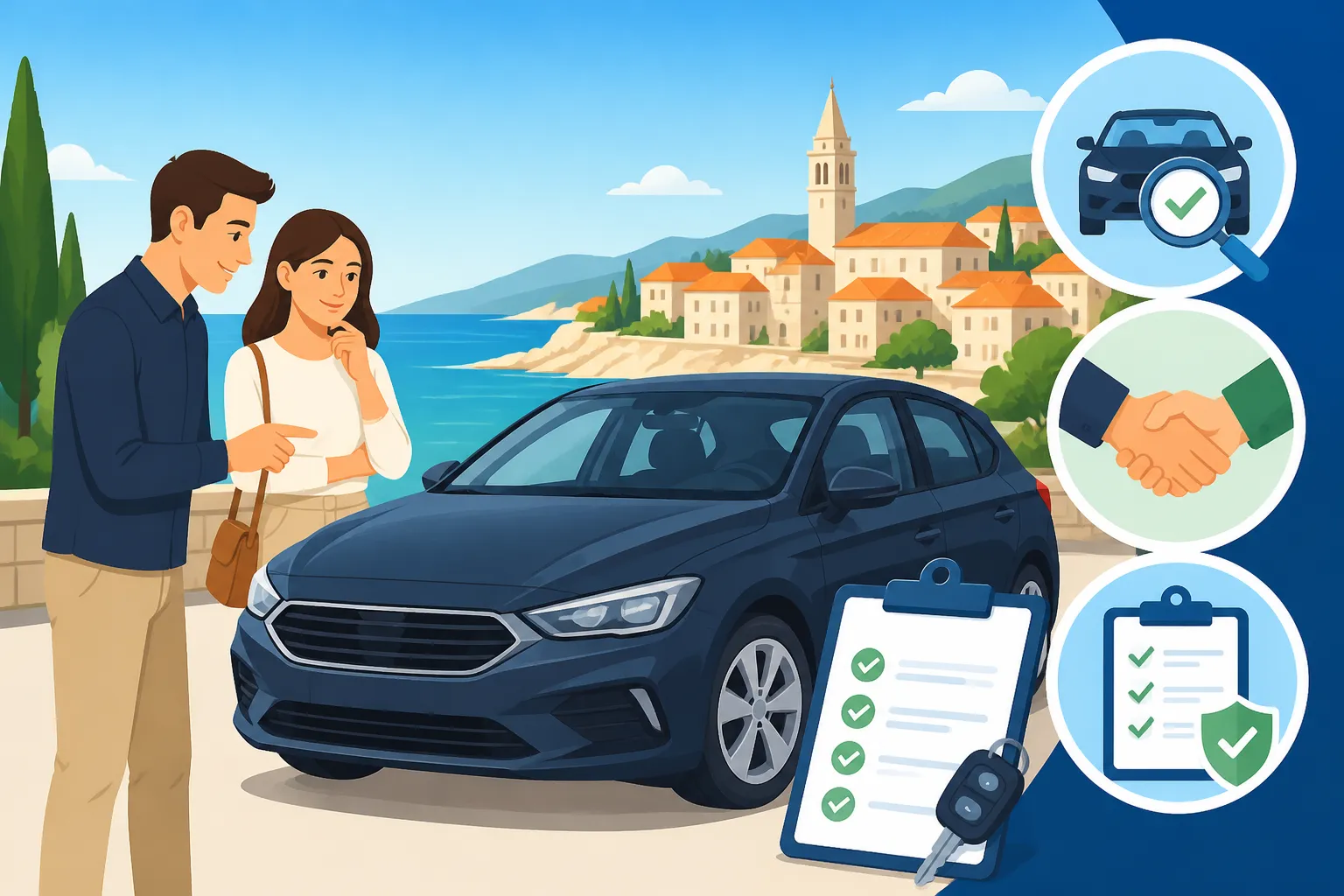
This is, without exaggeration, the most crucial step in buying a used car in Croatia. Never, ever buy a car without a thorough pre-purchase inspection by an independent mechanic you trust. Not the seller's mechanic, your mechanic. Even if the car has a valid Tehnički Pregled (technical inspection) from the Croatian Auto Club (HAK), that's just a basic safety check, not a comprehensive health report. Our detailed guide on Understanding Vehicle Technical Inspection (Tehnički Pregled) in Croatia can give you more insight into this, but for a used car purchase, you need to go beyond the minimum.
Arrange to take the car to an authorized service center or a trusted private mechanic for a full diagnostic. They should check the engine, transmission, brakes, suspension, electronics, and look for any signs of accident damage or previous poor repairs. This inspection will cost you money (typically €50-€150), but it’s an investment that can save you thousands in future repairs or from buying a lemon. A reputable seller should have no problem with this; if they resist, walk away immediately. It's often a sign they're hiding something. Also, bring your Croatian-speaking friend along to the inspection to ensure nothing is lost in translation regarding the mechanic's findings.
Essential Documents for the Transfer
The paperwork can feel overwhelming, but knowing what to expect will ease the process. Here’s what you absolutely need:
- Prometna Dozvola (Traffic License/Registration Document): This is the main document for the vehicle. Check that the details (VIN, make, model, year) match the car and the seller's ID.
- Kupoprodajni Ugovor (Sales Contract): This is the legal document outlining the sale. It must contain details of both buyer and seller (full name, OIB, address), vehicle details (VIN, plate number, make, model), agreed price, and date of sale. Crucially, this contract needs to be notarized by a public notary (javni bilježnik) to be legally binding and allow for the transfer of ownership. The cost of notarization is usually borne by the buyer, or sometimes split.
- Dokaz o Vlasništvu (Proof of Ownership): Usually, the Prometna Dozvola in the seller's name serves as this. If the seller isn't the registered owner (e.g., they're selling for a family member), you'll need additional documentation proving their right to sell.
- Servisna Knjižica (Service Book): While not legally required for transfer, a complete service book is gold, showing the car's maintenance history.
- Potvrda o plaćenom porezu na cestovna motorna vozila / Upravna pristojba (Proof of paid Road Tax / Administrative Fee): The seller should provide proof that all previous obligations are settled. When you buy, you'll pay a new administrative fee.
- Osobna Iskaznica/Putovnica (ID Card/Passport): Both buyer and seller need valid identification.
Make sure all documents are originals. Copies are not usually accepted for the actual transfer process. If the car is still under a loan, the seller will need to clear the loan and provide proof from the bank that the lien has been removed before you can transfer ownership.
Handling Payments and Ownership Transfer
When it comes to payment, cash is still relatively common for private sales in Croatia, especially for lower-priced vehicles. However, for larger sums, a bank transfer is much safer and leaves a clear paper trail. You'll need a Croatian bank account for this. If you’re just setting up your finances, our guide on How to Set Up Online Banking and IBAN Transfers in Croatia can be a lifesaver.
Once you and the seller have agreed on a price and inspected the car, you'll both go to a public notary (javni bilježnik) with your IDs and the vehicle's Prometna Dozvola. The notary will draft or review the Kupoprodajni Ugovor, verify identities, and notarize the signatures. This step formally transfers ownership. At this point, you'll typically pay the seller the agreed amount. Do not pay the full amount before the contract is notarized. You might pay a small deposit, but the bulk should be paid upon notarization.
After notarization, you, as the buyer, are responsible for going to the MUP (Ministry of Interior) within 15 days to register the vehicle in your name. This is a critical deadline, so don't delay!
Registration, Insurance, and Hitting the Road
You've got your notarized contract, the keys are in your hand, and the car is yours! But wait, you can't just drive off into the sunset yet. There are a few more crucial steps to ensure your vehicle is legally on the road. This is where the Croatian bureaucracy really shines, but with a bit of guidance, you'll navigate it smoothly.
Registering the Vehicle at MUP
This is the big one. With your notarized Kupoprodajni Ugovor and the car's Prometna Dozvola, head to the MUP office responsible for vehicle registration in your area. They often have specific counters for vehicle registration, sometimes separate from general administrative tasks. You’ll need to bring:
- Your valid ID (passport or residence card)
- Your OIB
- The notarized Kupoprodajni Ugovor (original)
- The car’s original Prometna Dozvola
- Proof of valid mandatory car insurance (we'll get to this next!)
- Proof of valid Tehnički Pregled (technical inspection) – if the car’s registration has expired, you’ll need to get a new one before you can register it in your name.
- Payment for the administrative fees and road taxes.
The MUP will process the ownership transfer, issue you a new Prometna Dozvola in your name, and update the vehicle's records. If the car is from a different county (županija) in Croatia, you might also need to get new license plates, even if the old ones are perfectly fine. This can sometimes add to the cost and complexity. Our comprehensive guide on How to Register a Vehicle and Get Croatian Plates offers a deep dive into this entire process, which is often cited as one of the most bureaucratic hurdles for new residents. Expect queues and bring a book, patience, and a charged phone (maybe with that Airalo eSIM still active for entertainment!).
Mandatory Insurance (Obvezno Osiguranje)
Before the MUP will register the car in your name, you must have valid mandatory third-party liability insurance (obvezno osiguranje). This isn't optional; it's a legal requirement. You can get quotes from various insurance companies in Croatia, such as Croatia Osiguranje, Allianz, Wiener osiguranje, Generali, and Triglav osiguranje. It's always wise to shop around, as prices can vary.
The cost of your insurance will depend on several factors: the type and power of the car, your age, where you live, and crucially, your claims history. As a new driver in Croatia, without a local claims history, you might start at a higher premium. However, some companies will recognize a "no-claims bonus" or claims-free driving period from your previous country. Make sure to ask if they accept proof of this from your former insurer; this can save you a significant amount. Once you choose an insurer and pay the premium, they will issue you a policy document which you then take to the MUP as proof. Remember, this is basic liability insurance; it covers damages you cause to others. For damage to your own vehicle, you'll need additional comprehensive insurance (kasko osiguranje), which is optional but often recommended, especially for newer or more valuable cars.
Road Tax and Other Fees
Beyond the purchase price and insurance, there are several fees associated with owning a car in Croatia.
- Administrative Fees (Upravna Pristojba): Paid at the MUP when you register the vehicle. These fees are fixed and depend on the vehicle's engine power (kW).
- Road Tax (Porez na cestovna motorna vozila): This annual tax is also based on engine power and age of the vehicle. It's usually paid as part of the annual registration process.
- Technical Inspection Fee (Tehnički Pregled): This is an annual fee for the mandatory technical inspection at HAK or an authorized station.
- Environmental Fee (Naknada za okoliš): A small annual fee tied to the vehicle's environmental impact.
These fees can add up, so factor them into your overall budget for car ownership. Don't forget the fuel costs, which are regulated but can still fluctuate, and potential parking fees, especially in city centers. Having a realistic budget, including these often-overlooked expenses, is vital for long-term car ownership in Croatia. It’s not just the purchase price; it’s the ongoing cost of keeping it legally on the road that truly matters.
Navigating Potential Problems and Post-Purchase Life
Alright, you've done it! You've navigated the administrative maze, the car is legally registered in your name, and you're ready to hit those Croatian roads. But buying a used car is just the beginning of your journey as a car owner. Like any vehicle, it will require ongoing care, and sometimes, unexpected issues can pop up.
Dealing with Unexpected Issues
Let's face it, even with the most thorough pre-purchase inspection, used cars can throw curveballs. A week or a month after your purchase, a new rattle might appear, or a warning light might illuminate on your dashboard. This is where knowing your rights and having a good local mechanic become invaluable.
If you bought the car from a reputable dealership, especially one offering a warranty, your first step is to contact them immediately. Croatian consumer protection laws do provide some recourse for faulty used goods, but proving a pre-existing defect can be challenging, especially for private sales where "as-is" clauses are common. Keep all your purchase documents, including the Kupoprodajni Ugovor and any inspection reports, meticulously organized.
For general repairs, finding a trustworthy mechanic is key. Ask local friends, colleagues, or other expats for recommendations. A good mechanic who speaks some English (or who you can communicate with effectively) can save you a lot of stress. Be proactive with maintenance. Don't wait for a small issue to become a big, expensive problem. Regular servicing, oil changes, and tire checks are part of responsible car ownership, no matter where you are in the world.
Maintenance, Servicing, and Warranties
Regular maintenance is non-negotiable if you want your car to run smoothly on Croatia's diverse roads. Following the manufacturer's recommended service schedule (e.g., every 15,000 km or annually, whichever comes first) is a smart move. Most larger towns have authorized service centers for major brands (e.g., VW, Opel, Renault, Hyundai) as well as numerous independent garages that can service a variety of makes and models. Prices for parts and labor are generally more affordable than in Western Europe, but they can still add up.
If you purchased the car from a dealership, clarify the terms of any warranty they provided. What specifically is covered? For how long? Are there any exclusions? Keep the warranty documents in a safe place. For private sales, warranties are almost non-existent, making that pre-purchase inspection even more critical. Consider joining local expat groups online; they often have great advice on reliable garages and where to source spare parts affordably. If you're moving your entire life, and not just buying a car, finding good local services is part of the package. Companies like Sirelo can assist with the broader moving process, providing directories and resources for many aspects of settling into a new country, and sometimes even offering tips on local services.
Selling Your Car as an Expat
The day will likely come when you decide to leave Croatia or simply upgrade your vehicle. Selling a car as an expat follows a similar process to buying one, just in reverse. You'll need to prepare your car for sale, gather all your documents (Prometna Dozvola, service book, proof of ownership), and list it on platforms like Njuškalo. Be prepared for potential buyers to ask for a pre-purchase inspection, just as you did.
One crucial point to remember: if you are a non-EU citizen and your residence permit is tied to employment or another specific purpose, selling your car before leaving Croatia is generally much smoother than trying to manage it remotely. Ensure all outstanding taxes and fees are settled. If you're selling to another foreigner, they will also need an OIB and registered residence to complete the transfer. The whole process, while familiar, will still involve the MUP and a notary, so factor in time for these administrative steps before your final departure. Making sure the car is legally off your name is essential to avoid any future liabilities.
Disclaimer
Please remember that while I strive to provide the most accurate and up-to-date information, laws and administrative procedures in Croatia can change. This guide is for informational purposes only and does not constitute legal or financial advice. Always consult with official sources, legal professionals, or relevant government bodies (like MUP or Porezna Uprava) for your specific situation.