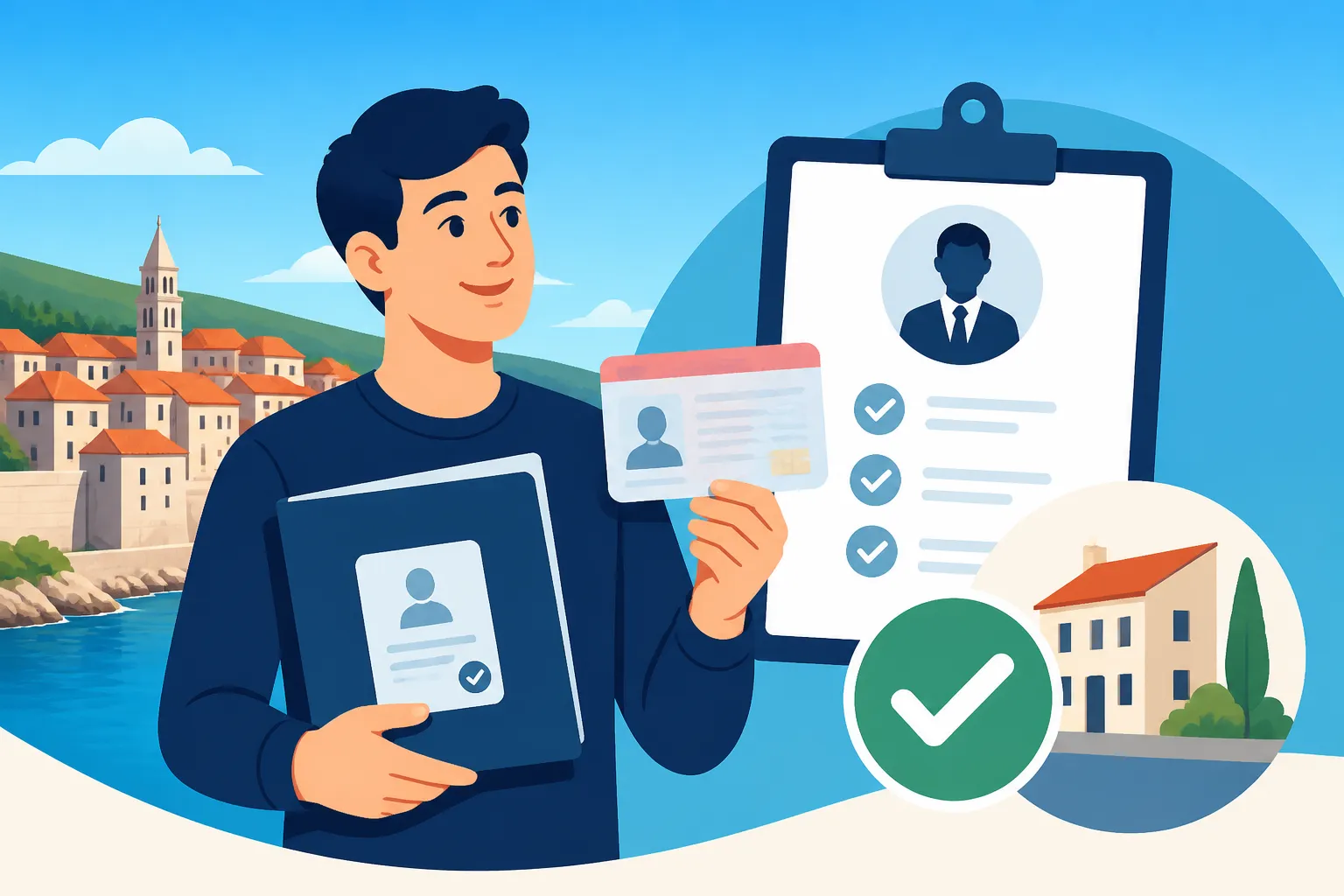
How Do I Get a Work and Residence Permit in Croatia?
Ah, the quest for the Croatian work and residence permit! If you're a non-EU/EEA citizen dreaming of building a life here, you've likely already felt the icy grip of administrative dread. It’s a process that can feel like navigating a labyrinth blindfolded, full of twists, turns, and unexpected dead ends. This guide is here to shine a light on the path, sharing realistic expectations and practical advice to help you secure your official status and truly settle into life in beautiful Croatia.
Understanding the Croatian Work and Residence Permit Landscape
Let's be honest, the administrative jargon surrounding immigration can be mind-numbing, and Croatia is no exception. Before you even think about packing your bags, it’s crucial to understand the basic framework. For many non-EU/EEA citizens, the goal isn't just a work permit or just a residence permit; it's a "single permit" that covers both. This might sound convenient, and in theory, it is, but the journey to get there still requires significant effort and patience.
Who Needs a Work and Residence Permit?
This is where the rubber meets the road. If you're coming from an EU/EEA country, consider yourself lucky; your path is considerably smoother, largely involving just registering your stay. But for the rest of us, particularly those from outside the European Economic Area, a work and residence permit is absolutely essential to legally live and work in Croatia for more than 90 days within any 180-day period. Trying to work without one is a surefire way to run into serious trouble with the authorities, leading to fines, deportation, and an unwanted black mark on your immigration record.
This requirement applies across the board, whether you're a highly skilled IT professional, a seasonal worker in tourism, or someone starting their own business. There are specific categories and criteria for each, but the underlying principle remains: if you're earning money and staying long-term, you need this permit. Don't make the mistake of thinking a tourist visa will somehow transition into a work permit or that a short-term project won't require proper documentation. Croatian authorities are quite strict on this, and while they might seem laid-back on the surface, they certainly aren't when it comes to immigration rules.
The "Single Permit" Concept: Work and Residence in One Go
Gone are the days when you had to apply for a work permit from one office and then trek to another for your residence permit. Thankfully, Croatia has adopted the "single permit" system, which, in principle, means your application for both work and residence is handled through one process. This single permit is formally known as a dozvola za boravak i rad (residence and work permit). This consolidation aims to streamline things by having the Ministry of Interior (MUP) manage the entire process, often in consultation with the Croatian Employment Service (HZZ).
However, while it's a single application, it's not always a single, seamless experience. The MUP still needs to coordinate with the HZZ regarding the labour market test (which we'll get into shortly), and sometimes, communication between departments can feel less than perfectly synchronized. You might find yourself providing similar information to different branches of the same institution. The key takeaway here is that your employer plays a significant role in initiating the work aspect, and you, as the applicant, are responsible for compiling all personal documents for the residence part. It’s a joint effort, and often, it feels like you’re doing most of the legwork.
The Step-by-Step Application Process for Non-EU/EEA Citizens
Now, let's get down to brass tacks. This is the part that often causes the most anxiety, and for good reason. The Croatian bureaucracy, while not malicious, can be slow, demanding, and at times, seemingly illogical. Approach this process with a meticulous mindset, a deep well of patience, and a healthy sense of humor, because you're going to need all three.
Finding an Employer and the Labour Market Test
Before you can even dream of a permit, you need a job offer from a Croatian employer. This isn't like finding a job in your home country where a handshake seals the deal. Here, your employer takes on a significant administrative burden. For many non-EU/EEA positions, your potential employer must first go through a procedure known as the "labour market test" (test tržišta rada).
What does this mean for you? Well, it means the employer has to prove to the Croatian Employment Service (HZZ) that there isn't a suitable Croatian or EU/EEA citizen available for the job before they can hire you. This usually involves advertising the position through the HZZ for a certain period, typically around 15 to 30 days. If no suitable candidates are found, then – and only then – can your employer proceed with your application. It’s a hurdle designed to protect the domestic labour market, and it can add several weeks or even months to the process before your actual permit application can even begin. Some highly skilled professions or positions with specific expertise are exempt from this test, but generally, expect this step. You can read more about the intricacies of this process in our guide on Understanding the Labour Market Test for Croatian Work Permits.
Once the labour market test is cleared (or if the position is exempt), your employer will formally submit the request for your work and residence permit to the MUP, either directly or via the HZZ. They will need your personal details, proof of your qualifications, and, crucially, a valid employment contract or a binding job offer. This contract is your golden ticket, so ensure all the terms, including salary, are clearly stipulated.
Gathering Your Documentation: The Paper Chase
This is where the paper piles up. Croatian authorities are big on documentation, and they want everything in its proper place, usually translated and apostilled. Missing a single stamp or a page can send your application back to square one, causing frustrating delays.
Here’s a general rundown of the documents you’ll likely need:
- Valid Passport: Your passport must be valid for at least three months beyond the intended stay and ideally have at least two blank pages.
- Application Form: Duly completed and signed. You can usually download this from the MUP website.
- Passport-Sized Photos: Usually 2 or 3, recent, and meeting specific size and background requirements.
- Proof of Funds: Bank statements showing you have sufficient means to support yourself, or confirmation of your salary from your employer. Our article on How Much Income Is Required for a Croatian Residence Permit? offers more details on expected amounts.
- Proof of Accommodation: A rental agreement (ugovor o najmu), proof of property ownership, or a statement from your host in Croatia. This is often checked quite rigorously, so ensure it’s legitimate. You'll find more insights on this in our guide on How Do I Prove Accommodation for a Croatian Residence Permit?.
- Health Insurance: This is absolutely non-negotiable. For many non-EU citizens, this means private health insurance that covers your stay until you become eligible for public HZZO coverage. Companies like
Cigna Globaloffer comprehensive expat health insurance plans that are often accepted for residence permit applications. Make sure your policy clearly states the coverage amount and validity period. For a deeper dive into all your options, check out Health Insurance in Croatia: Mandatory, Supplementary and Private Options Explained. - Criminal Background Check: Issued by your home country (or country of last residence) and generally not older than six months. This will likely need to be apostilled or super-legalized and then officially translated into Croatian.
- OIB (Personal Identification Number): If you don't have one already, you'll need to obtain this. Your employer might help, or you might need to apply for it yourself at the tax administration (Porezna uprava). It’s crucial for just about everything in Croatia. Don’t miss our guide on How to Get Your OIB and Why It Matters for Healthcare Access.
- Educational Qualifications/Proof of Competence: Certificates, diplomas, etc., relevant to your job. These, too, often require apostille and translation.
- Employment Contract: The signed contract from your Croatian employer.
Every single document needs to be either in Croatian or officially translated into Croatian by a sworn court interpreter. And for many international documents, you’ll need an apostille stamp (if your country is part of the Hague Apostille Convention) or full super-legalization. This process can be time-consuming and expensive, so factor it into your relocation budget. Our comprehensive guide on What Documents Do I Need for a Croatian Residence Permit? provides an even more detailed checklist.
Submitting Your Application: Where and How
Once you've got your job offer and painstakingly gathered all your documents, it's time to submit the application. For non-EU/EEA citizens, there are two primary routes:
- At a Croatian Embassy or Consulate Abroad: If you are outside Croatia, this is typically your first port of call. You'll submit your application, often including fingerprints and biometrics, there. Once approved, they will usually issue a Type D long-stay visa, allowing you to enter Croatia and collect your residence card.
- At the MUP in Croatia: In some cases, if you're already legally in Croatia (e.g., on a tourist visa from a country that doesn't require a visa to enter Croatia), and you have an employer ready to sponsor you, your employer might initiate the process with the MUP directly. However, it's generally recommended for non-EU citizens to apply from their home country unless specifically advised otherwise by MUP, as some rules dictate you must apply from abroad. Always check the latest regulations directly with the MUP or your nearest Croatian embassy.
When submitting, whether abroad or in Croatia, prepare for a potentially long wait. Appointments for the MUP can be notoriously difficult to secure in larger cities like Zagreb or Split. Many MUP offices now require online booking, but slots fill up fast. We’ve all been there, refreshing the page at midnight hoping to snag an appointment. It's a common expat frustration, so make sure to plan ahead. Our guide on How Do I Book a MUP Appointment for Immigration Matters can offer some practical strategies.
The Waiting Game and Biometrics
After submission, the waiting game begins. This is often the hardest part, as you’re left in limbo, unable to fully plan your life. Processing times can vary wildly depending on the MUP office, the complexity of your case, and the time of year. While official timelines might state 30-90 days, many expats report longer waits, especially during peak seasons or for more complex cases. Patience truly is a virtue here.
During this period, the MUP will review your documents and likely consult with the Croatian Employment Service (HZZ) if the labour market test was required. If any documents are missing or incorrect, they will notify you, usually by phone or email, and you’ll have a short window to provide them. This is why having accurate contact information and checking it regularly is crucial.
Once your application is approved, you’ll receive notification to visit the MUP once more, usually for biometrics (fingerprints and a digital photo). This is the final step before they issue your actual residence card, known as a boravišna iskaznica. This biometric card is your proof of legal residence and work status in Croatia. Our article How Do I Get a Biometric Residence Card (Boravišna Iskaznica) in Croatia explains this card in more detail.
While you're waiting for everything to be processed, remember that managing your move can be a huge undertaking. Services like Sirelo can be invaluable during this time, helping you organize the logistics of shipping your belongings and providing peace of mind while you deal with the MUP. It’s a marathon, not a sprint, and having some external support can make all the difference.
Key Considerations and Common Challenges for Expats
Living in Croatia as an expat is an incredible experience, but it comes with its unique set of challenges. The work and residence permit process is often the first, and sometimes the biggest, hurdle. Understanding what to expect can help you mitigate some of the stress.
Health Insurance Requirements
As mentioned, valid health insurance is a cornerstone of your residence permit application. For non-EU/EEA citizens, this typically means demonstrating you have comprehensive private health insurance for the initial period of your stay. This is crucial because you generally won't be eligible for the public Croatian Health Insurance Fund (HZZO) immediately upon arrival. There's often a waiting period or specific criteria you need to meet, such as proving legal employment and residence for a certain duration, before you can register with HZZO.
When choosing a private plan, ensure it's robust enough to cover essential medical care, hospital visits, and emergencies. Policies from reputable international providers like Cigna Global are frequently chosen by expats because they understand the requirements for visa and residence applications. They can provide documentation in English, which simplifies things immensely during your MUP application. Once you're properly registered with HZZO, you'll gain access to the public healthcare system, which is a significant relief for many. However, navigating The Complete Guide to Healthcare in Croatia for Expats (2027) is a whole journey in itself, so be prepared for a learning curve.
Proof of Accommodation and Financial Means
The MUP takes proof of accommodation very seriously. It’s not enough to just say you'll live somewhere; you need concrete evidence. This means a notarized rental agreement (ugovor o najmu) that clearly states your name, the address, the duration of the lease, and is signed by both you and the landlord. If you own property, you’ll need to provide the ownership certificate (vlasnički list). A simple letter from a friend saying you can crash on their couch won't cut it. The authorities want to see a stable, legal living arrangement.
Similarly, demonstrating sufficient financial means is vital. This is to ensure you won't become a burden on the Croatian state. The exact amount can vary but is generally tied to the average net salary in Croatia. You might need to show recent bank statements or a letter from your employer confirming your salary. If you're supported by a spouse or family member, you'll need their financial proofs and documentation of your relationship. Don’t underestimate these requirements; they are fundamental to your application’s success. Our article, How Do I Prove Accommodation for a Croatian Residence Permit? delves deeper into this.
Navigating the Bureaucracy and Language Barrier
Let's not sugarcoat it: Croatian bureaucracy can be an experience. The systems are often paper-heavy, processes can be opaque, and rules can seem to change without clear public announcement. This is compounded by the language barrier. While younger generations and those in tourism-heavy areas often speak excellent English, many civil servants, particularly in smaller MUP offices, might not. This can lead to misunderstandings, frustration, and delays.
My personal advice? Arm yourself with patience. Bring a Croatian-speaking friend or hire an official interpreter if you're dealing with the MUP directly. Double-check every form, every document, and every instruction. It's not uncommon to be told one thing by one MUP official and something slightly different by another. Keep copies of everything, and document every interaction if possible. This isn't about distrust; it’s about protecting yourself and your application. For those considering a full relocation package, some services, potentially including those offered through networks like Sirelo, might provide assistance with local administrative tasks, which can be a lifesaver.
Renewals and Changes of Status
Your initial work and residence permit will typically be valid for one year. As the expiration date approaches, you’ll need to apply for an extension or a renewal. The process for renewal is generally similar to the initial application but might require fewer documents if your circumstances haven't changed dramatically. It's crucial to start this process well in advance, ideally 60 to 90 days before your current permit expires, to avoid any gaps in your legal status. How Do I Renew My Croatian Residence Card provides more specific advice on this critical step.
If your employment situation changes – say, you change jobs or decide to become self-employed – you'll need to inform the MUP and potentially apply for a change of status on your permit. Don't assume your permit automatically transfers or updates; always confirm with the authorities. Failing to report significant changes can lead to your permit being revoked. For a complete picture of your journey, you can also check out The Complete Guide to Croatian Residence Permits for Expats (2027).
Summary of Key Documents and Steps for Non-EU/EEA Work & Residence Permit
| Step/Document Category | Key Item | Description & Importance |
|---|---|---|
| Pre-Application | Job Offer & Employment Contract | Essential for initiating the process; must be from a Croatian employer. |
| Labour Market Test (if applicable) | Employer proves no suitable local/EU candidate. Can add significant time. Managed by the HZZ (Croatian Employment Service). | |
| Personal Documents | Valid Passport | Must be valid for at least 3 months beyond intended stay. |
| Application Form (Request for Residence) | Duly completed and signed. | |
| Passport Photos | Recent, standard size. | |
| OIB (Personal Identification Number) | Required for all official dealings in Croatia. | |
| Financial & Living | Proof of Funds / Financial Means | Bank statements or employer confirmation of salary to show self-sufficiency. |
| Proof of Accommodation | Notarized rental contract or property ownership. No casual arrangements. | |
| Health & Security | Health Insurance | Private health insurance is often required initially for non-EU/EEA citizens before HZZO eligibility. Must cover your stay. |
| Criminal Background Check | From home country/last residence, apostilled/legalized, translated. Not older than 6 months. | |
| Professional/Educational | Educational Qualifications | Relevant diplomas/certificates, often requiring apostille and translation. |
| Submission | Appointment with MUP/Embassy | Book well in advance. Gather all original documents and copies. |
| Post-Submission | Biometrics Appointment | Fingerprints and digital photo taken after approval for your residence card. |
| Collection of Residence Card | The final step: your official boravišna iskaznica. |
Disclaimer
The information provided in this article is for general guidance only and does not constitute legal advice. Immigration laws and procedures in Croatia can change frequently. It is highly recommended to consult with the Ministry of Interior (MUP) of the Republic of Croatia, a Croatian embassy or consulate, or a qualified legal professional specializing in immigration for the most accurate and up-to-date information pertaining to your specific situation.