How Do I Check the Status of My Residence Application in Croatia?
The anxiety of waiting for a decision on your Croatian residence application can feel like an eternity. You’ve painstakingly gathered documents, navigated the MUP (Ministry of Interior) offices, and now you’re just… waiting. This guide is here to demystify the process of checking your application status, offering realistic advice and empathetic understanding for all expats going through this uniquely Croatian administrative experience.
The Waiting Game: Understanding the Croatian Bureaucracy
Ah, the Croatian bureaucracy – it’s a rite of passage for every expat. You fill out forms, you stand in lines, you provide documents that feel utterly redundant, and then you’re told to wait. And wait, you do. The uncertainty is often the hardest part, leaving you in limbo, unable to make concrete plans for your life in this beautiful country.
Why the Wait Can Feel Like Forever
The MUP, or Ministarstvo unutarnjih poslova, is the primary institution responsible for handling all residence permit applications. While they process thousands of applications each year, they are often stretched thin. High volumes of applications, especially during peak seasons (like summer for digital nomads or the start of the academic year for students), coupled with sometimes understaffed departments, can lead to significant delays. It's not uncommon for what should be a straightforward process to take weeks, or even months, longer than anticipated. This isn't usually a sign of an issue with your application, but rather the sheer workload and administrative rhythm here. Don't take it personally; everyone experiences it.
Beyond the sheer volume, national holidays, local administrative reshuffles, or even unexpected IT system issues can add to the processing time. You might hear stories of people getting their permits in a few weeks, while others wait for half a year or more for seemingly similar applications. This inconsistency is a source of much expat frustration, and it's completely valid to feel that way.
The Importance of Accurate Documentation
One of the biggest culprits for application delays is incomplete or incorrect documentation. The MUP caseworkers are meticulous, and if even a small detail is missing or doesn't perfectly match their requirements, your application will likely be put on hold, or you'll be called back for supplementary documents. This is why thorough preparation, cross-referencing every item on their checklist, is paramount.
For instance, providing adequate proof of funds, a valid lease agreement, or the correct health insurance certificate are common stumbling blocks. Always ensure your documents are translated by an official court interpreter (sudski tumač) if required, and apostilled if coming from outside the Hague Convention countries. And don't forget the omnipresent OIB – your personal identification number. If you're a new arrival, getting your OIB is one of the first crucial steps, as it's required for almost everything, including your residence application. Having all your ducks in a row from the start, as detailed in our guide on What Documents Do I Need for a Croatian Residence Permit?, can significantly smooth out the process, or at least prevent unnecessary additional delays.
Your Primary Tool: The MUP's Online and Offline Channels
When you're constantly refreshing your email and checking your mailbox, it's natural to wonder how you can actually get an update. In Croatia, checking your residence application status typically involves a mix of digital and traditional methods, each with its own quirks.
Checking Status Through the MUP Website
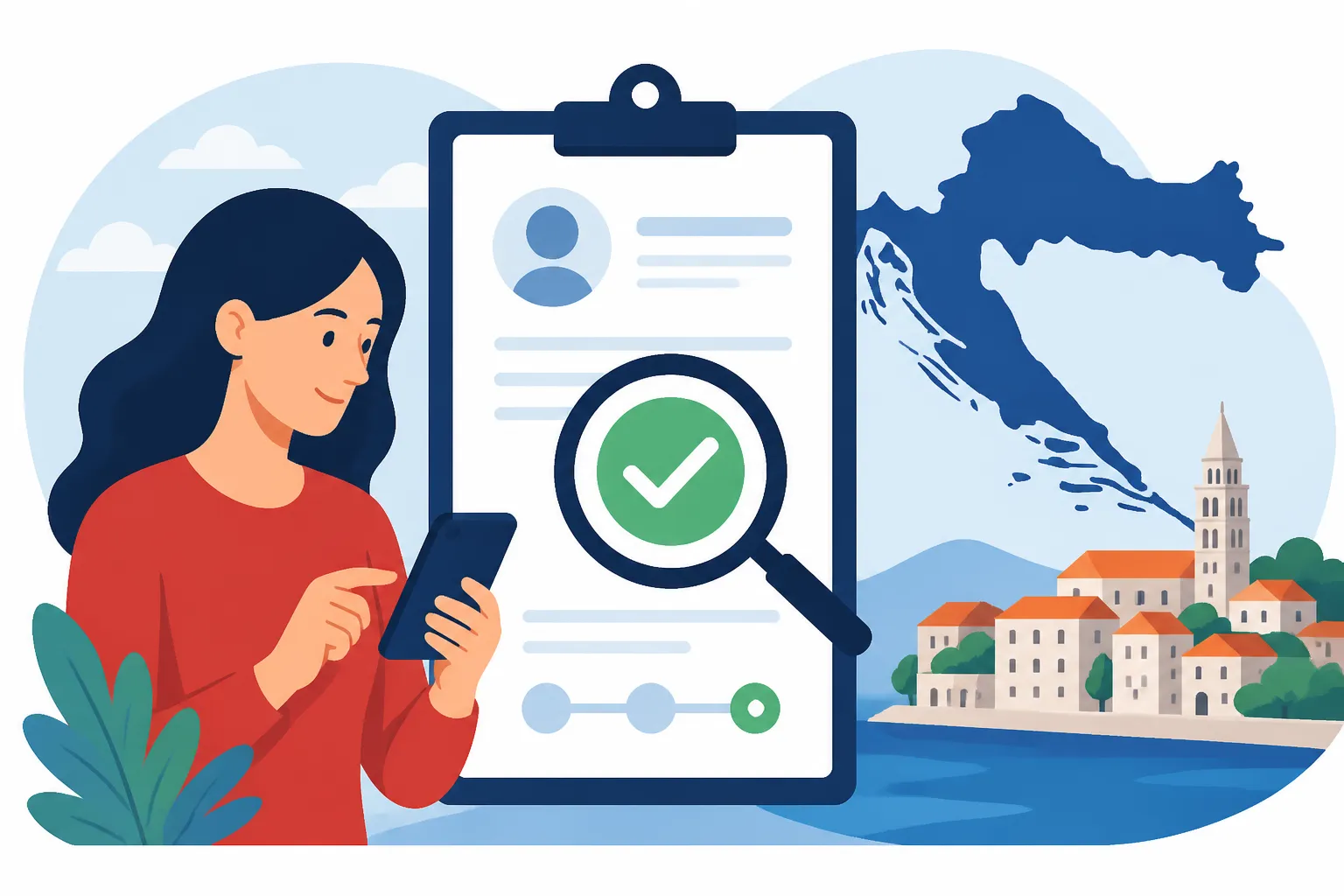
Unlike some countries with highly developed online portals, the Croatian MUP does not currently offer a centralized, real-time online status checker where you can simply input your application number and get an immediate update on its progress. This can be incredibly frustrating in our digital age! So, if you're hoping for a progress bar or "documents under review" notification, you'll likely be disappointed.
However, the MUP website (mup.gov.hr) is still an invaluable resource for general information, forms, and contact details for regional police administrations (policijska uprava or policijska postaja) which handle residence permits. You can often find updated requirements or news that might impact processing times there. Some cities might have specific local MUP pages with more targeted information, but it's rarely about individual application status. So, while you can't track your specific application step-by-step online, regularly checking the official MUP site for general updates related to The Complete Guide to Croatian Residence Permits for Expats (2027) or specific categories like Understanding Temporary Residence (Privremeni Boravak) Categories in Croatia is always a good idea.
Making the Call: The Phone as Your Lifeline (or Headache)
Picking up the phone is often the first instinct when you haven't heard back, and it can be a way to get an update, albeit with mixed results. You’ll want to call the specific MUP office where you submitted your application. This is usually the Policijska uprava (Police Administration) in your county or a smaller policijska postaja (police station) in your town, if they handle immigration matters.
General MUP Contact Information:
While there isn't one universal number to check all residence applications, you can usually find the general inquiry number for your local MUP office on their website. For Zagreb, for example, the main MUP contact numbers can be found through their website.
Tips for Calling:
- Timing is Everything: Try calling early in the morning, right when they open, or immediately after lunch. These times might have slightly shorter wait times.
- Be Prepared: Have your application receipt number (broj predmeta or broj zahtjeva), your passport number, and your OIB ready. The more information you can provide quickly, the better.
- Language Barrier: This is a big one. While some MUP officers might speak English, many do not, especially in smaller towns. If your Croatian isn't up to par, try to have a Croatian-speaking friend, colleague, or even a professional translator make the call for you. Explain clearly what you need: "Želim provjeriti status mog zahtjeva za boravak. Predao/predala sam zahtjev dana [date] pod brojem [application number]." (I wish to check the status of my residence application. I submitted the application on [date] under number [application number]).
- Patience is a Virtue: You might be put on hold for a long time, or you might need to call multiple times before reaching someone who can help. Don't get discouraged!
The information you receive over the phone can vary wildly. Sometimes you’ll get a clear update, other times a vague "it's being processed," and occasionally, you might be told to come in person. This inconsistency is just part of the Croatian experience, but a polite, persistent approach is usually best.
The Personal Touch: Visiting the MUP Office in Person
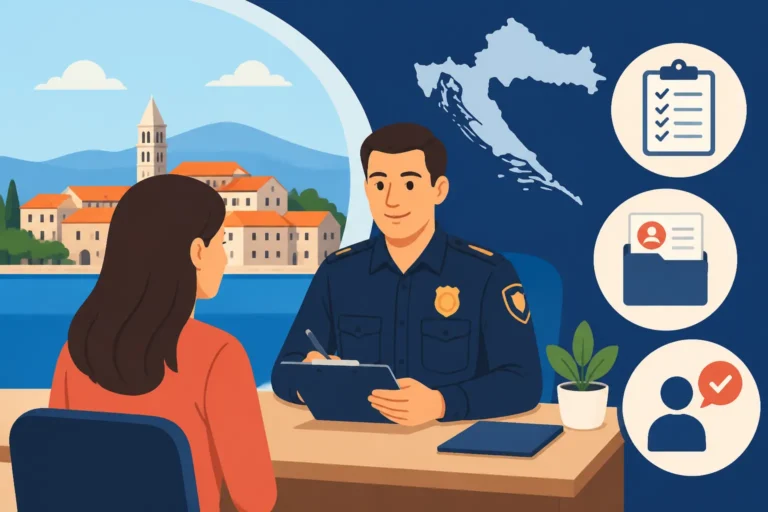
For many expats, a direct visit to the MUP office becomes an inevitable part of checking their application status, especially if phone calls have been fruitless or if there seems to be an unusually long delay. While it can feel daunting, going in person sometimes expedites matters or at least gives you a clearer picture.
When and How to Visit
A personal visit is often necessary when:
- You haven't received any communication well past the expected processing time.
- You received a request for additional documents and want to submit them or clarify something in person.
- You just need reassurance and direct human interaction, which is completely understandable after weeks or months of waiting in the dark.
For residence permit applications, most MUP offices, particularly larger ones in cities like Zagreb, Split, and Rijeka, have moved towards an appointment-based system. This is a huge improvement over the old days of endless queues! You can often book an appointment through the e-Građani portal if you have a Croatian ID and already use the system, or more commonly, by calling the MUP office directly to schedule a time. It’s always best to check the local MUP website for current procedures regarding appointments, or consult our guide on How to Book an Appointment at the MUP for Immigration Matters. Walking in without an appointment might still be possible in some smaller towns, but prepare for very long wait times, or worse, being turned away and told to make an appointment.
Office hours typically follow standard government working times, usually 8 AM to 3 PM, with a lunch break. Some offices have specific days for foreigners. Again, check local listings. Arrive a bit early for your appointment, even if it's just to find parking or navigate the building.
What to Bring and What to Expect
When you visit the MUP to inquire about your application, you must come prepared.
- Application Receipt: This is your proof of submission and contains your unique application number (broj predmeta). It's the most critical document to have.
- Passport/ID Card: Your identification, of course.
- OIB: Your Croatian personal identification number.
- Any Correspondence: If you've received letters from the MUP (e.g., requests for additional documents), bring them.
Upon arrival, you'll typically report to a reception desk, state the purpose of your visit ("Želim provjeriti status mog zahtjeva za boravak"), and present your documents. You'll then be directed to the appropriate counter or waiting area.
What to expect during the interaction:
- Language: As with phone calls, the language barrier can be a challenge. If possible, bring a Croatian speaker with you. Even if the officer speaks some English, having someone fluent can ensure clarity and nuance.
- Varying Answers: You might get different answers from different officers, or even from the same officer on different days. This isn't ideal, but it's a reality. Remain polite and persistent.
- Requests for More Information: Sometimes, a visit will reveal that one small, seemingly insignificant document is missing, or that they need a clarification. This is frustrating, but at least you know the reason for the hold-up!
- The Boravišna Iskaznica: If your application is approved, you'll eventually be directed to submit biometrics (fingerprints and photo) for your biometric residence card, or boravišna iskaznica. This is a separate, final step after approval, so don't expect to walk out with it on your inquiry visit. Our guide on How Do I Get a Biometric Residence Card (Boravišna Iskaznica) in Croatia details this final stage.
While face-to-face interaction can be frustrating, it often provides the most concrete information and a sense of progress. It also shows the MUP that you are actively engaged in the process.
The Role of Third Parties in Tracking Your Application
Navigating the MUP can be a significant undertaking, especially if you're new to Croatia, don't speak the language well, or simply don't have the time to dedicate to the administrative hurdles. This is where third-party assistance can come into play, potentially easing the burden and offering more direct channels for status checks.
Utilizing Lawyers or Agencies
For complex cases, individuals with specific legal situations, or those who value peace of mind over potential cost savings, hiring a local lawyer specializing in immigration or an expat relocation agency can be a game-changer. These professionals often have established relationships with MUP offices and are intimately familiar with the intricacies of Croatian immigration law and procedures. They understand the nuances of submitting How to Prepare Documents for a Croatian Residence Application and what triggers delays.
Pros of hiring a lawyer/agency:
- Expertise: They know exactly what documents are needed, how to present them, and how to respond to MUP queries.
- Language & Communication: They handle all communication in Croatian, translating any official documents or conversations for you.
- Direct Channels: Some agencies or lawyers may have more direct contact lines or methods for checking application status, potentially getting answers faster than an individual could.
- Reduced Stress: They take on the administrative burden, freeing you from the time-consuming process of calls and visits.
- Problem Solving: If your application hits a snag, they are equipped to advise on the best course of action, which could range from providing additional documents to initiating a formal appeal.
Cons of hiring a lawyer/agency:
- Cost: This is the primary drawback. Their services can be expensive, adding a significant sum to your relocation budget.
- Varying Quality: As with any service, the quality of lawyers and agencies can vary. Do your research, read reviews, and ask for recommendations within expat groups.
For those planning a full move, services like Sirelo, a moving platform, can also help connect you with reputable relocation service providers who might offer immigration assistance as part of a broader package. While Cigna Global is typically associated with health insurance (a mandatory component of most residence applications, especially for those considering Understanding Health Insurance Waiting Periods for New Residents in Croatia), it's important to differentiate between general relocation support and specialized legal immigration advice.
Employer or Sponsor Assistance
If your residence permit application is tied to employment, study, or family reunification, your employer, educational institution, or sponsoring family member often plays a crucial role. For work permits, in particular, the Croatian employer is frequently the one who initiates the application and has the most direct communication channel with the MUP.
How they can assist:
- Direct Contact: Employers often have designated HR personnel who regularly liaise with the MUP regarding work permits. They may have a direct contact person or an established process for inquiring about application status on behalf of their foreign employees. This can be much more effective than you trying to call yourself. Our guide on The Complete Guide to Working in Croatia as a Foreigner (2027) delves into the employer's role in work permits.
- Advocacy: If there are delays, the employer can sometimes advocate on your behalf, especially if your presence is critical for their business operations.
- Documentation Support: They can help ensure all employer-specific documents are correctly submitted and respond promptly to any MUP requests for additional information.
Don't hesitate to politely ask your employer or sponsor if they can assist you in checking the status of your application. They often have more leverage and access to information than you might as an individual applicant. For students, the international office of your university might be able to offer similar support.
What to Do If Your Application is Delayed or Undecided
The waiting can feel endless, and sometimes it stretches beyond what seems reasonable. If you find yourself in this situation, it's natural to feel frustrated and even a bit helpless. However, there are steps you can take to understand the situation better and potentially nudge things along.
Understanding Potential Reasons for Delays
Before panicking, consider the common reasons why a residence application might be delayed in Croatia:
- Incomplete Application: This is the most frequent reason. Even a minor omission (a signature, a stamp, a missing copy) can halt the process. The MUP should theoretically inform you of this, but sometimes the notification itself can be delayed.
- Background Checks: For certain types of permits, particularly those requiring more extensive security or criminal record checks, processing times can be significantly longer. This is outside the MUP's direct control as they rely on other agencies.
- Peak Season/Backlog: As mentioned, certain times of the year (e.g., summer months, pre-holidays) or specific MUP offices might experience higher volumes, leading to a general slowdown.
- New Regulations: Sometimes, changes in immigration law or administrative procedures can cause temporary delays as staff adjust to new requirements.
- Administrative Errors: While rare, human error can occur, leading to your application being misplaced or misfiled. This is difficult to prove, but a persistent inquiry can sometimes uncover it.
If you are consistently met with "it's in process" without further explanation, try to politely ask if there's anything specific you can provide or if there's a particular department or stage of the process where it might be held up. This might not always yield results, but it shows your proactive interest. Knowing how long it generally takes to get a Croatian residence permit can help manage expectations.
Formal Inquiries and Appeals
If you've exhausted all informal avenues (calls, visits, employer checks) and your application is significantly delayed beyond the officially stated processing times (which are often optimistic), you might consider more formal steps.
- Written Inquiry (Dopis): You can submit a formal written inquiry (dopis) to the MUP, requesting an update on your application. This should be a polite but firm letter, referencing your application number, date of submission, and emphasizing the prolonged wait. It's often advisable to send this by registered mail (preporučeno pismo) with an acknowledgment of receipt (povratnica) so you have proof it was received.
- Administrative Complaint (Žalba): If a decision is outright rejected and you believe it was done incorrectly, or if a decision is delayed unreasonably without cause, you might have grounds for an administrative complaint (žalba) through official channels. This is a more serious step and usually requires legal advice. It would typically be addressed to a higher administrative body, not just the local MUP. This process can be lengthy and complex, so it’s usually considered a last resort.
For the vast majority of expats, simply staying persistent with polite inquiries, ensuring all initial documents were perfect, and having patience is the best course of action. Very few cases escalate to formal complaints or appeals, but it's important to know the options exist if you find yourself in an extreme situation. Remember, the goal is to get your permit, not to fight the system, so approach any formal steps with careful consideration and, ideally, legal counsel.
| Method of Inquiry | Pros | Cons | Best For |
|---|---|---|---|
| MUP Website | General information, updated requirements, forms. | No individual status tracker, not for specific application updates. | Initial research, downloading forms. |
| Phone Call | Can get quick verbal updates, no travel required. | Language barrier, long waits, inconsistent information, might be told to come in person. | First check after expected processing time, quick questions. |
| In-Person Visit | Direct interaction, clearer answers, can submit additional docs. | Time-consuming, potential wait times, language barrier, may require appointment. | Significant delays, complex issues, submitting new documents, getting reassurance. |
| Lawyer/Agency | Expertise, handles communication, direct channels, reduces stress. | Expensive, quality varies. | Complex cases, language barrier, high value on peace of mind. |
| Employer/Sponsor | Direct contacts, advocacy, faster updates for work/family permits. | Only applicable for sponsored permits, depends on employer's willingness/resources. | Work permit applications, family reunification. |
| Formal Written Inquiry | Official record, can prompt action if ignored. | Slow process, requires formal language, usually needs registered mail. | Extreme delays, no response from other channels. |
Disclaimer
The information provided in this guide is for general informational purposes only and does not constitute legal advice. While we strive to keep the information up-to-date and accurate, Croatian immigration laws and administrative procedures can change frequently. Always consult with the official MUP website, a legal professional, or a qualified immigration consultant for advice tailored to your specific situation.