How Do I Access a GP Outside of Business Hours in Croatia?
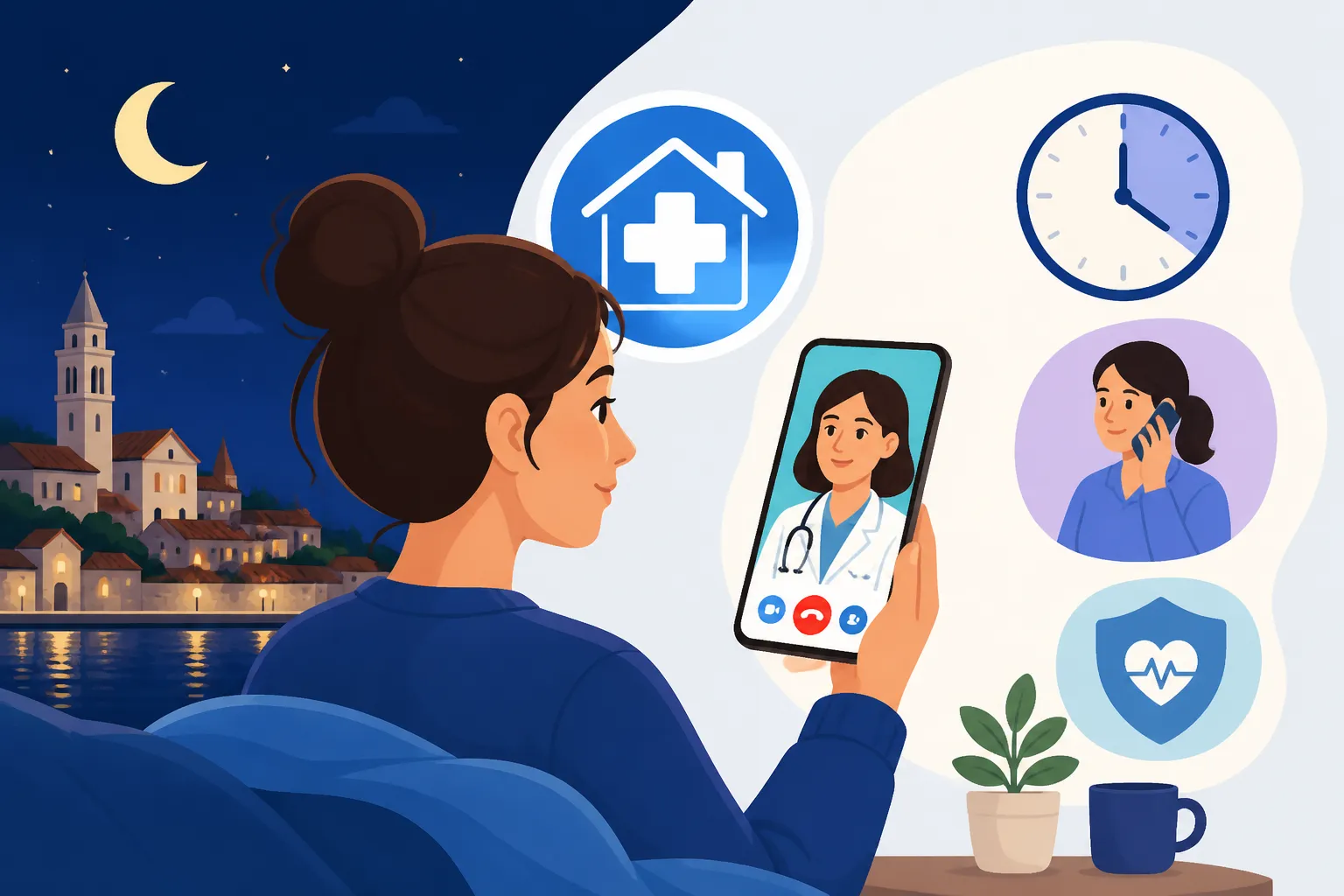
One of the most unsettling experiences as an expat or tourist in Croatia is falling ill or needing medical attention when your regular family doctor (obiteljski liječnik) isn't available. It’s a common fear, especially when navigating a new healthcare system in a foreign language. This guide will walk you through exactly how to access a general practitioner (GP) outside of standard business hours, providing practical steps and insights to help you stay calm and get the care you need.
Understanding Croatia's After-Hours Healthcare System
When you first arrive in Croatia, registering with a family doctor is one of the first things you'll do, usually after you’ve tackled your The Complete Guide to Healthcare in Croatia for Expats (2027) and sorted your HZZO paperwork. However, most GP offices operate on a fairly standard schedule, typically closing in the late afternoon or evening, and certainly not open on weekends or public holidays. So, what happens when you spike a fever at 9 PM on a Saturday, or wake up with a nasty ear infection on a Sunday morning? You can't just call your regular doctor's office and expect an answer.
Croatia has a system in place for these situations, but it's not always immediately obvious how to navigate it as a foreigner. It generally involves two main pathways for non-emergency situations: after-hours clinics at Dom Zdravlja (health centers) and, for more serious issues, emergency rooms. Knowing the difference and when to use each is absolutely crucial.
Dom Zdravlja After-Hours Clinics (Dežurna Služba)
For most non-life-threatening ailments that arise outside of your regular GP's hours, your first port of call should be the after-hours clinic, known as "Dežurna Služba" (duty service) or "Hitna Ambulanta" (urgent clinic) at a local Dom Zdravlja. These clinics are specifically designed to provide primary care services when your doctor's office is closed. They are staffed by general practitioners who can diagnose conditions, prescribe medication, and offer basic treatments. Think of it as an urgent care center, but embedded within the public health system.
These clinics are typically open during evenings, nights, weekends, and public holidays. The exact hours and locations can vary by city and even by neighborhood, so it's always a good idea to know where your nearest one is before you actually need it. For instance, in Zagreb, there are usually a few central locations that serve the entire city during these off-hours, such as the one in Laginjina Street. While these clinics are part of the public health system, if you have basic HZZO health insurance, you might still need to pay a participacija (co-payment) fee, unless you also have Understanding Dopunsko Zdravstveno Osiguranje (Supplementary Insurance) in Croatia. This co-payment is generally a small amount, but it's important to be prepared for it.
When you arrive at a Dežurna Služba, you’ll typically register at the reception desk, just like at any other doctor's office. You'll need your health insurance card (HZZO or private), your OIB, and sometimes your passport. The wait times can vary significantly depending on the time of day, the severity of other patients' conditions, and the staff available. It's not uncommon to wait an hour or two, especially during peak times like Saturday evenings or holiday mornings. However, for a persistent cough, a sudden fever, or a minor injury, this is precisely the right place to go.
Emergency Rooms (Hitna Pomoć) vs. Urgent Care
It’s vital to understand the distinction between the Dežurna Služba and the "Hitna Pomoć" (emergency room) at a hospital. The Hitna Pomoć, often simply called "Hitna" by Croatians, is reserved for true medical emergencies – situations where life is at risk or there's a serious injury requiring immediate, specialized attention. This includes severe chest pain, major trauma, sudden loss of consciousness, stroke symptoms, uncontrolled bleeding, or difficulty breathing. If you are experiencing such a situation, you should immediately call the emergency number 112 or 194. You can learn more about this in our guide on Emergency Medical Care in Croatia: What Every Expat Needs to Know.
Going to the emergency room for a non-emergency will not only result in extremely long wait times, as critical cases are always prioritized, but it might also incur higher costs if the hospital determines your condition was not an emergency. The staff will assess your condition upon arrival, and if it's not deemed urgent, you could be redirected to an after-hours clinic or told to see your regular GP the next day. This can be frustrating, particularly if you're already feeling unwell and navigating a new system. It's truly a system for life-threatening issues, not for routine illnesses that simply happen after 5 PM.
Many larger hospitals in Croatia, such as the Clinical Hospital Centers (KBC) in Zagreb, Split, Rijeka, or Osijek, have their own urgent care or casualty departments that may be separate from the full-blown emergency room but still handle more acute issues than a Dom Zdravlja after-hours clinic. However, for most common after-hours primary care needs, the Dežurna Služba is the more appropriate and efficient choice. Always try to assess the severity of your condition realistically to choose the right facility.
Step-by-Step Guide to Accessing After-Hours GP Care
Navigating a medical situation when your regular doctor isn't around can feel daunting. Let's break down the process into actionable steps to make it less stressful.
When to Call Your GP vs. Dežurna Služba vs. Hitna Pomoć
Understanding the right channel for your symptoms is key.
- Your Regular GP (Obiteljski Liječnik): This is for routine check-ups, chronic condition management, non-urgent illnesses during working hours, and prescription renewals. Your GP is your primary point of contact for all non-emergency health matters during their stated clinic hours. They know your medical history best, and it’s always preferable to see them if possible. If you're new to the country and haven't registered with one yet, our guide The Expat Guide to Finding a Family Doctor (Obiteljski Liječnik) in Croatia can help.
- Dežurna Služba (After-Hours Clinic): This is for acute, non-life-threatening conditions that arise outside of your GP's working hours. Examples include sudden high fever, persistent cough, severe sore throat, minor cuts requiring stitches, urinary tract infections, severe earaches, or acute stomach issues that aren't extreme. If you're wondering if it can wait until morning, but you're truly uncomfortable, this is the place to go.
- Hitna Pomoć (Emergency Room): Only for life-threatening emergencies or severe injuries. This includes suspected heart attack or stroke, severe allergic reactions, major accidents, unconsciousness, uncontrollable bleeding, sudden and severe abdominal pain with vomiting, or difficulty breathing. If you even suspect it’s an emergency, do not hesitate – call 112 or 194.
Here's a quick reference table to help:
| Condition Type | Best Course of Action | When to Use |
|---|---|---|
| Routine check-up, chronic issue, mild cold | Your Regular GP | During your GP's office hours |
| High fever (non-severe), persistent cough, UTIs | Dežurna Služba (After-Hours Clinic) | Evenings, nights, weekends, public holidays |
| Severe chest pain, major trauma, stroke, severe bleeding | Hitna Pomoć (Emergency Room) | Anytime, 24/7, for life-threatening emergencies |
What to Expect at an After-Hours Clinic
Once you’ve determined that an after-hours clinic is the correct place for your ailment, here's what typically happens:
- Locate the Nearest Clinic: As mentioned, these clinics are usually located within a Dom Zdravlja. You can often find this information on the local Dom Zdravlja website, by asking a local, or by doing a quick online search for "Dežurna Služba [Your City Name]". Keep this information handy in your phone or wallet.
- Arrival and Registration: Upon arrival, head to the reception. You'll need to present your ID (passport/residence permit), your Croatian health insurance card (HZZO card if you have one), and your OIB. If you have private health insurance, like from a provider such as SafetyWing, ensure you have your policy details and card readily available. The receptionist will register you, and you may be asked to fill out a brief form. They will likely direct you to the waiting area.
- The Wait: Be prepared for a wait. After-hours clinics operate on a first-come, first-served basis, with more urgent (but not emergency) cases sometimes prioritized. Bring a book, fully charged phone, or anything to keep you comfortable.
- Consultation with the Doctor: When your turn comes, you'll be called in to see the GP on duty. They will ask about your symptoms, medical history, and current medications. This is where language can become a barrier if you're not fluent in Croatian, which we'll address in the next section.
- Diagnosis and Treatment: The doctor will examine you, make a diagnosis, and prescribe necessary medication (via an e-Recept if you are registered with HZZO) or suggest further steps. If they determine your condition requires specialist attention, they might provide a referral (e-Uputnica) to a hospital or specialist clinic for follow-up during regular hours. If you need medication, you can take your prescription to any open pharmacy (ljekarna). Many larger cities have 24-hour pharmacies.
It’s important to remember that these doctors provide general care. They are not specialists, and their role is to stabilize your immediate condition and guide you toward appropriate follow-up care if needed. They are there to bridge the gap between your GP’s closing time and reopening, ensuring continuous primary healthcare access.
Special Considerations for Expats and Tourists
As a foreigner, you might face unique challenges when seeking medical care after hours in Croatia. Being prepared can make a world of difference.
Language Barriers and How to Overcome Them
Perhaps the biggest hurdle for many expats and tourists is the language barrier. While younger medical professionals in Croatia often speak excellent English, especially in larger cities like Zagreb, Split, or Dubrovnik, this isn't universally true, especially in smaller towns or with older staff. In an urgent situation, trying to explain complex symptoms in a foreign language can be incredibly stressful.
- Google Translate/Translation Apps: Have a reliable translation app on your phone. Google Translate, for instance, has a medical dictionary function and can even translate conversations in real-time, though this can be clunky in a fast-paced medical setting.
- Bring a Croatian Speaker: If possible, bring a Croatian-speaking friend, colleague, or neighbor with you. This is by far the most effective solution.
- Prepare Key Phrases: Learn a few essential Croatian medical phrases. Knowing how to describe your main symptom (e.g., "Boli me glava" – My head hurts; "Imam temperaturu" – I have a fever) can be incredibly helpful. We’ll provide a small list below.
- "How to Find an English-Speaking Doctor in Croatia": While this guide focuses on after-hours care, knowing that such doctors exist and where to find them for regular appointments can provide peace of mind. Some private clinics often have English-speaking staff, but their after-hours services might be limited or more expensive.
- Written Notes: Jot down your symptoms, when they started, and any relevant medical history in simple English (or even using pictures/diagrams). This can be handed to the doctor, allowing them to use a translation app if needed.
Health Insurance: HZZO, Supplementary, and Private Options
Your insurance coverage dictates your out-of-pocket costs and, sometimes, where you can seek care.
- HZZO (Mandatory Health Insurance): If you are a resident and are registered with HZZO, this is your primary coverage. For after-hours clinics, you’ll present your HZZO card. You will usually pay a "participacija" (co-payment). For example, a visit to the Dežurna Služba might cost around €10-€15 without supplementary insurance.
- Dopunsko Zdravstveno Osiguranje (Supplementary Insurance): This is highly recommended for anyone on HZZO. It covers the participacija fees, meaning your after-hours visit will typically be free. Companies like Croatia Osiguranje or HZZO's own supplementary plan offer this. If you don't have it, consider getting it; it saves you small but frequent costs and hassle. Learn more about Understanding Dopunsko Zdravstveno Osiguranje (Supplementary Insurance) in Croatia.
- Private Health Insurance: If you are a tourist, a digital nomad, or an expat not yet covered by HZZO, you will need private health insurance. Providers like SafetyWing offer travel and medical insurance plans tailored for digital nomads and long-term travelers. With private insurance, you'll likely pay upfront at the after-hours clinic and then seek reimbursement from your insurance provider. Always keep all receipts and medical reports. It's crucial to understand your private plan's specifics, including direct billing options (rare in after-hours public clinics), reimbursement procedures, and any deductibles or co-pays. For example, SafetyWing provides comprehensive coverage for unexpected medical emergencies, which would include visits to after-hours GP clinics if deemed medically necessary. Remember, the Health Insurance in Croatia: Mandatory, Supplementary and Private Options Explained article provides a great overview of these choices.
Always carry your insurance card or policy details with you. If you're covered by SafetyWing or similar international insurance, make sure you have their contact details readily available.
Essential Phrases and Resources
Having a few key phrases at your fingertips can significantly ease communication.
| English Phrase | Croatian Translation |
|---|---|
| I need a doctor. | Trebam liječnika. |
| It hurts here. (pointing) | Boli me ovdje. |
| I have a fever. | Imam temperaturu. |
| I have a cough. | Imam kašalj. |
| I have a sore throat. | Boli me grlo. |
| My stomach hurts. | Boli me trbuh. |
| I feel nauseous. | Muka mi je. |
| I have a headache. | Boli me glava. |
| I need a prescription. | Trebam recept. |
| Is there someone who speaks English? | Govori li netko engleski? |
| Thank you. | Hvala. |
Important Numbers:
- 112: General Emergency Number (can connect you to ambulance, fire, police).
- 194: Ambulance (Hitna Pomoć) directly.
Beyond phrases, familiarize yourself with online resources. Your local Dom Zdravlja website might have an English section, or at least a clear listing of after-hours clinic locations and hours. Expat forums and social media groups are also invaluable for real-time advice and recommendations from fellow foreigners who have navigated these systems. Many often share updated information on after-hours services.
Prevention and Preparedness
A little preparation goes a long way in turning a potentially chaotic after-hours medical need into a manageable situation. It's about empowering yourself before you're in a vulnerable state.
Keeping Your Medical Information Handy
Imagine you're feeling awful, feverish, and disoriented. The last thing you want to do is hunt for your medical records.
- Medical Information Card/App: Create a small card or use a medical ID app on your phone that includes vital information: your name, OIB, blood type, any known allergies (especially to medications), chronic conditions you suffer from, and a list of your current medications (generic names are best). Also, include an emergency contact person and their phone number. If you are a SafetyWing member, keep your policy number and their emergency contact clearly visible. This allows medical staff to quickly assess your background, even if there's a language barrier.
- Medication List: Keep an up-to-date list of all your prescription and even over-the-counter medications, including dosage and frequency. If you're on a digital nomad visa, for example, and rely on insurance like SafetyWing, this becomes even more crucial as you might be carrying medications from your home country.
- Doctor's Contact Info: Have your regular Croatian GP's contact information readily accessible. Even if they are closed, their name and clinic address can be helpful for the after-hours doctor if they need to send over notes for follow-up.
Understanding Your Insurance Coverage Before You Need It
Don't wait until you're sick or injured to figure out your insurance.
- HZZO Details: If you have HZZO, understand what it covers and what additional costs (participacija) you might face. If you have supplementary insurance (dopunsko), ensure it's active and you know how to use it. Many expats wonder, "Is Dopunsko Osiguranje Worth It for Expats in Croatia?" and in situations like after-hours care, the answer is often a resounding yes.
- Private Insurance Specifics: If you rely on private health insurance, thoroughly read your policy documents. Know your deductible, co-payment structure, what's covered for GP visits (especially urgent care), and the exact procedure for submitting claims for reimbursement. SafetyWing, for instance, typically requires you to pay upfront for non-emergency medical visits and then file a claim. Understand how long you have to file a claim and what documentation is required (original receipts, medical reports, etc.).
- Emergency vs. Non-Emergency Coverage: Be clear on how your insurance distinguishes between emergency care (Hitna Pomoć) and urgent care (Dežurna Služba). Some policies have different coverage levels or deductibles for each.
- What Happens If I Get Sick Before My HZZO Registration Is Complete? This is a critical question for new arrivals. Often, private travel insurance (like SafetyWing) will be your only recourse until your HZZO coverage kicks in. This waiting period is precisely when robust private insurance is indispensable.
By taking these proactive steps, you can significantly reduce the stress and uncertainty that comes with needing medical care outside of regular business hours in Croatia. Being an expat means being adaptable, and that includes preparing for the unexpected. Stay informed, stay prepared, and remember that help is available, even after the lights go out at your regular doctor's office.
Disclaimer
The information provided in this guide is for general informational purposes only and does not constitute medical or legal advice. While we strive to provide accurate and up-to-date information, healthcare systems and regulations can change. Always consult with a qualified medical professional or legal expert for advice tailored to your specific situation.