How Do I Pay for Private Healthcare in Croatia as a Foreigner?
Navigating the Croatian medical landscape often feels like a full-time job, especially when you are caught between the mandatory public system and the speed of private clinics. This guide solves the confusion around paying for private healthcare, detailing costs, insurance integration, and how to avoid the bureaucratic pitfalls that leave most foreigners paying more than they should for medical attention.
The Reality of Private Healthcare in Croatia
If you have spent more than a week in Croatia, you have likely noticed that the public healthcare system, while robust in its medical expertise, is often bogged down by immense waiting lists. This is precisely why the private sector, dominated by "Poliklinike" (polyclinics), has exploded in popularity. For an expat, the transition from the public system to a private one is often a necessity rather than a luxury. Understanding how to navigate these facilities begins with recognizing that they operate quite differently from the state-run hospitals.
The private sector is where you go when you need an MRI next Tuesday, rather than next year. Facilities like Poliklinika Aviva or Medikol in Zagreb offer state-of-the-art equipment and, perhaps most importantly, a higher density of English-speaking staff. However, the convenience comes with a price tag that is not covered by your standard public contributions. Most foreigners find themselves needing to bridge the gap between their mandatory HZZO coverage and the immediate needs of their health. When you are still in the process of Registering with HZZO in Croatia: The Complete Expat Guide (2027), having a clear plan for private payment is essential.
One of the first things you will encounter is the concept of the polyclinic. Unlike a massive hospital, these are often specialized centers that handle everything from dermatology to cardiology under one roof. They are sleek, efficient, and very much run like a high-end business. Because they are private, they do not require a referral from your family doctor. You simply call, book, and show up. But before you walk through those glass doors, you need to know exactly how the financial transaction will take place, as the Croatian "administracija" is legendary for its strictness.
Why Expats Choose Private Over Public
The primary driver for choosing private care is time. In the public system, even for non-emergency but necessary procedures, the wait times can be demoralizing. If you are trying to understand How Long Are Specialist Waiting Lists in the Croatian Public System?, the answer is often "months." For a working professional or a digital nomad, taking half a day off to wait in a crowded corridor at a Dom Zdravlja is rarely an option. Private clinics respect your time, offering precise appointment slots that actually start when they are supposed to.
Another factor is the quality of the "customer journey." In private clinics, you are treated as a client. This is a refreshing change for those who have struggled with the somewhat gruff bedside manner occasionally found in the overstretched public sector. Furthermore, the specialized nature of these clinics means you are often seeing the top experts in the country, many of whom work in the public hospitals during the morning and run their private practices in the afternoon.
The Concept of the Poliklinika
In Croatia, a "Poliklinika" is a private medical institution that provides specialist-consultative healthcare. It is the middle ground between a small doctor's office and a full-scale hospital. These institutions are everywhere in major cities like Zagreb, Split, and Rijeka. They are often the first port of call for expats seeking a Health Check-Up (Sistematski Pregled) in Croatia. They offer a streamlined experience where you can get blood work, an ultrasound, and a specialist consultation all in a single morning.
The administrative side of a polyclinic is usually very modern. They will ask for your Personal Identification Number (OIB) to create a file. If you are still figuring out How to Get an OIB and Why It Matters for Healthcare Access, make sure you prioritize this, as it serves as your primary identifier in every Croatian system, including private medical databases. Without an OIB, some clinics may still treat you, but the paperwork becomes significantly more cumbersome.
Methods of Paying for Private Medical Services
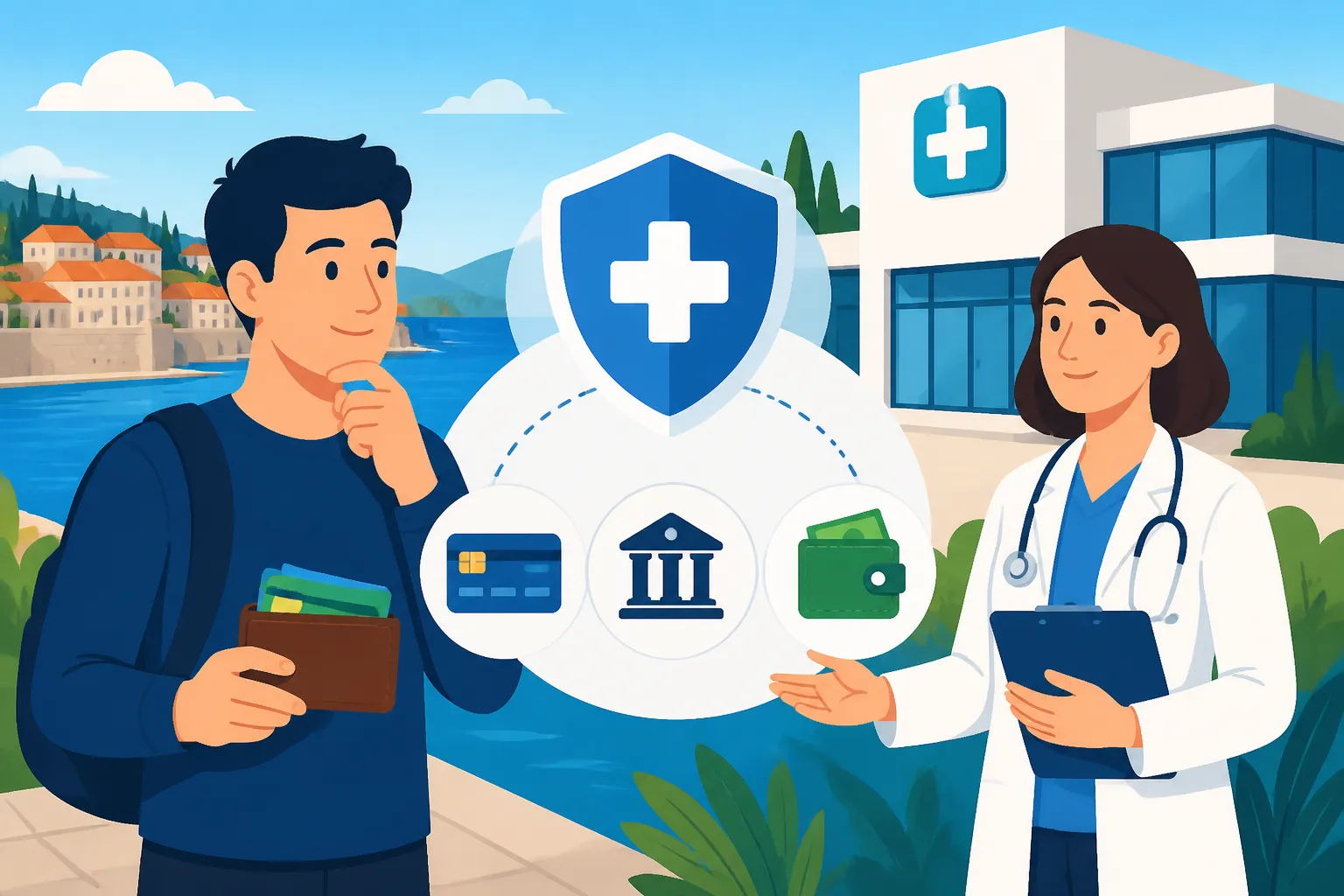
When it comes to the actual transaction, you generally have three routes: paying out-of-pocket, using a domestic private insurance plan, or utilizing an international health insurance provider. Each has its pros and cons depending on your residency status and how long you plan to stay in the country.
Most expats start with out-of-pocket payments, especially if they are just arrived and haven't set up their local insurance yet. The good news is that the Croatian private medical sector is remarkably transparent about pricing. Most polyclinics have a "Cjenik" (price list) clearly displayed on their website. They accept all major credit cards, and cash is still widely accepted, though the country transitioned fully to the Euro in 2023, so make sure your wallet is updated.
Direct Out-of-Pocket Payments
Paying directly is the simplest method. You walk in, receive your treatment, and pay at the reception desk before leaving. You will receive a fiscalized receipt (račun), which is a vital document if you hope to seek reimbursement later from an international insurer. For many, this is the preferred way to handle one-off visits, such as seeing a Dermatologist (Dermatolog) in Zagreb or a quick consultation for a minor ailment.
The costs, while higher than the public "participacija" fees, are often quite reasonable compared to North American or Western European private rates. For example, a specialist consultation might range from 50 to 100 Euros. It is direct, there is no paperwork involved for the clinic, and it gives you the ultimate flexibility to choose whichever doctor you prefer without checking insurance networks.
Private Health Insurance Plans
For those living in Croatia long-term, domestic private health insurance—often called "Dodatno" (additional) insurance—is a popular choice. This is different from the mandatory HZZO or the Supplementary Insurance (Dopunsko) in Croatia. Dodatno insurance is a private contract with companies like Croatia Osiguranje, Allianz, or Merkur. You pay a monthly premium, and in return, you get a certain number of specialist exams and diagnostic tests for free each year at their partner clinics.
If you are a digital nomad or a frequent traveler, a domestic plan might feel a bit restrictive. This is where a brand like SafetyWing becomes incredibly relevant. SafetyWing offers global travel medical insurance that is specifically designed for nomads. It can cover unexpected medical emergencies while you are in Croatia, allowing you to access private care without the fear of a massive bill. For many expats, having a baseline of international coverage like SafetyWing provides peace of mind during those first few months when you are still navigating the Health Insurance in Croatia: Mandatory, Supplementary and Private Options Explained landscape.
Understanding Costs and Billing
To give you a realistic idea of what you will be paying when you step into a private clinic, let's look at some standard costs. Keep in mind that prices in 2026 have stabilized somewhat, but it is always wise to ask for a quote before booking a major procedure.
Most clinics will provide you with an itemized bill. This is crucial if you are trying to understand The Cost of Healthcare in Croatia: A Complete Breakdown for Foreigners (2026). You aren't just paying for the doctor's time; you are paying for the "obrada" (processing), any materials used, and the administrative fee. If you have international insurance, ensure the receipt includes the medical codes and a brief description of the diagnosis in English if possible, though most insurers are used to Croatian receipts.
Standard Price Ranges for Common Services
| Service Type | Estimated Cost (Private) | Notes |
|---|---|---|
| Specialist Consultation | €60 – €120 | Includes initial exam |
| Standard Blood Panel | €40 – €90 | Depends on markers |
| Ultrasound (UZV) | €50 – €100 | Varies by organ |
| MRI Scan | €200 – €400 | Per body part |
| Physical Therapy Session | €30 – €60 | Usually per 45-60 mins |
| Dental Cleaning | €50 – €80 | Often includes check-up |
As you can see, while not "cheap" by local standards, these prices are often accessible for those earning a foreign salary. If you find yourself needing more specialized care, such as Finding a Gynaecologist (Ginekolog) in Split, you can expect to pay around €80 for a full exam including an ultrasound.
How Invoicing and Payments Work on the Ground
When you finish your appointment, you will be directed to the "pult" (reception). They will ask how you wish to pay. If you have a domestic Dodatno insurance card, you show it then. The system will check if your plan covers that specific exam. If it does, you sign a slip and walk out. If you are paying yourself, they will issue the "račun."
Always check your receipt to ensure your OIB is correct. This is not just a Croatian obsession with numbers; it is how the tax authorities track medical expenses. If you ever need to prove your medical spending for residency renewals or tax deductions, that OIB on the receipt is your golden ticket. Furthermore, if you are a freelancer, you might be wondering How Much Tax Does a Paušalni Obrt Pay in Croatia in 2026? and whether medical expenses are deductible. Generally, for a flat-rate trade (paušalni obrt), they are not, but for other business types, they might be.
Bridging the Gap: SafetyWing and International Coverage
One of the most common mistakes newcomers make is assuming they can just "wing it" until their HZZO card arrives. The reality is that the registration process can take weeks or even months. If you fall ill during this period, you are 100% liable for all costs. This is where international insurance plans act as a vital bridge.
SafetyWing is a popular choice among the expat community because of its flexibility. Unlike traditional insurers that require you to sign up for a year, SafetyWing works on a subscription model. This is perfect if you are waiting for your residence permit to be processed. If you have an accident or a sudden illness, you can go to a private clinic, pay the bill, and then file a claim with SafetyWing for reimbursement.
It is important to understand that while SafetyWing covers emergencies and unexpected illnesses, it is not a replacement for the mandatory state insurance if you are a resident. However, for the private medical visits that often occur in the first few months, it is a lifesaver. It allows you to skip the queues at the public hospitals and head straight to a specialist who can see you immediately. This is especially true if you are looking for Emergency Medical Care in Croatia: What Every Expat Needs to Know, as the private sector can often handle urgent but non-life-threatening issues much faster.
When International Insurance Makes More Sense
If you are a digital nomad on a one-year permit, you might find that relying on an international plan like SafetyWing combined with out-of-pocket payments for routine care is more efficient than trying to fully integrate into the local private insurance market. Local plans often have "waiting periods" (karenca) where you can't claim for certain conditions for the first 3 to 6 months. International plans usually don't have this, making them better for short-to-medium-term stays.
Additionally, international insurance often covers you when you travel outside of Croatia. If you decide to take a weekend trip to Slovenia or Italy and need a doctor, your SafetyWing policy travels with you, whereas a local Croatian private plan from Croatia Osiguranje might only cover you within the national borders.
Navigating the Intersection of HZZO and Private Care
A frequent point of confusion is whether you can use your public HZZO insurance at a private clinic. The short answer is: usually not. However, there is a nuance called "ugovorne ustanove." These are private clinics that have a contract with HZZO to perform certain procedures when the public hospital capacity is exceeded.
If you have a "crvena uputnica" (red referral) from your Family Doctor (Obiteljski Liječnik) in Croatia, you can sometimes use it at a private facility that has an HZZO contract. However, the wait times for these "contracted" slots in private clinics are often just as long as the public ones. If you want the speed of private care, you must be prepared to pay for it independently of the HZZO system.
Using Dopunsko for Private Services
Many expats ask if Understanding Dopunsko Zdravstveno Osiguranje (Supplementary Insurance) in Croatia will help with private clinic bills. Generally, Dopunsko only covers the "participacija" (co-payment) in the public system and the cost of certain medications. It does not pay for a private consultation at a polyclinic.
However, some private insurers offer "combined" packages where they handle your Dopunsko and give you a few private exams as a bonus. If you are a resident, this is often the most cost-effective way to get the best of both worlds. You fulfill your legal obligation to have supplementary insurance while gaining access to the private network for a discounted rate.
Practical Tips for Foreigners
Finding the right clinic is half the battle. While Google Reviews are helpful, the expat community in Croatia is very active on social media. Joining local groups can help you find an English-Speaking GP in Zagreb who also operates in a private capacity. Don't be afraid to ask the clinic's reception over the phone about their experience with foreign insurance—most of the larger ones deal with international patients daily.
Finally, always keep a digital folder of your medical records. Unlike some countries where your records follow you automatically, the Croatian system is still somewhat fragmented between the public e-Građani system and private clinic databases. Whenever you pay for a private visit, ask for the "nalaz" (medical report) in addition to the "račun." These reports are vital when you eventually need to show your medical history to a new doctor or if you are Registering a Chronic Condition with My Croatian GP.
Managing Receipts for Reimbursement
If you are using a plan like SafetyWing, your claim success depends entirely on your documentation.
- Ensure the clinic prints your full name and OIB on the receipt.
- Ask for a "specifikacija troškova" (specification of costs) if the receipt is just a single total.
- Keep the medical report (nalaz) that explains why the treatment was necessary.
- Take a clear photo of the receipt immediately; thermal paper fades quickly in the Croatian sun!
By following these steps, you ensure that paying for private healthcare is a smooth transaction rather than a bureaucratic nightmare. Croatia offers world-class medical professionals; you just need to know which "counter" to go to and which card to pull out of your wallet.
Disclaimer
The information provided in this guide is for informational purposes only and does not constitute legal, financial, or professional medical advice. While we strive to keep the data current, regulations regarding healthcare and insurance in Croatia change frequently. Always verify current requirements with the Croatian Health Insurance Fund (HZZO) or your insurance provider before making financial decisions.