Can I Apply for the Digital Nomad Permit While in Croatia?
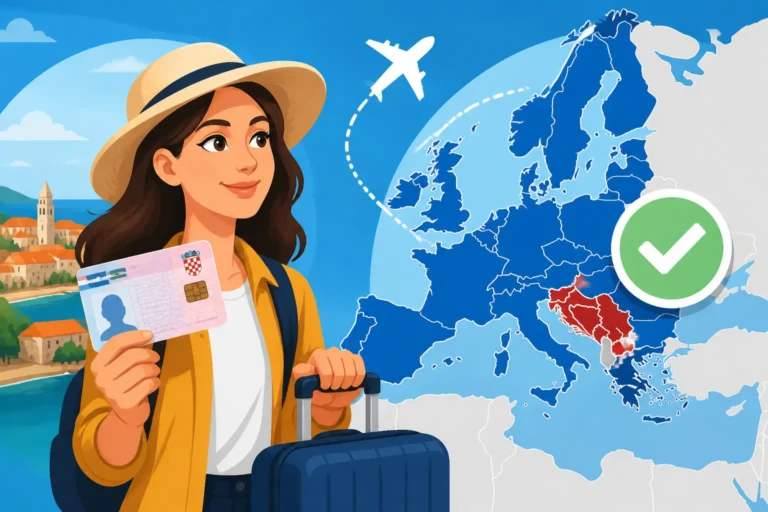
Oh, the classic expat conundrum! You're already here, you've fallen in love with the country, maybe you've spent a few weeks exploring, and now the idea of living here long-term as a digital nomad has fully blossomed. But then the panic sets in: "Wait, can I even apply for the digital nomad permit while I'm already in Croatia?" It’s a completely valid question, and one that, unfortunately, doesn’t have a simple “yes” or “no” answer for everyone. The rules can feel like a labyrinth, but trust me, many of us have navigated them. This guide will meticulously break down the various scenarios, requirements, and crucial nuances you need to understand to apply for your Croatian digital nomad permit from within the country, validating every single frustrating step along the way.
The Crucial Starting Point: Your Current Status in Croatia
Before you even think about gathering documents or booking a MUP appointment, the absolute first thing you need to understand is your current legal status in Croatia. This isn't just a technicality; it’s the make-or-break factor for whether an in-country application is even remotely possible for you. Believe me, the Croatian authorities, particularly at the MUP, are sticklers for proper procedure, and trying to bypass this foundational step will only lead to heartache and wasted time.
Non-EU/EEA Citizens and the Schengen 90/180 Rule
This is where most of the complexity lies. If you're coming from a non-EU/EEA country – think the US, Canada, UK, Australia, or any other third country – your initial entry into Croatia is usually under the Schengen rules. What does this mean? It means you’re typically allowed to stay for a maximum of 90 days within any 180-day period as a tourist or visa-free visitor. Croatia, while now fully integrated into the Schengen Area, still operates under these strictures.
The golden rule here is this: you must have a valid legal stay when you submit your digital nomad permit application. If your 90 days are up, or you're even a day over, you’ve overstayed, and your chances of applying successfully from within Croatia plummet to virtually zero. In fact, overstaying can lead to fines, deportation, and even future bans from the Schengen Area, making your dream of Croatian life a very distant one.
So, if you entered visa-free or on a short-stay Schengen visa, you can generally apply for the digital nomad permit while you are still within your initial 90-day allowance. However, it’s not a given that you can simply stay in Croatia until the permit is approved if your initial 90-day period expires during processing. While some MUP offices might be flexible for minor overlaps, the official stance is that your prior legal stay doesn't automatically extend just because your application is pending. This is a point of significant stress for many expats, and rightly so. The safest bet is to aim to have your application submitted, processed, and ideally approved before your 90 days are up. If you anticipate a lengthy processing time and your 90-day period is dwindling, you might be advised to leave the Schengen Area and apply from your home country or country of legal residence to avoid any complications. It's frustrating, I know, but playing by the rules saves a lot of grief in the long run. For a deeper dive into these regulations, check out our guide on Understanding the 90/180 Schengen Rule for Croatia.
EU/EEA Citizens and Their Unique Path
If you're an EU/EEA citizen, the good news is that you generally have the right to live and work in Croatia without needing a specific digital nomad permit in the same way non-EU citizens do. You already benefit from freedom of movement and residence within the European Union.
However, even as an EU/EEA citizen, if you plan to stay in Croatia for more than 90 days, you are required to register your temporary residence with the MUP. This is not strictly a digital nomad permit, but rather a registration of your right to reside in Croatia based on your EU citizenship. You might still choose to go through the digital nomad permit application process if you believe it offers certain administrative benefits or clarity, though this is less common. For most EU/EEA citizens, simply registering as a resident (often under the category of "person with sufficient means" if you're not employed in Croatia) is sufficient. The process for you will be less about obtaining permission to stay and more about formalizing your presence, which is considerably less stressful than the non-EU path. For more details on this, you might find our guide on How to Register Your Residence as an EU Citizen in Croatia helpful.
Navigating the In-Country Application for Non-EU/EEA Citizens
Okay, so you’re a non-EU/EEA citizen, you’re currently in Croatia, and you’ve confirmed you’re within your legal stay period. Fantastic! Now comes the actual process of applying from within the country. This path requires meticulous planning and a healthy dose of patience.
The "Sweet Spot" Scenario: Applying Before Your Tourist Stay Expires
This is the ideal situation for non-EU/EEA digital nomads who find themselves already in Croatia. You've arrived, maybe you've been here for a month or two, and you still have plenty of time left on your 90-day visa-free allowance. In this scenario, you absolutely can apply for the Croatian digital nomad permit (or rather, temporary residence for digital nomads) directly at the local police station (MUP) responsible for your place of residence.
The key here, and I cannot stress this enough, is timing. You need to submit your complete application while your current legal stay is still valid. If you're on day 89 of 90 and planning to apply, you’re cutting it incredibly close. My advice? Aim to submit everything at least 3-4 weeks before your 90-day period ends, just to give yourself some buffer for unexpected administrative hiccups. Croatian bureaucracy, while improving, isn't always the fastest. You want to avoid any situation where your application is still pending and your legal right to be in Croatia has expired. While it might be tacitly understood that you won't be penalized if your application is pending beyond your 90 days, officially, you are in a grey area. It’s always best to have your ducks in a row.
The "Sticky Wicket" Scenario: When You're Close to Overstaying or Have Already
Now, let’s talk about the less-than-ideal scenarios. If your 90-day period is rapidly dwindling, or worse, has already expired, you're in a tough spot. Trying to apply for a digital nomad permit once you've overstayed your welcome is generally a non-starter. The MUP will likely reject your application outright, and you could face severe penalties. This might include:
- Fines: These can range from a few hundred to several thousand euros.
- Deportation: You could be ordered to leave the country immediately.
- Schengen Ban: This is the most serious consequence, potentially barring you from re-entering the entire Schengen Area for months or even years.
If you find yourself in this situation, the most prudent (though painful) advice is often to leave Croatia and the Schengen Area immediately and apply for the digital nomad permit from your home country or country of legal residence. It's a logistical nightmare, especially if you've already started to set up your life, but it’s infinitely better than being blacklisted. Don't try to pull a fast one; the system has ways of knowing.
Preparing for Your MUP Appointment: Location and Availability
Once you've confirmed your eligibility and you're within your legal stay, the next step is interacting with the MUP. This is usually the most dreaded part for any expat in Croatia, regardless of what they're applying for.
You'll need to apply at the local MUP office responsible for your place of residence. For instance, if you're renting an apartment in Zagreb, you'll go to the MUP in Zagreb. If you're in Split, you'll visit the Split MUP. The key here is "place of residence," which means you'll need to have secured accommodation before applying, and often, your landlord will need to have registered your presence. Our guide on Registering Your Residence in Croatia: The Complete MUP Guide can provide more context on this.
Booking an Appointment: This can be a huge hurdle. In larger cities like Zagreb or Split, MUP offices are often swamped. You might be able to book an appointment online via the e-Građani system if you already have an OIB and sufficient digital credentials (which new arrivals rarely do), or by phone, but more often than not, it means an early morning trip to the MUP to queue up. In smaller towns, the MUP might be less crowded, and you might simply walk in. Always check the specific procedures for your local MUP office in advance. Trust me, I’ve spent more than my fair share of mornings watching the sunrise from a MUP queue, so I validate this frustration entirely. For tips on navigating this, see How to Book an Appointment at the MUP for Immigration Matters.
Essential Documentation and Procedural Nuances
Even if you’re applying from within Croatia, the list of required documents for the digital nomad permit remains largely the same as if you were applying from abroad. However, there are some specific nuances when you're already on Croatian soil. Getting these right is paramount.
The Standard Digital Nomad Permit Requirements (Revisited for In-Country)
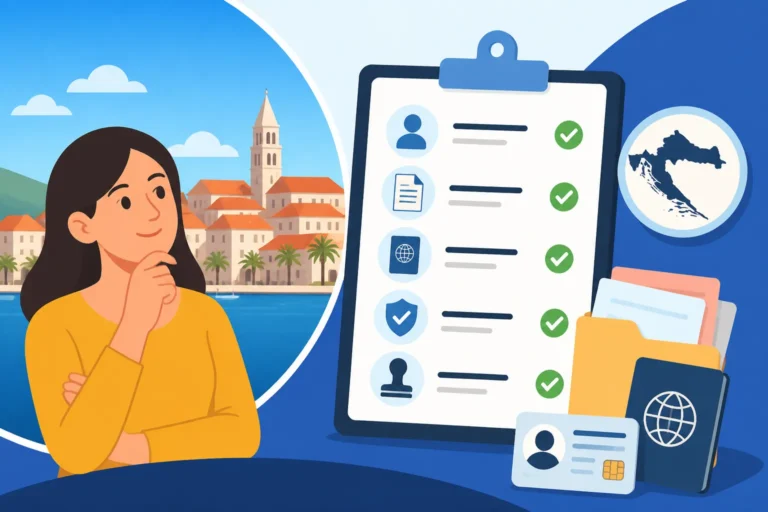
Let's quickly go over the core documents, highlighting how they might feel different when you're already here:
- Valid Passport: Of course, your passport must be valid for at least three months beyond the intended period of your stay. Make sure you have photocopies of all relevant pages, including your entry stamp.
- Completed Application Form (Obrazac 1a): This form needs to be filled out precisely. Any errors or omissions can cause delays.
- Proof of Remote Work / Company Registration: This is fundamental. You need to provide documentation showing that you are either employed by a foreign company (that doesn't operate in Croatia) or that you own a company registered outside Croatia, and that your work can be performed remotely. This could be a letter from your employer, a copy of your employment contract, or proof of your company's registration.
- Proof of Income: A critical requirement. You must demonstrate sufficient financial means to support yourself in Croatia without relying on the Croatian social system. As of early 2024, this typically means proving you have 2.5 times the average gross Croatian salary from the previous year. This amount changes annually, so always check the latest figures on the MUP website or consult a local expert. For example, if the average gross salary was around €1,600, you'd need to show proof of at least €4,000 per month. This can be bank statements, salary slips, or a letter from your bank. Keep in mind, the currency transition to the Euro is complete, so all figures will be in euros.
- Health Insurance: This is non-negotiable. You need valid travel health insurance that covers your stay in Croatia. It must cover at least €30,000 in medical expenses, including repatriation. Many digital nomads opt for international health insurance providers like Cigna Global as they offer comprehensive packages specifically designed for expats, ensuring you meet all requirements for your permit and, more importantly, have peace of mind regarding your health. If you’re unsure about what kind of coverage you need, our guide on What Health Insurance Do I Need for a Croatian Residence Permit? can clarify things.
- Proof of Accommodation: This means a notarized rental contract (or lease agreement) or proof of property ownership in Croatia. If you’re staying with friends or family, they would need to provide a statement (often called Izjava o smještaju) confirming they are hosting you, which might also need to be notarized. This is often where things get tricky if you haven't fully committed to a long-term rental yet. For details on how to get this sorted, check out The Complete Guide to Renting an Apartment in Croatia (2027).
- Criminal Background Check: You will need to provide a criminal background check from your home country, apostilled or legally verified. Some MUPs might also ask for one from Croatia if you’ve been residing here for a certain period.
- OIB (Personal Identification Number): You absolutely need an OIB for your application. This is your Croatian tax identification number, and you can apply for it at the local tax office (Porezna Uprava) even before you have your residence permit. It’s usually a straightforward process, but necessary. Our post on How to Get an OIB and Why It Matters for Healthcare Access explains this in detail.
- Administrative Fee: There will be a fee for processing your application, usually paid via biljezi (stamps) purchased at a kiosk or post office, or sometimes directly at the MUP via a slip to the bank.
Tackling Accommodation and OIB When Already Present
When you're applying from within Croatia, some of these documents have particular nuances:
- Accommodation: You're already here, so you likely have some form of accommodation. If it's a short-term Airbnb, that won't cut it. You need a long-term rental contract, preferably notarized. Your landlord is legally obliged to register your temporary address with the MUP, and you’ll need proof of this registration, usually a white card or confirmation slip called a prijava boravišta. This serves as your critical proof of residence. Make sure to discuss this with your landlord before you sign anything. For specifics on how to handle this, refer to How to Register a Rental Lease with the Croatian Tax Administration.
- OIB: While you can apply for this from abroad, many nomads who decide to apply in-country get their OIB by visiting the tax office. It's a relatively quick process – bring your passport, fill out a simple form, and you usually get it on the spot.
Language Barriers and Translation Requirements
Unless your documents are already in Croatian, English, or potentially one of the major EU languages (like German or Italian, depending on the MUP office), you will need certified translations. This means hiring a court-certified translator (sudski tumač). Do not underestimate this step; the MUP will not accept uncertified translations. This applies to things like your criminal background check, bank statements (if not in English), employment letters, and anything else not in Croatian. It's an additional cost and time consideration, so factor it into your planning.
After Submission: What to Expect and Plan For
So, you’ve meticulously gathered all your documents, probably wrestled with a few Croatian forms, survived your MUP appointment, and finally submitted your application. Congratulations, you've cleared a major hurdle! But the journey isn't over yet. Now comes the inevitable waiting game.
The Waiting Game: Processing Times and Temporary Status
Once your application is submitted, you officially enter the processing phase. How long this takes can be a bit of a lottery. I’ve heard stories of permits being issued in a couple of weeks, and others dragging on for months. It truly depends on the specific MUP office, the time of year, and the completeness of your dossier. Generally, expect anywhere from 30 to 90 days.
During this waiting period, a critical question arises: Can you stay in Croatia if your initial 90-day tourist period expires while your permit is pending? This is the greyest of grey areas and a source of immense anxiety for many. Officially, your tourist stay ends after 90 days. However, the MUP usually issues an acknowledgment that your application is under review. While this doesn't explicitly grant you an extended legal stay, in practice, if your application was correctly submitted while your previous stay was valid, you should be fine remaining in the country until a decision is made. You might not be able to leave and re-enter Croatia (or the Schengen Area) without complications during this period. My advice: avoid international travel until your permit is formally approved and your residence card is in hand. It’s an inconvenient truth, but better safe than sorry.
Handling Potential Delays or Denials
It's not uncommon for the MUP to request additional documents after your initial submission. This could be due to a missing item, a clarification needed, or just standard procedure. Don't panic, but respond promptly. The MUP will usually give you a deadline to provide the supplementary information. If you don't respond in time, your application could be denied.
A denial, while disheartening, isn't always the end of the road. If your application is denied, the MUP will provide a reason. You might have the option to appeal the decision within a certain timeframe (usually 15 days) or, if the reason for denial is something easily rectifiable, you could prepare a new, corrected application. However, in cases of serious issues (like overstaying or insufficient funds), your best bet might be to leave Croatia and re-evaluate your plans. Always consult with a local lawyer or immigration consultant if you face a denial; their expertise can be invaluable.
Once Approved: Biometrics and the Boravišna Iskaznica
The moment of truth arrives! You get the call or letter: your digital nomad permit is approved! A huge sigh of relief, right? Almost. The final step is typically to go back to the MUP for biometrics capture – fingerprints and a photo. You’ll be given an appointment for this, and then, after another short wait (usually a week or two), your physical residence card, known as the boravišna iskaznica, will be ready for collection.
This card is your official proof of temporary residence in Croatia and allows you to reside legally in the country for the duration of your permit (typically one year, renewable). This card is extremely important; carry it with you. With your boravišna iskaznica, you can then start thinking about other aspects of settling in, like getting your utilities set up properly (check out The Expat Guide to Setting Up Utilities in Croatia) or exploring options for supplementary health insurance to cover co-payments, as the public system often has them – a topic covered in Understanding Dopunsko Zdravstveno Osiguranje (Supplementary Insurance) in Croatia.
Here’s a quick summary table to help visualize the critical differences for in-country applications:
| Scenario | Non-EU/EEA Citizen (Visa-Exempt) | Non-EU/EEA Citizen (Visa-Required) | EU/EEA Citizen |
|---|---|---|---|
| Current Stay | Tourist/Visa-Free (max 90/180) | Short-stay Schengen Visa | Freedom of Movement (no DNP needed) |
| In-Country Application Possible? | YES, if within 90 days. | Generally NO (must apply from abroad). | YES, but it's registration, not a permit. |
| Key Risk | Overstaying 90 days during processing. | Applying with invalid visa. | None, as long as you register. |
| Primary Requirement | Proof of remote work, funds, insurance, accommodation. | N/A (apply abroad). | Proof of identity, residence, means. |
| Legal Status Post-Application | Grey area if 90 days expire, avoid international travel. | N/A (apply abroad). | Validated by registration. |
| What to do if over 90 days | Leave Schengen, apply from home country. | N/A (apply abroad). | Register (no overstay issue). |
The path to obtaining your Croatian digital nomad permit while already in the country can be a rewarding one, allowing you to seamlessly transition from visitor to resident. However, it demands a thorough understanding of immigration laws, particularly the Schengen rules, and a readiness to tackle the MUP’s administrative processes. For a more comprehensive overview of all requirements, don't forget to check out How to Get a Croatian Digital Nomad Permit: The Full Guide (2027). With careful planning and a bit of expat grit, you'll soon be enjoying those Croatian sunsets with full legal status. And remember, if you're planning a big move once that permit is sorted, services like Sirelo can be a real lifesaver for comparing moving companies and getting your belongings to your new Croatian home without too much fuss.
Disclaimer
This article is for general informational purposes only and does not constitute professional advice. Laws, prices and regulations vary by location and change over time. Consult a qualified professional for guidance on your specific situation.